Axios Future of Health Care

March 28, 2025

Good morning. Yes, I realize the massive changes announced yesterday at HHS will likely have some kind of impact on the future of health care. Do I know what that impact is yet? Nope! So I'm writing about something else today.
- But if you have ideas about the impact, I certainly want to hear them. Just hit reply to this email.
Today's word count is 1,573, or a 6-minute read.
1 big thing: How RFK Jr. could threaten vaccine markets
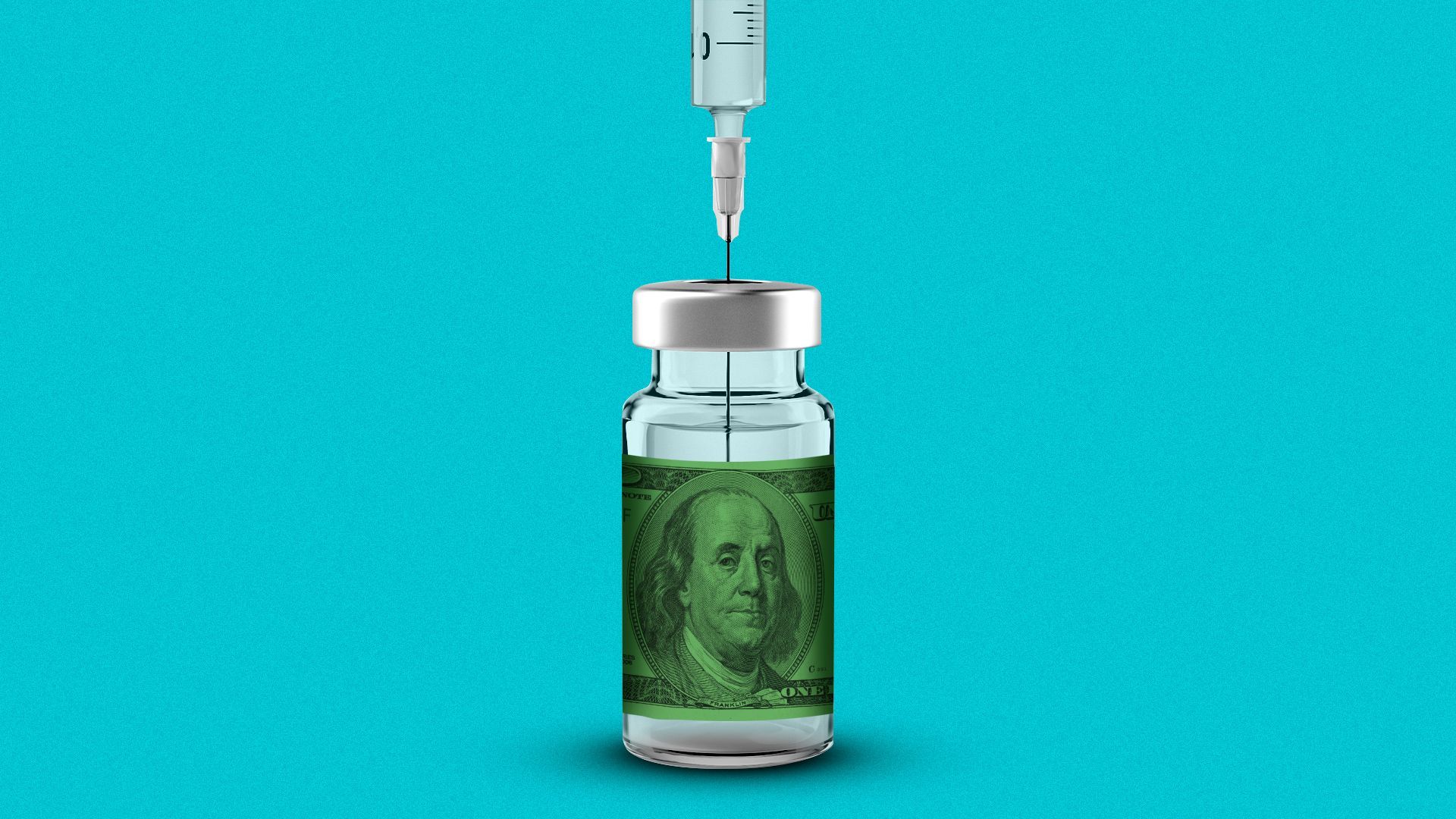
The not-so-slow drip of vaccine-unfriendly news coming from the Trump administration poses the longer-term question of just how much drugmakers would be willing to take before they decide the historically fragile market is too volatile to participate in.
Why it matters: The availability of vaccines in the U.S. isn't just dependent on whether the federal government has approved them; manufacturers have to be willing to continue making and selling them.
- Actions taken by the Trump administration — including HHS Secretary Robert F. Kennedy Jr., a longtime vaccine critic — could ultimately convince drug companies that the market is too risky to enter or remain in, either because of depressed demand or an increased threat of litigation.
- "It's a fragile market and it's not something we can take for granted, and it is a market we have seen drastically threatened before," said Richard Hughes, a professor of vaccine law at George Washington University and a partner at Epstein, Becker & Green.
Driving the news: The Washington Post reported this week that a longtime promoter of the debunked theory that vaccines cause autism will lead the Trump administration's planned study into the link between the two.
- David Geier, who has published papers with his father claiming that vaccines cause autism, has also been disciplined by Maryland regulators for practicing medicine without a license. Axios confirmed that a David Geier is listed in the HHS employee directory, although HHS declined to comment.
- The charges against Geier included that he encouraged autistic children to take Lupron, a drug used in chemical castration.
- Reminder: There's already been tons of research on vaccines and autism, and the scientific community has confidently concluded there is no link. One CDC-endorsed study, should it reach the opposite conclusion, would be weighed against a pile of evidence.
The big picture: The steady flow of vaccine news from HHS since Kennedy took office has been interpreted by many experts as an ominous sign of what's to come. But none of the major policy changes feared when Kennedy was first nominated have occurred — yet.
- And some may never. Kennedy has explicitly vowed not to revoke the approval of the polio vaccine, for example (although he dodged saying the same about all vaccines).
- But a government-endorsed study — no matter how poorly conducted — that concludes certain vaccines cause autism would mark a major escalation in terms of government actions with the potential to harm vaccine uptake.
- Vaccine hesitancy itself can be bad for vaccine markets. Case in point: Moderna's struggle to succeed financially after the demand for COVID vaccines slumped post-pandemic.
- "When uptake drops — which we want high uptake for herd immunity, public heath — but that has a revenue effect as well," Hughes said.
Another major policy grenade with potentially even more significance would be if Kennedy began to chip away at vaccine makers' federal liability protections, which have been fiercely criticized by Kennedy allies, including the anti-vaccine organization he founded.
- Sources close to HHS expect the agency is interested in reforms to the federal Vaccine Injury Compensation Program (VICP), which was established under a law passed by Congress in 1986 in response to the threat of vaccine lawsuits leading to shortages.
- The VICP is essentially an alternative legal system for resolving vaccine injury cases. Successful plaintiffs win money from the U.S. government, not vaccine manufacturers.
- Weakening or removing liability protections for certain vaccines could be the thing that makes manufacturers contemplate leaving the market, experts say — or at least causes them to significantly raise prices.
- "Could them being sued directly send them out of the vaccine market? Absolutely. It did in the past. That or vaccines are going to be so expensive that nobody could get them," said Renee Gentry, director of the Vaccine Injury Litigation Clinic at George Washington's law school.
- Of course, a big unknown is whether the White House would greenlight such a controversial move.
What they're saying: Kennedy was asked during the confirmation process what changes he's contemplating making to the VICP.
- Kennedy allies in the past, as well as Kennedy himself, have argued the program takes away manufacturers' incentive to make vaccines safe.
- In Kennedy's written response to senators during his confirmation process, he avoided answering the question.
- "I will do nothing as HHS secretary that makes it difficult or discourages people from taking vaccines. As I testified to the Committee, I am not anti-vaccination. I support transparency and sound data for vaccines," he wrote.
Yes, but: A much more straightforward way to disrupt the vaccine market would be to simply cancel government contracts with manufacturers.
- "That's probably one of the most directly impactful levers that he has," Hughes said.
- "You take companies that have much smaller portfolios and a research and development pipeline ... these are companies that are very much put at risk when contracts get canceled" or the threat of liability increases, he added.
Continued below ...
2. How it works
The federal government is very specific about which vaccines and which injuries are covered by the compensation program, laying them out in a table. These conditions are "presumed to be caused by vaccines unless another cause is proven," per HHS.
- Covered vaccines have to be recommended by the CDC for routine administration to children or pregnant women, subject to an excise tax and added to the program by the HHS secretary. Thus, the secretary has a lot of sway over this table — including changes to it.
- The secretary "modifies the Table by regulation after consulting with the Advisory Commission on Childhood Vaccines, posting a notice, and soliciting public comment. The Secretary may place injuries or conditions on the Table based on scientific and/or policy reasons," an HHS website states.
- That means Kennedy could always add new injuries — like autism — to the program, though vaccine makers wouldn't be the ones paying successful plaintiffs; the government would.
Yes, but: The vaccine compensation program doesn't mean vaccine makers can't be sued directly. Plaintiffs just have to go through vaccine court first.
- Merck, for example, has been — unsuccessfully thus far — sued over claims that its HPV vaccine, Gardasil, injured patients. Kennedy has played a role in these lawsuits by referring cases to a law firm, and said during the confirmation process that he will now give any fees he could earn through this litigation to his son.
- And not all vaccines are covered by the government program; shingles vaccines and some pneumococcal vaccines aren't included, for example.
The intrigue: To take this full circle, government-backed undermining of vaccine safety isn't unrelated to civil court challenges. A CDC study finding MMR vaccines cause autism, for example, could be entered as evidence during a court proceeding.
- This was part of the larger argument Sen. Elizabeth Warren was making about Kennedy's financial ties to the Merck cases during his confirmation hearing. She listed ways that Kennedy could influence the lawsuits as secretary.
- One of those ways: "You could publish your anti-vaccine conspiracies, but this time on U.S. government letterhead — something a jury might be impressed by," she said.
What we're watching: That kind of government-backed evidence may not hold the same kind of sway under the Trump administration as it did in previous ones, Gentry said — especially if it's at odds with other major scientific institutions.
- "The American public is going to be suspect of anything that this secretary does, and I don't think that's going to change overnight because the CDC releases an article," Gentry said.
3. An unintended consequence
Ironically, shifting vaccine injury cases from vaccine court into the normal legal system could actually make it harder for people who have legitimate cases to win them.
State of play: Cases that do appear in civil court under the current system don't have a track record of success.
- "People want to go and sue [vaccine companies] — they can sue them now. They can sue vaccines that aren't covered. And look how those cases have gone: not well," Gentry said.
- Removing vaccines from the federal program would "dramatically affect the market, but if you're coming from the standpoint of wanting to help the vaccine-injured, it's far more devastating to the vaccine-injured," she added.
Between the lines: Vaccine court presents plaintiffs with a lower bar for getting compensated, as it's a no-fault program.
- Plus, drug companies are well-resourced, to put it mildly. And the anti-vaccine movement looks at vaccines with a much different eye than the general public, who would make up the juries deciding vaccine cases.
- "They're looking at vaccines as if they're on par with cigarettes and tobacco, and the public doesn't view them that way, overall," Gentry said.
The big picture: This also means that handling disputes outside of vaccine court may not be that big of a deal for vaccine makers, simply because the plaintiffs aren't likely to win based on recent history.
- Of course, the vaccine program was created in the first place because lawsuits posed a threat of vaccine shortages.
The bottom line: No one really knows — besides a handful of pharma execs, maybe — what it would take for drug companies to abandon a vaccine. Of course, it's a separate question — and one we aren't getting to today — as to what would convince them to keep investing in new products.
- But if Kennedy stays true to his pre-HHS views, we all may be about to find out. Any subsequent vaccine shortages would be bad news for all of us.
Thanks to Nicholas Johnston, Adriel Bettelheim and Alison Snyder for editing and Matt Piper for copy editing.
Sign up for Axios Future of Health Care