Axios Future of Health Care

November 10, 2026


Good Tuesday morning. We're taking stock of the fight between Calley Means and his former White House colleagues, and what it bodes for the MAHA movement.
🚨 Situational awareness: The Pan American Health Organization kicks off a three-day meeting today in Washington, D.C., that will determine whether the United States loses its measles elimination status.
Programming note: We'll be off tomorrow in observance of Veterans Day. To all veterans, thank you for your service. We'll see you Thursday.
Today's newsletter is 1,057 words, a 4-minute read.
1 big thing: MAHA leader turns White House gadfly
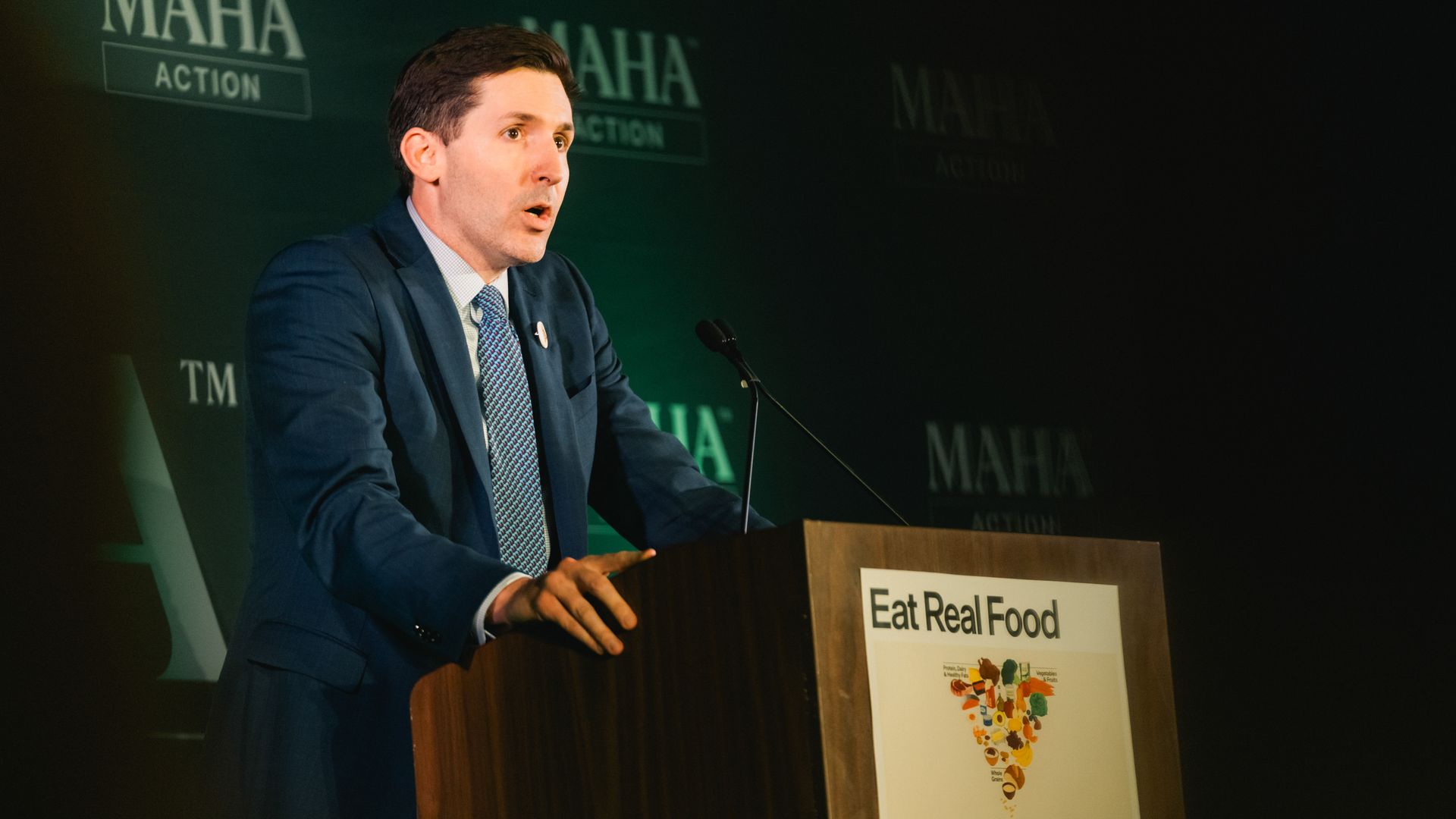
Calley Means quickly rose from wellness entrepreneur to senior Trump health adviser — and now he's attacking the White House and suggesting top aides undermined the president's health agenda.
Why it matters: His scorched-earth campaign — which continued yesterday in comments to Axios — marks a stunning turn for a figure who was the administration's most vocal advocate of the "Make America Healthy Again" agenda.
- It also raises questions about what the escalating fight between Means and former White House officials will accomplish for the movement.
Driving the news: Means told Axios he's going public with his allegations of corruption — especially by former White House chief of staff Susie Wiles — because of the high stakes.
- "It is existential to the survival [of] America that we rid DC of Susie's brand of politics," Means said in a text exchange.
- Means' initial comments on Friday's episode of "The Joe Rogan Experience" went viral, and he continued the campaign with an appearance on CBS' "Face the Nation" Sunday.
- Asked if he's worried about lawsuits after comments from a Wiles spokesperson and former White House deputy chief of staff James Blair — who Means has also accused of wrongdoing — Means pointed to his X post warning them and other parties to "immediately preserve all potentially relevant records and communications."
Means has kept up a steady stream of X posts about his allegations and the way he claims the officials have responded to them.
- "Susie - I'm not intimidated and you will not scare me. Again, please stop sending me emotional texts. This is not personal - this is civilizational," Means posted yesterday.
- White House spokesperson Allison Schuster said in a statement the Trump administration has won "extensive victories for the MAHA Agenda." HHS and a Wiles spokesperson didn't respond to requests for comment.
The big picture: After hitching their wagon to President Trump ahead of the 2024 election, MAHA leaders have been complaining for months of a lack of progress on issues around healthy foods and pesticide use.
- But whether the public feud Means has initiated will have any impact on the policy agenda he's championed — or whether it's more of a personal grievance tour — remains to be seen.
- A former HHS official said that after Republicans' midterm wipeout, Means is "highlighting that one of the more popular aspects of Trump's domestic agenda should be something [the administration] spends more time on to prepare the party for 2028."
The intrigue: The MAHA base sees incoming chief of staff Stephen Miller as an ally, even though he hasn't said much about movement priorities like cleaning up the food supply, curbing food additives or scrutinizing vaccines.
- Miller's wife, Katie, hosted Health Secretary Robert F. Kennedy Jr. on her podcast and has posted photos of dishes with ingredients like raw milk, per the Washington Sun.
- Means told "Face the Nation" that Miller understands corporate influence over health care and that he represents a break from Wiles.
- "Stephen Miller has been nothing short of a champion in Making America Healthy Again. As a father of four, Miller is acutely aware of the importance of transforming our food, health, and scientific systems for the next generation of Americans," Schuster said.
2. 1 big number: AI use by clinicians

Nearly 9 in 10 health providers (89%) report using an AI tool or chatbot for work tasks in the past year, though comparatively few have received any formal training, according to a new West Health-Gallup survey out today.
The big picture: Health professionals are using AI for some of the same reasons as their patients. But as AI use expands, many may need more guidance or other support, particularly when it informs clinical decisions.
What they found: The survey of more than 1,000 primary care physicians found the most common uses in the past year are gathering information about medications (78%) or about symptoms or health conditions (76%).
- Over half (53%) used AI to review test results, scans or imaging, while 50% have used it to write clinical notes. Nearly half said they used AI to write patient instructions or after-visit summaries or to record and transcribe patient appointments.
- Despite the widespread work-related use, only 20% of providers reported receiving any formal AI training — especially those in physician groups or independent practices.
A separate survey by West Health-Gallup of 5,330 adults found that more than half (56%) who have seen a primary care provider in the past year are comfortable with AI making diagnosis or treatment decisions, as long as the provider can change or override those decisions.
3. Biotechs urge steps to boost drug discovery

The biotech industry is asking Congress to pass stalled patent legislation and maintain merit-based NIH grant reviews as part of a policy package to help U.S. firms compete with China's biopharma sector.
Why it matters: The seven-point plan comes as economic uncertainty and rising interest rates are slowing the pace of some biopharma deals, and policymakers are scrutinizing certain U.S. investments in China.
Driving the news: The Biotechnology Innovation Organization is urging steps to modernize and streamline U.S. drug development and improve patient access to clinical trials.
- The trade group called for the passage of stalled bills that would raise the bar for challenging patents and clarify what kinds of inventions are eligible for patent protection. They would also make it easier for discoveries like gene therapies to be patented.
- The group also called on Congress and the administration to sustain support for NIH, FDA and other science agencies and to ensure stable, merit-based grant administration.
- The Trump administration has proposed a $5 billion budget cut for NIH in FY27 and adding political reviews to the process for making research grants.
What we're watching: Some of the issues raised could be addressed in next year's reauthorization of FDA user fees.
Thanks for reading Axios Future of Health Care, and to editor David Nather and copy editor Matt Piper. Please ask your friends and colleagues to sign up.
Sign up for Axios Future of Health Care