Axios Future of Health Care

November 19, 2026


Good Thursday morning. A new report warns that China's tightening grip on the global pharmaceutical industry could limit the United States' ability to deliver breakthrough treatments to its own people.
🚨 The U.S. Preventive Services Task Force is due to meet for the first time in nearly a year and a half today after Health Secretary Robert F. Kennedy Jr. overhauled its roster.
Today's newsletter is 929 words, a 3.5-minute read.
1 big thing: New alarm over China's pharma power
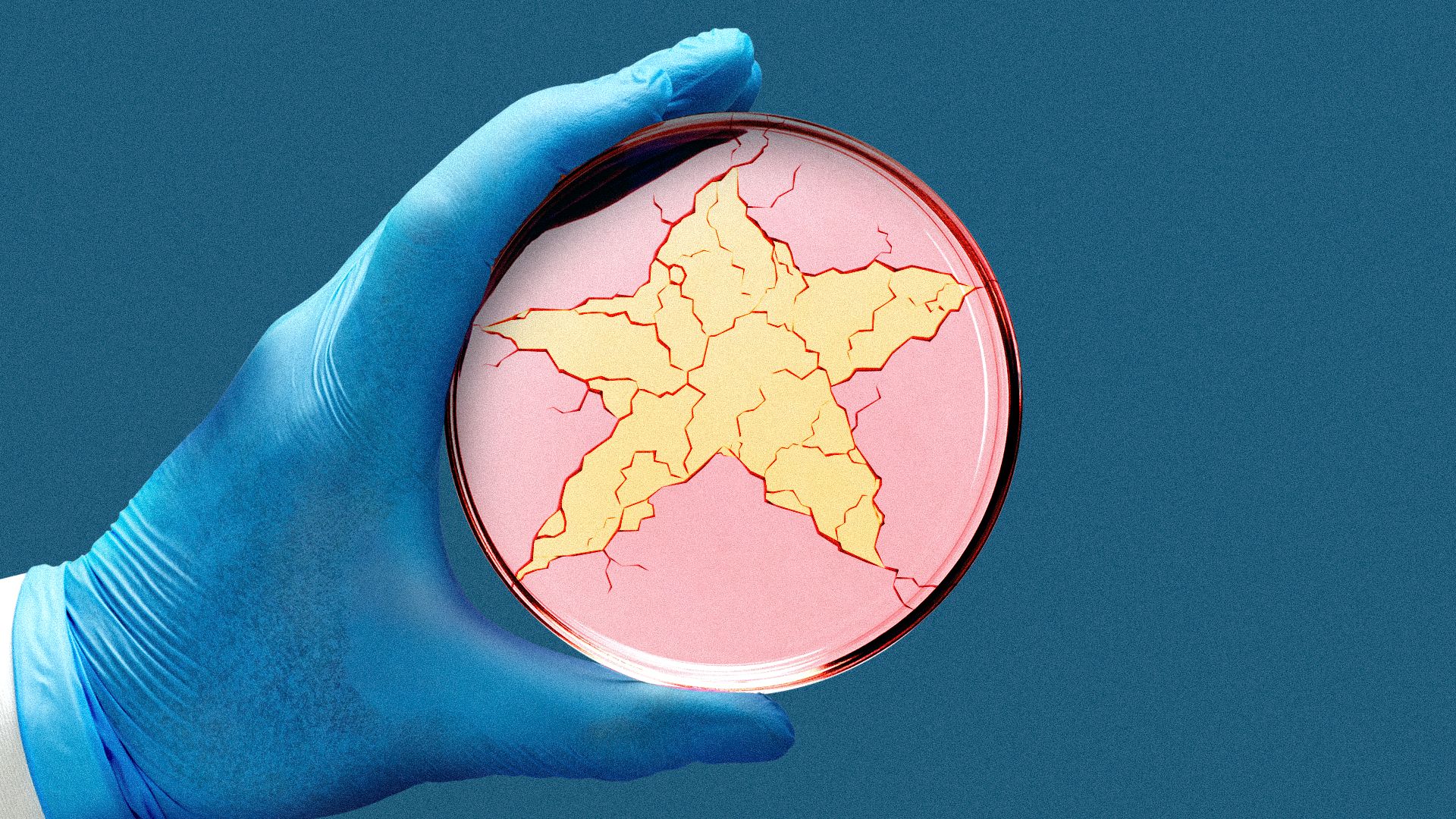
China is intensifying efforts to control the entire drug supply chain, putting the U.S. at risk of being cut off from future lifesaving treatments, the National Security Commission on Emerging Biotechnology warns in a new analysis out today.
Why it matters: Western drug giants have invested huge sums in Chinese biotechs to boost their product pipelines. But sharing capital and expertise could give Beijing more control over critical pharmaceutical technologies.
- Concerns about the U.S. getting boxed out have intensified after the Chinese government proposed new restrictions last month on the export of certain technologies, including cell and gene therapy platforms.
Driving the news: Western drug giants are increasingly entering into licensing agreements with Chinese firms that redirect U.S. capital away from U.S. innovation and toward the Chinese pharmaceutical industry, the commission found in its analysis of 57 deals from the beginning of 2023 through last month.
- The deals are being made earlier in the drug discovery process, allowing the Chinese partners to gain not just capital but know-how in developing and commercializing treatments.
- This kind of knowledge transfer in automobiles, semiconductors and industrial chemicals gave Chinese industry a competitive edge and leverage to control global markets for the products, according to the commission, which was established by Congress to examine how emerging biotech intersects with national security.
- "The end game is the same for the [Chinese Communist Party] in the pharmaceutical industry," the commission warns, saying the goal is increased U.S. dependence on Chinese innovation and enrichment of the Chinese pharmaceutical industry.
Between the lines: Drugmakers including AstraZeneca, Bristol Myers Squibb and Pfizer have been drawn by China's surge of investment in the life sciences and the promise of faster clinical trials and product approvals.
- Typically a Chinese biotechnology company sells the license to develop or commercialize a treatment it developed to a multinational pharmaceutical company.
- The Western companies see the arrangements as a way to outsource the burden of drug discovery and verify early results. But the commission found that the deals are increasingly based on preclinical data and that upfront payments are coming earlier in the R&D cycle.
- The commission says this can result in a "flywheel effect" that sees royalties and equity in joint ventures flow back to China, fueling new research and infrastructure and attracting global talent.
Threat level: The concern is what happens if China scales up and corners a market, establishing a stranglehold on supplies of key products and ingredients.
- That's especially critical in pharma. While a chip shortage may result in delays replacing a car or phone, a drug shortage delays treatments for controlling seizures, treating infections or managing severe pain, Brookings Institution senior fellow Marta Wosińska has noted.
- In a report last year to Congress, the commission posed a hypothetical scenario in which Beijing withheld a breakthrough treatment from American patients in the event of a conflict in Taiwan.
State of play: Last month, the Trump administration proposed subjecting certain deals with Chinese life sciences companies to new screening requirements or prohibiting them altogether.
- The commission, in its new analysis, calls the proposal "a prudent step to curtail China's biotechnology ambitions" but adds policymakers "must act now to empower the United States to out-innovate strategic competitors before it's too late."
2. 1 in 10 workers are uninsured

1 in 10 American workers didn't have health insurance in 2025, according to a new report from the Center for Economic and Policy Research.
Why it matters: Even before big policy changes to Medicaid and the Affordable Care Act, a substantial portion of the workforce still fell through the cracks of the country's patchwork insurance system.
By the numbers: Of the more than 26 million uninsured U.S. residents last year, 16 million had full- or part-time jobs or were unemployed and actively seeking work.
- 10 million held year-round, full-time jobs.
- The report uses Census Bureau data and defines "uninsured" as lacking health insurance for all 12 months of the year.
- For the entire U.S. population, just under 8% lacked health insurance in 2025.
Between the lines: Working-age adults generally get health insurance through their employer, the individual market or Medicaid.
- But each of these options has limitations. Not all employers offer coverage, especially as costs continue to rise. Medicaid eligibility is capped by income.
- Anyone can buy into the individual market, but ACA subsidies are scaled to a person's income, and not everyone can afford their portion of the premiums or out-of-pocket costs.
Zoom in: Workers who were unemployed for any length of time in 2025 were most likely to be uninsured, followed by part-time or seasonal workers.
- Hispanic and Black workers were more likely to be uninsured than white or Asian workers.
- And while 20% of workers in the lowest wage quintile were uninsured, only 2% of those in the highest wage quintile lacked health insurance.
The bottom line: Reduced ACA subsidies, Medicaid cuts and cost pressures on employers "all suggest that coverage rates for workers are more likely to fall than to rise from their current levels," the authors conclude.
Thanks for reading Axios Future of Health Care, and to editor David Nather and copy editor Matt Piper. Please ask your friends and colleagues to sign up.
Sign up for Axios Future of Health Care