Axios Future of Health Care

October 24, 2025

Good morning! We're talking about the future of drug prices today, which — spoiler alert — seems pretty likely to feature more government intervention.
Today's word count is 1,018 or a 4-minute read.
📺 NEW: The latest episode of "The Axios Show" features Sen. Bernie Sanders interviewed by Alex Thompson. Watch on Axios … Subscribe to our YouTube.
1 big thing: Price controls are winning
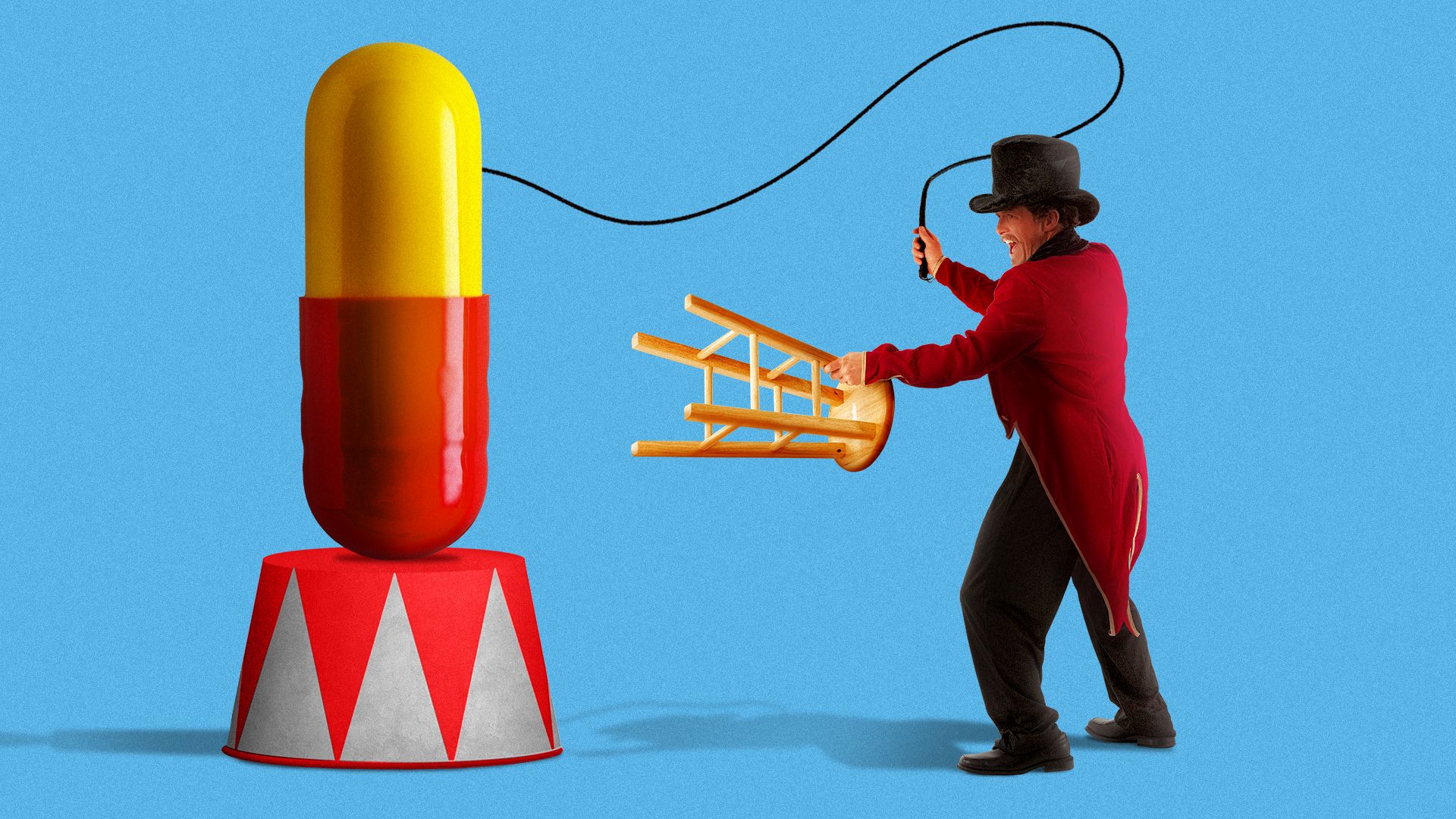
Whatever political opposition existed around restricting pharmaceutical prices via government intervention — and there was quite a lot not so long ago — seems to have largely disappeared.
- In other words, price controls are all the rage.
Why it matters: As most Republicans fall in line behind President Trump's efforts to take on drug prices, the new conversation is around how to limit costs through policymaking, not whether to.
Between the lines: Very few drugs are actually subject to government cost controls, and the Trump administration's "most favored nation" deals have largely consisted of voluntary pricing concessions by manufacturers.
- But the vanguard of politicians willing to defend free market pharmaceutical pricing has drastically shrunk.
- The outcasts argue that top-down cost controls have unintended consequences, the worst of which will be a decrease in future biomedical innovation.
State of play: President Trump long ago ditched familiar Republican talking points about drug pricing and the pharmaceutical industry. He's spent the last several weeks touting deals made with drug companies that offer Americans better prices.
- But the administration has not backed away from its threat to mandate lower prices within Medicare using MFN pricing, a much larger risk to manufacturers' finances than what the Democrats passed into law a few years ago.
What they're saying: CMS administrator Mehmet Oz has said that by the end of Trump's term, "95% of all drugs in America will be at pricing that we feel proud of," according to Pink Sheet.
- "There's a chance all of this will be [political theater] and not much substance, but there's a chance he could really go after the revenue streams of these companies," said Doug Holtz-Eakin, president of the American Action Forum and an opponent of price controls.
- "We'll just have to see if there's enough blowback from that to stop this train a little bit."
Meanwhile, Colorado has broken new ground in states' efforts to lower prices by capping what is paid for Enbrel, one of the country's bestselling drugs.
Even the FDA has waded into drug pricing, though with a carrot rather than a stick.
- Last week, it announced the first batch of drug candidates receiving priority reviews that will result in a decision within a month or two of filing an application, compared with as long as a year.
- One of the criteria for selection is meeting the national priority of "increasing medication affordability with Most Favored Nation pricing."
What they're saying: "Drug price controls are not inevitable — they're a choice. We've seen what happens when governments go down that path," said Alex Schriver, senior vice president of public affairs at PhRMA.
- "In Europe, price controls drove away investment and left patients with fewer treatment options — we don't want that to happen here."
The big picture: Federal drug pricing restrictions, passed into law by Democrats under former President Biden, have only been on the books for a few years, and those Medicare-negotiated prices for the first batch of 10 drugs haven't even taken effect.
- Republicans loudly opposed allowing Medicare to negotiate prices for even a handful of drugs, warning that the new law posed a major threat to future innovation.
- But while they weakened a piece of the law this summer, a major win for drug companies, there was no real attempt to get rid of it once the GOP was in power.
Yes, but: Congress would likely have to be involved in any major expansion of government pricing power, especially if courts strike down any regulations to force MFN pricing.
- "I still think there is enough policy and ideological opposition to price controls in the Congress that, for now at least, it seems less likely that we'd see a congressional action to institute price controls" beyond the IRA's price negotiation provisions, said Lanhee Chen, a fellow at Stanford's Hoover Institution.
What's next: The Trump administration has signaled that it wants to use the Democrats' law to negotiate even more aggressive prices than the Biden administration did. Those prices will be announced in the coming weeks.
- One of the drugs subject to negotiations this time around is semaglutide, the active ingredient in Novo Nordisk's Ozempic and Wegovy.
The bottom line: Though free market-loving, competition-embracing wonks still exist, they're out of step with the times.
- "I'm in favor of trying capitalism," Holtz-Eakin said. "I don't see any appetite for it in the White House."
2. Prices are still increasing
Speaking of unintended consequences, there's an argument that price controls will lead to higher launch prices. And launch prices have risen since the passage of the law allowing Medicare negotiations.
Driving the news: The list price of new drugs approved by the FDA increased by a median of 24% between 2022 and 2024, and the median net price increased by 51%, according to a report released yesterday by the Institute for Clinical and Economic Review.
- In other words, the actual price paid for new drugs — net rebates and discounts — rose even more than list prices did over that three-year period.
- Even when accounting for differences in the mix of drugs approved each year, the annual net launch price increased by 33% per year.
Between the lines: Launch prices are also being closely watched in the wake of Medicare negotiations, with the argument being drugmakers now have an incentive to price products higher at launch in order to maximize revenue before the drug is eligible for negotiations.
- A similar argument is being made about the deals pharmaceutical companies have been making with Trump, which include a commitment to launch new drugs in the U.S. at prices comparable to what they charge other countries.
- If countries were unwilling to accept U.S. prices, drug companies could respond by hiking U.S. prices to make up for lost revenue.
Thanks to Adriel Bettelheim and David Nather for editing and Matt Piper for copy editing.
Sign up for Axios Future of Health Care