Axios Future of Health Care

September 03, 2026


Hello, Thursday. Brain chips are crossing a threshold into clinical practice. And a new report warns the U.S. may be falling behind China in the field.
Today's newsletter is 1,014 words, a 4-minute read.
1 big thing: Brain implants stoke U.S.-China rivalry
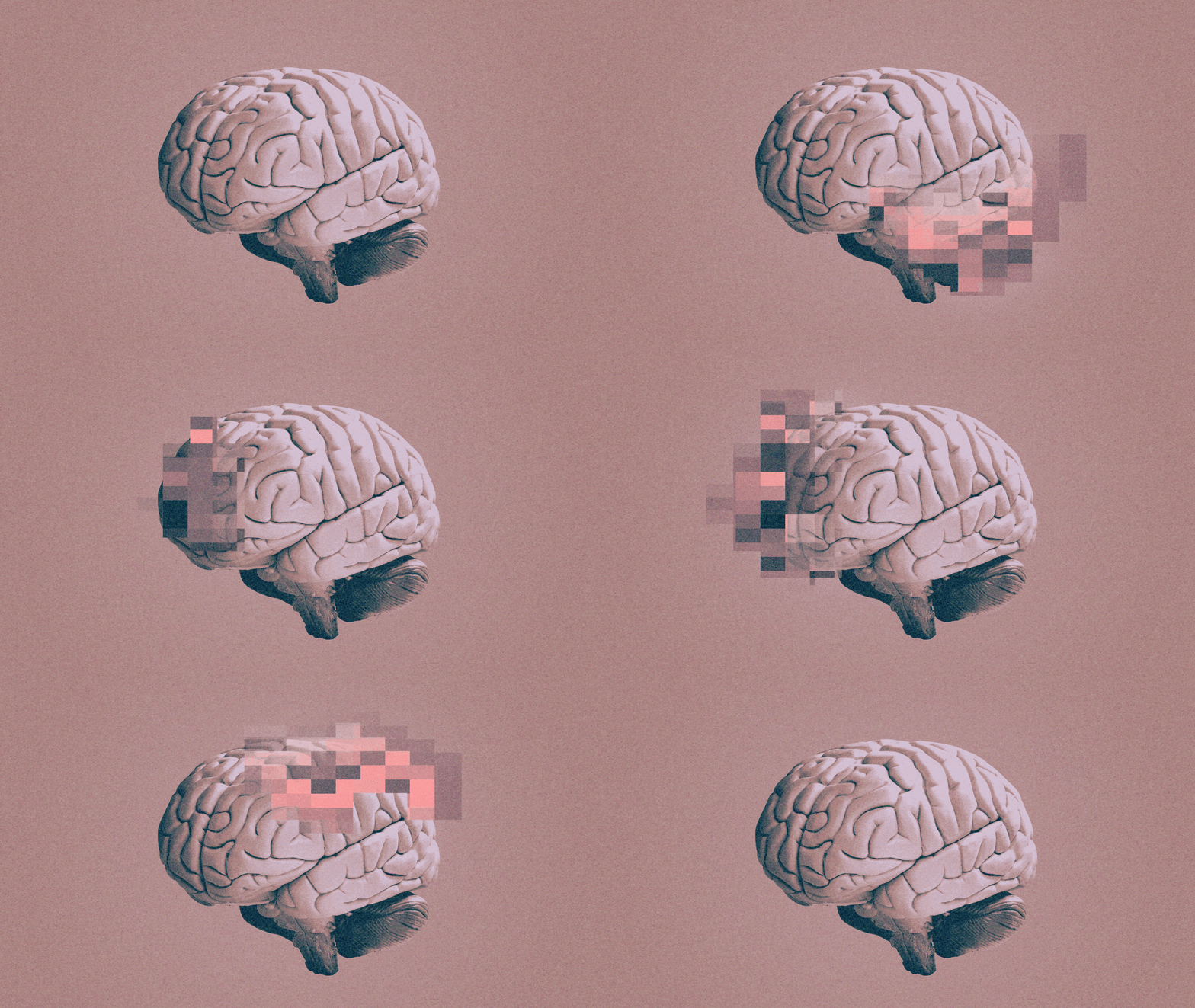
Brain implants like those being developed by Elon Musk's Neuralink are becoming the latest friction point in the intensifying U.S.-China rivalry in the life sciences.
Why it matters: The devices are bringing new hope to patients with strokes, Parkinson's disease and other neurological conditions. And tech billionaires have fueled advances by pouring billions into biotech startups focused on linking the brain with computers.
- But a new national security analysis says U.S. development efforts are being overtaken by Beijing's full-court press around manufacturing, data and commercialization.
- The consequences could extend beyond health care, affecting U.S. military capabilities and the ability to train the next generation of AI models, according to the analysis.
- The report was produced by the National Security Commission on Emerging Biotechnology, which was created by Congress to review how biotechnology can affect national security.
State of play: Brain-computer interfaces, or BCIs, are going mainstream. Companies like Neuralink, Precision Neuroscience, Paradromics and Synchron are testing new applications, like helping to restore communication for people who have lost the ability to speak.
- Rapid advances in artificial intelligence are reducing the time it takes to calibrate a device to a patient's brain signals and use them for functions like controlling a prosthetic part.
- And China leveled up the field this spring, when its National Medical Products Administration issued what's thought to be the world's first commercial approval of a BCI designed to revive hand movement in people with spinal cord injuries.
- The approval was part of a strategy that designated BCIs as a national "future industry," alongside quantum computing and 6G wireless communications systems.
The commission analysis says regulatory bottlenecks and funding concerns are drying up the U.S. pipeline for BCIs and shifting the playing field in China's favor, noting that new treatments for neurological conditions take an average of more than 11 years to reach approval.
- It calls for the FDA to develop a clearer pathway for bringing implants to market, and for CMS to come up with a way to pay for devices once they're through regulatory approvals.
- "China is moving strategic technologies like BCI faster than the United States can," Sen. Todd Young (R-Ind.), the chair of the national security commission, tells Axios.
- "Our government needs a coordinated biotechnology strategy to promote U.S. innovation and commercialization of what promises to be a truly revolutionary platform technology for health and national security."
Between the lines: BCIs are another example of how technology is outpacing regulation — and posing thorny ethical and privacy issues.
- There's the basic question of who controls the device and data, and whether privacy laws like HIPAA even apply.
- Giving patients more control over their data may require new laws or regulations that could limit developers' ability to improve algorithms that decode brain signals, the Government Accountability Office has noted.
- But more consumer autonomy could provide safeguards that extend beyond medical settings and protect against data being accessed to make insurance or workplace decisions, or to study how people subconsciously respond to advertising or other messages.
- China currently has no neural-data-specific privacy or security regulations, per the commission analysis.
Reality check: Brain implants remain a work in progress. Many fail within their first year, and experts say manufacturing improvements like new materials, coatings and batteries could address signal degradation and extend power life.
- It's also difficult to recruit patients for clinical trials who have profound disabilities but still are healthy enough to withstand brain surgery.
What we're watching: Whether brain implants are included in the Trump administration's RAPID program — a joint effort between FDA and CMS to expedite Medicare coverage of certain "breakthrough" devices.
- Longer term, BCIs could be adapted for nonmedical purposes, like controlling swarms of drones through operators' thoughts.
2. The new legal and ethical questions
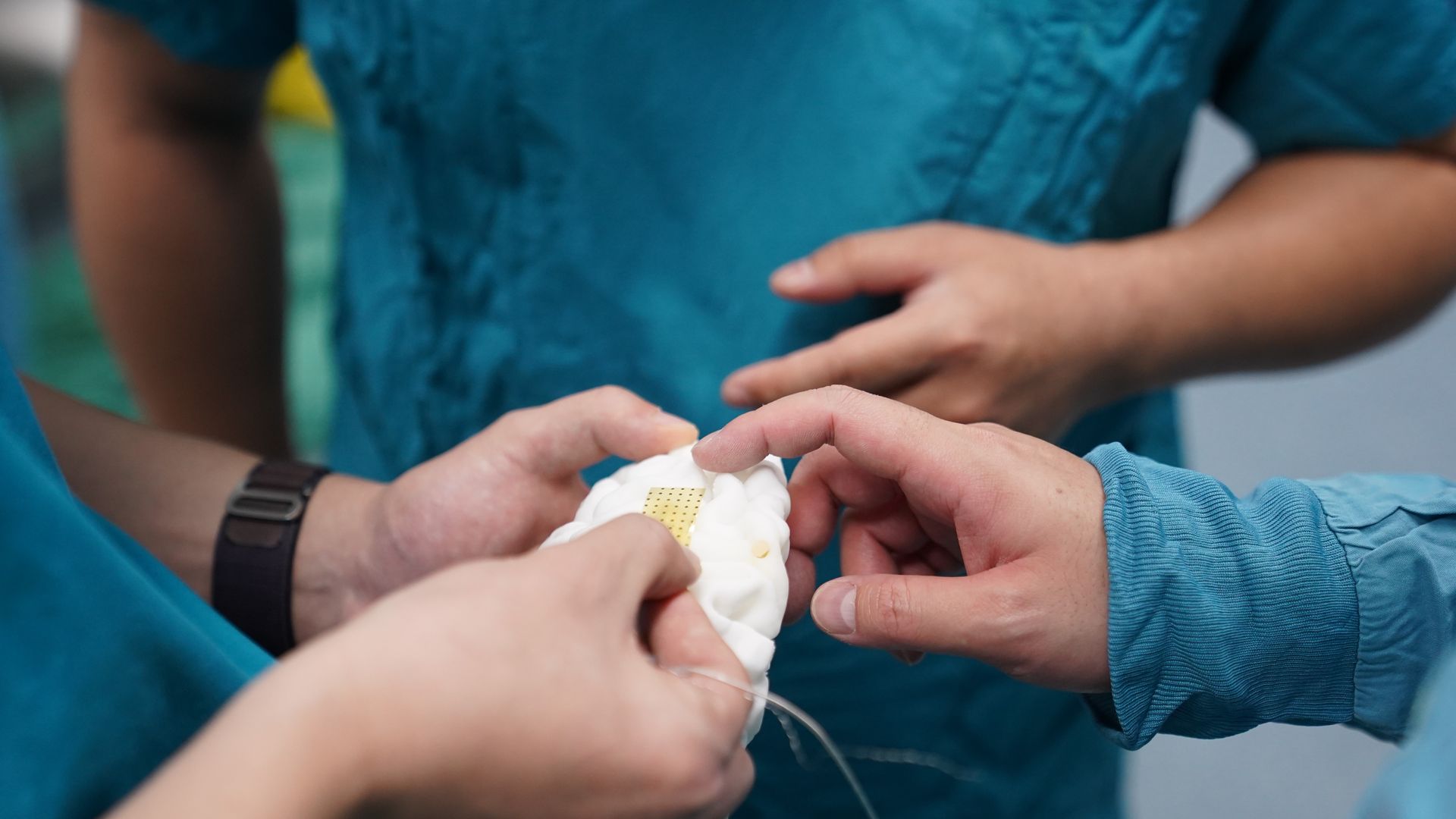
As the use of brain implants expands into clinical settings, medical researchers are trying to unite around standards for patient consent, data protection and responsible use.
Why it matters: It's no easy task putting guardrails around a field that combines neurosurgery, data collection and functionality that changes over time.
- Plus, there are different types of BCIs, including electrodes inserted directly into the brain, devices that sit on the brain's surface and sensors outside of the skull.
Driving the news: A research collaborative convened by Mass General Brigham last month proposed a framework for engaging with patients about the prospect of BCIs.
- It encourages setting shared expectations and reference points and recognizing surrogates' role for patients with progressive conditions like amyotrophic lateral sclerosis.
- It also advocates clear conversations about what data will be captured, where it is stored, who can see or use it and what rights are attached.
"These devices carry immense promise to help patients, and at the same time require close attention to how we ought to bring ethical principles into practice," said lead author Michael Young, a neurologist at Mass General Brigham Neuroscience Institute and assistant professor at Harvard Medical School.
- He and others are also focused on narrowing gaps in data protection for BCIs, despite the existence of privacy laws like HIPAA and the European Union's General Data Protection Regulation.
Friction point: Unifying standards could be important as more states pass their own privacy laws governing brain data collected by devices and create the prospect of a patchwork of different standards.
The bottom line: The implications are profound when one considers that adverse events or life changes could make a patient want to switch off an implant's functions or even remove it.
- Young also points to research indicating that 25% of patients in a coma or vegetative state have covert consciousness and show signs of awareness.
- "How might we use the technology for two-way communication, to unlock the voices of patients who are there but cannot yet speak for themselves? That's a critical next frontier," he said.
Thanks for reading Axios Future of Health Care, and to editor David Nather and copy editor Matt Piper. Please ask your friends and colleagues to sign up.
Sign up for Axios Future of Health Care