Axios Future of Health Care

September 25, 2026


You made it to Friday! Heidi Overton's high-profile FDA confirmation hearing added to the intrigue over who'll be running the agency by the end of the year.
Today's newsletter is 1,060 words, a 4-minute read.
1 big thing: FDA nominee's murky prospects
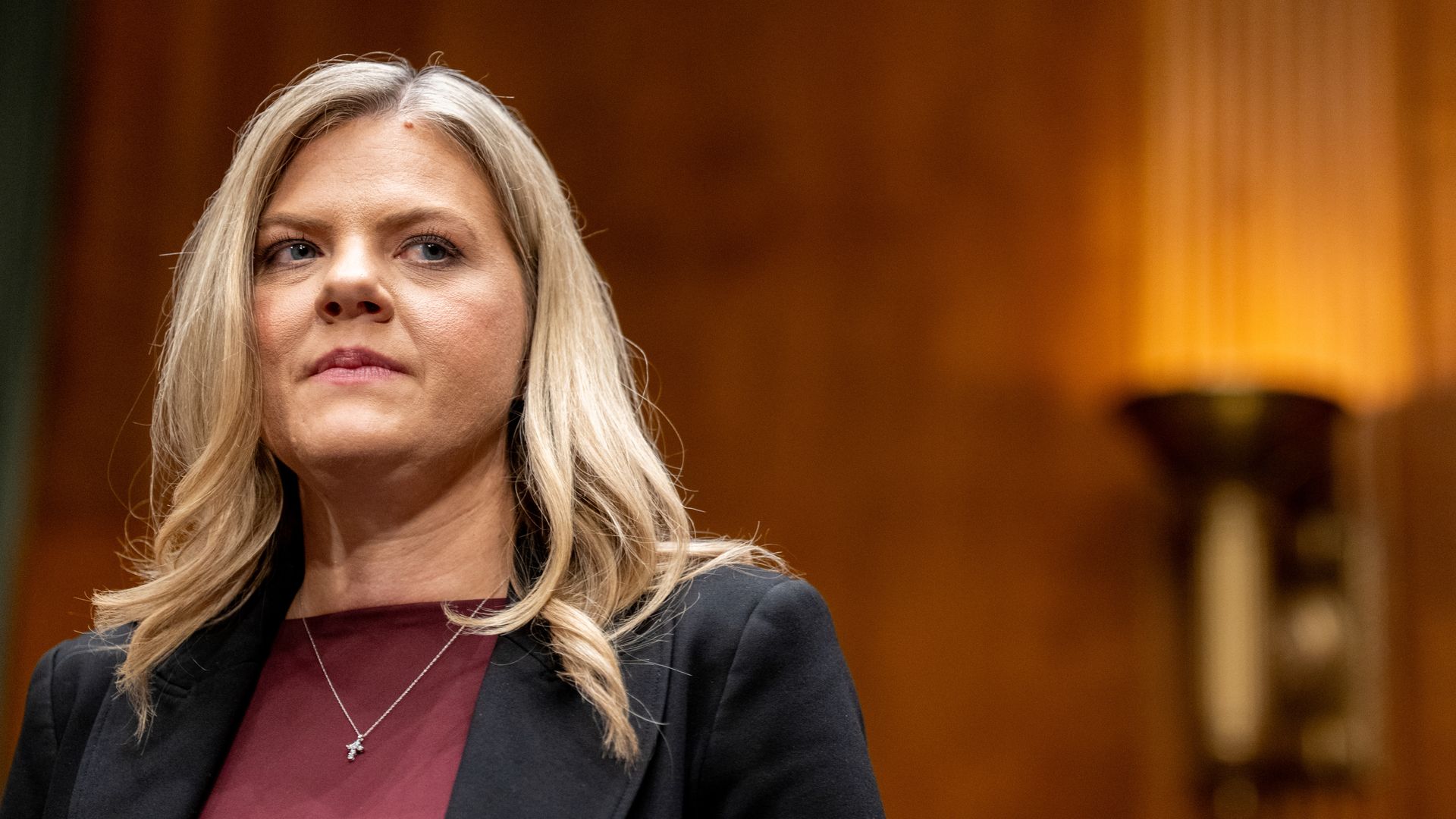
Yesterday's Senate confirmation hearing for Food and Drug Administration commissioner nominee Heidi Overton yielded little insight as to how she'd regulate access to vaccines and abortion pills, or whether some key Republican senators would support her.
Why it matters: With so little time left on the congressional calendar, the FDA may not have a full-time political leader in place before the end of the year, even as the agency faces hugely consequential decisions.
Driving the news: Overton's positions on the safety and efficacy of vaccines and abortion pills drove the most provocative exchanges before the Senate health committee.
- Overton, a New Mexico physician and White House aide, stated the MMR vaccine is safe and effective and "is our best tool right now in the public health response to the measles outbreak."
- She added that "every vaccine on the U.S. market right now [is] safe and effective, according to the FDA."
But when pressed by Senate health committee Chairman Bill Cassidy (R-La.) on how she'd respond if her boss "was saying things alleging that the FDA was wrong in approving a drug as safe," Overton replied that her role would be to "describe what is currently known" and that approved vaccines met FDA standards for safety and efficacy.
- Throughout the hearing, Overton refused to directly say that President Trump was wrong when he made remarks like saying the MMR vaccine is possibly lethal, instead describing the safety of the shot.
- She did contradict Trump's previous suggestion that Tylenol taken during pregnancy causes autism, saying she had "not seen any causal evidence."
On abortion pills, Overton had to strike a difficult balance on whether there should be more restrictions around the dispensing of mifepristone.
- Though neither Sen. Susan Collins (R-Maine) nor Sen. Lisa Murkowski (R-Alaska) asked her directly about the medication, her answers to other members' questioning appeared calibrated not to alienate the two pro-abortion rights lawmakers.
- Murkowski expressed concern over "political pressure to revisit the approval status of certain products," before moving on to other subjects.
- "According to FDA standards, the drug is safe and effective as labeled today with the appropriate risk evaluation mitigation strategy," Overton told Sen. Tammy Baldwin (D-Wis.).
Some of her toughest questions came from Sen. Josh Hawley (R-Mo.), a staunch abortion opponent who pushed back on her affirmation of mifepristone's safety and efficacy.
- Overton pointed to the "ongoing safety review that is being done to assess if the risk evaluation mitigation strategy is appropriate."
- She previously has publicly referred to the drug as "dangerous."
- Overton's hearing came weeks after a federal appeals court heard arguments in a lawsuit brought by Louisiana that challenges liberalized dispensing rules the FDA approved in 2023. The rules — which the Trump administration didn't defend during the hearing — made the pills available through teleprescribing and the mail.
The big picture: Ultimately, senators will have to decide whether to accept what Overton told the committee or to judge her by her previous actions and rhetoric.
- Overton didn't correct Trump during an Oval Office appearance when he described the MMR vaccine as potentially lethal and announced an executive order calling for substantial changes to the childhood vaccination schedule.
What we're watching: There are also ongoing studies within HHS on both vaccine and mifepristone safety that could plausibly be used to change the underlying evidence that current policy is based on.
- When it comes to vaccines, at least, many experts worry the HHS efforts amount to little more than an attempt to manufacture the conclusions vaccine skeptics already believe, but that aren't supported by mainstream science.
- And the outcome of the FDA's mifepristone review could be used to support further restrictions in the future.
The bottom line: Overton's confirmation — or even her vote out of the health committee — is still a nail-biter, and there's a good chance we won't know the outcome until after the midterm elections.
2. Older Americans at risk for drug interactions

More than 1 in 5 older adults could be at risk of a major drug-drug interaction, with the safety of those using antidepressants a particular concern, according to new research in JAMA.
Why it matters: The findings from a population-based study of drug and supplement use could influence future treatment guidelines for older Americans with depression, who often have at least one chronic physical health condition.
What they found: The percentage of adults ages 62–85 taking five or more prescription drugs at the same time increased from 31% in 2015–2016 to 35.7% in 2021–2023.
- The trend was also observed for dietary supplements, increasing from 12.6% to 16.7%.
- Antidepressants, cholesterol drugs and therapies to stop blood from clotting were the most commonly used medications involved in potentially major drug-drug interactions.
Between the lines: Previous research has shown that combining antidepressants and other drugs can overload the nervous system with too much of the natural brain chemical serotonin. It can also affect heart rhythms and increase the risk of irregular heartbeats.
- "These findings underscore the need for continuing efforts to improve medication safety among older adults," said lead author Dima Mazen Qato, a USC associate professor of clinical pharmacy.
- "Efforts to reduce ... harmful drug interactions should focus on commonly used interacting regimens, particularly those involving antidepressants."
3. What we're reading:

In radiology, AI is blurring the line between technology development and clinical practice (Stat)
Our take: More radiology practices are embracing AI, not only developing or buying tech tools but marketing their abilities to hospital customers.
Black lung disease remains a threat, but federal officials delay effort to address it (KFF Health News)
Our take: As the administration tries to boost coal mining, it's pausing enforcement of a rule designed to help protect workers from an aggressive form of pneumoconiosis, primarily caused by exposure to silica dust.
Americans are about to lose access to cheap gray-market prescriptions from Canada (WSJ)
Our take: Patients are stocking up ahead of a new rule, taking effect Oct. 22, that will put drugs mailed from abroad through more rigorous screening. The FDA currently lets personal shipments go through without checking each package against import criteria.
Thanks for reading Axios Future of Health Care, and to editor Kate Marino and copy editor Matt Piper. Please ask your friends and colleagues to sign up.
Sign up for Axios Future of Health Care