Axios Future of Health Care

November 15, 2024

Welp, I had written (almost) this entire newsletter and then we learned Robert F. Kennedy Jr. will be nominated as HHS secretary.
- So, sorry, back to politics it is.
Today's word count is 1,271, or a 5-minute read.
1 big thing: Complete chaos is an option
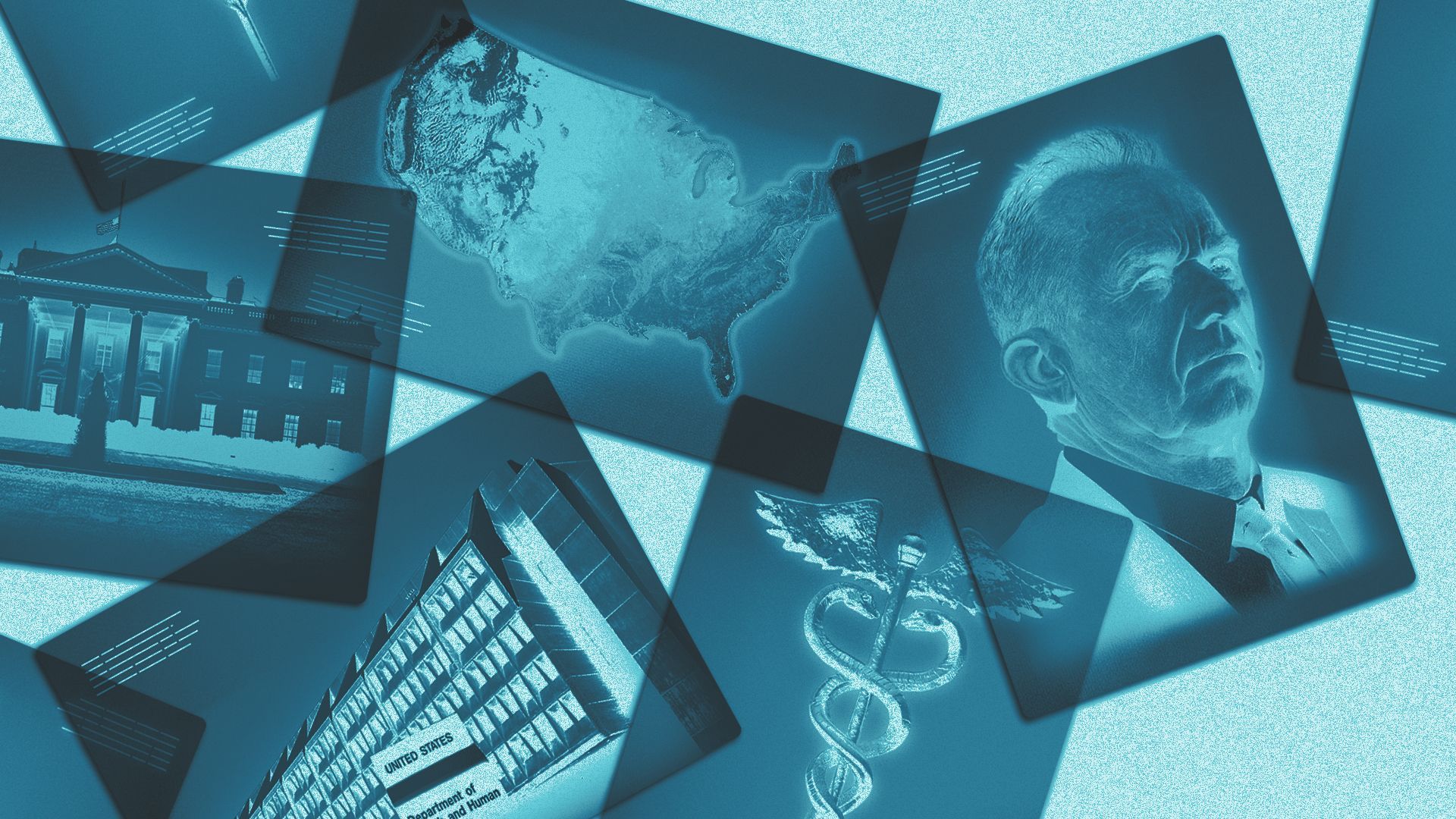
President-elect Trump has selected vaccine skeptic Robert F. Kennedy Jr. to lead the nation's top health care agency, which would give him power over food and drug regulation, Medicare and Medicaid policy, the federal public health system and national health care research money.
Why it matters: We're now in the Wild West in a way we never were during Trump's first presidency, at least when it comes to health care.
- The pick is a radical departure from both mainstream science and Republican orthodoxy, and even before we know if Kennedy will be confirmed, the fallout is sending shockwaves through health care markets.
- "Kennedy likely will lead to significantly more volatility in health markets, making navigating policy risks far more challenging," Raymond James analyst and former Trump administration health official Chris Meekins wrote yesterday in an investor note.
- "If Kennedy is confirmed, it is hard to bookend risks for investors as his views are so outside the traditional Republican health policy orthodoxy."
"For too long, Americans have been crushed by the industrial food complex and drug companies who have engaged in deception, misinformation, and disinformation when it comes to Public Health," Trump posted on X, announcing the decision.
- "Mr. Kennedy will restore these Agencies to the traditions of Gold Standard Scientific Research, and beacons of Transparency, to end the Chronic Disease epidemic, and to Make America Great and Healthy Again!"
Between the lines: Kennedy's views on vaccines and the need to revamp health agencies are well-known at this point. But his views on more traditional health care topics — like Medicare Advantage or the Affordable Care Act subsidies — are much less clear.
- And on some topics, especially the value of the pharmaceutical industry, Kennedy has starkly different views than most Republicans — including those who may be staffing the administration in other health care roles.
- On the other hand, his appointment is likely to set the tone for other top health care appointees, like FDA commissioner or CMS administrator — and potentially scare away would-be contenders who don't share his views.
Yes, but: Kennedy still probably has to get confirmed by the Senate, though there's been a lot of talk lately about Trump pushing for the use of recess appointments to skirt around the confirmation process. (Here's a good Semafor explainer of why that is easier said than done.)
- Regardless of how Senate Republicans react, a confirmation process would be brutal.
- "Mr. Kennedy's outlandish views on basic scientific facts are disturbing and should worry all parents who expect schools and other public spaces to be safe for their children," Senate Finance Committee Chair Ron Wyden said in a statement after the announcement.
- "When Mr. Kennedy comes before the Finance Committee, it's going to be very clear what Americans stand to lose under Trump and Republicans in Congress."
The big picture: By elevating Kennedy to such a position of power, Trump has lent credence to a messenger who distorts and misrepresents basic facts or concepts that have been rigorously proven.
- The post-pandemic years have shown how easy it is for seeds of doubt to translate into reduced vaccination rates and, in the case of measles, the outbreak of a disease that was declared eliminated in the U.S. in 2000.
Go deeper: What a Trump-empowered RFK Jr. could do on health care
2. The promise — and risks — of smartwatches
OK, now we'll take a politics departure — here's what was going to lead this week's newsletter!
I've worn an Apple Watch for ~5 years now, but I've never thought of it as anything remotely resembling a medical device (call me a skeptic, sorry). But I may have been converted this weekend.
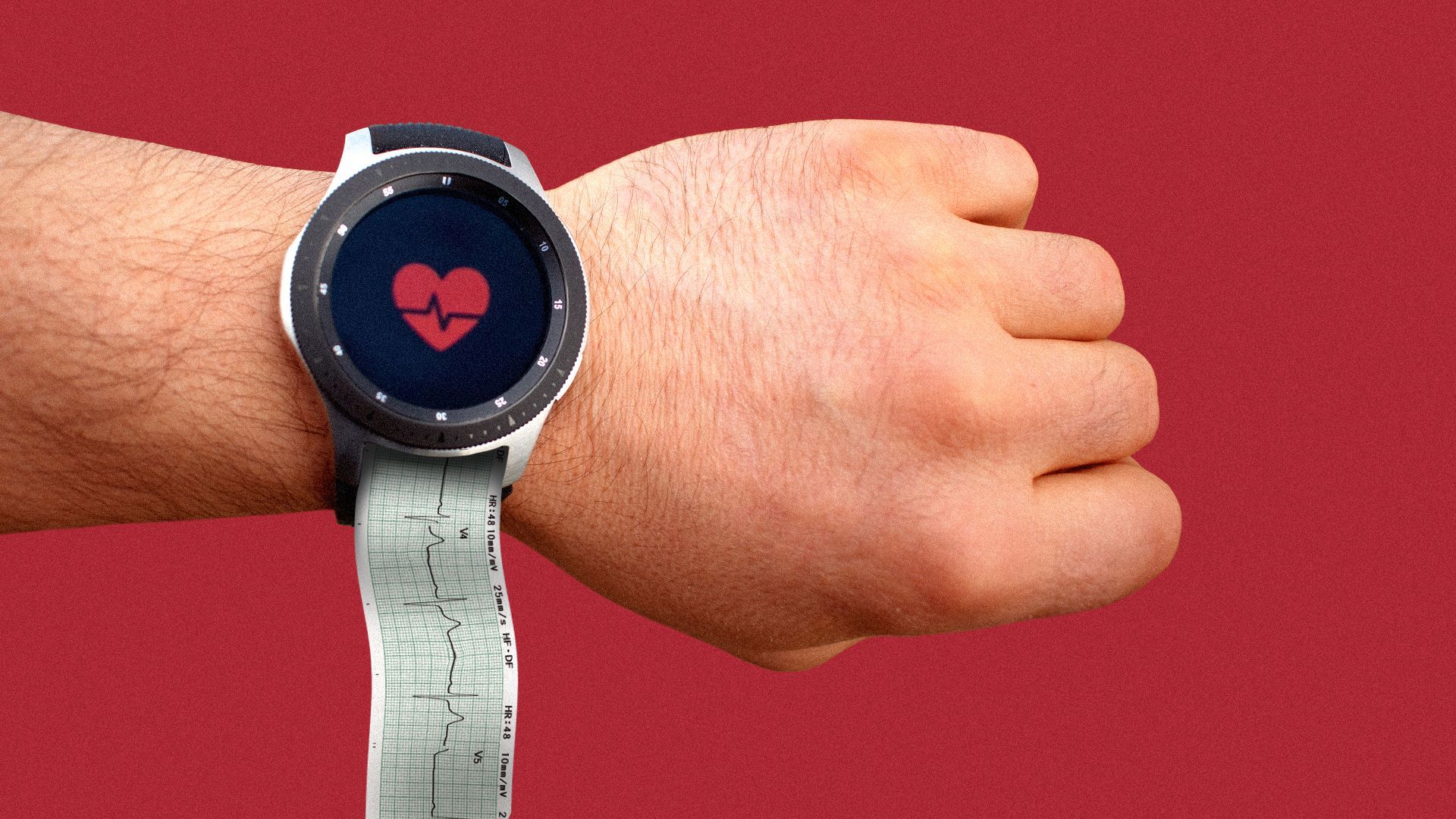
I woke up Saturday to the news that my mom had gone to the ER after her watch detected she was experiencing atrial fibrillation, a type of irregular heart rhythm.
- She didn't have any symptoms, at least not any that would have otherwise signaled to her that she needed to seek treatment (versus just exercising more).
- She's totally fine now, but her watch was correct — the doctors confirmed the AFib, which converted back to normal while she was still at the hospital.
Why it matters: Obviously, I'm thrilled that my mom caught her case in real time and can now take steps to reduce the associated health risks — that's much preferable to her having a stroke down the road with no heads up it was coming!
- She received medication at the hospital and has made an appointment to see a cardiologist.
At the macro level, catching more cases of AFib early on could have a huge impact on costs and people's quality of life.
- A stroke is the "initial manifestation" of AFib in nearly a quarter of cases, according to the American College of Cardiology. Nearly 800,000 Americans have a stroke every year, and stroke is a leading cause of long-term disability.
- That means there's an enormous potential for preventive care here.
- The Apple Watch recently added a feature that detects sleep apnea, another condition that can lead to downstream health problems if left unaddressed.
- "I think that these new technologies are incredibly powerful tools for making the invisible visible, and getting ahead of health issues that can have very negative long-term consequences," said Jennifer Goldsack, CEO of the Digital Medicine Society.
Continued below ...
3. The less-rosy side
The bad news for my mom is she might not have needed to go to the ER, some experts say, even though it's completely understandable that she did.
- AFib itself usually isn't an emergency absent other symptoms; it's more a signal that it's time to go to the doctor. But the Digital Medicine Society's Goldsack said more education needs to be done to make the public aware of what they should do if they get a notification like my mom's.
- These tools "are potentially a very powerful tool to mitigate long-term health effects at the population level, but they're not intended to be a safety tool, a diagnostic, something that gives you a prediction of an immediate health event," she said. "It's not just enough to randomly put risk information out there without being able to couch it in, how immediate is the risk, and suggest next steps."
Apple does include information about the heart features in the watch's onboarding processes, which users have to go through to use the features, and that education remains available to users and is presented at the time of an irregular heart rhythm notification.
- But — be honest — how much attention do we pay to those onboarding processes when we get some new gadget? And how likely are we to remember what was said potentially years later?
Plus, the technology isn't perfect, and false positives aren't free of consequences.
- Apple Watches, however, are highly sensitive and specific — and there is only a .7% false positive rate, according to Apple.
- An unnecessary trip to the ER is not only stressful, but it also could result in a hefty hospital bill — a pretty undesirable situation for anyone.
And the other big issue is that socioeconomics remain a predictor of who is likely to own a smartwatch, making their screening tools generally only available to those who can afford them out of pocket.
- The people who stand to benefit most from wearable devices are less likely to use them, one study found.
What's next: My husband immediately started trying to convince me I now need to upgrade my watch. Wish me luck in my resistance.
The bottom line: "I really think this is an exciting part of the future, and this is one of the ways we go from sick care to health care," Goldsack said.
Thanks to Nicholas Johnston for editing and Matt Piper for copy editing.
Sign up for Axios Future of Health Care