Axios Future of Energy

October 05, 2026


🥞 Welcome back! We're opening with a look at Patagonia's political strategy, then offering a wide menu that includes...
- The latest on permitting, lots of finance news, the evolution of AI power and more, all in 1,342 words, 5 minutes.
🙏 Thanks to Mackenzie Weinger and Chris Speckhard for editing, and to our brilliant Axios visuals team.
🤘 Happy birthday to AC/DC vocalist Brian Johnson, whose reserve and light touch carry today's intro tune...
1 big thing: Patagonia CEO takes aim at political apathy
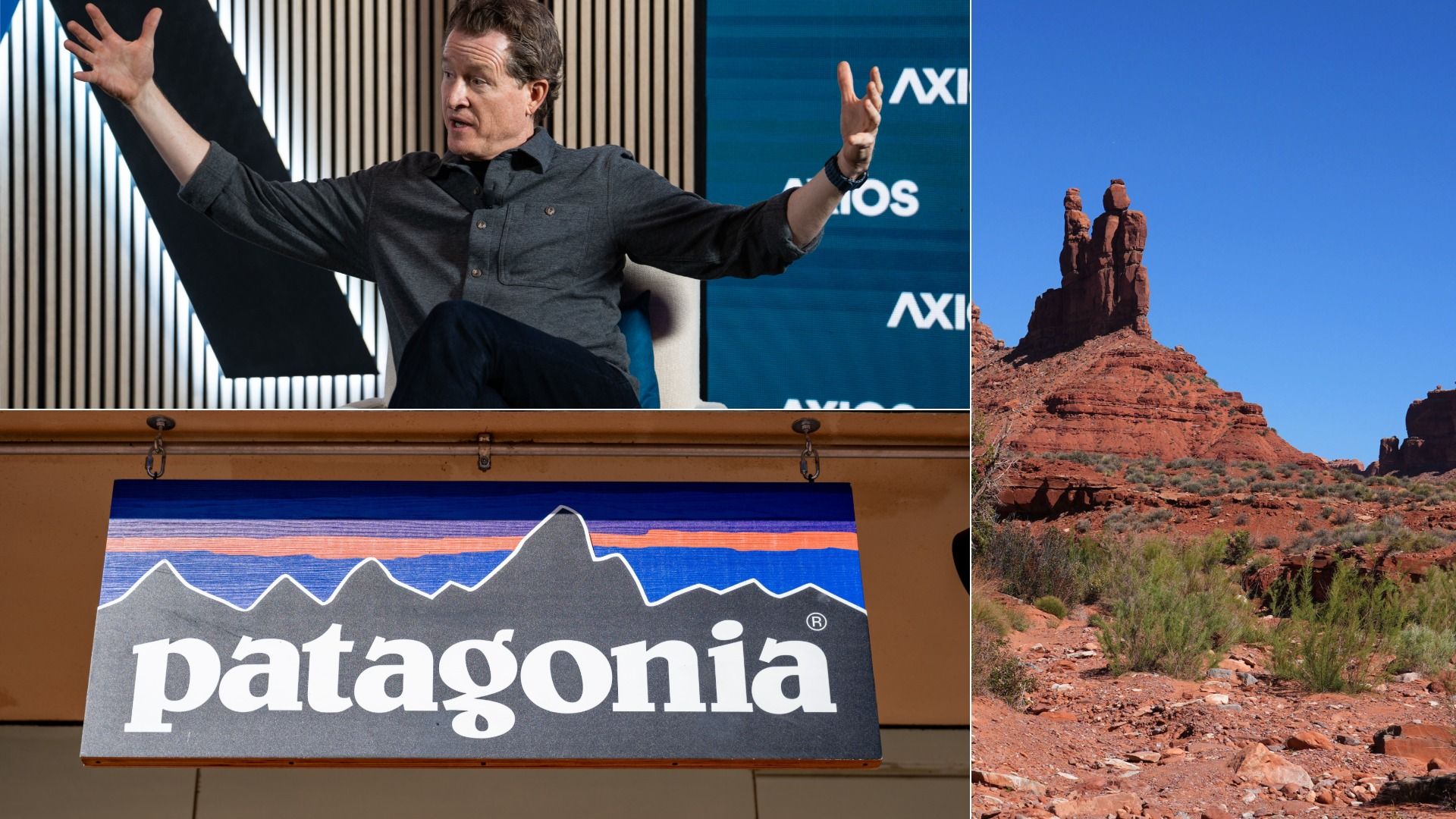
Patagonia has a blunt goal for this year's midterms: Get more environmentally minded Americans to care enough to vote.
Why it matters: The outdoor apparel company is betting millions of dollars that political apathy can be overcome — even as the issues it champions struggle to compete with affordability and other voter concerns.
Driving the news: Patagonia's $11.2 million get-out-the-vote campaign, launched Sept. 26, met its goal within four days.
- Patagonia offered $100 credits to 112,000 people who each helped three friends make a plan to vote, resulting in nearly a half-million voting plans, the company said.
- The number was intentional, matching the 11.2 million environmentalists who did not vote in the last election, according to the nonprofit Environmental Voter Project.
"I think apathy is a huge part of it," Patagonia CEO Ryan Gellert said when asked what he thinks is keeping people politically disengaged.
- "It's probably the single biggest thing that concerns me right now," he told Axios in an interview.
- He said President Trump was "flooding the zone" with so much that it is overwhelming people. "I just think people are just really feeling beat up, and I get it," Gellert said.
The big picture: The California-based company has long owned a rare spot in corporate America: consistently taking high-profile, and sometimes controversial, positions on environmental causes.
- Founder Yvon Chouinard transferred ownership of the company in 2022 to a trust and nonprofit organization, with profits not reinvested in the company directed toward fighting climate change.
Catch up quick: Patagonia has sued the Trump administration twice over efforts to shrink Bears Ears National Monument in Utah, including the second one last month.
Yes, but: Patagonia says its midterm campaign is strictly about voter participation — not particular candidates or elected officials — even as Gellert himself is an outspoken critic of Trump's environmental record.
- Gellert said Patagonia has worked constructively with Republican presidents and fought Democratic administrations when it disagreed with them.
- "We center candidates and we center issues that we consider to be pro-environment," he said.
"Candidly, I never imagined an administration that was so wholly set from one end of government to the other end attacking these things," Gellert told Axios, referring to Trump administration moves to roll back environmental and conservation policies.
- White House spokesperson Taylor Rogers rejected Gellert's criticism, arguing Trump has rolled back costly climate regulations while maintaining longstanding environmental protections.
Reality check: Climate and the environment aren't breaking through as a leading midterm concern.
- In a July Pew poll that asked voters without prompting what one issue they most wanted congressional candidates to discuss, climate and the environment didn't meet the 4% threshold to be included.
Go deeper: Hear how Patagonia is using AI — and why Gellert is worried.
2. 👀 Exclusive: Manufacturers launch permitting ads

The National Association of Manufacturers just launched its first ads urging Congress to approve the bipartisan Senate plan that would speed up permitting for energy projects and other infrastructure.
Why it matters: Faster and more certain permitting is the top priority for powerful business and industry groups in the waning months of this Congress.
Driving the news: "America's manufacturers are ready to go, but Congress needs to clear the path. Years of red tape have stalled important projects, raising costs and slowing progress in communities across the country," the ad states.
- The initial five-figure buy is running on YouTube and streaming platforms like Hulu, Disney+, Peacock, Roku and Tubi.
Catch up quick: Top Democrats and Republicans on the Senate's energy and environment panels released the compromise bill last week, with votes expected in the lame duck session of Congress.
How it works: The sweeping bill would set new deadlines on litigation and environmental reviews under several statutes.
- It also has "project certainty" language to prevent the federal government from thwarting permits issued after mid-September 2026.
- It would create a stronger federal hand in siting large transmission lines, and requires data center developers to cover costs of generation and grid upgrades to serve their projects.
Friction point: Some groups on the left flank of the environmental movement oppose the bill, and a key House Democrat is against a lame duck deal.
- But several of the green NGOs with the closest ties to Democrats are still forming their position, citing trade-offs.
- Fossil fuel, mining, and clean energy groups support the legislation.
What's next: Expect intense lobbying and advocacy in the coming weeks.
- "Manufacturers are going to be working tirelessly across the country over the October recess to talk about the importance of this bill," NAM said in a statement.
3. 🧁 Bonus permitting notes
The battle lines are still shaking out, but since our last edition I've noticed support from three unions so far:
- The Laborers' International Union of North America, the United Association that represents plumbers and pipefitters, and the International Union of Operating Engineers.
The intrigue: Jennifer Granholm, who was President Biden's energy secretary, also gave it a thumbs-up in a LinkedIn post.
4. 💡 Startups turn spare power into AI compute

Entrepreneurs are putting micro data centers anywhere spare power exists — from EV chargers to solar farms and home panels — and VCs are piling in.
Why it matters: If the trend takes off, the startups could deliver valuable computing more quickly and easily than massive data centers.
The big picture: The huge data centers that hyperscalers are building across the country are facing unprecedented local backlash, long grid queues, and permitting challenges.
- AI companies are also building data centers focused on use (or inference), instead of training, which can be smaller and proximal to users.
State of play: Startups are developing computing and energy projects ranging from kilowatts to tens of megawatts, often placed next to underused power.
- Rune is building 8-by-8-foot computing modules that can plug into solar projects, using electricity that would be wasted. It raised a $40 million Series A led by Spark Capital this month.
- Xeal — backed by Keyframe Capital Partners, ArcTern Ventures and Moderne Ventures — recently launched an edge inference computing network using idle EV charging capacity.
- Soluna, a bitcoin mining infrastructure provider, has been building tens of megawatt projects using excess clean energy at wind farms, while Aikido is embedding AI computing directly into offshore wind turbines.
5. 🏃 Catch up quick: EVs, nuclear, oil deal, tech finance

🚗 Tesla and Rivian topped expectations on electric vehicle deliveries over the past three months, an early sign that elevated gas prices may be giving EV demand a lift. Full story
⚛️ The Trump administration plans to provide around $4 billion in loans to Vistra Corp. to expand output from three nuclear plants, Bloomberg and Reuters report.
💵 Schneider Electric, the power equipment and tech heavyweight, is buying the major industrial software player PTC in a $22.6 billion deal.
- Why it matters: The deal will help enable more use of AI to improve complex industrial and energy systems, the companies said. Go deeper
🛢️ Cenovus, a Canadian oil sands giant, is buying Athabasca Oil Corporation in a deal valued at roughly $4 billion, the companies said this morning. It's the latest move in the ongoing consolidation of Canada's oil patch.
🧑🔬 Quantum Formatics is raising $20 million to $30 million to discover superconducting materials for electric grids, data centers, MRI machines and fusion energy systems, Axios Pro has learned. Full story
🔋 R3 Lithium is scaling from the ashes of bankrupt battery recycler Ascend Elements, with plans to raise around $90 million in a Series B, CEO Linh Austin tells Axios Pro exclusively. Go deeper.
Want a steady diet of finance scoops and smart analysis? Talk to our sales team about Axios Pro Deals.
📫 Did a friend send you this newsletter? Welcome, please sign up.
Sign up for Axios Future of Energy