Axios Future of Energy
September 26, 2025

πΈ Aaaaaahhhhh. Friday. We're opening with a look at data center power pressures, then visiting climate policy, EV charging, oil demand and more, all in 1,348 words, 5 minutes.
πΊ Don't miss it: The Axios Show's second episode with Ukrainian President Volodymyr Zelensky is out now. Watch on Axios β¦ Subscribe to our YouTube.
πΆ This week in 1991, A Tribe Called Quest released "The Low End Theory," an instant classic that provides today's intro tune...
1 big thing: Data centers should prepare to bring their own power, Wright says

Data center developers should provide their own electricity if enough isn't available, Energy Secretary Chris Wright told Axios in a Climate Week NYC interview.
Why it matters: Energy-hungry data centers are prompting a rush for electricity after decades of stagnant growth, and some independent grid operators warn power shortages could be ahead.
- Wright's comments reinforce President Trump's support earlier this year for the concept of co-locating data centers next to power sources instead of getting electricity from broader grid systems.
Driving the news: Asked if he would support curtailing data centers' growth if electricity reliability was at risk, Wright answered: "I think a better way to look at it and how we talk to all developers of data centers, is: 'If there is not available power for you, you got to bring the energy with you.'"
The big picture: This is the energy sector's BYOB, only it's BYOG: Bring your own generation.
- It's a wonky β but wildly important β debate that's shaking up a historically sleepy and slow-moving power sector.
The other side: A former top energy regulator during the first Trump administration expressed concern that co-locating data centers next to their own power sources could lead to household electricity shortages.
- Speaking at an Axios House event during Climate Week, former FERC Chair Neil Chatterjee said "a flood of applications" for such projects could drain the power grid β especially at peak demand times.
- On extremely hot or cold days, "if the grid operator has to choose whether to send that power to a 24/7 data center to support AI or to residential consumers, I guarantee you it's going to the data center," Chatterjee said Tuesday.
- "That means residential consumers could be without air conditioning on the hottest day of the summer or without heat on the coldest day of the winter. These are real questions and they're not political."
The intrigue: I asked Wright about Chatterjee's comments during an onstage interview later Tuesday at an event hosted by the Dynamo Energy Hub, a networking group for energy companies.
- He said concerns about reliability of power are "legitimate" but then sought to blame the Biden administration for what he described as not supporting robust power growth.
What we're watching: FERC is considering the issue now, specifically its effect in the country's largest power market across the Midwest and Mid-Atlantic. Last year, it rejected such a proposal.
2. π It's Tesla vs. Trump on climate rules
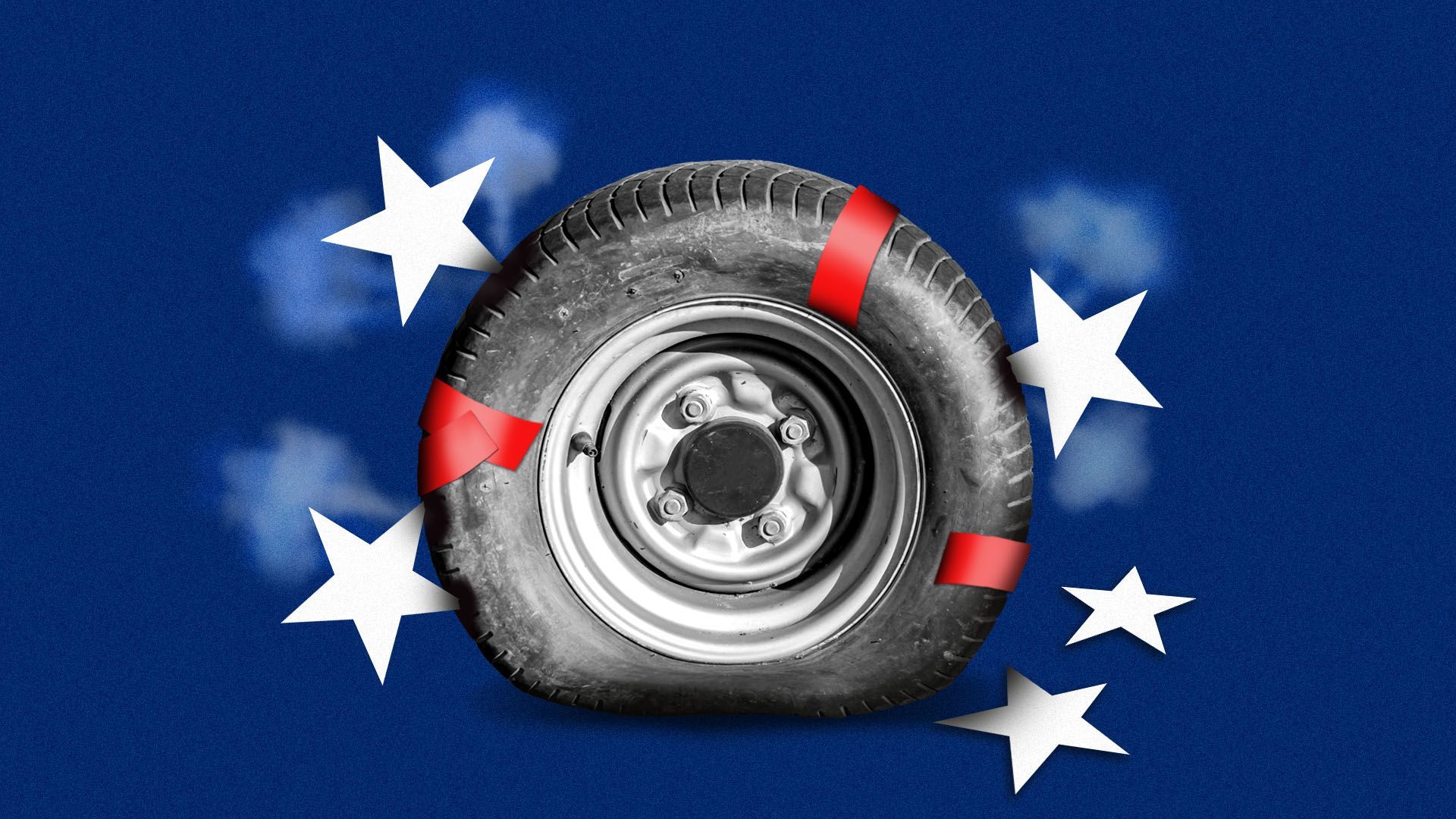
Tesla is telling the EPA it shouldn't rescind the legal underpinning for carbon emissions rules and scuttle tailpipe CO2 standards.
Why it matters: The comments show how the Trump administration's pullback of climate policies threatens the EV maker.
- The company's sharp divide with EPA also follows the collapse of CEO Elon Musk and President Trump's alliance.
Driving the news: Tesla is among the many respondents to EPA's proposal to repeal the 2009 "endangerment finding" that greenhouse gases from vehicles threaten human health and welfare.
- The finding provides the legal basis for regulating CO2 emissions from cars and trucks, and β by extension β some other big sources.
- Tesla's comments also oppose EPA's related plan to do away with vehicle emissions rules.
The bottom line: "The Endangerment Finding β and the vehicle emissions standards which flow from it β have provided a stable regulatory platform for Tesla's extensive investments in product development and production," Tesla states.
3. π¬ Utilities fret over legal stakes of EPA climate repeal
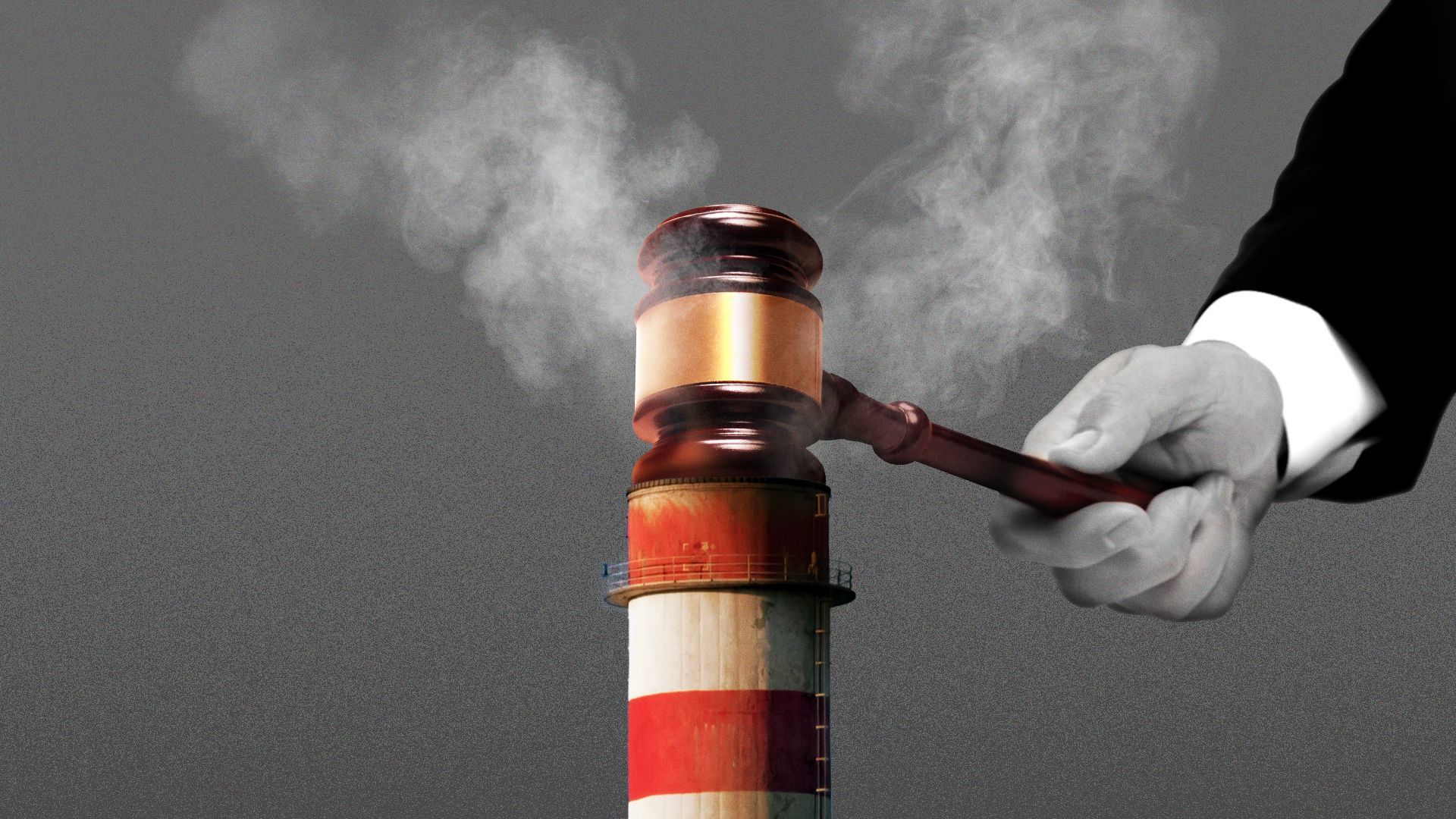
For-profit utilities' lobbying coalition is warning EPA that nixing the endangerment finding could bring legal quicksand for the industry.
Why it matters: While EPA's plan is focused on auto emissions, the Edison Electric Institute comments signal how it could ripple outward from there.
What they're saying: If the 2009 finding goes away, "different parties will assert that such an action casts doubt" on whether EPA can regulate power sector CO2, EEI writes.
Here's what spooks EEI if EPA doesn't have any electricity CO2 rules:
- "[T]he possibility increases that the power sector could be further exposed to competing and conflicting regulations through a patchwork of state regulations, as does the potential for increased litigation alleging common-law claims, regardless of the merits of those suits."
State of play: Other K Street heavyweights are also weighing in on the repeal plans that green groups and many scientists strongly oppose.
- The American Petroleum Institute agrees with EPA that its tailpipe rules exceed EPA authority, and that "several other aspects of the procedural process to develop the 2009 Findings were flawed."
- The U.S. Chamber of Commerce also supports nixing EPA tailpipe rules but doesn't directly endorse or oppose nixing the endangerment finding itself.
- Either way, they want EPA to "affirm" that federal law preempts state and common law legal claims on climate.
What we're watching: What arguments ultimately carry the day at EPA and the courts.
4. π’ EV charging industry convulsions loom
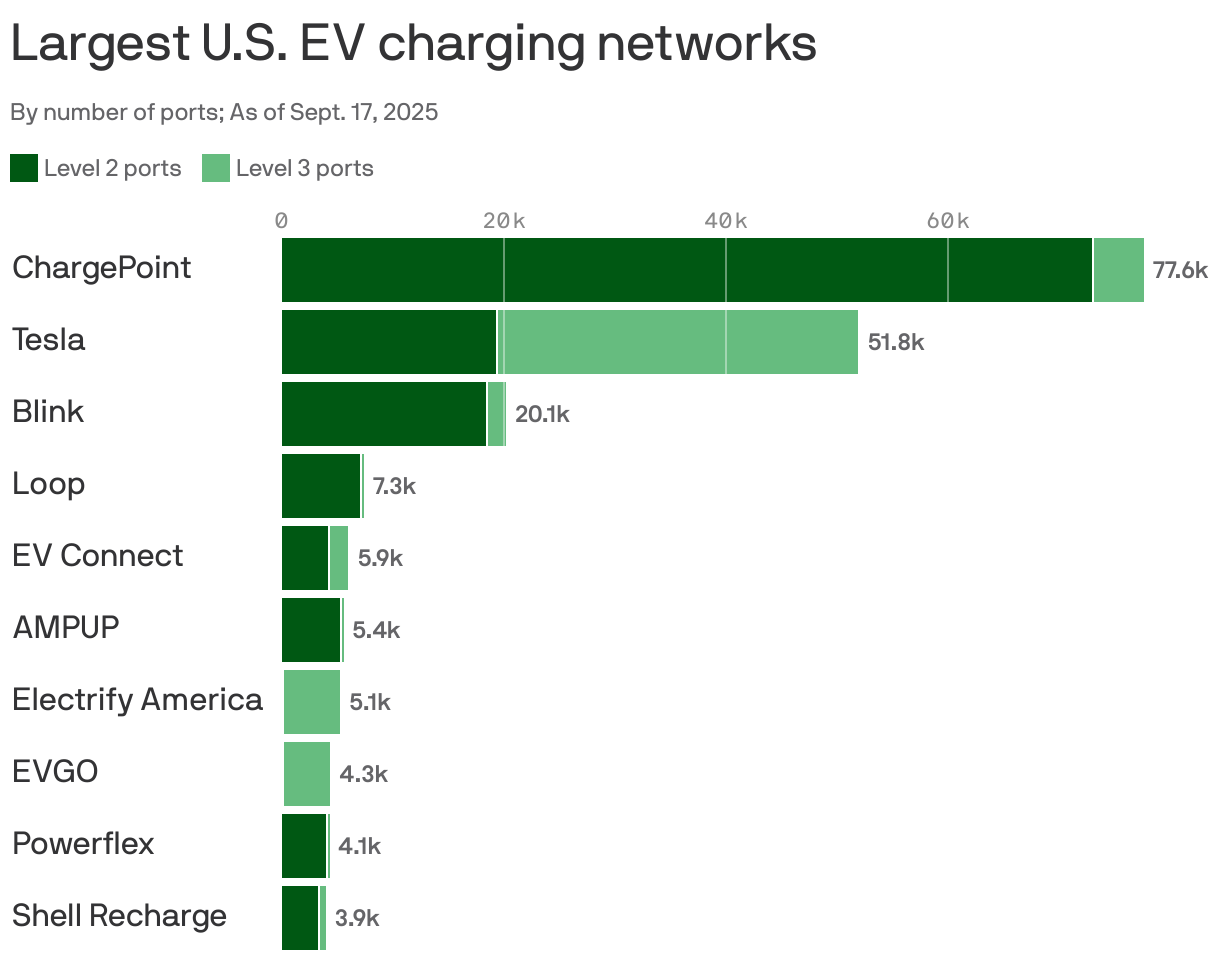
There's a shakeout coming in the EV charging industry as financial challenges mount for some early players, per Bloomberg Intelligence analysts.
Why it matters: Companies that have dominated to date won't lead the next phase of growth, per their 2026 EV charging outlook.
- Instead, it will be vertically integrated networks owned or backed by automakers with billions of dollars at stake in electrification.
The growers: Tesla, with more than 32,000 ports at its Superchargers, plus 19,000 slower Level 2 chargers, is on track to nearly double its Supercharger network by 2030, Bloomberg estimates.
- Ionna, a JV between eight automakers, plans to add 30,000 fast-charging ports by 2030, from 300 today.
- GM (with EVGo) and VW (through Electrify America) are also expanding beyond Ionna.
Lagging behind: Companies like ChargePoint and Blink, which have dominated Level 2 charging, the most common type of public infrastructure.
Full story and sign up for the Axios Future of Mobility newsletter.
5. π Catch up quick: Tech finance, peak oil, LNG deal, nuclear fuel
π΅ Norway's huge sovereign wealth fund is investing $1.5 billion in Brookfield Asset Management's Global Transition Fund II, it said today.
- State of play: It will focus on renewables and the broader transition to low-carbon sources across industries, Norges Bank Investment Management said. Go deeper
π’οΈ Peak no more? BP's new long-term outlook sees oil demand growing for the remainder of this decade, a split with last year's version of the analysis.
- Yes, but: It still sees a post-2030 structural decline through mid-century (albeit shallower than last year's), splitting with OPEC's up-up-up view. Reuters has more.
- What we're watching: All eyes are on the International Energy Agency's long-term analysis later this year, which will model a more conservative "current policies scenario" for the first time since 2019.
- The bottom line: This isn't just nerdy navel-gazing β the analytical hive-mind's conclusions inform policymakers, investors, corporate strategies, researchers and more.
π€ XRG, the investment arm of UAE state oil and gas giant Adnoc, snagged an 11.7% equity stake in phase 1 of NextDecade's Rio Grande LNG project in Texas.
- Why it matters: It's the first U.S. gas investment from XRG, which formed in late 2024, and a vote of confidence in long-term LNG demand growth.
βοΈ Via Bloomberg, "Centrus Energy Corp. is planning a multi-billion dollar investment to boost production of uranium fuel, part of an effort to develop the US supply chain for nuclear reactors that currently rely heavily on imports from Russia."
6. π’οΈQuote of the day: oil patch angst edition
"Life is long, and the sword being wielded against the renewables industry right now will likely boomerang back in 3.5 years against traditional energy which will find itself facing harsher methane penalties, permitting restrictions, crazy environmental reviews and other lawfare tactics."β An anonymous oil and gas exec quoted in the Dallas Fed's latest survey of the sector
Why it matters: The Dallas Fed's quarterly surveys provide an unfiltered, if anonymous, snapshot into the industry's thinking.
πͺ Did a friend send you this newsletter? Welcome, please sign up.
π Thanks to Chuck McCutcheon and Chris Speckhard for edits to today's edition, along with the brilliant Axios Visuals team.
Sign up for Axios Future of Energy