Axios Future of Energy

February 25, 2026

🐪 Wednesday. We're getting over the hump with items on...
- The through-lines in Trump's speech
- VC trends, charted
- A geothermal scoop, a really big battery, Big Oil and much more, all in 1,485 words, 5.5 minutes
🙏 Thanks to Chuck McCutcheon and Chris Speckhard for edits to today's newsletter, along with the brilliant Axios Visuals team.
📻 Exactly 25 years ago, Joe (featuring Mystikal) simultaneously ruled Billboard's Hot 100 and R&B charts with today's intro tune...
1 big thing: It's all about the Benjamins at SOTU
President Trump mostly kept his energy message focused on prices at last night's State of the Union speech as he seeks traction on the economy ahead of the midterms.
Why it matters: The White House and Republicans face political crosscurrents.
- Gasoline prices are pretty low — something Trump hit very early, if not altogether accurately, in the prime-time speech.
- But power prices are generally rising, and Trump vowed to make sure Big Tech doesn't stick consumers with data center electricity costs.
Here are a few highlights and takeaways...
🔆 Data centers get the spotlight — but vaguely. Trump said he negotiated a "ratepayer protection pledge" with tech companies.
- He said companies will "have the obligation to provide for their own power needs" and touted building onsite generation.
- It's unclear how or whether it goes beyond recent voluntary pledges from companies including Microsoft and OpenAI to cover costs.
- The White House didn't provide details. Several Democratic lawmakers quickly said it doesn't do enough to shield people.
🌎 Green means money — even for climate activists. Want another sign that prices are the most important political battleground?
- Prebuttal messages from groups like Climate Power and the League of Conservation Voters led with hitting Trump on energy costs — not his moves to dismantle emissions rules.
- The climate link is more muted or bank shot — they argue his moves against renewables are making power costlier.
🙅 Permitting legislation snub. Tons of business and industry groups badly want a comprehensive bipartisan permitting bill.
- If the White House does too, it wasn't apparent in the speech, which lacked any call for a deal.
🔍Trump played fast and loose with facts. He's directionally right that gasoline prices have fallen during his term and are way below Biden-era highs.
- But, for instance, his claim that gasoline prices are under $2.30-per-gallon in "most states" is not correct.
- The White House did not respond to an inquiry last night.
The bottom line: Money talks.
2. 💵 With investing, AI's gain may be energy's loss


AI may be siphoning off investment dollars that once flowed to energy startups, according to a new report from the International Energy Agency.
Why it matters: The global shift is a stark, data-driven sign of the times — climate ambition is collapsing just as the AI race accelerates.
Driving the news: Some of the world's largest venture capital funds that back energy startups have redirected at least part of their capital toward AI.
Zoom in: Across the 50 biggest funds investing in energy, specialization in energy innovation has slowed since 2022 — tracking with a rise in AI investments, the report finds.
Reality check: At the macro level, this is correlation, not clear causation. It would take a deeper dive into individual deals to determine who's truly losing — and who's winning — at the other's expense.
Between the lines: There's an irony here: The AI boom's biggest need — energy — may be getting financially undercut by the boom itself.
Yes, but: The IEA says AI isn't the only factor. Higher interest rates and other market pressures are also dampening energy investment.
What we're watching: To what degree the AI surge ultimately pulls more money back into energy innovation to power its own growth.
What's next: Major tech companies are pledging billions for clean energy, from fusion to geothermal — potentially reshaping the investment landscape yet again.
3. 👓 Climate vibe checks: Net-zero (at some point) and EU rules

👋 Call it a comeback (of sorts). The Net Zero Asset Managers (NZAM) initiative today relaunched with a revised commitment statement that omits its founding 2050 target date.
- Why it matters: It's among several financial climate coalitions that had hemorrhaged members amid political pressure and the turning ESG tide, and suspended operations in early 2025 to rethink things. Some other coalitions collapsed entirely.
- State of play: The overhauled coalition has support from asset owners with $3.7 trillion under management.
- The bottom line: It's a sign of the times. Today's update says the group is committed to Paris Agreement goals while recognizing "diverse jurisdictional realities" and "greater clarity about dependencies and limitations."
🇪🇺 Via Reuters, "EU countries on Tuesday gave their final approval to scale back rules that require companies to address environmental and human rights risks in their supply chains, after months of pressure from businesses and governments including the U.S. and Qatar."
4. 🍨 Scoop: Quaise Energy raising $200M for geothermal plant

Quaise Energy is raising about $200 million to develop its first commercial geothermal power plant, a source familiar tells Axios Pro.
Follow the money: The raise is being driven by an anticipated 250 MW power supply contract.
Zoom in: Quaise Energy began raising about $100 million in Series B funding in September, the source says, and is seeking another $100 million in grants, debt and project-level equity tied to its debut commercial plant.
- The Houston-based startup previously raised $120 million in equity and grant funding from investors including Mitsubishi and Nabors Industries.
How it works: Rivals drill 3 to 4 miles, but Quaise wants to go as deep as 12 miles, where "superhot" rock can reach 750 degrees Fahrenheit.
- The idea is to generate higher-capacity energy at lower cost to supply industrial loads, such as data centers.
What's next: The company this year broke ground on Project Obsidian, a commercial site where the well will be 3 miles deep but will run hotter than rival wells.
- It expects to bring an initial 50 MW online by 2030, expanding to 250 MW to fulfill its first power purchase agreement with an undisclosed customer.
Talk to our sales team about Axios Pro Deals, where this scoop first appeared.
5. 👀 Three things with TotalEnergies CEO Patrick Pouyanné
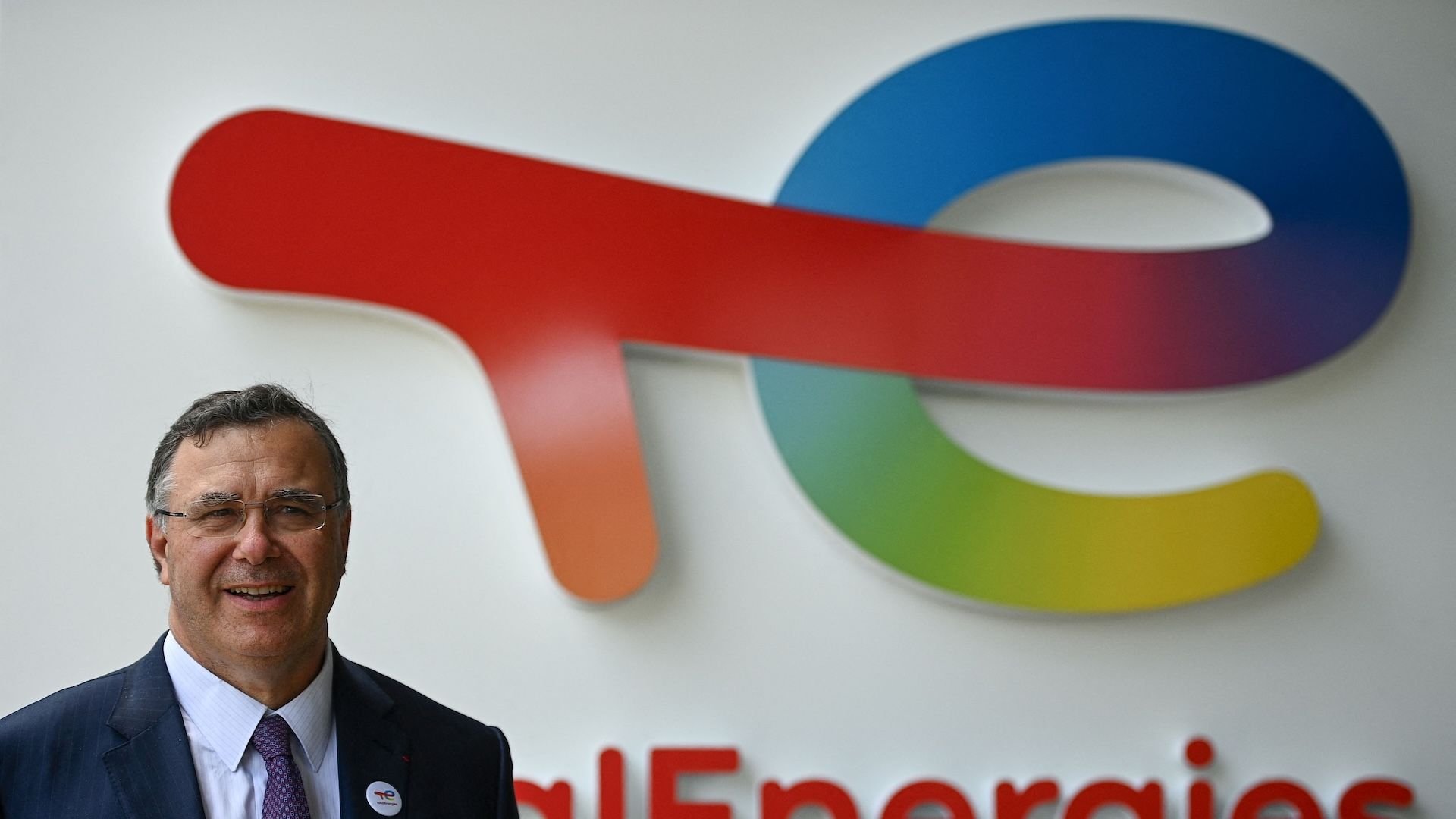
A few things caught my eye during TotalEnergies' CEO Patrick Pouyanné's onstage chat yesterday with S&P's Dan Yergin at the Atlantic Council.
Why it matters: TotalEnergies is among the world's largest publicly held oil and gas companies, and has diversified into power.
🌎 A climate twist on Venezuela caution. He listed reasons why TotalEnergies is skeptical about returning — the cost of upgrading and moving heavy oil, many opportunities to grow production elsewhere, like Namibia, and so forth.
- And then added: "And by the way, it does not fit as well ... with our commitment to produce with less emissions."
- It's a reminder that while climate has slid down the diplomatic agenda, some oil majors still consider their climate footprint when investing on decades-long scales.
⚡ The changing relationship with Big Tech. Pouyanné talked at length about TotalEnergies' growing power business, including renewable electrons for Google data centers.
- Tech companies were once "quite transactional," he said. Now, it's more about long-term relationships that can span multiple countries and services.
- Amid rising demand, tech companies are looking for energy partners who can provide a "continuous pipeline."
📈 Skepticism about peak oil demand. Market fundamentals support continued annual growth of slightly under 1 million barrels per day, he said.
- Pouyanné cited growing populations and higher living standards in emerging countries. "It's sort of constant things, except in the year of COVID," he said.
6. 🏃 Catch up quick: Solar, Congress, Epstein

☀️ The Commerce Department plans to impose steep duties on solar cells and modules from India, Indonesia and Laos in response to subsidies in those countries.
- Why it matters: It's a win for a coalition of U.S. manufacturers that petitioned for the duties, claiming they're unfairly undercut by Chinese-backed firms.
- Yes, but: The penalties "heighten uncertainty for an industry not favored by US President Donald Trump and threaten to increase costs for producers as well as for consumers," Bloomberg reports.
🗳️The House yesterday passed a bill that would place tougher requirements on the Energy Department in issuing energy efficiency standards for home appliances.
- Why it matters: It's part of a broader GOP effort to undo Biden administration appliance efficiency rules and leave decisions to the market.
- Yes, but: Just seven Democrats joined Republicans to pass the bill, signaling it's unlikely to get further. Consumer groups said it would raise utility bills.
❎ Former Nebraska Sen. Bob Kerrey (D) resigned from the board of clean energy startup Monolith over his association with Jeffrey Epstein, per CNN and the Lincoln Journal Star.
7. 🔋 Number of the day: 300 megawatts
That's the multi-day dispatch power of a Form Energy iron-air battery heading for utility Xcel Energy's Minnesota grid in 2028.
Why it matters: The system can store 30 gigawatt-hours and provide power for 100 hours to help meet periods of high demand, they said.
- It's the "largest battery project by gigawatt-hour energy capacity announced to date in the world," and is capable of dispatching over days, the companies said.
Go deeper: The project is part of Google's wider agreement with Xcel Energy to help finance clean power sources as it builds a major new data center in the state.
📬 Did a friend send you this newsletter? Welcome, please sign up.
Sign up for Axios Future of Energy