Axios Future of Energy

December 23, 2025


🏆 For this year's final edition, we've giving you something new and hopefully fun: our first annual energy awards. Then we assess the latest Trump moves, all in 1,192 words, 4.5 minutes.
🗓️ We'll be back Jan. 5. Enjoy the holidays!
🙏 Thanks to Chuck McCutcheon and Chris Speckhard for edits to today's newsletter, along with the brilliant Axios Visuals team.
🎶 At this moment in 2004, Snoop Dogg and Pharrell Williams were ending the year atop Billboard's Hot 100 with today's intro tune...
1 big thing: The 2025 Future of Energy Awards


The envelopes, please...
⚛️ Biggest winner: Nuclear power. It saw a surge of new federal support and ongoing interest from tech giants looking to shore up future electrons for AI.
- Fresh backing included executive orders, DOE reorienting its loan program around nukes, and the White House deal with Westinghouse and partners to pursue projects. Officials also moved to advance restarts of shuttered plants in Michigan and Pennsylvania.
💨 Biggest (political) loser: Offshore wind. The Trump administration did seemingly everything it could to thwart the industry, including yesterday. (The courts may change that in 2026.)
- Runner-up: Electric vehicles. Sales plummeted after federal consumer purchase subsidies expired Sept. 30 under the GOP budget law.
👁️🗨️ Best ink-blot test: Data centers. The quest to power AI — and what it means for electricity demand and prices — was the biggest energy story of 2025.
- For the White House, data centers are an essential part of the AI race and underscore the need for coal and gas.
- For some Democrats, their growth proves the folly of scuttling renewable incentives, while many environmentalists want to thwart new projects over climate and water concerns.
🥘 Back-burner resident of the year: Climate change. Activists and some prominent Democrats made affordability — not global warming — their main message when opposing White House and GOP rollbacks of Biden-era climate policies.
🛢️ Oily trend of the year: Risk premiums' lost mojo. The oil market response to the U.S.-Iran conflict and other crises was surprisingly muted.
- These days, traders want evidence of actual disruption of barrels before bidding up the price — especially in a soft market where supply is outstripping demand growth.
🤭 Most ironic use of a sitcom character: Ron Swanson promoting electric vehicles.
😮 Biggest surprise: Trump Media & Technology Group (parent of Truth Social) merging with nuclear fusion startup TAE Technologies.
- It reads like a "Mad Lib": Pick two random things to bring together. But considering the year we've had, it makes some sense in hindsight.
- Trump Media wasn't doing well, and it has pushed into other seemingly random areas. Enter fusion, an increasingly hot sector — despite the fact it doesn't exist commercially (yet anyway).
🤔 Best debate starter: Bill Gates and his 17-page memo from October broke the internet in our corner of the world.
- Gates sparked debates on everything from the severity of climate change to funding tensions between climate and public health, his primary focus as a philanthropist.
🎙️ Word of the year: "Dispatchable." This was a close call ahead of "affordability," but it was regularly on Republicans' lips about how they prefer their energy.
🗣 Most arcane policy fight: The battle over the Congressional Review Act resolution to repeal California's waiver to write its own auto emissions standards.
- The question of whether the waiver is a "rule" or an "order" could help shape the U.S. auto market's future.
🎬 Best PR boost: The oil biz from "Landman." Don't let the explosions and drug lords fool you, this TV show is ultimately helping the oil industry's cachet with Americans.
- It humanizes and makes tangible — and exciting — an industry that's been vilified lately.
- Just ask the oil industry's top lobby group, which is running a seven-figure ad campaign alongside the second season.
💬 Best quote: "I had my first congressional hearing on fusion 45 years ago, and the experts on the panel said it's 50 years out. So I'm getting excited." — Al Gore
- Runner-up: "For most people, the main interface with energy firms is the bill. And that bill looks like an accountant in 1982 got free [rein] and no one took a look." — UC-Berkeley economist Maximilian Auffhammer
2. ✋ A mighty wind blows against permitting deals
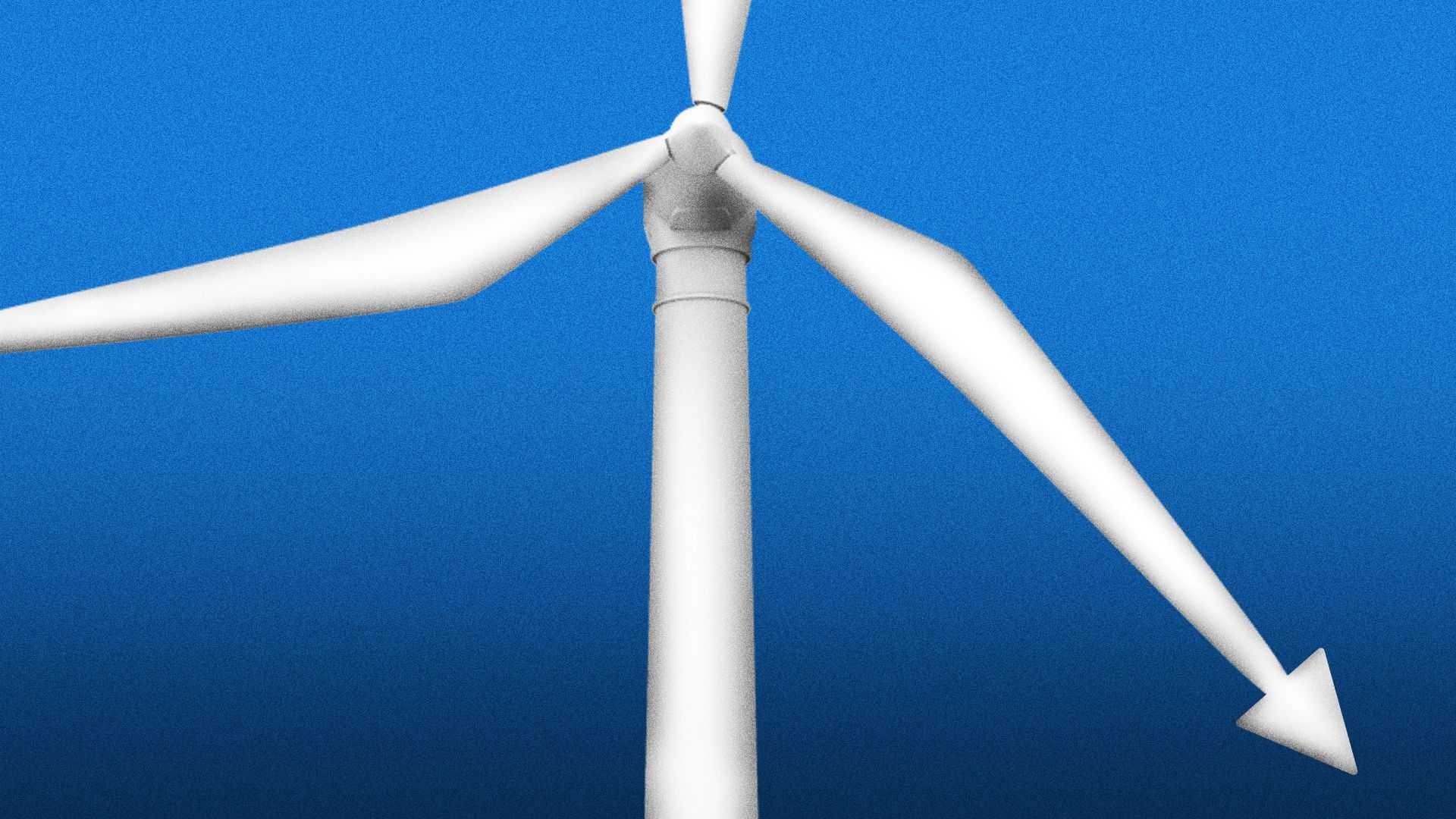
President Trump's latest broadside against offshore wind could make the uphill climb toward a Capitol Hill permitting deal even steeper.
Why it matters: Big industries badly want a durable shift to faster project reviews and fewer legal vulnerabilities.
- But the politics were already daunting despite House passage of major legislation.
Catch up quick: The Interior Department yesterday halted the five Atlantic coast offshore wind projects under construction.
- Officials claimed Pentagon analysis showed risk of radar interference from the projects.
- Two top Senate Democrats called permitting talks dead unless Trump officials reverse field.
Threat level: TD Cowen analysts said the construction halt would fuel Dems' push for "ironclad" bill language that prevents retroactively scuttling permits.
- "[B]ut expect the President and his congressional allies to resist. Net-net, we now have a new roadblock to legislative reform," its note states.
The intrigue: ClearView Energy Partners said the glass-half-full case would be that pausing the projects "could serve as collateral for Republicans negotiating a Senate bargain."
Yes, but: "A gloomier observer might see cancellations premised on 'inherent' risk to national security ... as an indication the Administration does not view codification of a narrower approach to permitting as a priority and may not be interested in facilitating a deal," ClearView's note adds.
What they're saying: Former senior Senate GOP aide Alex Flint said a permitting deal could still happen "because majorities in both bodies and across the energy sector want permitting certainty."
- "But it will increase the rhetoric from the Trump acolytes who will oppose limits on executive authority, and increase the risk of President Trump vetoing the legislation," adds Flint, executive director of the Alliance for Market Solutions.
What we're watching: Likely court battles.
- And Interior left the door open to letting the projects resume, citing the "possibility of mitigating" the alleged risks.
Chuck McCutcheon contributed.
3. 🛢️ Trump on seized Venezuelan oil: "We're gonna keep it"


The U.S. now controls about 3.7 million barrels of Venezuelan crude from two interdicted oil tankers. And President Trump doesn't want to give it up.
- "We're gonna keep it," Trump said last night when asked about the oil's fate.
Why it matters: Trump's policy of seizing ships and their Venezuelan oil could bring a financial windfall of hundreds of millions of dollars to the U.S. government.
- But it furthers accusations that his pressure campaign on Venezuela's leader Nicolás Maduro amounts to oil-grabbing piracy.
- It threatens to escalate tensions with China, which buys as much as 75% of Venezuela's oil.
How it works: The Trump administration has three options, experts and administration officials say, in keeping the oil from the two ships it began interdicting Dec. 10:
- Sell it on the open market and use the proceeds to fund government.
- Allow U.S.-based businesses with $20.5 billion in court-approved claims against Venezuela's regime lay claim to the oil
- Keep the oil outright and store it in the Strategic Petroleum Reserve, the nation's crude stockpile.
4. 🤝 Number of the day: $4.75 billion
That's how much Google parent Alphabet is paying, excluding debt, for data center and energy company Intersect.
Why it matters: It's a final 2025 reminder that tech giants are racing to power their AI ambitions. Go deeper.
📬 Did a friend send you this newsletter? Welcome, please sign up.
Sign up for Axios Future of Energy