Axios Future of Energy

June 10, 2026


1 big thing: Iran aftershocks hit oil, coal, climate


With the Iran war now over 100 days old, here's the latest rolling snapshot of how it's driving changes in energy markets.
The big picture: Global oil use is going down (in the short term), UN climate officials are using the crisis to push for clean energy, and coal is getting more use in the Asia-Pacific region.
🛢️ Oil: The Department of Energy's data arm now sees global oil use dropping this year by 1.1 million barrels per day (bpd) before bouncing back next year.
- The big picture: "High fuel prices, reduced fuel availability, and government initiatives have lowered oil demand," the Energy Information Administration said in its latest outlook yesterday.
- The intrigue: The agency again boosted its estimate of U.S. production growth, signaling a real — but not huge — response to higher prices.
- What's next: It now sees a rise from 13.7 million bpd this year to almost 14.2 million bpd next year, compared to a pre-war estimate of a 2027 decline to 13.3 million.
🌏 Global warming: Officials at midyear UN climate talks in Bonn, Germany, this week are pointing to the crisis to justify more aggressive steps.
- Driving the news: The Turkish hosts of the big annual UN summit in November (COP31) yesterday unveiled initiatives including a target of electricity meeting 35% of total global energy demand by 2035.
- Friction point: Simon Stiell, the top UN climate official, said in a statement that the "current fossil fuel cost crisis" is "painfully" making the case for these kinds of efforts.
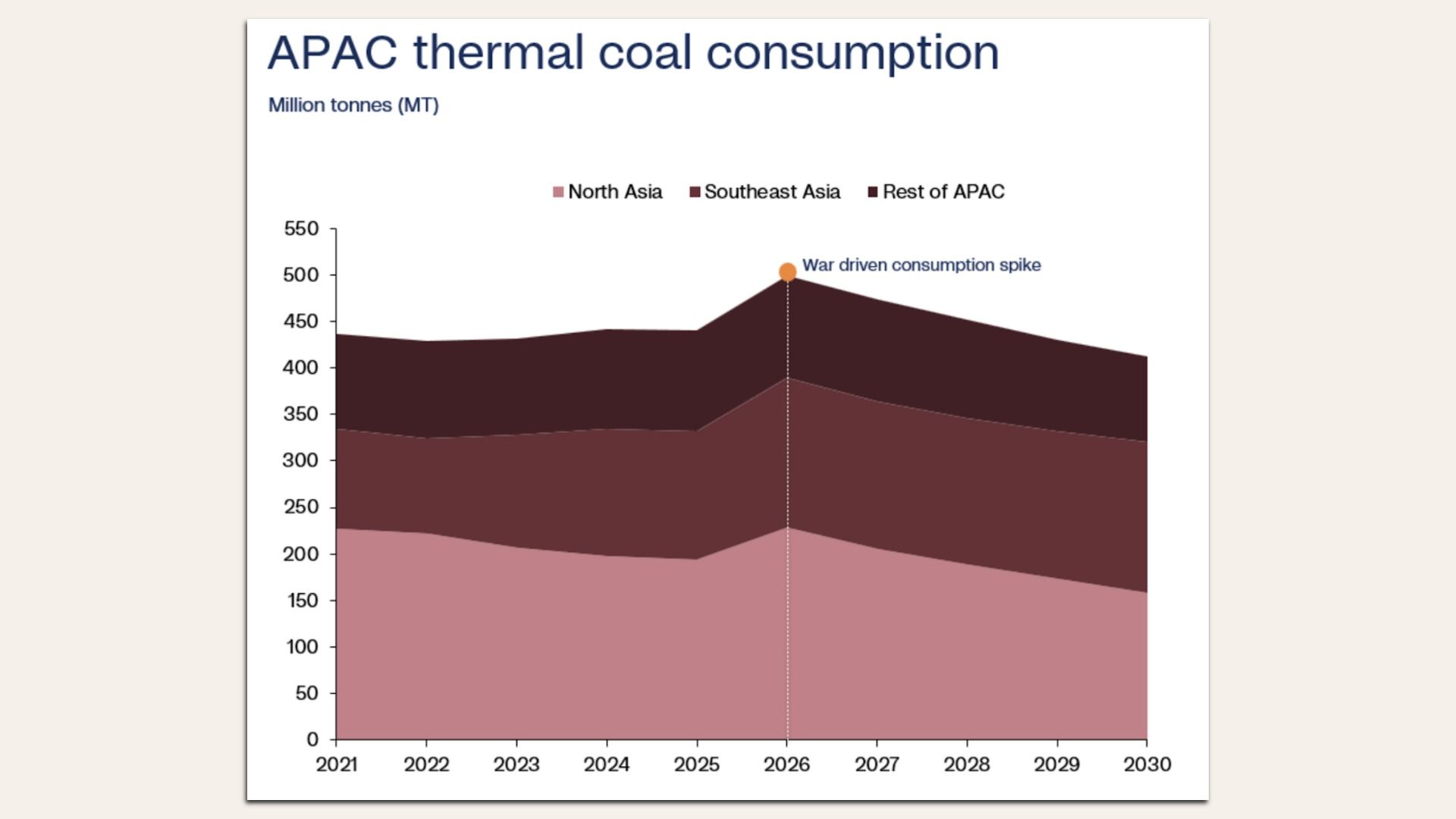
🏭 Coal: New analysis from the consultancy Rystad Energy shows a "significant near-term surge" in use of coal for power generation in the Asia-Pacific region.
- State of play: Disruptions in Qatar's liquefied natural gas sector and higher prices for the fuel are driving the increase in the most CO2-emitting fuel.
- Yes, but: While coal is getting a near-term boost, a number of analysts see the conflict also driving more movement toward renewables and storage in various regions.
- Zoom in: Rystad's graphic showing the war-driven coal bump is just below.
3. 🛢️ Charting the oil stockpile decline


Here's a look at how quickly oil stockpiles are dwindling in the Organization for Economic Co-operation and Development club of advanced economies.
Why it matters: Before the war, global oil inventories were rising as production grew faster than demand.
- But the Strait of Hormuz crisis and production cutbacks among Middle East producers are causing an aggressive drawdown.
What's next: The Energy Information Administration sees commercial levels falling, by late this year, to their lowest level since data collection began in 2003.
- It currently sees the strait reopening in the third quarter, but believes it will take until early 2027 for production and trade patterns to largely return to pre-war status.
Yes, but: The market has other shock absorbers, like China's massive stockpile, as well as releases from government reserves in the U.S. and elsewhere.
The bottom line: There's a lot of urgency to enable increased oil flows from the region as stockpiles dwindle.
4. 🔋 GM bets bigger on battery storage

5. 👟 Catch up quick on oil: Markets and meetings
6. ☀️ Number of the day: 12.8%


That's solar energy's share of the U.S. electricity mix in May.
Why it matters: It's the first time solar outpaced coal-fired generation on a monthly basis, per the clean energy think tank Ember's analysis of EIA data. AP has more.
Axios Future of Energy