GM bets bigger on battery storage

Add Axios as your preferred source to
see more of our stories on Google.
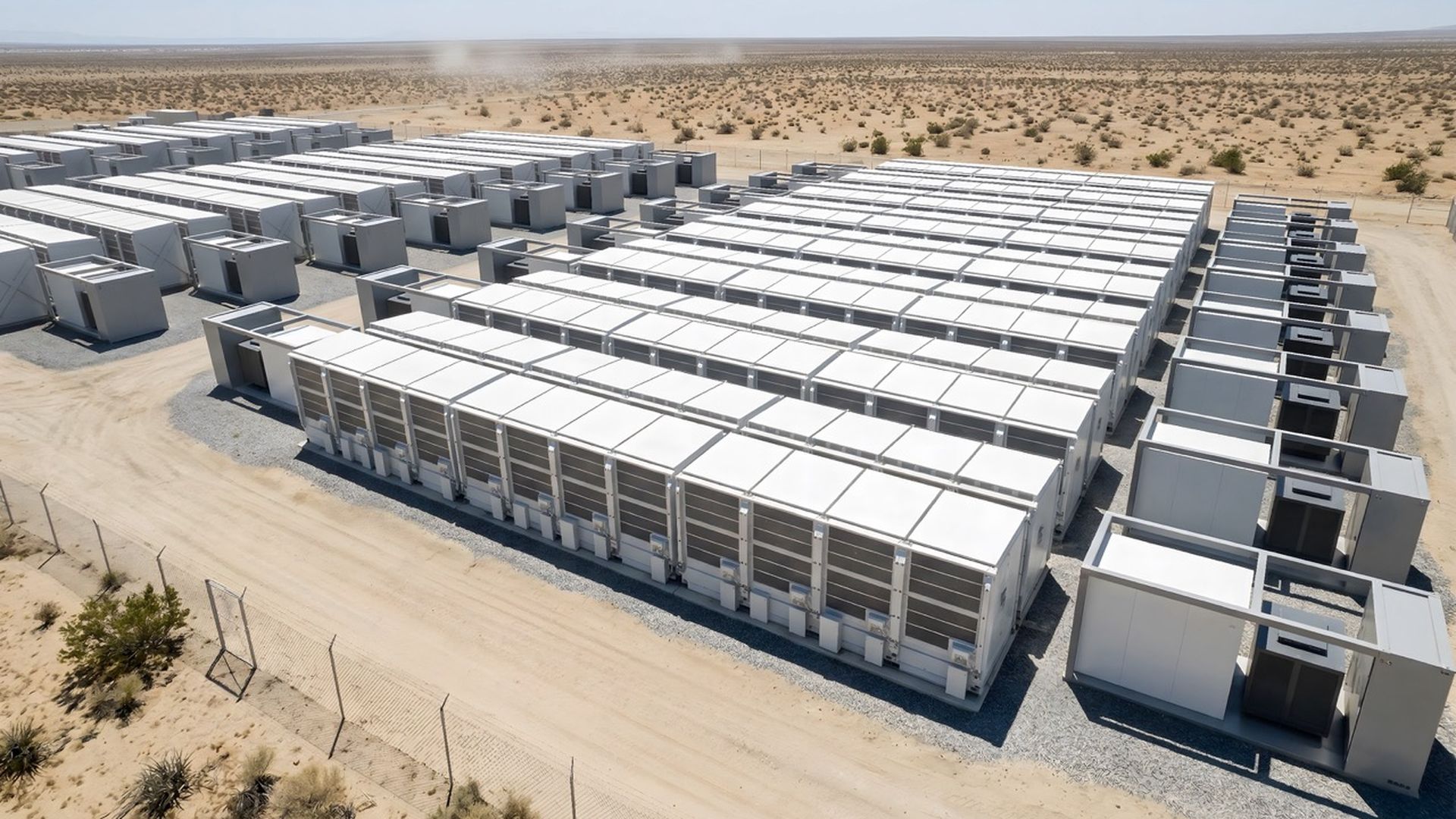
Rendering of a future Peak Energy commercial ESS site. Photo courtesy of GM
General Motors, the largest U.S. automaker, is seeking to become more of an energy company, turning electric vehicles into grid assets and batteries into fuel for AI data centers.
Why it matters: The moves are another sign of how automakers are investing in opportunities far beyond transportation, leveraging battery technology as EV growth has cooled.
Driving the news: GM said Tuesday that it plans to expand its existing energy storage business through battery innovation.
- It's making a big bet on sodium-ion batteries — technology that isn't well-suited for cars but is ideal for stationary storage connected to utility grids and data center installations.
- Its venture arm is making a strategic investment in a startup called Peak Energy, and together the companies plan to develop next-generation sodium-ion battery cells purpose built for grid-scale storage.
Between the lines: Sodium-ion batteries — as opposed to the lithium-based batteries used commonly in EVs — use abundant, inexpensive materials and can be engineered for longevity and low cost.
- That makes them better suited for stationary storage where weight and size don't matter.
The big picture: As the AI boom drives a surge in electricity demand, automakers are seeing an opening to create new revenue streams.
- It's a diversification play for many, including Ford, whose stock is up 20% since announcing the launch of its Ford Energy subsidiary on May 11.
- Morgan Stanley estimated Ford Energy could eventually generate $500 million-$600 million in annual earnings (before interest and taxes) at scale.
- Across the industry, at least eight underutilized EV battery factories in the U.S. are being repurposed for electricity storage.
What they're saying: GM says its technology, which is purpose-built for storage, will be 20% to 25% cheaper than other systems that use repurposed EV batteries.
- "We are not licensing somebody else's technology from China," said GM battery chief Kurt Kelty, in a pointed dig at rival Ford, whose Michigan-made batteries are based on technology from China's CATL.
- "We're building on GM battery know-how in America for a great market that needs durable, cost-effective storage at scale."
What we're watching: GM is also introducing software that can turn existing bidirectional EVs, which can both draw power from and send power back to the grid, into flexible energy assets that can help meet peak demand.
- But they need utilities' participation to make that happen.
