Axios Future of Energy

June 02, 2026


🛢️ President Trump wants drilling in the Arctic National Wildlife Refuge. We're about to find out if the industry shares his zeal. We're also exploring...
- A big new U.S. nuclear fuel project
- A big day for an energy storage heavyweight
- The latest on renewables and more, all in 1,168 words, 4.5 minutes.
🙏 Thanks to David Nather and Chris Speckhard for editing and to our brilliant Axios visuals team.
🎸 Steely Dan's album "The Royal Scam" just turned 50, and the band crossed the diamond with the pearl on today's intro tune...
1 big thing: Alaska is the next test of the Iran war's influence
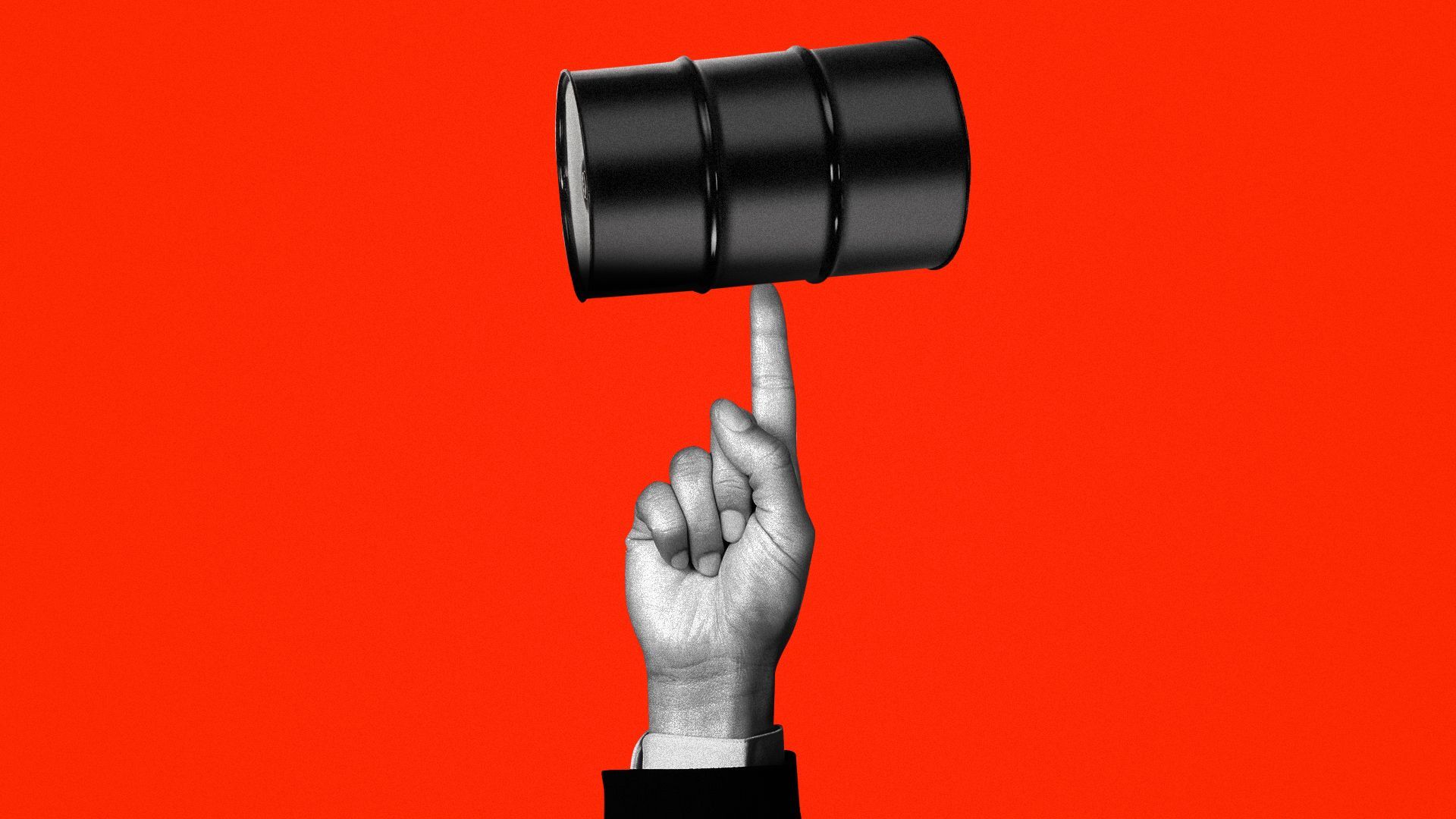
A new auction of oil drilling rights in Alaska will test the limits of President Trump's "drill, baby, drill" agenda — and whether the Iran war will push companies into the most contested U.S. frontier.
Why it matters: The Arctic National Wildlife Refuge could hold massive oil deposits, but protecting it has been a top environmental movement priority for many decades.
State of play: The Interior Department will unseal the latest bids on Friday.
- The oil industry showed tepid interest in a 2021 ANWR auction, and none whatsoever in a late Biden-era sale in 2025.
Yes, but: Will this time be different?
- The Iran war highlights the benefits of supply from secure countries — especially for Asian nations reliant on the Strait of Hormuz and not that far (in tanker terms!) from Alaska.
- Climate pressure on the industry has lessened in recent years, and predictions of a relatively near-term oil demand peak have gotten less fashionable.
Flashback: A March lease sale in another Arctic region — the National Petroleum Reserve-Alaska — saw fairly aggressive interest, with high bids totaling almost $164 million.
- Giants including ConocoPhillips, which already has major projects there, Repsol and Exxon won tracts, as did multiple independent producers.
There's more momentum behind a huge Alaskan natural gas pipeline and LNG proposal, which would create a market for "associated gas" from Alaska oil production.
- "That also has downstream effects on the lease sales," said Cody Schulte, an analyst with the research and consulting firm S&P Global Energy. "It turns into something you can monetize."
🥊 Reality check: There are big hurdles to decade-scale development projects that could keep oil companies away from bids or developing leases they may obtain.
- For the publicly held companies, ANWR is a PR challenge to say the least, and projects will be contested in years-long legal battles.
- The NPR-A is more of a known quantity.
- Last year's GOP budget law requires multiple sales in both areas over a decade, so there will be future bites at the apple.
What we're watching: Keep an eye on the state-owned Alaska Industrial Development and Export Authority, which holds leases from the 2021 auction.
- It's planning seismic work to assess its holdings, and signaled interest in bidding in this week's sale.
What they're saying: "If this sale was happening in July or August it could be a very different story because if the Strait of Hormuz is still closed then, we could be facing gasoline shortages and everyone will be clamoring to drill in ANWR," oil analyst Ellen Wald said via email.
- But at the moment, she said, companies are cautious about allocating capital to a "logistically challenging" area, and there's risk of a future Democratic administration canceling leases.
The bottom line: "The curve of interest is shifting in the Americas direction," said Rapidan Energy Group founder and president Bob McNally (he gets into this more on the Oil Ground Up podcast).
- "Whether it's enough to incite huge interest in politically or commercially challenging plays remains to be seen," he said via email.
2. 🧁 Bonus: Charting Alaska's long decline


The state's crude oil production, which rivaled Texas in the late 1980s, has been on a steady decline.
📈 Yes, but: The U.S. Energy Information Administration sees revived growth as new or recent projects come online or expand.
- In the near term, it sees production growing to 450,000 barrels per day this year and 500,000 in 2027.
- It's driven by a Repsol-Santos joint venture that just started producing, and growth of ConocoPhillips' Nuna project.
3. 🏃 Catch up quick on nuclear, batteries and renewables

⚛️ Urenco USA, the country's dominant uranium enricher, this morning announced a multibillion-dollar investment to expand capacity of its New Mexico plant by around 50%.
- Why it matters: A number of companies are planning new reactors and extending the lifetime of existing units, and the FT notes that federal policymakers are looking to reduce reliance on Russian fuel.
🧮 Combined U.S. additions of wind, utility-scale solar, and battery storage capacity dropped 17% in Q1 compared to January-March of 2025, per new American Clean Power Association data.
- Why it matters: The report reveals a mixed picture and warning signs for the sector overall, even as the U.S needs more power to meet rising demand.
- State of play: Storage set another record. But the backlog of delayed projects across the tech areas grew by 6.4 gigawatts due to permitting hiccups and other problems.
- Threat level: Looking further out, the future project pipeline for onshore wind stagnated as developers "experienced difficulty securing approvals from federal regulators."
⚛️ The New York Power Authority is taking the next step in Gov. Kathy Hochul's push for new nuclear power development in the state.
- The latest: It issued a formal "request for qualifications" seeking developers for large-scale or small modular reactors. NYPA wants a "credible path" to start construction before 2033 in order to tap Inflation Reduction Act tax credits.
4. ⚡ Trump's transport boss likes EVs — if they fly

Transportation Secretary Sean Duffy flew in a Beta Technologies electric vertical takeoff and landing (eVTOL) aircraft at the firm's Burlington, Vermont, HQ.
Why it matters: His visit is the latest vote of confidence in electric aircraft from the Trump administration — even as it cuts federal support for electric cars.
- Duffy, in a social media post alongside video of his visit, lauded the "future of aviation" and uses for air taxis, emergency medical flights and regional travel.
Catch up quick: Duffy and the FAA in March announced new testing programs to work with private industry on deploying eVTOLs and other advanced air tech.
5. 🔋 Number of the day: 44%
Shares of energy storage company Fluence soared 44% yesterday on the news of its partnership with Nvidia to provide battery systems for the AI giant's next data center design. (H/t Bloomberg.)
- "As part of the blueprint, Fluence's battery energy storage provides the flexibility and resilience AI factories need to operate reliably and scale quickly in power-constrained environments," states the announcement.
- It's a collaboration between Fluence, Nvidia and industrial and energy infrastructure giant Siemens.
6. 🐅 Quote du jour: Shifting investment winds edition
"I am discontinuing our voluntary divestment from all publicly traded oil and gas companies. The Trustee-mandated decision to divest from thermal coal and tar sands companies remains in effect."— Vincent Tuohey, president of Princo, Princeton University's endowment manager
That's from his statement yesterday announcing the retreat from its 2022 pledge. It's part of a wider climate rethink among asset managers and banks.
Our thought bubble, via Axios head of news Ben Berkowitz: Exxon traded around $89 the day they announced their divestment; it's at $149 today. No chief investment officer is leaving that on the table in this environment.
📫 Did a friend send you this newsletter? Welcome, please sign up.
Sign up for Axios Future of Energy