Axios Future of Energy

May 26, 2026


🥞 Welcome back! We're opening this short week with items about...
- What a postwar oil market could look like
- The energy dimension of Pope Leo's AI warning
- Supreme Court positioning, Ferrari's electric move, China's carbon math and more, all in 1,333 words, 5 minutes.
🚨 Situational awareness: BP just removed board chairman Albert Manifold, citing "serious concerns ... related to important governance standards, oversight and conduct."
- Why it matters: It's just the latest shakeup at the energy giant as it pivots back toward its core oil and gas business and slows its low-carbon work. CNBC has more.
🎧 Happy birthday to Stevie Nicks of Fleetwood Mac, who's in fine form on a solo cut that's today's intro tune...
1 big thing: The new oil order that could emerge from a U.S.-Iran deal
With a U.S.-Iran deal (maybe?) taking shape in coming days, the oil market that follows will look different than what preceded the war.
Why it matters: The emerging deal — which would re-open the Strait of Hormuz while nuclear talks proceed — could return large amounts of barrels to the market.
Reality check: Things won't be normal for a long time, and the postwar definition of normal is fluid, too.
A few near-term and long-term things to watch...
😨 Confidence: In the near term, "It's all about whether vessel owners and crews feel safe transiting the Strait of Hormuz," said oil analyst Ben Cahill of UT-Austin.
- He notes confusion about whether Iran will imposes some kind of fees, safety, insurance rates and more.
- "It could be a stop-and-start process as risk-averse shippers work through these uncertainties," he tells me via email.
🕰️ Timelines: "Following the clearance of any mines, a minimum of two to three months will likely be required to re‑establish steady export operations," the International Energy Agency said in its mid-May oil market report.
- And Persian Gulf countries need time to resume production that declined after the main export route was cut off.
📜 Definitions: What "open" means for the world's most important energy shipping lane is unsettled.
- Iran may not call it a toll, but Iranian officials are floating new fees on tankers.
- This could be a boon to Iran even if the fee is relatively small, said Edward Fishman, a former State Department aide now with the Council on Foreign Relations.
- Fishman — speaking on oil analyst Rory Johnston's essential Oil Ground Up podcast — sees vessels paying tens of billions of dollars per year, even $100 billion.
⚠️ Vibes and market risk: Before the crisis that throttled supplies, there was debate in oil circles about whether markets were blasé about threats to infrastructure or shipping.
- Even once the current crisis is in the rearview, watch the level of "geopolitical risk premium" — the market's willingness to preemptively price in risk — that elevates prices.
- It could be higher now, especially with Iran's newly assertive posture in the strait.
- "There will be a permanent price premium attached to a permanently more risky operating environment," Clayton Seigle, an oil analyst with the Center for Strategic and International Studies, said via email.
🚧 Pipeline infrastructure: There are already efforts to at least somewhat ease the strait's importance by building pipelines to bypass it.
🇺🇸 U.S. oil production: Higher prices are likely to encourage producers to modestly boost their output as they see opportunities from a market that went from soft to tight.
2. 😬 Pope Leo worries about AI's climate toll

Pope Leo XIV is warning about the climate toll of AI's voracious energy needs in his lengthy new encyclical about the tech.
Why it matters: The pope has a massive bully pulpit as leader of a church with 1.4 billion members worldwide, and reaches people well beyond that.
Driving the news: Energy and climate surfaced in Leo's far longer list of warnings about AI's effect and broad ideas for managing them.
- "Current AI systems require enormous amounts of energy and water, significantly influencing carbon dioxide emissions, and place heavy demands on natural resources," it states.
- It's "essential to develop more sustainable technological solutions that reduce environmental impact and help protect our common home."
Threat level: The document also criticizes "new forms of slavery" that include mineral extraction needed for AI infrastructure.
- "In some regions of the world, children and adolescents work in dangerous conditions, crushing the materials from which rare earth elements are extracted," it states.
What we're watching: I'm curious whether this will become a consistent theme for the pope.
- His predecessor Pope Francis' 2015 climate encyclical became a rallying cry — and organizing tool — for advocates.
3. ⚖️ K Street army rallies against state climate cases
Big industry groups are urging the Supreme Court to rule that federal law preempts state and local litigation that seeks climate damages from oil companies.
Why it matters: The many new amicus briefs in the case — which SCOTUS agreed to hear in February — highlight the depth of concern over the litigation in state courts nationwide.
Driving the news: Parties submitting amicus briefs include...
- The U.S. Chamber of Commerce, the National Association of Manufacturers, and several insurance industry trade groups.
- Wait, there's more! Another comes jointly from three multinational giants: Airbus, Shell, and shipping company Hapag-Lloyd.
- They warn that "the effort to enlist local courts to shape global climate policy" is occurring outside the U.S., too, and that individual courts should not be allowed to essentially set climate policy for the rest of the world.
The intrigue: Trump officials and industry groups are arguing federal law is paramount even though EPA repealed the endangerment finding — the underpinning of emissions rules under the Clean Air Act.
- The administration filing argues that the repeal is isolated to vehicle emissions, not stationary pollution sources.
- It also argues that it shouldn't matter anyway because claims by Boulder County and its co-litigants against oil companies are unconstitutional.
What we're watching: Watch this space for coverage of upcoming briefs siding with state and local governments behind these state court lawsuits.
4. 🤝 Energy deals you might have missed


⚛️ Deep Fission, which aims to develop small nuclear reactors deep underground, filed with the SEC last week for a $150 million public listing targeting a valuation of up to $1.66 billion. Go deeper
⌨️ Texture, a developer of software operating systems for electric utilities, raised $12.5 million in Series A funding. Go deeper
💰 Veriten, an energy-focused research and investment firm, raised $105 million in an initial close of its second fund. Go deeper
🔥 Antora Energy, a BlackRock-backed thermal batteries developer, is commissioning a 5 gigawatt-hour system for biofuels producer Poet in the startup's first commercial project. Go deeper
🪨 EnergyX, a lithium extraction developer, signed an agreement with Compass Minerals to potentially develop a $400 million Utah production hub and refinery to supply the battery mineral. Go deeper
💵 Playground Global, an early-stage venture firm focused on deep tech, raised $475 million for its fourth fund. Go deeper
Talk to our sales team about Axios Pro Deals for a steady diet of scoops and smart analysis.
5. 💵 One tech thing: Ferrari's first all-electric car
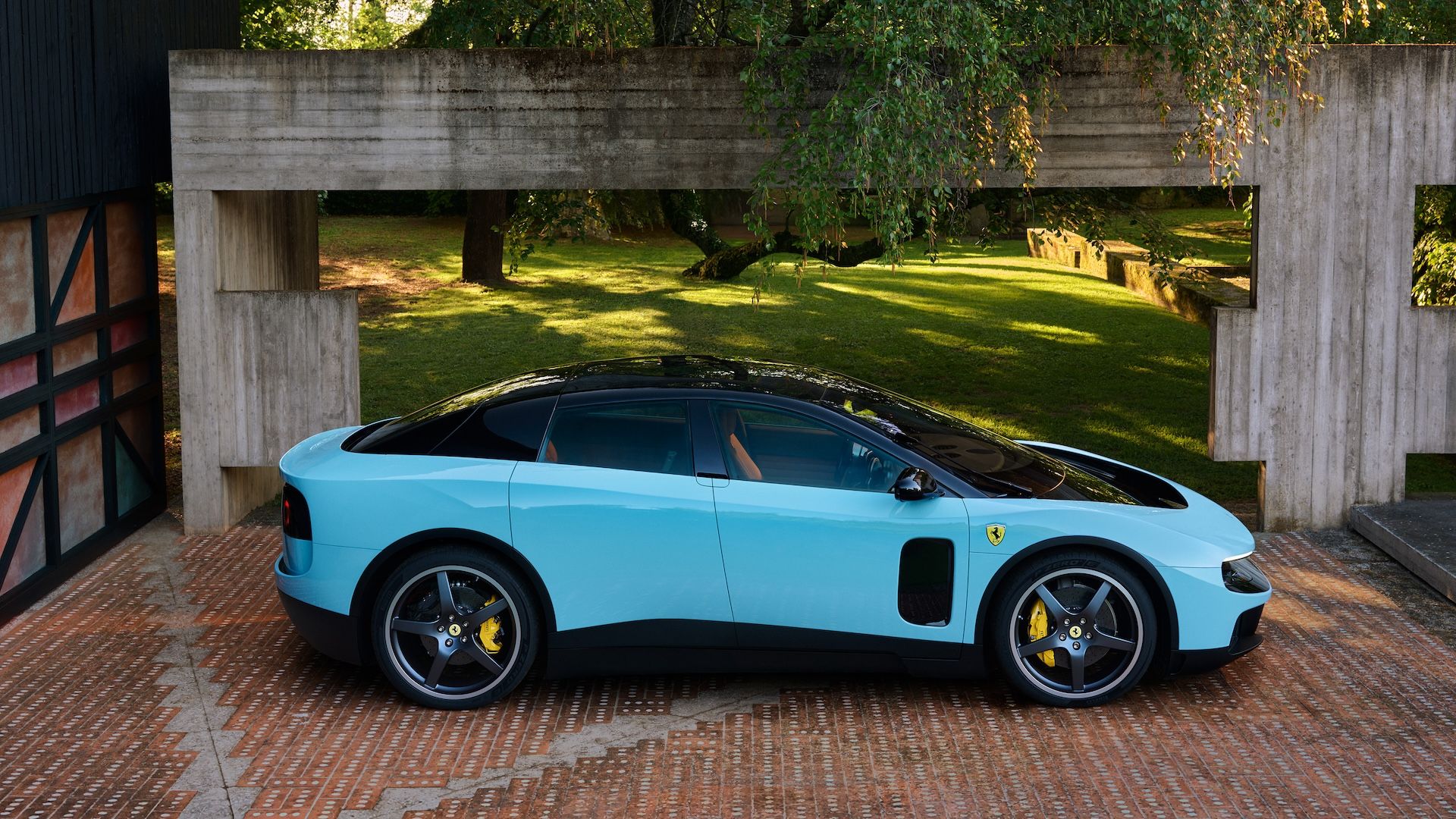
In case you're car shopping, that's ☝️ the Ferrari Luce, the storied luxury automaker's first all-electric vehicle that just landed.
Why it matters: It's "one of the biggest gambles in the Italian company's history, arriving amid a string of missed targets and expensive promises by luxury carmakers to go electric," the NYT reports.
State of play: The base price is $640,000, per multiple reports.
- The car goes from 0-62 miles per hour in 2.5 seconds and hits 124 mph in 6.8 seconds, Ferrari said.
- The battery range is around 330 miles, it said.
The bottom line: It will "test the appetite of the superrich for EVs," the WSJ reports.
6. 😧 Number of the day: 50%
Changes to how China measures carbon intensity — CO2 per unit of economic output — mean its emissions growth over the past five years could be about 50% higher than what it eventually reports, new analysis finds.
Why it matters: "On paper, the revision creates a gap of 700m tonnes of CO2 (MtCO2) per year, equivalent to the total emissions of Germany or South Korea," writes Lauri Myllyvirta of the Centre for Research on Energy and Clean Air.
Go deeper: Full analysis written for CarbonBrief ... FT coverage
📫 Did a friend send you this newsletter? Welcome, please sign up.
🙏 Thanks to David Nather and Chris Speckhard for editing and to our brilliant Axios visuals team.
Sign up for Axios Future of Energy