Axios Future of Energy

June 16, 2026


🔥 Scorching take: Predicting the future is hard. Today we're exploring ways the Iran crisis defied expectations, then moving on to...
- Strait of Hormuz timelines
- The future of EVs, data center politics and more, all in 1,356 words, 5 minutes.
🙏 Thanks to David Nather, Mackenzie Weinger and Chris Speckhard for editing and to our brilliant Axios visuals team.
🎶 At this moment in 1998, Brandy and Monica were into their epic 13 weeks atop the Billboard Hot 100 with today's classic intro tune...
1 big thing: How the Iran war energy crisis defied expectations

With large-scale oil shipments potentially resuming soon, let's take stock of how the energy shock has bucked conventional wisdom.
Why it matters: What market watchers and participants got wrong could help inform responses to geopolitical upheaval in the future.
Here's what surprised analysts (and journalists) during the conflict:
📃 Futures market behavior. Predictions of $150 per barrel or even $200 were common in the early days, and prices — while painful — never got close.
- There's no consensus on why. As oil analyst Ben Cahill put it to me, "paper markets can defy physical market reality for months."
- Some argued the market was too sanguine about a looming supply crunch, and responding too much to President Trump's frequent posts declaring progress.
- Others saw a market working more or less as intended based on available info. Either way, the predictions were wrong.
"If you had surveyed oil market analysts at the start of the year and asked what the oil price would be if most supply through the strait [of Hormuz] were disrupted for more than 100 days, few would have told you less than $100 a barrel," Jason Bordoff, founding executive director of Columbia University's Center on Global Energy Policy, said via email.
🇨🇳 China's outsized role. The world's largest oil importer cut back on purchases to a degree that many market watchers didn't expect.
- "Besides the market's sanguine response to the greatest supply outage in history, Beijing's ability to subtly shape the crisis was surprising," notes Joseph Webster, a senior fellow with the Atlantic Council.
😳 Iran's ability to (mostly) choke off the strait. "For me, the biggest surprise was how quickly and easily the Iranians managed to close the strait, and how ineffective US measures to reopen it proved to be," Gregory Brew of the Eurasia Group said in an email.
🦕 Oil, like life, finds a way. Lots of forces together have made the market surprisingly able to buy time, even as the transitway for a fifth of the world's oil remains severely restricted.
- One is that "global oil refining is more resilient and flexible than we realized," Cahill notes via email.
2. 🗞️ The latest on Iran: Prices and predictions
⛽ Average U.S. gasoline prices look set to fall under $4 per gallon within days — or may already be there, depending on who is counting.
- Why it matters: It's a symbolic threshold as energy prices look set for a primetime role in midterm election battles.
- Driving the news: The U.S. nationwide average is $4.04 this morning, per AAA tracking, while the market data firm GasBuddy concludes the average fell to $3.99 on Sunday.
- Catch up quick: The average U.S. price was just under $3 ahead of the war, and climbed as high as $4.56 in May, per AAA's tally.
🕰️ With an apparent deal to re-open the Strait of Hormuz in place, market watchers are trying to game out how much additional oil will start moving and how soon.
- Why it matters: Tankers move slowly and oil inventories are still falling. "Under an optimistic scenario, we would not expect meaningful normalisation of Hormuz commercial traffic before late July, and near-full restoration of oil output before end-September," the research arm of the bank HSBC said in a note.
- What we're watching: Future management of the strait remains murky even if the ceasefire holds. Iran reportedly plans to charge some kind of transit fees after 60 days.
- Threat level: "If this stands, it appears to represent a significant victory for Tehran, and we think it could indeed impede a full normalization of flows," RBC Capital Markets' Helima Croft said in a note.
3. 🚗 The longer road to EV dominance

Global electric car sales will hit another record this year, but future growth will be slower than once expected, the research firm BloombergNEF's latest outlook finds.
Why it matters: It's an "uneven" global market for the tech that displaces oil use and cuts emissions, with "some markets accelerating at a rapid rate, while others have slowed to a near stall."
The big picture: Fully electric and plug-in hybrid passenger cars together will snag 27% of new sales this year, up from under 5% just six years ago, with lots more growth ahead as battery economics improve.
Yes, but: This is the second consecutive year that the firm has downgraded its outlooks.
- The "full withdrawal" of federal support in the U.S. is the biggest reason, with the firm now seeing EVs at 57% of U.S. sales by 2040, compared to 71% in the previous outlook.
- A slowdown in China, the world's largest car market where government support has lessened in some ways, is also a factor, alongside trade tensions.
- "Japan still lags due to few compelling EV offerings and persistent consumer preference for hybrids and mild hybrids," Andrew Grant, head of intelligent mobility at BloombergNEF, tells Axios.
By the numbers: BloombergNEF now sees global passenger EV sales reaching 35.4 million units in 2030, several million below its last look-ahead.
- "It's not all bad news," Grant said. "EV outlooks for Southeast Asia and Europe have been revised upwards."
- EVs reach 52% of global passenger vehicle sales by 2035 and 66% by 2040, it projects, down from 70% in 2040 in the previous outlook.
What we're watching: There are early signs that the oil crisis is juicing interest in EVs.
4. 👟 Catch up quick on policy: Batteries, DOE, EPA, xAI

🔋 U.S. companies across the sodium-ion battery supply chain just unveiled a new group — the American Battery Leadership Coalition — that will seek stronger federal support for the tech.
- Why it matters: These kinds of batteries, which don't use lithium, use abundant, inexpensive materials and can be engineered for longevity and low-cost stationary applications.
- Driving the news: The nine initial members include Alsym Energy, Peak Energy, Batri, and Ingevity.
- What we're watching: The group wants policy changes it says would enable the U.S. to erode China's dominance. Think funding for commercial demonstration projects; new tax credits; DOE loan finance; and federal procurement.
💵 The Energy Department finalized a $1.6 billion loan for Michigan-based DTE Gas Company to "modernize and strengthen approximately 800 miles of distribution mains and service lines." It follows a conditional Biden-era approval.
📄 Litigation over EPA's repeal of the endangerment finding is poised to expand, with states and environmental groups planning to sue EPA for "failure to act" on formal administrative petitions to reconsider.
⚖️ Via Wired, the Justice Department is intervening on the side of Elon Musk's xAI in litigation, brought by the NAACP, over the company's use of gas turbines to power a Mississippi data center.
5. 🕵️♀️ Sen. Warren probes private equity's data center and energy overlap

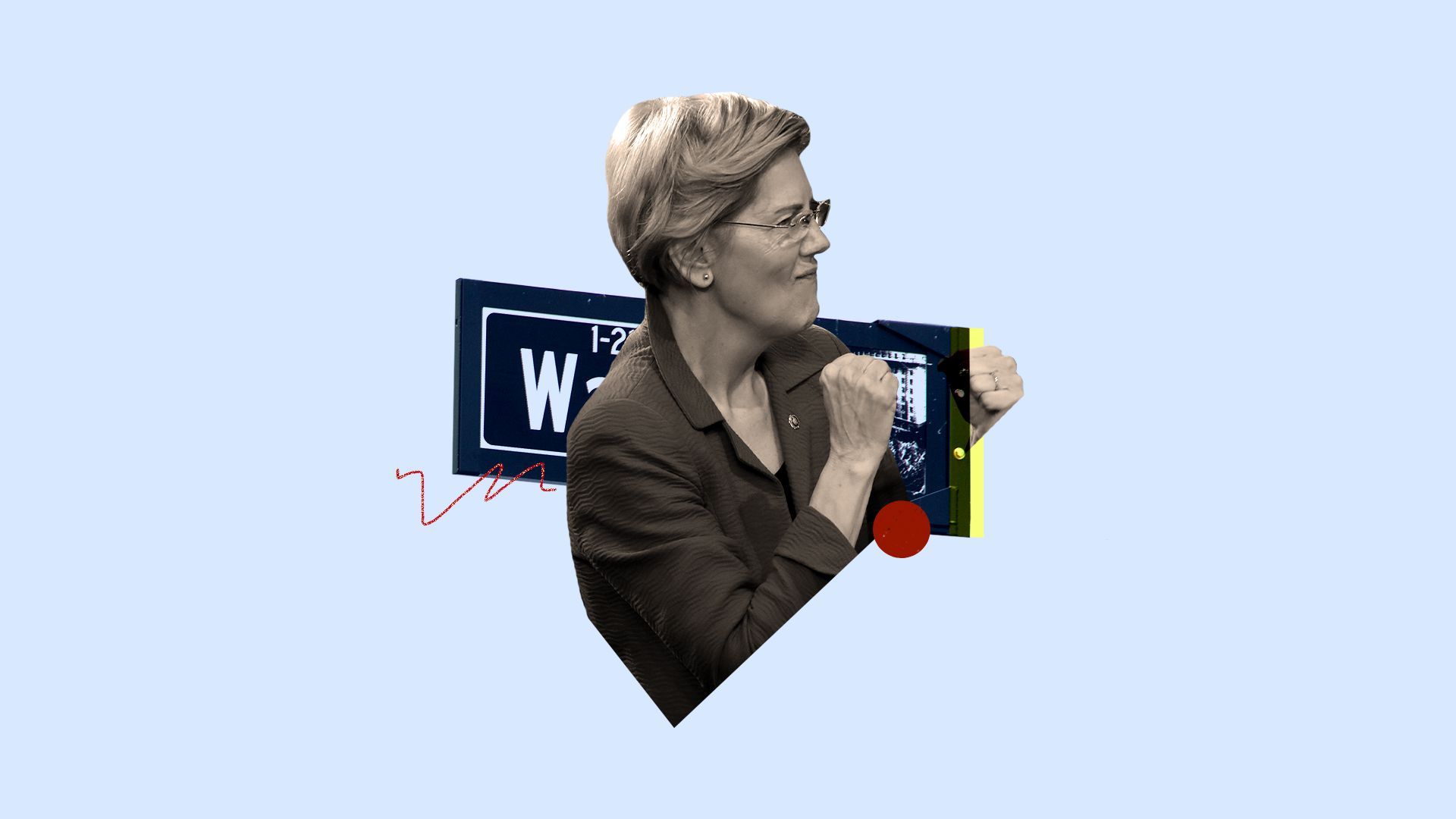
Sen. Elizabeth Warren (D-Mass.) is pressing four large infrastructure investors for information on their data center deals, Axios first reported.
- She's interested in possible overlaps between ownership of data centers and utilities, but doesn't allege wrongdoing.
Why it matters: There is growing political anxiety over data centers that underly the AI revolution, particularly as energy prices rise, and private equity's involvement pours populist fuel on the fire.
Driving the news: Warren, ranking member on the Senate Banking Committee, sent letters to BlackRock, Blackstone Group, Brookfield Infrastructure Partners and KKR.
- They ask for an "explanation of how you are ensuring that your significant footprint in both energy supply and demand will not allow you to increase energy costs and exploit American people."
State of play: Warren sends lots of letters to Corporate America, including to investment firms, but this one is tapping at the bipartisan zeitgeist.
- Consumer electricity prices are soaring. There's disagreement over the level of data center culpability, but that doesn't diminish the finger-pointing.
6. 🧮 Number of the day: 340 million



The SPR is at its lowest level since July 1983, when the country was still just building up the federally held stockpile.
- It's at 340 million barrels for the week ending June 12. Go deeper
📫 Did a friend send you this newsletter? Welcome, please sign up.
Sign up for Axios Future of Energy