Axios Future of Energy

February 04, 2026

๐ช Halfway! Today's speedy tour of the beat visits...
- ๐ค The gas-data center pairing
- โ๏ธ GOP solar politics
- โ๏ธ Lots o' minerals news
- ๐ต Power startup finance, transmission, and more, all in 1,483 words, 5.5 minutes.
๐จ Situational awareness: "The European Union will pitch the US on a critical minerals partnership to curb China's influence," Bloomberg reports.
๐ Thanks to Chuck McCutcheon and Chris Speckhard for edits to today's newsletter, along with the brilliant Axios Visuals team.
๐ถ The great Sade released the album "Soldier of Love" this week in 2010, and it provides today's intro tune...
1 big thing: The AI boom is making natural gas great again


Natural gas is the clear winner in a fast-moving push to generate power directly at data centers, a new report finds.
Why it matters: These are billion-dollar bets that last decades โ and doubling down on fossil fuel today locks in more global warming far into the future.
Driving the news: Nearly 75% of the power equipment planned to be used on site at data centers is natural gas, according to a report released yesterday by Cleanview, a market intelligence platform.
"Press releases for these projects say one thing. But the 35+ permit documents, site plans, and equipment deals we found tell a much different story," the report finds.
- Despite public nods to renewables, hydrogen, or nuclear, the equipment being installed this year and next is "almost entirely gas-powered."
By the numbers: Cleanview identified 46 data centers planning to build their own on-site power, with a combined capacity of 56 gigawatts.
- That represents roughly 30% of all planned data center capacity in the United States, up from virtually zero a little more than a year ago.
The big picture: Wind, solar, and batteries are cheaper in a lot of places. But the AI race is so intense that companies are choosing power they can get now over power that's cheaper later, amid years-long grid connection delays.
- "The rub for solar and wind developers is that they're essentially locked out of this market until" developers begin building renewable-energy farms adjacent to data centers, Cleanview's Michael Thomas told Axios in an interview.
Zoom out: Natural gas is already the largest source of electricity on U.S. power grids โ and it's also dominating data centers that do connect to the grid, particularly in the Mid-Atlantic and Midwest, the country's AI hotbed.
Flashback: A decade ago, natural gas was becoming politically toxic, with some activists and lawmakers pushing to ban it alongside coal.
- Now, as global climate ambitions falter and AI drives a race for power, gas is regaining political and commercial appeal.
What we're watching: How far this shift toward on-site power goes.
- Bloom Energy, which makes fuel cells from natural gas, recently found that 44% of data-center operators expect to rely entirely on on-site power by 2035 โ a trend that's helped fuel the company's meteoric stock rise.
2. โ๏ธ Exclusive: Trump pollster finds MAGA voters like solar energy
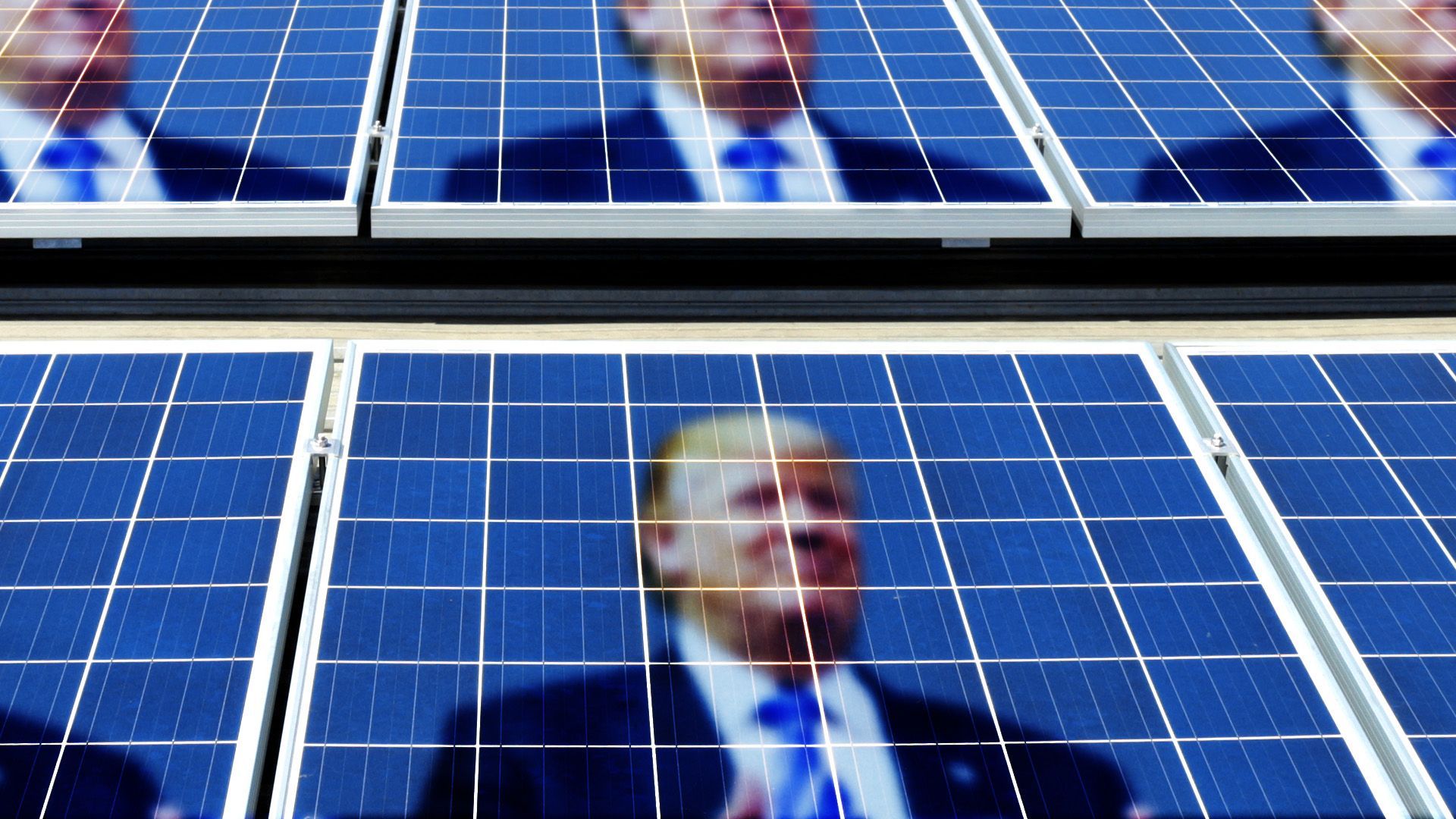
A majority of Trump coalition voters back solar power, especially if panels are made in the U.S. and without Chinese materials, polling shared exclusively with Axios shows.
Why it matters: Trump officials are moving against renewables on several fronts, including Interior Department permitting restrictions and the GOP budget law hastening the end of project subsidies.
- But the poll commissioned by U.S. manufacturer First Solar suggests that a big swath of his coalition is partial to the tech.
Driving the news: Fabrizio, Lee & Associates polled what it calls a GOP+ sample โ a mix of Republicans, GOP-leaning Independents, and Trump voters.
- It found 51% favor utility-scale solar, while 30% oppose it.
- The share in favor soars to 70% if panels are made in domestic factories, using U.S. materials, and have no ties to China.
- In addition, 68% agree with the statement that "we need all forms of electricity generation, including utility solar, to be built to lower electricity costs."
Catch up quick: Tony Fabrizio, a partner in the firm, has been chief pollster in President Trump's campaigns.
The big picture: "GOP+ voters want America to have energy independence and for their electric bills to be affordable," a polling memo states.
- "They understand that utility solar energy is a key aspect in allowing that to happen."
What we're watching: Whether the data influences Trump administration policies.
The bottom line: "[T]he belief by some on the right that solar energy is anathema to right-leaning voters is unfounded," the polling memo argues.
Methodology: The firm polled 800 registered voters from January 19-21, and the margin of error is +/- 3.46%, the memo states.
3. ๐Catch up quick on minerals: Bilateral deals, Project Vault, DRC

๐ค The Trump administration will sign up to 11 bilateral critical minerals agreements this week, Interior Secretary Doug Burgum said yesterday ahead of today's State Department-hosted summit.
- Why it matters: His remarks at CSIS, a think tank, are part of the wider Trump team push to secure supplies of materials for industrial needs โ and chip away at China's dominance.
๐ฌ Ex-Im Bank President and CEO John Jovanovic offered a deeper look at the U.S.'s new $12 billion Project Vault minerals reserve in his remarks at the same event.
- State of play: He emphasized that the stockpile's makeup will be guided by large industrial mineral users. "It is very much a demand signal driven by the OEMs," he said, referring to original equipment manufacturers. "So it's not us sitting in a room guessing what we should stockpile and keep on hand."
- How it works: "The structure permits OEMs to withdraw a set amount every year for their own uses, so long as they replenish it to the same watermark," he said.
๐๏ธ A few more nuggets on Project Vault:
- What they're saying: The law firm Baker Botts has a primer on what to watch and what it means for the mining industry. "A reserve structure favors projects that can reliably meet specification, traceability, and compliance requirements," it states.
- What we're watching: Processing needs, where China is especially dominant. "The central constraint is refining and processing, not ore availability," Baker Botts notes, with its attorneys looking to see what other policies could surface from the administration.
๐ต The U.S.-backed Orion Critical Mineral Consortium has a draft deal to acquire 40% of mining giant Glencore's copper and cobalt operations in the Democratic Republic of Congo.
- Why it matters: The deal, which has an implied valuation of $9 billion, is "the first big investment in the country since Washington struck a minerals deal with Kinshasa in December," the FT reports.
4. ๐ Policy notes: Oil exports and Treasury
๐ข๏ธ The Transportation Department issued a license for Sentinel Midstream's planned Texas GulfLink deepwater port for crude oil exports.
- Why it matters: The project, 26.6 nautical miles off the coast of Brazoria County, Texas, can handle up to 1 million barrels per day, the department said.
- The big picture: The U.S. already exports around 4 million barrels of crude per day. The planned Gulflink port can handle Very Large Crude Carriers and curb nearshore congestion, the department said. Go deeper.
โฝ The Treasury Department issued draft rules to govern tax credits for "clean fuels" authorized in the 2022 climate law, then modified and extended under last year's GOP budget law.
- What they're saying: The Renewable Fuels Association, a biofuels group, welcomed the "step in the right direction toward providing the clarity and certainty." But "much work remains to be done and many questions" remain around emissions calculations and more, it said.
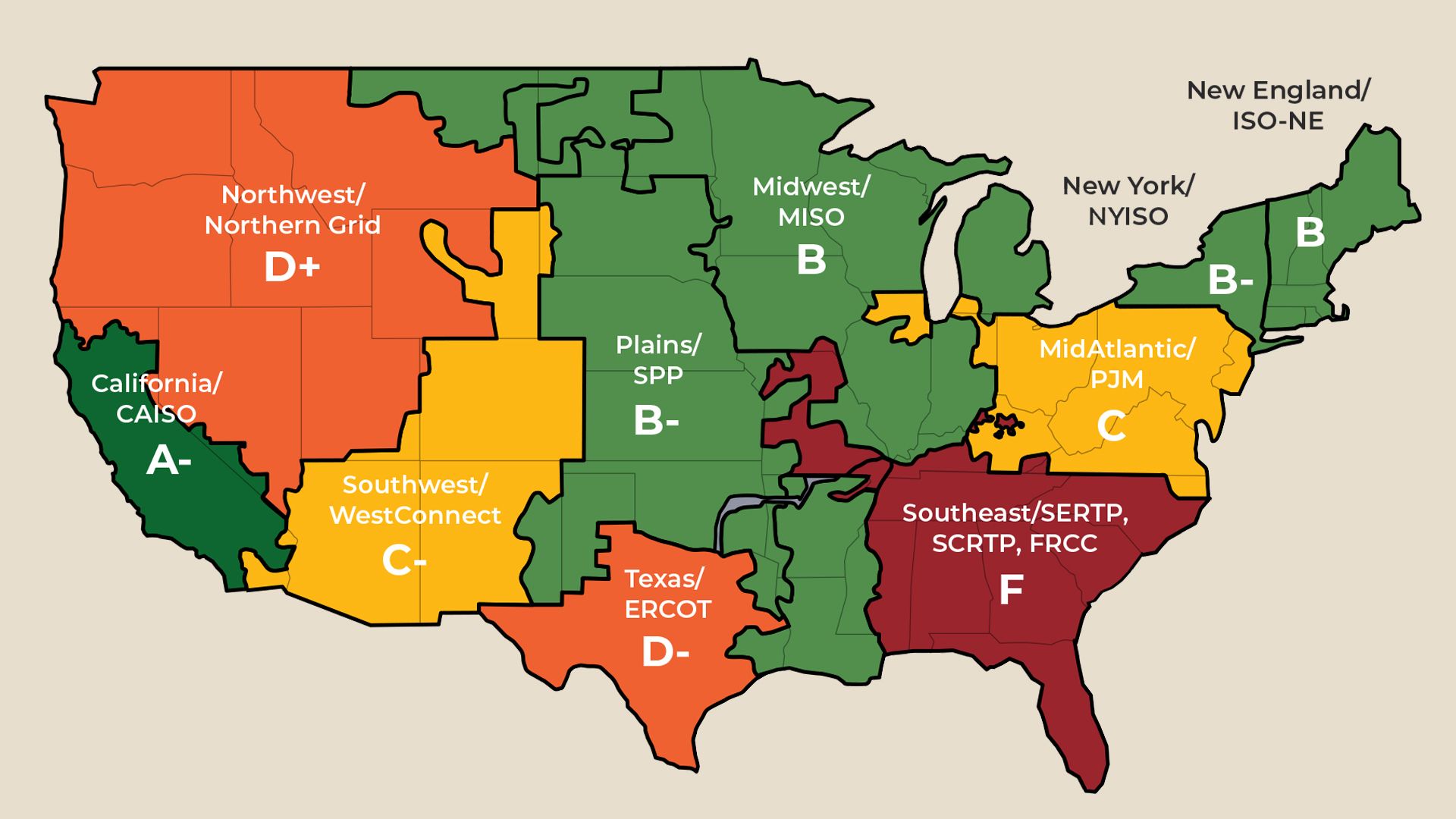
5. โกTransmission report card: Poor grades for Texas, South

A new assessment by Grid Strategies and Americans for a Clean Energy Grid says many areas' transmission planning and development work needs way more schooling.
Why it matters: The electricity grid has largely held up during the recent winter storm and cold spell โ but analysts worry about its future capabilities as data centers and AI place ever-increasing demands on it.
Driving the news: The report card's grades "should be understood as a snapshot of progress underway rather than an endpoint," the groups say, citing ongoing progress in some regions.
- The Southeast โ which the report says has "a clear need for additional transmission capacity" โ fared the worst with an "F." It got the same grade in the group's 2023 assessment.
- The Northwest drew a "D-plus," a slight improvement over its "D" in 2023, thanks partly to improvements in interregional planning.
- But shortcomings in that area led Texas, which got a "D-plus" in 2023, to get tagged with a "D-minus" this time.
6. ๐งฎ Number of the day: $1 billion
Heron Power, the advanced transformer startup founded by former Tesla executive Drew Baglino, is raising between $100 million and $200 million at up to a $1 billion valuation, Axios Pro's Alan Neuhauser has learned.
Talk to our sales team about Axios Pro Deals for a steady diet of scoops and smart analysis.
7. ๐ฌ Quote of the day: Yankee gas edition
"One thing that was really shocking for me coming out of the storm was that, in the Northeast during Fern, 40 percent of generation came from fuel oil or diesel, and that's simply because we don't have enough gas infrastructure to bring gas to New England."โ FERC Chair Laura Swett to House Energy and Commerce's Energy Subcommittee members during a hearing yesterday on the commission's mission
๐ฌ Did a friend send you this newsletter? Welcome, please sign up.
Sign up for Axios Future of Energy