Axios Future of Energy
November 06, 2026


🪩 Happy Friday! We're heading into the weekend with a look at climate's role in Democratic politics, then moving on to...
- Permitting news, renewables analysis, Google's latest move, and good weekend reads, all in 1,354 words, 5 minutes.
👋 Situational awareness: Goodbye, Tesla Cybertruck.
🎸 This week in 1988, R.E.M. released the album "Green," which provides today's beautiful intro tune...
1 big thing: Democrats' blue wave leaves climate behind
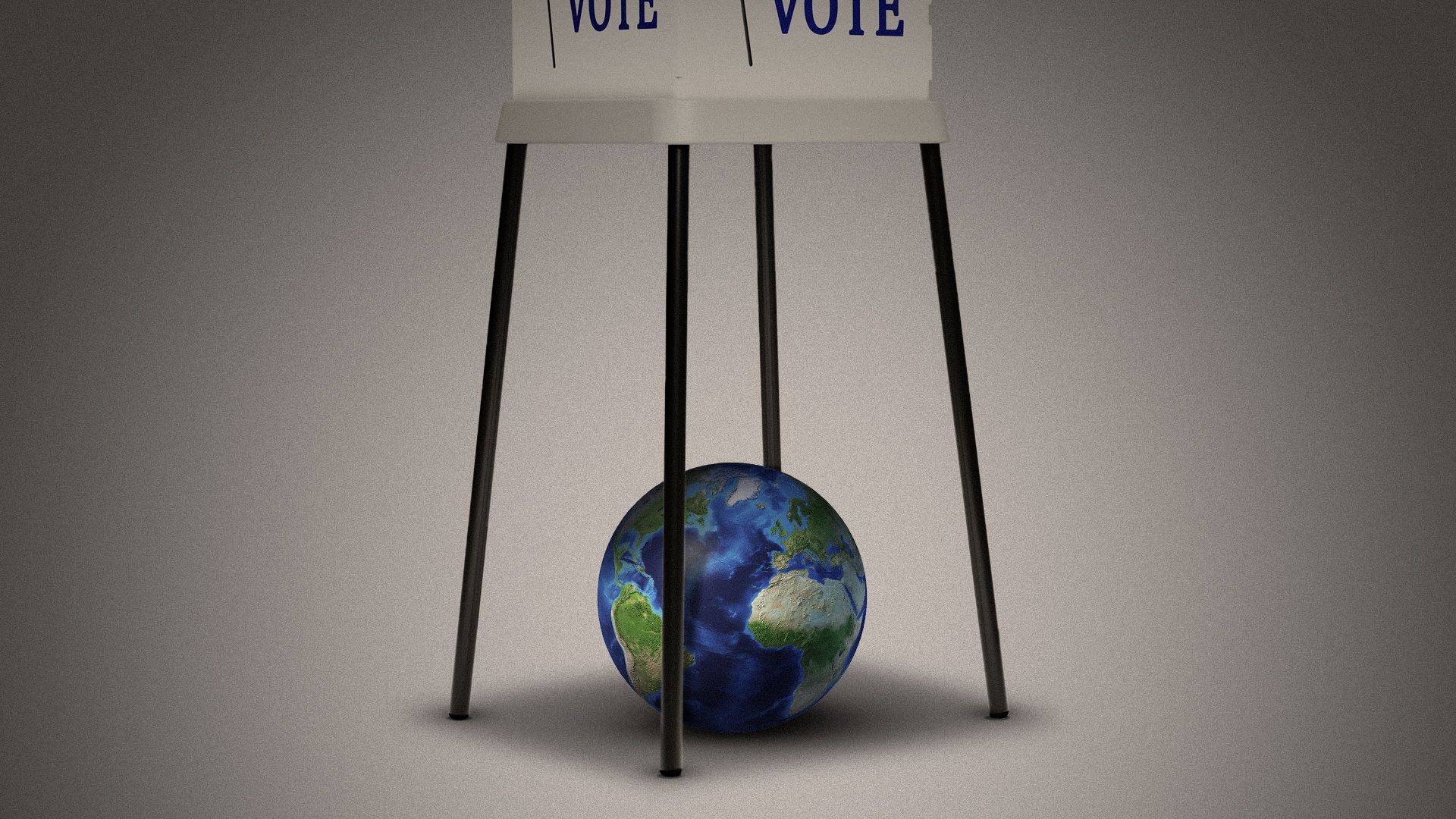
Democrats have made climate change a centerpiece of their campaigns for years — but this year they barely mentioned it.
Why it matters: The midterms showed just how far the topic has fallen down the political priority list, even within the party most committed to addressing it — and suggest affordability will shape how Democrats govern next year.
Driving the news: Democrats up and down the ballot campaigned overwhelmingly on affordability, including fuel prices surging amid President Trump's Iran war and rising electricity bills, accentuated by the AI boom.
Zoom in: Even some of the party's most prominent climate advocates emphasized affordability over climate change — or reconsidered ambitious climate policies in response to rising costs.
- New York Gov. Kathy Hochul, who previously championed the state's ambitious climate agenda, pushed to weaken parts of its landmark climate law this year, citing affordability concerns.
- Sen. Ed Markey (D-Mass.), who co-authored the Green New Deal, played down the proposal during his reelection campaign, emphasizing affordability and other priorities instead.
- Texas Sen.-elect James Talarico, who has previously warned about fossil fuels' impact on the planet, campaigned on protecting oil and gas jobs alongside expanding renewable energy and lowering electricity bills.
Flashback: The political shift has been underway since the 2024 presidential election, when even climate-focused groups began de-emphasizing climate change in their political advertising, a trend that persisted this cycle.
State of play: On a call with reporters the day after the election, leading environmental groups celebrated Democrats' victories as a rejection of Trump's energy policies, arguing that his attacks on clean energy contributed to higher electricity bills.
Yes, but: While the Green New Deal-era approach of campaigning explicitly on climate change is mostly gone, Democrats are repositioning clean energy as one part of a broader focus on affordability and the economy.
- "There's no question that climate change is going to be a more vocal part of the agenda under Democrat leadership," said Jason Grumet, head of the American Clean Power Association, this week. "And I think that people recognize that the solution flows more from an abundance premise than a restrictive premise."
Zoom out: The affordability-first approach reflects a broader reckoning within the climate movement.
- "We have to find the limited spaces for progress in a world where climate is even more deprioritized than it was a couple years ago," Armond Cohen, executive director of Clean Air Task Force, told Axios in an interview before the election.
Reality check: Even though climate change has faded as a top political priority, its physical impacts — and mounting economic costs — aren't going away.
What's next: Next week will offer a split-screen reality.
- The Senate is poised to begin debate on a wonky but important bill aimed at expediting energy projects of all kinds, whose impact on climate change could be significant — or not.
- Meanwhile, some Democratic lawmakers plan to attend the annual United Nations climate conference beginning Monday in Antalya, Turkey.
2. 🚩 Parsing the new risks to the permitting bill

Let's break down the big permitting news: The office of Hakeem Jeffries, the top House Democrat, last night said the bipartisan Senate bill "falls short in several areas."
State of play: Jeffries is calling for "meaningful engagement" with the House Democratic Caucus and says he won't "rubber-stamp" the measure.
- His office flags problems with how it changes the National Environmental Policy Act and cites the need to protect tribal sovereignty.
Between the lines: The statement notably doesn't call for punting into next year when Dems will have more power, as some bill critics want.
- Still, Jeffries' posture is another hurdle, and who knows whether the "constructive involvement" he's demanding is possible in the quick lame duck session.
My thought bubble: There are a lot of moving pieces, but it could signal that if there's a political path for the bill this year, it's with more GOP than Democratic support.
What we're watching: The latest moves to help shore up support. The Pentagon is advancing nine more wind projects today that had been bottled up for months, Punchbowl News reports.
What they're saying: The office of co-author Sen. Sheldon Whitehouse (D-R.I.) said the Senate's energy and environment panels "actively solicited input" from House members while the bill was written and since it landed.
- Authors are working on an amendment that "will address many of the concerns and priorities raised by House Democrats."
The bottom line: Jeffries' statement puts all eyes on those bill revisions that the Senate co-authors are slated to unveil.
3. 🐎 The race to define the permitting bill

Talk about permitting irony: Backers of the Senate bill to cut red tape for energy projects are burying lawmakers in paper.
Why it matters: A flurry of analyses circulating on Capitol Hill show how supporters are scrambling to sway votes ahead of a key Senate vote on Monday.
📻 Driving the news: The bill would enable an additional 170 gigawatts of wind, solar, and battery storage capacity by 2035, per analysis out today from the Center for Climate and Energy Solutions (C2ES) and Greenline Insights.
- The bill would lower residential electricity bills by $2.5 billion in 2035, it finds.
- Power sector CO2 emissions would be 13% lower than under a "business as usual" case without the bill.
A separate new study from the group Employ America projects the bill could add up to 105,600 industrial jobs through 2040.
- And the National Association of Manufacturers is circulating analysis concluding that the current permitting system is costing manufacturers $12 billion annually.
⚔️ The other side: Critics are having their say, too. For instance, Earthjustice is out this week with a critique claiming major threats to historic preservation.
What we're watching: Opponents are planning protests this morning outside the New York City home of Senate Minority Leader Chuck Schumer (D-N.Y.) and the office of House Minority Leader Hakeem Jeffries (D-N.Y.).
4. 📊 How the Iran war is changing the renewables landscape
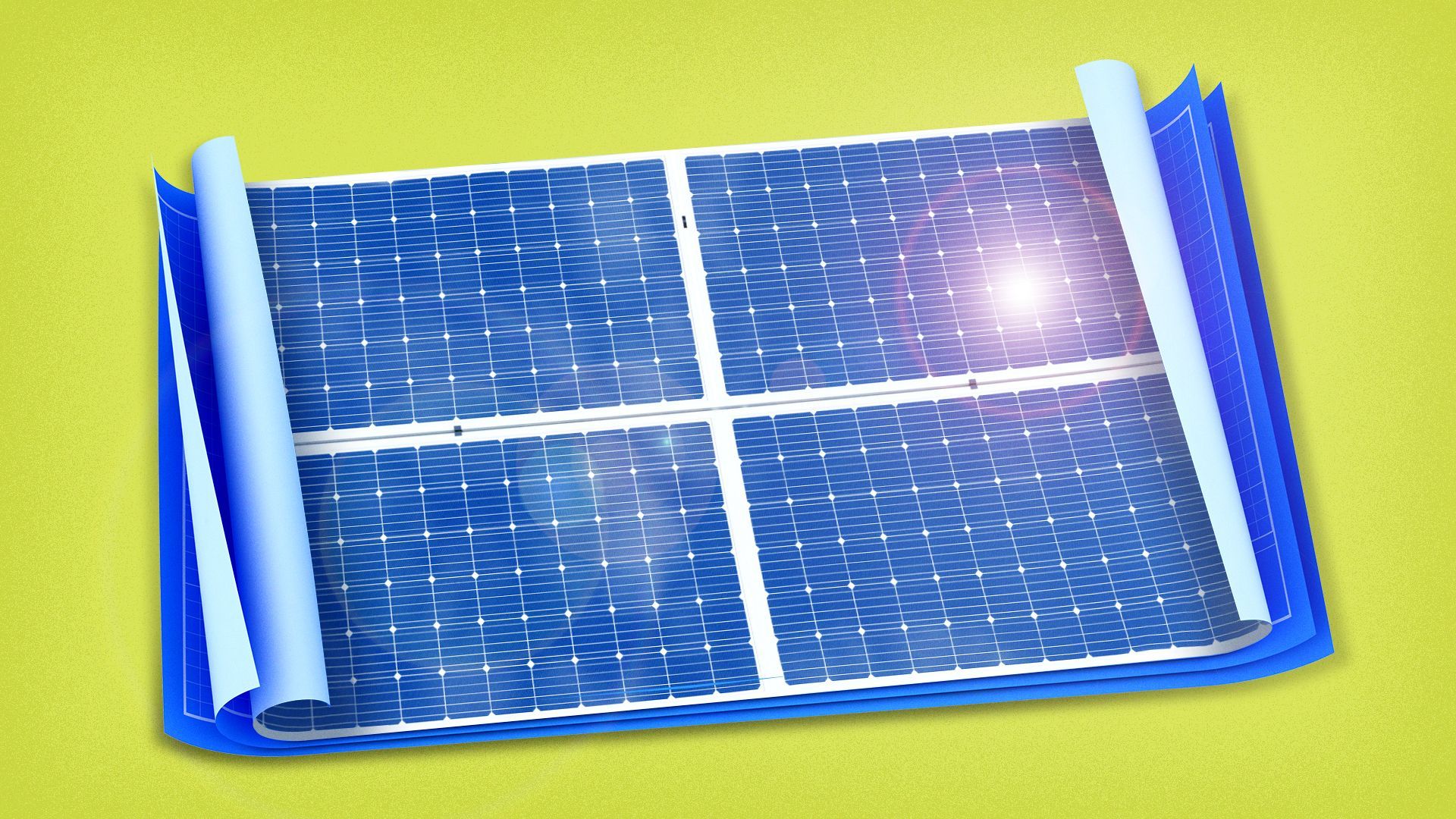
The Middle East conflict is driving some countries to accelerate their renewable energy plans, a new International Energy Agency report shows.
Why it matters: The war's effect on LNG and oil supplies is spurring what could be lasting changes in energy markets and policy decisions.
- Energy security is driving expansion "as more countries seek to reduce their exposure to imported fuels," IEA head Fatih Birol said in a statement.
The big picture: IEA forecasts that renewables will generate almost 43% of global electricity in 2031, up from a third last year.
- Some governments have setting more ambitious targets in response to the Iran crisis, while others are accelerating existing plans.
5. 👓 Hot Reads: Elections and research

Amendment 82, which would add "right to natural gas" to Colorado Constitution, appears unlikely to pass (Colorado Sun)
Amy says: The prevailing wisdom is that moderate energy and climate politics prevailed in this week's elections, but at least in this one purple hot spot for oil and gas, that doesn't mean voters are giving a big green light to industry.
Energy and Water Issues Propel Democrats to Victory in Arizona (Inside Climate News)
Amy says: My story today focuses on the national landscape, but I think climate will feature more prominently at the state level — and especially in climate hot spots (pun intended I guess) like Arizona.
How Trump Is Dismantling America's Scientific Research Machine (NYT)
Amy says: This is a wide-ranging story that touches on energy and climate but goes far beyond.
- Key quote: "Science is the long game," said Marcia McNutt, who was president of the National Academy of Sciences, the country's top scientific advisory body, until this summer. "By the time we no longer win any Nobel Prizes, we will have lost the capacity to ever recover."
6. 🧮 Stat du jour: 702 megawatts with CO2 capture
That's the planned power from Bloom Energy fuel cells equipped with carbon capture that Google is backing to help supply a new Wyoming data center.
📫 Did a friend send you this newsletter? Welcome, please sign up.
🙏 Thanks to Mackenzie Weinger, David Nather and Chris Speckhard for editing, and to our brilliant Axios visuals team.
Sign up for Axios Future of Energy