Axios Future of Energy
August 19, 2026


🐪 Halfway! We're opening with a wide-angle look at changing grid vulnerabilities, then moving on to...
- The evolving politics of data centers, ocean mining, batteries and more, all in 1,320 words, 5 minutes.
🙏 Thanks to Mackenzie Weinger, David Nather and Chris Speckhard for editing and to our brilliant Axios visuals team.
🥁 RIP to Frank Beard, drummer for Texas rock greats ZZ Top, whose talent lives on in today's intro tune...
1 big thing: The grid's extreme heat problem is changing

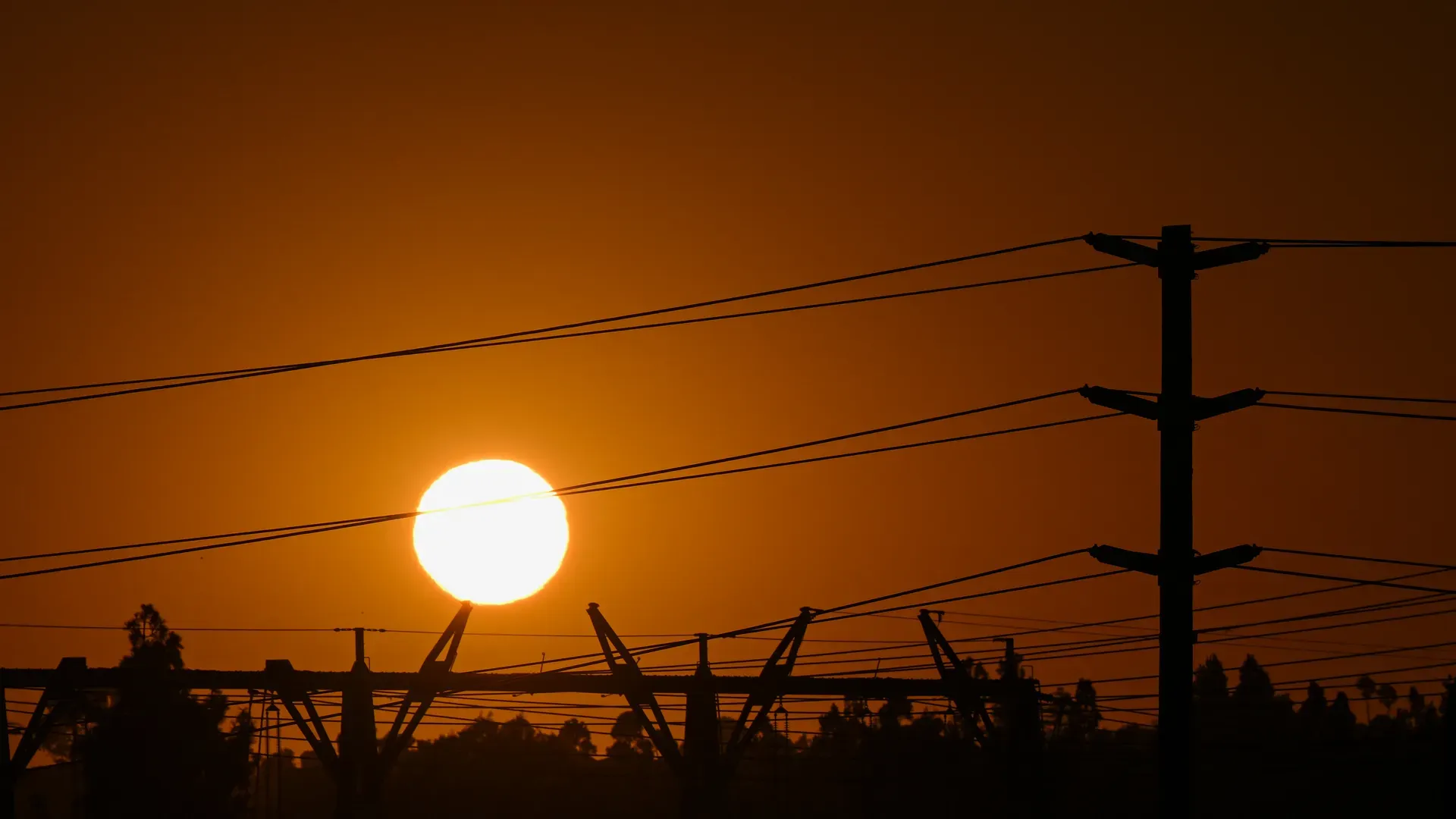
Solar energy and batteries are making it easier for utilities to meet surging electricity demand during extreme heat, but prolonged high temperatures are exposing other vulnerabilities in the grid.
Why it matters: Electricity demand rises as air conditioners work harder in extreme heat, while high temperatures can make parts of the system less efficient and put additional stress on equipment.
The big picture: Climate change is extending periods of extreme heat just as electrification and data centers add new loads, leaving parts of the grid working harder for longer.
Between the lines: Michael Webber, a mechanical engineering professor at the University of Texas at Austin, tells Axios that grid operators face a "triple whammy" under extreme heat, as air conditioners, transmission lines and power plants all become less efficient.
- "At the times we need the grid the most is when every single component in the grid is less efficient ... but also more fragile, and then we run it more," says Webber, who's also CTO of Energy Impact Partners, a clean-tech venture capital firm.
- A 2018 study Webber co-authored found that power plants, air conditioners and transmission systems tend to operate more efficiently at cooler temperatures.
Zoom in: It's not just hotter days that matter. Webber says hot nights can prevent equipment from getting a chance to cool down.
- In Texas, "it's not so much that it's 105°F during the day; it's that it only cools to 78°F at night," he says. "The equipment never gets a break."
- Rob Gramlich, president of Grid Strategies, a consulting firm focused on electric transmission, says that problem is particularly acute for local distribution systems — including transformers — which need time to cool overnight.
- Utilities may need more redundancy in local distribution networks, as well as backup transformers that can be deployed when equipment fails, Gramlich says.
- "They're going to have to build in more procurement and storage, which costs money," he adds.
What we're watching: Longer hot seasons could also squeeze the spring and fall windows when power plants traditionally go offline for maintenance.
Zoom out: California shows how rapidly the summer reliability equation can change as solar and storage proliferate.
- The state experienced rolling blackouts during summer heat in 2020, but it has since added more solar and storage and is now "basically in a good situation" despite demand growth, Gramlich says.
- Through July, clean energy met or exceeded demand on the state's main grid for an average 6.8 hours per day, up from 0.4 hours in 2022, according to the California Energy Commission.
Yes, but: Extended winter cold can pose a greater resource-adequacy challenge than summer heat, Gramlich says.
The bottom line: As solar and storage make summer peaks easier to manage, prolonged heat is exposing a different challenge: keeping the grid itself running efficiently and reliably for longer stretches.
2. ⚔️ The stakes of Josh Shapiro's data center pivot

Pennsylvania Gov. Josh Shapiro's (D) newly hard line on data centers says plenty about the evolving politics of AI and the tech industry's challenge to build the energy and computing power it needs.
Why it matters: He's in the 2028 presidential mix, leads a critical swing state, and faces November reelection in one of several governor's races where data centers are taking center stage.
Catch up quick: Shapiro yesterday issued an executive order that creates a tougher road for data center developers.
- Changes include stricter standards on community buy-in, booting data centers from the state's fast-track permitting program, and making future projects ineligible.
- It comes after the state's Senate did not act on his proposals in May, but it's also tougher than the earlier policies.
The big picture: The shift in political tone is unmistakable.
- While his May rollout talked up strict standards, it also said the state is looking to compete on "innovation," and he's previously been more welcoming.
- The vibes were different yesterday. Shapiro went after "predatory" actors and used other tough language. Still, he stopped short of a moratorium.
State of play: The new standards brought cheers from environmental groups, including the League of Conservation Voters, a large and politically active outfit.
Friction point: "I thought he was the clear leader of the Abundance Democrats, but this is just more of the old business-bashing Dem playbook," Adam Thierer, an innovation policy analyst with the R Street Institute, a free-market think tank, said on X.
What we're watching: Data centers are shaking up races nationwide as the midterms approach.
- The Senate GOP campaign arm, in a private memo to top AI companies, warns that toxic views of U.S. data centers are killing the party's chances of holding a vital seat in Ohio, Axios' Alex Isenstadt scooped this morning.
3. 🏃 Catch up quick: Ocean mining, Venezuela, gas

🌊 Environmental and community groups are suing over federal plans to lease tracts off American Samoa for ocean-floor mining, and intend to challenge a similar effort off the Northern Mariana Islands.
- Why it matters: Trump officials are keen to foster an emerging industry that would harvest seafloor nodules with copper, nickel, zinc and other resources. But some scientists and environmental groups are concerned about ecological harms.
- Driving the news: Earthjustice is challenging a Commerce Department finding that leasing off American Samoa is "not likely to adversely affect" threatened or endangered species, which is key to enabling an Interior Department lease sale.
- State of play: The case, on behalf of conservation and community groups, is the first to challenge deep-sea mining in U.S. waters, per Earthjustice. Interior is separately weighing The Metals Company's push to explore international waters in the Pacific Ocean.
🛢️ Venezuelan oil minister Paula Henao said on state TV yesterday that the country has new contracts with U.S. oilfield services giant SLB and independent producer Hunt Oil, per Bloomberg and Reuters.
- Why it matters: The White House hopes to see U.S. companies play a major role in new or expanded projects in the country, which holds massive oil deposits, but it has been slow going.
- What we're watching: Several U.S. companies are slated to sign production contracts with the country's state-run oil company this week, per Politico.
💵 Via the WSJ, "Natural-gas and electricity distributor UGI Corp. recently received a roughly $9 billion takeover offer from KKR."
4. 🌇 One fading summer thing: Late sunsets slip away

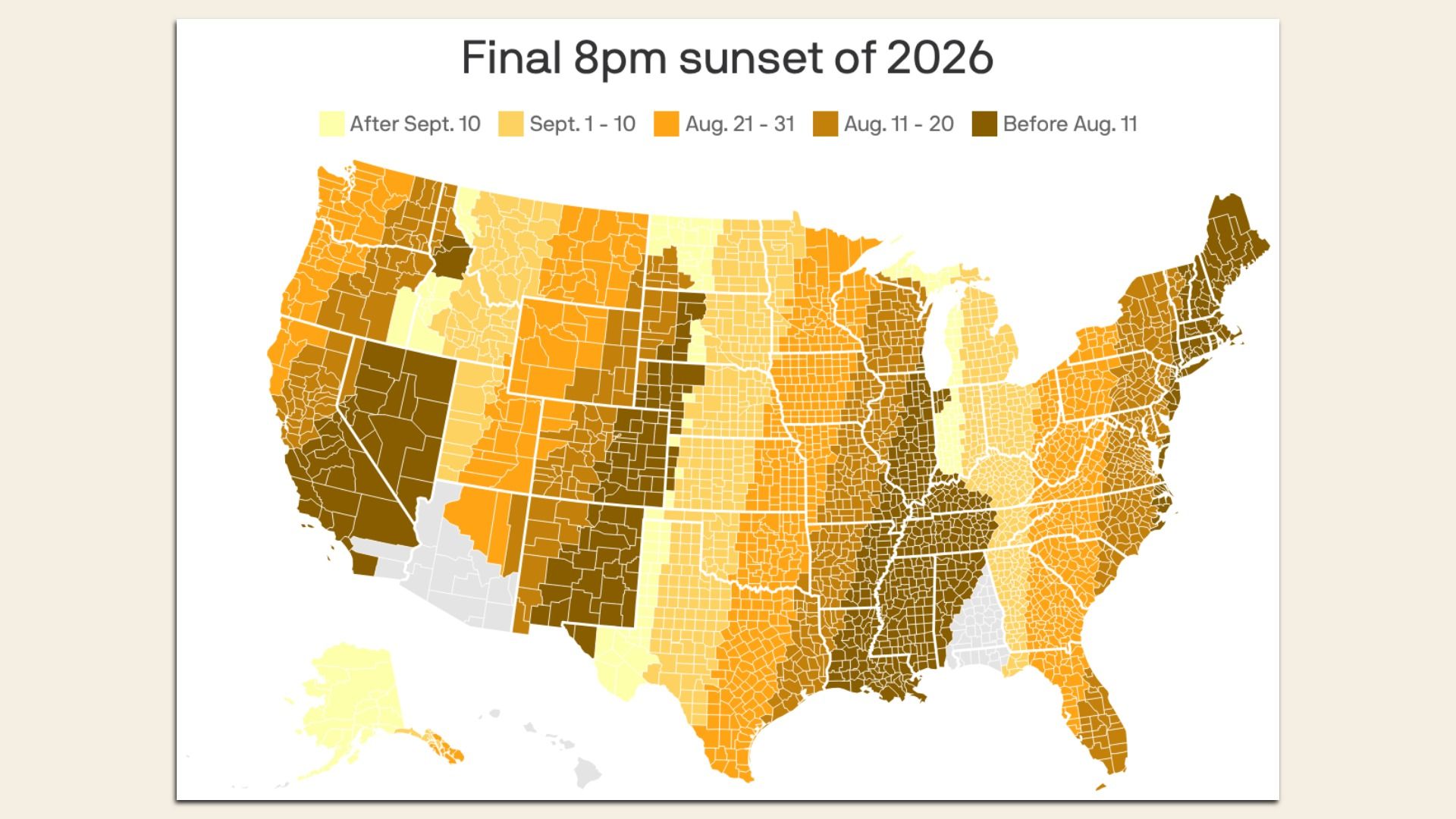
A quick break from energy news because our Axios colleague Brad Jennings reports that most Americans have already seen their final 8pm sunset of the year.
The big picture: We lose a little more daylight every day as the Earth's Northern Hemisphere tilts away from the Sun through Dec. 21, which will be the shortest day of the year.
- But the farther west within a time zone you live, the later your sunsets will typically be.
Zoom in: Most of the largest U.S. metro areas sit in the eastern parts of their time zones.
- East Coast cities from Boston to Miami are already officially in 8pm darkness.
- Same for Chicago, Los Angeles, Phoenix, San Diego, New Orleans, Nashville and Denver in their respective time zones.
- Most major cities in Texas — including San Antonio, Austin, Dallas and Fort Worth — still have late-evening daylight.
- And Atlanta, which sits west of Detroit in the Eastern time zone, also has later light.
5. 🪖 Number of the day: 40%
That's drones' 2025 share of total battery demand from various defense applications, such as bases, vehicles, and soldiers' gear (like radios), per new Benchmark Mineral Intelligence analysis.
Why it matters: While the total defense market for batteries remains small compared to civilian uses, it's growing quickly.
- And drones are reshaping the energy security landscape by making it easier — and cheaper — to interrupt energy supplies.
📫 Did a friend send you this newsletter? Welcome, please sign up.
Sign up for Axios Future of Energy