Axios Future of Energy

April 17, 2026


🍸 Aaaaaaah. We're closing the week with...
- TotalEnergies CEO on his wind deal with Trump
- The latest on Iran
- FERC's plans, climate litigation, data centers and more, all in 1,410 words, 5 minutes
🙏 Thanks to David Nather and Chris Speckhard for editing and to our brilliant Axios visuals team.
🦩 Happy birthday to composer Jan Hammer, best-known for today's instrumental intro tune...
1 big thing: "It's our money" — TotalEnergies CEO on offshore wind deal
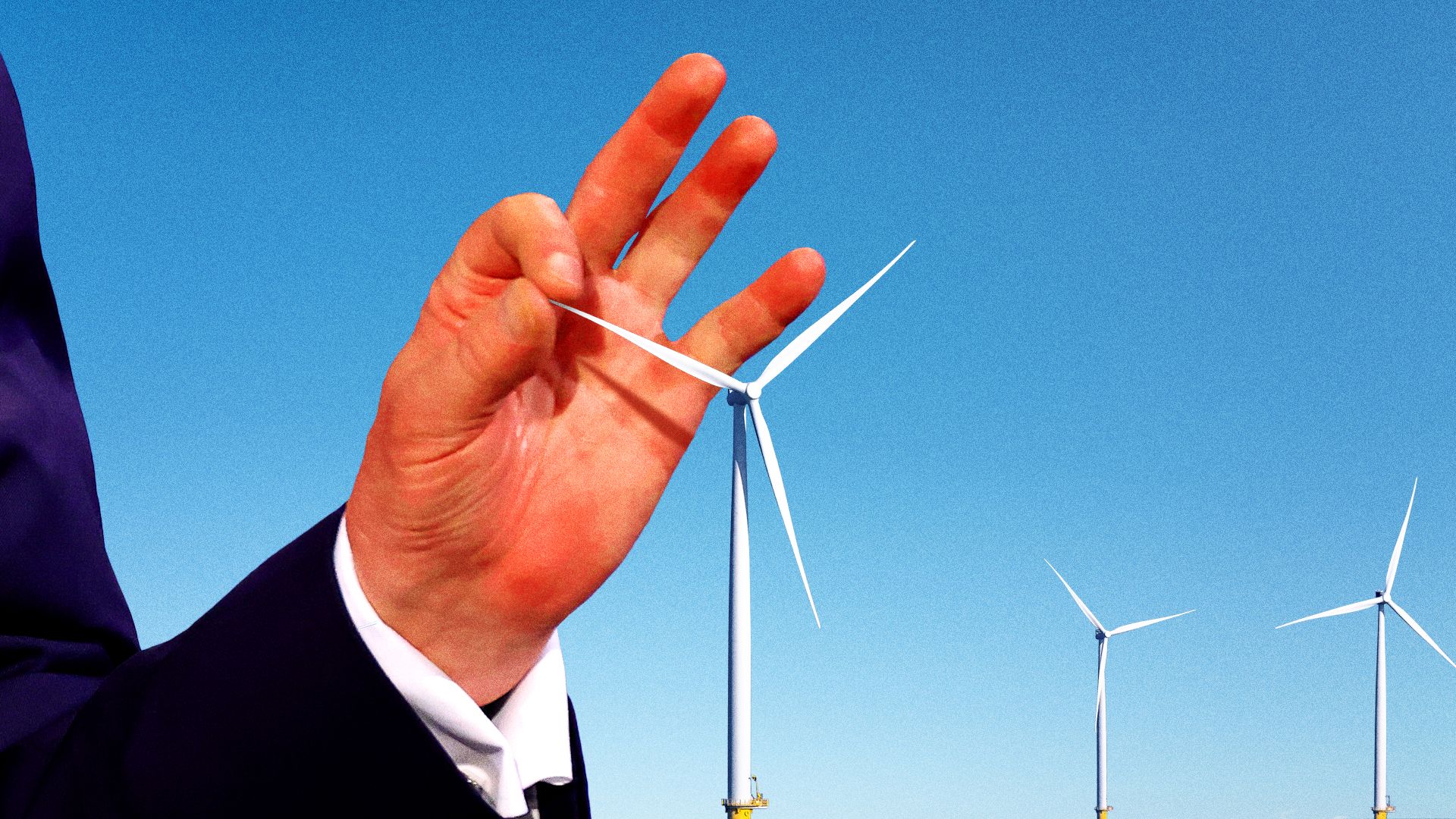
The CEO of French oil giant TotalEnergies is defending a rare — and controversial — deal he struck last month with the Trump administration ending the company's federal offshore wind leases.
Why it matters: The comments offer a window into a deal structure other companies could pursue as President Trump moves to dismantle the nascent U.S. offshore wind sector.
Driving the news: "This type of project — offshore wind — requires many years to develop," TotalEnergies CEO Patrick Pouyanné told Axios on the sidelines of a JPMorgan Chase gathering this week in Scottsdale, Arizona.
- "If you have a change in the administration every four years and they change their minds, you invest every four years, you stop, it doesn't work. I cannot do that."
Catch up quick: Last month, Interior Secretary Doug Burgum and Pouyanné announced the U.S. would return nearly $1 billion tied to federal leases TotalEnergies secured in 2022.
- In exchange, Pouyanné said his company would reinvest that money into oil and gas projects in the U.S.
State of play: The deal has raised questions about its legality and whether U.S. taxpayer money is flowing to a foreign company. Pouyanné rejected both critiques.
"We're not taking the taxpayers' money. It's our money. We gave it in 2022," Pouyanné said.
- When asked if he thought the agreement was legal, he replied: "The legality of the agreement is a matter for the government."
The big picture: Since moving back into the White House, Trump has moved aggressively to kneecap America's offshore wind industry, which was already struggling to get off the ground due to higher borrowing costs and supply chain snags.
- Several court rulings have set back Trump's efforts, leading to the unusual move by the administration to essentially pay off a privately controlled company to relinquish its leases.
Inside the room: Pouyanné said TotalEnergies initiated the talks. "It came from us — we took the initiative," Pouyanné said.
- The alternative, he said, was more litigation. "I cannot accept losing $928 million," Pouyanné said.
How it works: Pouyanné said his company would keep pursuing offshore wind in Germany, the United Kingdom and France. But he says it's "too expensive" in countries like Brazil, the Philippines, India, in addition to the U.S.
- Pouyanné said he will "never" pursue offshore wind again in the U.S., citing political volatility and relatively low power prices.
The intrigue: TotalEnergies — which rebranded from Total in 2021 to reflect a broader energy strategy — remains more committed to renewables than most other oil and gas producers.
- The company is still investing in U.S. onshore wind, solar and battery storage, which Pouyanné said can compete with natural gas.
What we're watching: Whether similar deals emerge for other offshore wind leaseholders.
2. 🗞️ The latest on Iran: Nuclear negotiations, Hormuz talks, oil plea, jet fuel worries
🚨 Breaking: The U.S. and Iran are negotiating a peace deal that involves the U.S. releasing $20 billion in frozen Iranian funds in return for Iran giving up its stockpile of enriched uranium, Axios' Barak Ravid and Marc Caputo report.
💬 Leaders of the U.K. and France convened dozens of countries today to discuss long-term freedom of navigation of the Strait of Hormuz. U.K. announcement ... AP coverage
🙏 Energy Secretary Chris Wright and Interior boss Doug Burgum urged U.S. oil execs to boost production during a videoconference yesterday, per Bloomberg and others.
- Reality check: "We can't surge production; it's not like a strategic petroleum reserve that you can suddenly release from a tank, that's not how shale works," oil analyst Bob McNally tells the FT.
🛫 "Europe may have just six weeks left of jet fuel, with serious consequences for the continent's economy, the International Energy Agency warned on Thursday," CNBC reports.
3. 🗓️ FERC readies to make its move on data centers

FERC pledged to act by June on DOE boss Chris Wright's push for rules to govern large data centers' connection to grids.
Why it matters: It's among Trump 2.0's biggest efforts to shorten the bureaucratic path for AI infrastructure — but without sticking consumers with system upgrade costs.
- FERC's decision will be very closely watched in the power and tech worlds.
State of play: Wright's late 2025 proposal offered principles for considering data center and power generation plans jointly; assigning costs to developers; prioritizing projects that can flexibly curtail power use, and more.
Friction point: The plan has kicked up lots of dust, such as state regulators and some utilities fretting that FERC will trample states' jurisdiction.
- FERC didn't tip its hand on how it will tackle Wright's multi-part proposal.
- Yesterday's announcement says only that it will address the topics in a "quick, efficient, and legally durable manner."
What we're watching: The research firm ClearView Energy Partners, in a note, read tea leaves in FERC members' comments at yesterday's commission meeting and the notice about the plan.
- ClearView predicts an "order or guidance that supports (but does not muscularly interfere with) regional transmission organizations (RTOs) efforts to reform Tariffs to address large load interconnection," it states.
4. 🧁 Bonus policy notes: Climate, mining, offshore wind


⚖️ It has been a busy couple of days on the climate litigation front.
- Why it matters: Court battles over state policies and fossil fuel companies' climate responsibility have taken on greater importance amid the federal policy U-turn.
- Catch up quick: A California superior court judge this week paused cases against oil giants brought by the state and local governments there, citing upcoming Supreme Court action on the topic.
- State of play: SCOTUS' decision to weigh in is freezing multiple cases. The high court said in February it will consider if federal law precludes state-law claims for damages from emissions.
- Yes, but: Via the NYT, a federal judge has tossed out a "highly unusual" Trump administration effort to pre-emptively block Hawaii from suing oil majors for climate damages. But the piece notes that defendants have asked the Hawaii court to pause that case too, pending SCOTUS action.
⛏️ The Senate narrowly sent a measure to President Trump's desk that reverses the Biden administration's 20-year moratorium on mining on federal land near the Boundary Waters Canoe Area Wilderness.
- Why it matters: The move removes a significant roadblock to Twin Metals Minnesota's long-debated bid to build an underground copper-nickel mine. Full story
⏸️ EDP SA, a big power company, has paused three planned U.S. offshore wind projects amid Trump's opposition to the tech, per Bloomberg.
5. 👓 Hot Reads: AI risks and China

How Worried Should Data Center Developers Be About Violence? (Heatmap News)
Amy says: This was an interesting read, though (sadly) it could be extrapolated out to represent the increasing violence on a range of issues not previously considered violent.
With Hormuz Closed, China Is Wiring the Globe's Clean Energy Future (David Hart, Council on Foreign Relations)
Ben says: Lots o' useful stuff here about how the war boosts China's edge in the growing struggle between "electrostates" and "petrostates."
- It gets beyond the familiar fare (like the advantage in solar) to deeper effects, like how throttled Mideast aluminum exports give China more leverage in markets for the metal that's crucial to power equipment.
Five large data centers eyed for Seattle (Seattle Times)
Amy says: The article doesn't disclose where the data centers will be, but I toured one in an office building downtown recently — and that was wild to see!
6. ⚡ What has — and will — power data centers
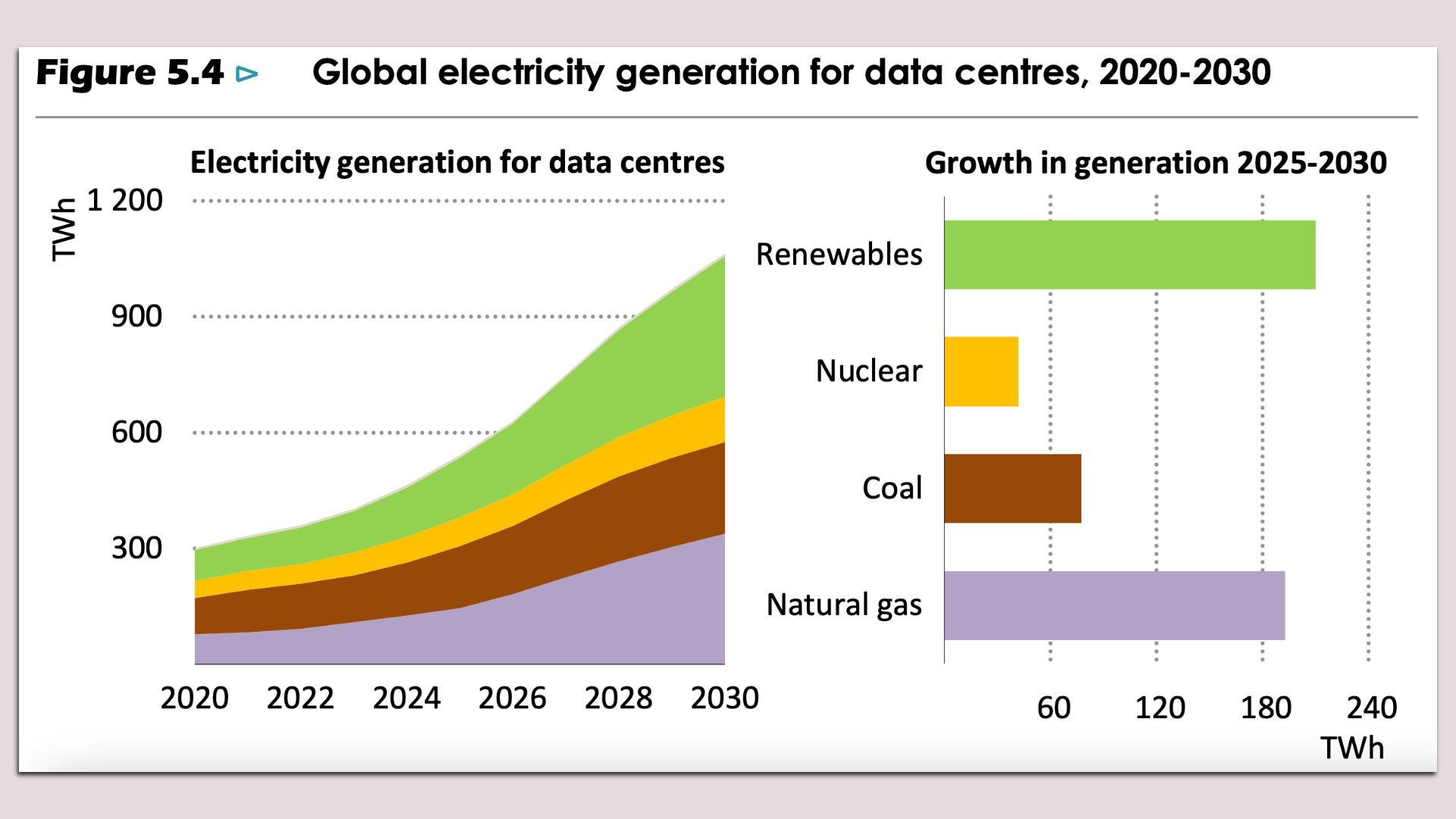
Renewables and natural gas are together slated to account for 65% of all power produced for global data centers by 2030, the International Energy Agency projects.
Why it matters: Its new report is a useful bonanza of stats and analysis about AI and power.
- It offers wide-angle perspective, too. Yeah, data center energy demand is soaring and risks straining grids.
- But it's not eating the world — it should represent around 3% of electricity use by 2030, IEA finds.
7. ⛽ Number of the day: -5%
Last week, U.S. drivers' rolling 30-day purchases of gasoline were down 5% compared to the same stretch last year, and the figure was -8% the prior week, per Barclays' tracking based on credit card data.
Why it matters: There's "continuing evidence of fuel demand destruction amid higher prices, although it has moderated compared to last week," researchers with the bank said in an analysis.
- That said, it reinforces how lots of driving isn't optional.
- Retail U.S. gas prices soared about 39% during the war — a vast swing compared to the consumption change.
📫 Did a friend send you this newsletter? Welcome, please sign up.
Sign up for Axios Future of Energy