Rare offshore wind reversal highlights shift under Trump

Add Axios as your preferred source to
see more of our stories on Google.
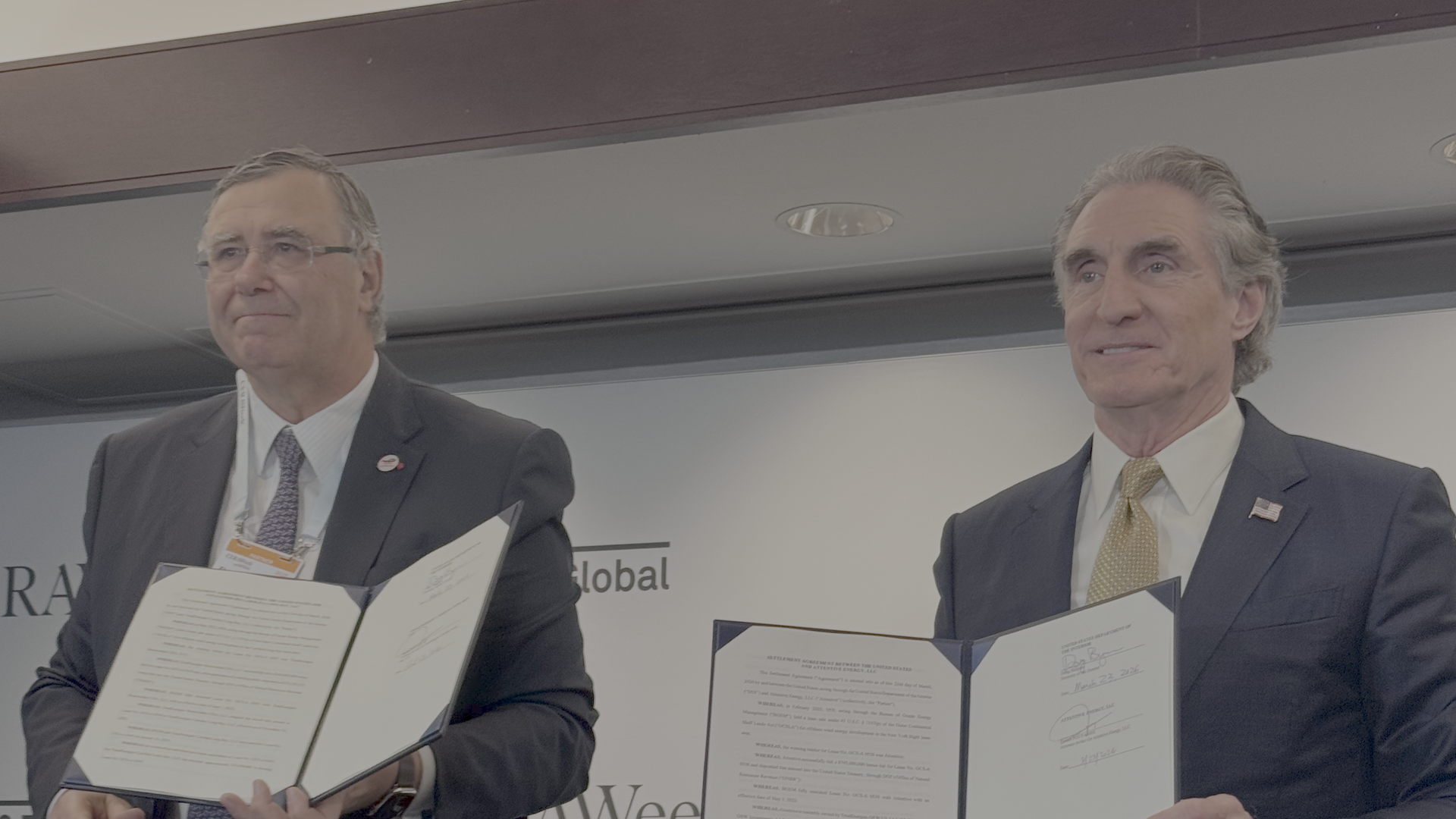
Pouyanné and Burgum display the agreement Monday. Photo: Amy Harder/Axios
HOUSTON — Interior Secretary Doug Burgum shared a stage Monday with the CEO of a French oil giant to take aim at offshore wind — a rare alignment between a government and a private company.
Why it matters: The moment, at one of the world's largest energy conferences, offered a stark snapshot of U.S. energy policy under President Trump.
Driving the news: Burgum and TotalEnergies CEO Patrick Pouyanné finalized an agreement Monday to cancel federal offshore wind leases worth about $1 billion and redirect that investment to oil and natural gas projects in the U.S.
Flashback: The shift is notable because both men had recently expressed support for wind.
- As governor of North Dakota in 2024, Burgum highlighted the fact that wind supplied roughly one-third of the state's electricity.
- In November 2024, Pouyanné said he was hopeful his company's offshore wind projects could move forward once Trump left office.
The big picture: Since moving back into the White House, Trump has moved aggressively to kneecap America's offshore wind industry, which was already struggling due to higher borrowing costs and supply chain snags.
- Several court rulings have set back Trump's efforts, leading to this unusual move by the administration to essentially pay off a privately controlled company to relinquish its leases.
What they're saying: The two leaders offered different rationales.
- Burgum made a distinction between onshore and offshore wind. "The cost of offshore is much, much higher than onshore," Burgum said in response to a question from Axios at a briefing Monday in Houston.
Pouyanné was more direct about the political calculus:
- "It's important that our investments fit with the policies developed by the countries, and that's what we'll do here in the U.S.," he said. "Our decision on U.S. offshore wind, which is to renounce the technology here, has not been renounced in other places."
The other side: Environmentalists and clean-energy advocates blasted the move on Monday, which was first reported last week by The New York Times.
- The criticism highlighted the fact that the AI boom is causing a surge in electricity demand, straining power bills that are already rising in some regions of the country.
- "This deal is an outrageous misuse of taxpayer dollars to prevent Americans from having clean, affordable power exactly when they need it most," said Ted Kelly, director and lead counsel for clean energy in the U.S. at the Environmental Defense Fund.
Between the lines: Offshore wind is far more expensive than onshore wind and solar and natural gas.
- But it's closer in cost to similarly early-stage technologies, including advanced geothermal and nuclear power, which big tech companies and the Trump administration are both supporting.
What we're watching: Whether this signals more one-off deals — and whether the U.S. offshore wind industry can regain momentum at all.
