Axios Future of Energy

October 24, 2025

🧭 The compass is pointing due weekend. We've got a quick and informative read for the journey, with 1,370 words, 5 minutes.
🚨 Big in power: DOE boss Chris Wright is pressing the Federal Energy Regulatory Commission to issue rules ensuring quick grid access for big data centers. Read his proposal.
📺 NEW: The latest episode of "The Axios Show" features Sen. Bernie Sanders interviewed by Alex Thompson. Watch on Axios ... Subscribe to our YouTube.
🎧 This week in 1972, soul great Al Green released the album "I'm Still in Love with You," which provides today's intro tune...
1 big thing: A mining giant's AI learning curve
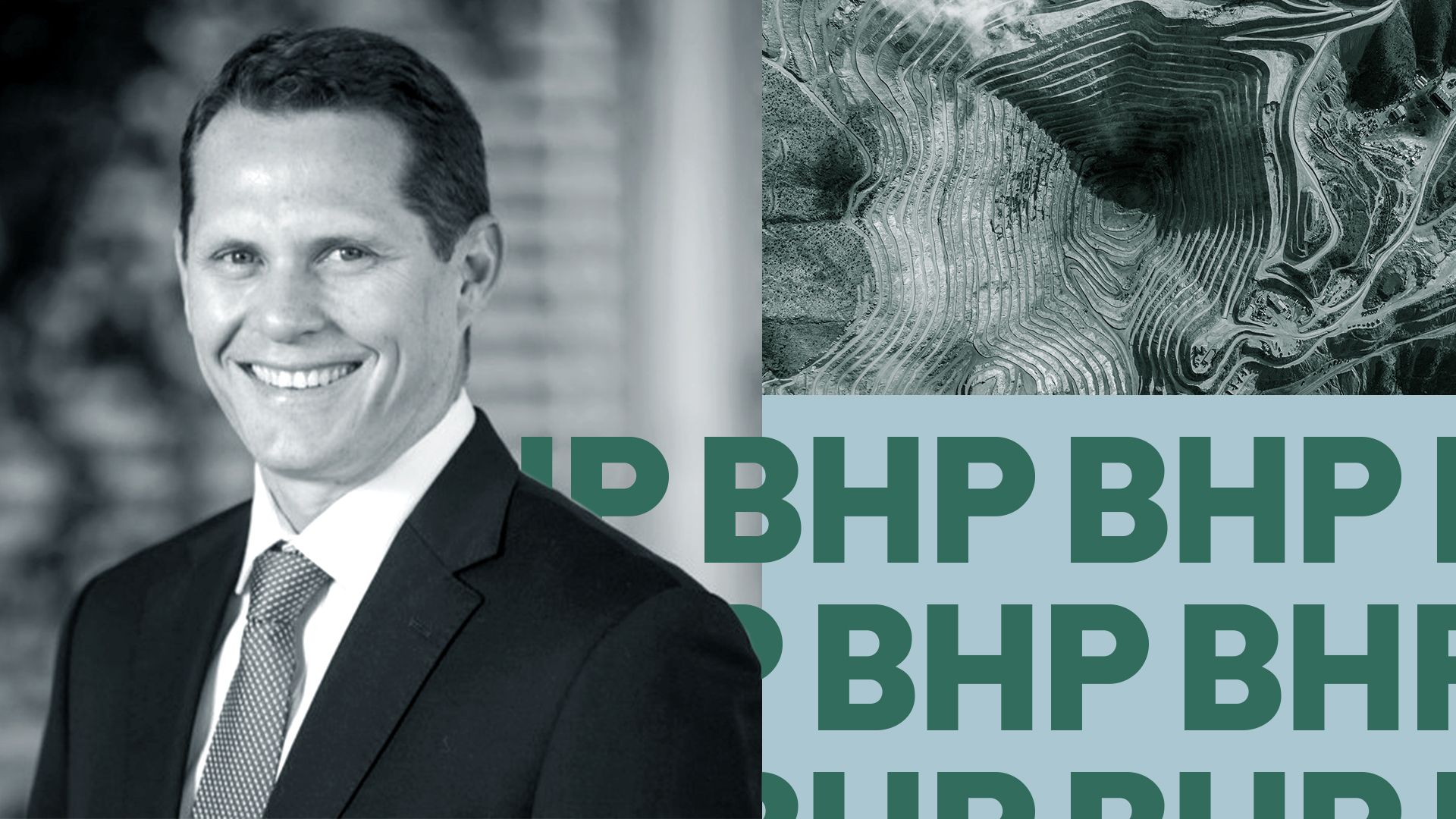
BHP, operator of the world's largest copper mine, sees a bright future for AI improving the industry — but cautions that it's early days, a top executive tells Axios.
Why it matters: BHP Americas President Brandon Craig's comments show how the huge, capital-intensive sector hopes to harness AI amid rising demand for key commodities.
- Legacy miners and startups alike are getting in on the action.
The big picture: "We're still learning how to take full advantage of this," Craig said in an interview this week.
- "I think most companies can see the power of this but are trying to calibrate on, how are we really going to generate value?"
- BHP is among the world's largest miners, with operations spanning copper — including Chile's huge Escondida mine — as well as iron ore, metallurgical coal, potash and nickel.
State of play: Craig's optimistic about ways AI digests astonishing amounts of data — some of it quite old — to help with resource discoveries and optimization.
- "We've spent 140 years drilling, drilling ground, looking for minerals, and then we've had geologists that have to interpret these reams of data to try and decode from this data, is there something there or isn't there?" he said.
- "And when you have deposits 1,000 meters, 2,000 meters underground, that becomes very, very difficult. AI is a whole lot better at interpreting that data reliably."
The intrigue: The company is also wading into how AI can help make its work safer and more cost-effective, Craig said.
- One example he offered was the use of AI to help with early detection of mechanical problems — like preventing a tear in a mammoth conveyor belt that's nearly 10 miles long.
- "With AI and the ability to just take a simple camera feed and put intelligence behind it, we will be able to solve a whole lot of problems very cheaply that will really support productivity, safety and a range of other things," he said.
Zoom out: Craig is bullish on long-term copper demand. That's regardless of how the expansion of renewables and AI data centers — which both use the metal — plays out globally.
- He cited growth in traditional uses — cables, buildings, motors and more. "If you step back and just look at macros," he said, referring to macroeconomic trends, "copper tracks GDP, but copper also tracks urbanization."
- "Absent renewables, absent digitization and artificial intelligence, copper intensity per GDP would be lower than what it is today, but it's still a modest effect," he said. "In 2050, it will be more material."
What we're watching: The company's U.S. future as the Trump administration looks to boost U.S. mining and ease permitting.
- And nearer term, we're interested in the ongoing court battle over the huge proposed Resolution Copper mine in Arizona that Rio Tinto would operate with a 45% BHP stake.
2. 🏀 Green stocks are rebounding, new analysis finds


Green energy stocks are making a comeback despite political headwinds, according to data released this week by research firm Rystad Energy.
Why it matters: Conventional wisdom suggests that clean-energy companies are down and out with President Trump repealing a raft of policies supporting them. But the stock reality says otherwise.
By the numbers: The green energy index, a collection of 83 public companies in the cleantech space, is up by 40% this year, beating the total return of the S&P 500 by 25 percentage points.
- The trend is "leaving most upstream oil and market indexes in the dust," said Artem Abramov, deputy of analysis at Norway-based Rystad.
Driving the news: The recent rally is being largely driven by a small handful of companies, including China's CATL and U.S. firm Bloom Energy. The latter has seen tailwinds thanks to AI power demand.
Yes, but: The index lost nearly 60% of its value during 2022 and 2023, and this latest recovery remains about 40% short of the peak in 2021.
Between the lines: This trend also doesn't capture the challenges that early-stage and private companies in this space are facing due to fewer government incentives, which are often vital to startups.
What we're watching: To what extent the AI boom will keep this trend going.
3. 🛢️ Trump's next drilling hurdle: convincing industry
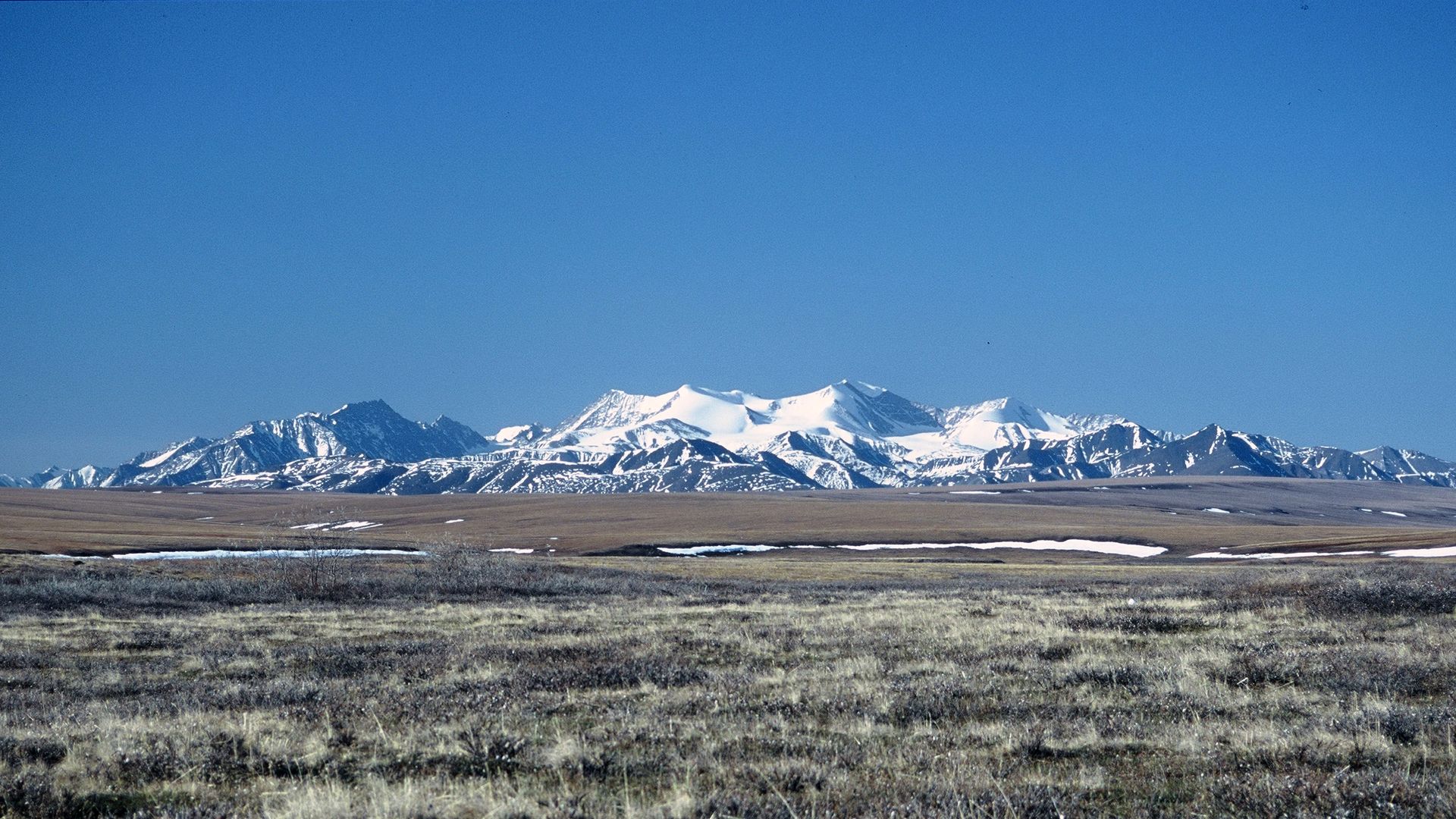
The Interior Department is teeing up fascinating tests about how oil companies think about the future of the market and the policy pendulum.
🏃 Catch up quick: Interior yesterday announced a decision to sell oil drilling leases in a wide swath of Alaska's Arctic National Wildlife Refuge.
- It's also reinstating leases previously obtained by the state-owned Alaska Industrial Development and Export Authority.
- Meanwhile, the Houston Chronicle and others report that Interior's upcoming five-year offshore leasing plan will offer East and West Coast acreage.
🏓 State of play: "We welcome the administration's efforts to fully leverage Alaska's enormous resource base as a driver of revenue, economic growth and energy security," Dustin Meyer, a top American Petroleum Institute official, said in a statement.
- Biden officials reluctantly sold leases required under Trump's 2017 tax-cutting bill, but under way more restrictive conditions, eliciting little interest.
🔍 Between the lines: A gauge of oil execs' appetite for ANWR will come when Trump's Interior actually auctions leases.
- ANWR — a political and legal battleground for decades — is thought to hold huge oil deposits.
- But C-suite openness to expensive and controversial Arctic projects is uncertain amid opportunities in the Lower 48 and the Gulf of America (renamed by Trump from Gulf of Mexico).
- Same deal for potential Atlantic and Pacific Coast sales.
🎙️ What they're saying: Oil analyst Ellen Wald doesn't see much industry interest in ANWR.
- "It's significantly more risky than other areas because it's very likely that a Democrat administration will withdraw the permits before any meaningful progress can be made towards recovering marketable oil or gas," she said via email.
Yes, but: Ben Cahill, another oil scholar, largely agrees, but notes via email that "maybe some independent E&Ps with Alaskan roots will show interest" in ANWR.
- Wald also sees big hurdles to East and West coast drilling, noting coastal governors' opposition and the prospect of a future administration nixing leases.
The bottom line: Lease sales, and how aggressively companies look to develop tracts, will help show how industry sees long-term demand, policy risks, future prices, and more.
4. 🥧 AI's rising share of the data center pie...
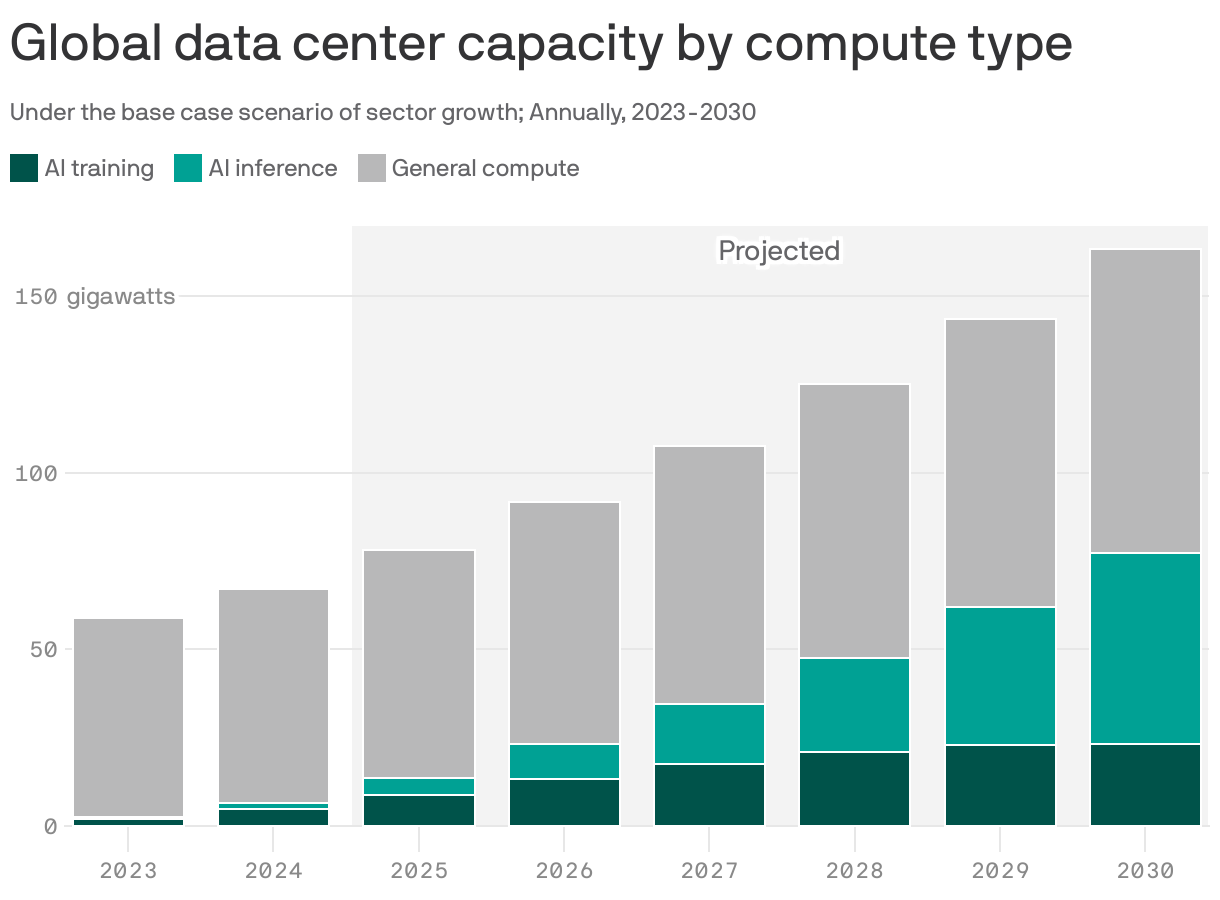
This graphic via Bain & Co. is a reminder that AI is a small subset of total data center capacity right now — but growing extraordinarily fast.
Why it matters: Massive, gigawatt-scale projects have huge power needs and risk new strains on aging grids.
The latest: Crusoe, which builds AI data centers focused around lower-carbon energy sources, held an initial close of its Series E round at an expected valuation of more than $10 billion.
- The company plans to raise $1.375 billion, after raising $600 million in Series D funding in December 2024.
5. 📊 ...and new polling about the environmental footprint
Forty-one percent of U.S. adults say they're concerned about AI's environmental impact, per new polling from AP and the University of Chicago.
Why it matters: Public worries could complicate buildout of huge data centers, which use large amounts of power and water.
The big picture: 49% of Democrats and 36% of Republicans list themselves as either "extremely," "very," or "somewhat" concerned.
What we're watching: That's one data point in a much wider poll of U.S. views on energy and climate. Take it for a spin.
6. 🚘 Number of the day: 600+
That's the number of jobs at stake as EV startup Rivian sheds 4.5% of its workforce.
Why it matters: The expiration of the federal EV tax credit in September is widely expected to lead to a decline in EV sales across the industry.
📬 Did a friend send you this newsletter? Welcome, please sign up.
🙏 Thanks to Chuck McCutcheon and Chris Speckhard for edits to today's edition, along with the brilliant Axios Visuals team.
Sign up for Axios Future of Energy