Axios Future of Energy

September 01, 2026


⏩ Power is evolving fast, and we're opening with fresh evidence, then moving on to...
- Tech finance news, the latest on Venezuela, a battery storage record and more, all in 1,333 words, 5 minutes.
🙏 Thanks to Mackenzie Weinger, David Nather and Chris Speckhard for editing and to our brilliant Axios visuals team.
🎛️ This week marks 30 years since Pet Shop Boys dropped "Bilingual," and a beautiful slice of their synth-pop craftsmanship is today's intro tune...
1 big thing: Power upstart Light snags $46 million for expansion

Light, a Texas startup that enables businesses to offer customers bespoke, branded retail electricity plans, raised $46 million in Series A funding, the company told Axios.
Why it matters: It will support Light's expansion outside Texas into the massive PJM market and beyond as it challenges incumbent power giants.
- Light works with solar companies, homes and multi-family buildings, EV charging providers and others.
- Its growth arrives amid rising power demand and costs.
Zoom out: "This industry, especially retail electricity, in the U.S. is dominated by these very large incumbents that are offering this one-size-fits-all product," co-founder and CEO Baker Shogry said.
- "Our north star is we want to enable partners to give their customers an electricity plan and solution they can't get anywhere else," he said in an interview.
How it works: Light works with companies to create and tailor branded retail electricity plans for customers.
- It operates behind the scenes on everything from regulatory compliance, power procurement, billing and more, while opening new revenue streams for clients.
Catch up quick: Existing clients include the solar and battery storage provider Palmetto; GoodLeap, which offers a suite of residential energy products; and Ownwell, which provides homeowners with services to lower taxes and other costs.
State of play: Providers of hardware like solar systems and EV chargers offer a more complete product if it comes bundled with a retail electricity plan, Shogry said.
- Higher demand and costs are leading more companies to see the benefit of entering into direct energy relationships with their customers, he said.
"It's becoming increasingly difficult to just sell hardware and then leave your customers to ... procure the electricity when it's increasingly volatile, confusing, and expensive to do so," he said.
- By working with Light, renewables and storage providers can also help customers monetize those assets by selling power back into the grid.
2. 🧁 Bonus energy finance notes: Natural gas, solar, geothermal
👀 SB Energy is going public. The SoftBank-backed company is developing a massive gas-fired power project in Ohio to serve an OpenAI data center campus. Go deeper
☀️ Odyssey Energy Solutions — which connects solar providers, contractors and financiers in developing nations — announced $74 million in new equity and debt finance. Heatmap has more.
🤝 Fervo and Google have a nearly 400 megawatt deal for energy from the geothermal startup's Utah project, the WSJ reports, calling it Fervo's largest-ever power deal.
3. 🛢️ Venezuela details and discontent
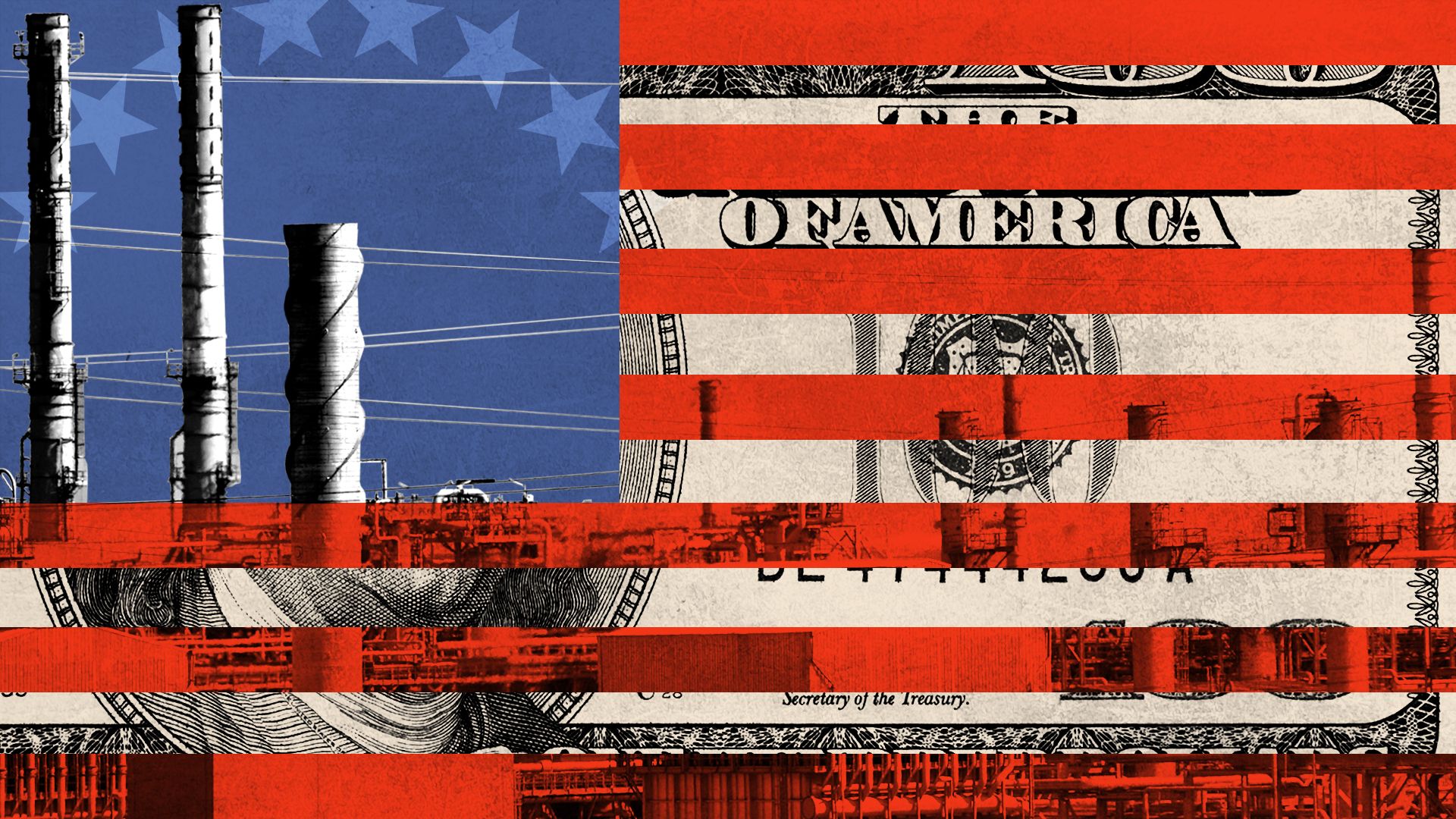
The White House has dropped details of the plan to take a majority stake in 17 Venezuelan oilfields, revealing the scope of preferential access for the U.S. and more.
Why it matters: President Trump and Delcy Rodríguez, Venezuela's acting president, say the plan will bring huge new investments to boost production from the nation, which has massive reserves but dilapidated infrastructure.
- But the unusual agreement — which creates a major role for the Pentagon — faces questions about its durability and criticism that it's a modern form of colonialism.
Driving the news: A new White House document provides more on the partnership with North American Blue Energy Partners (NABEP), the Pentagon, and the State Department.
- It reveals that in addition to the State Department's previously reported 20% guaranteed supply from the oilfields "at production cost," State has "the right of first refusal to purchase the remaining 80% of its production."
- In addition, "The U.S. government has a veto power over the appointment of any member of the board of directors, and a majority of NABEP's board of directors must be U.S. citizens," the White House said.
- Reuters reports, citing two U.S. officials, that some of the fields were previously run by Chinese or Russian interests.
Catch up quick: The Pentagon's Office of Strategic Capital will also have a 35% equity stake in NABEP corporate parent, the White House confirmed.
What we're watching: The agreement opens the door for more investments, but comes with big caveats, writes Radhika Bansal, a senior analyst with the research and consulting firm Rystad Energy.
- "Investors looking at multi-decade projects need confidence that a contract signed today will be honored by whoever governs Venezuela in ten or twenty years," Bansal writes in a note.
- But the political reaction inside the country, with criticism from people loyal to the old regime but also from "opposition circles," is a sign that "durability is not guaranteed," she writes.
Go deeper: The secret history of Trump's Venezuelan oil baron
4. 👟 Catch up quick on policy: Lobbying, climate ruling, Trump meeting

🚀 The Center for Climate and Energy Solutions (C2ES), a major nonprofit, is launching an advocacy affiliate called C2ES Action, it announced this morning.
- Why it matters: The move means C2ES, which has grown significantly in recent years, will have a freer hand for lobbying and legislative work by having an affiliate under section 501(c)(4) of the tax code.
- What we're watching: It plans to engage more deeply on federal permitting legislation, building transmission, state laws and more. It's not diving into electoral politics like some (c)(4) groups in this space.
- The bottom line: C2ES President Nat Keohane, who will also lead C2ES Action, tells Axios the group hopes to help channel rising power demand into investment and policies that back clean energy and manufacturing.
🛑 A New York federal judge blocked the state's "climate superfund" law that would assess billions of dollars in damages against fossil fuel companies to help fund climate adaptation.
- Why it matters: It's a setback for state-level climate advocates at a time when the White House has pulled back Biden-era federal efforts. It's a win for industry groups and red states who called it a punitive move to address a global problem at the state level.
- Driving the news: Judge Brenda Sannes of the U.S. District Court for the Northern District of New York — an Obama-era appointee — ruled that the state law is preempted by the federal Clean Air Act and the foreign affairs doctrine.
- What we're watching: Vermont's climate superfund law is also tied up in court, while several blue states are considering similar efforts.
⛽ President Trump will meet with refiners and fuel retailers at the White House today, so we'll be watching for any new federal efforts to ease gas prices.
5. 🔢 "Let data reign": The scramble to save data centers

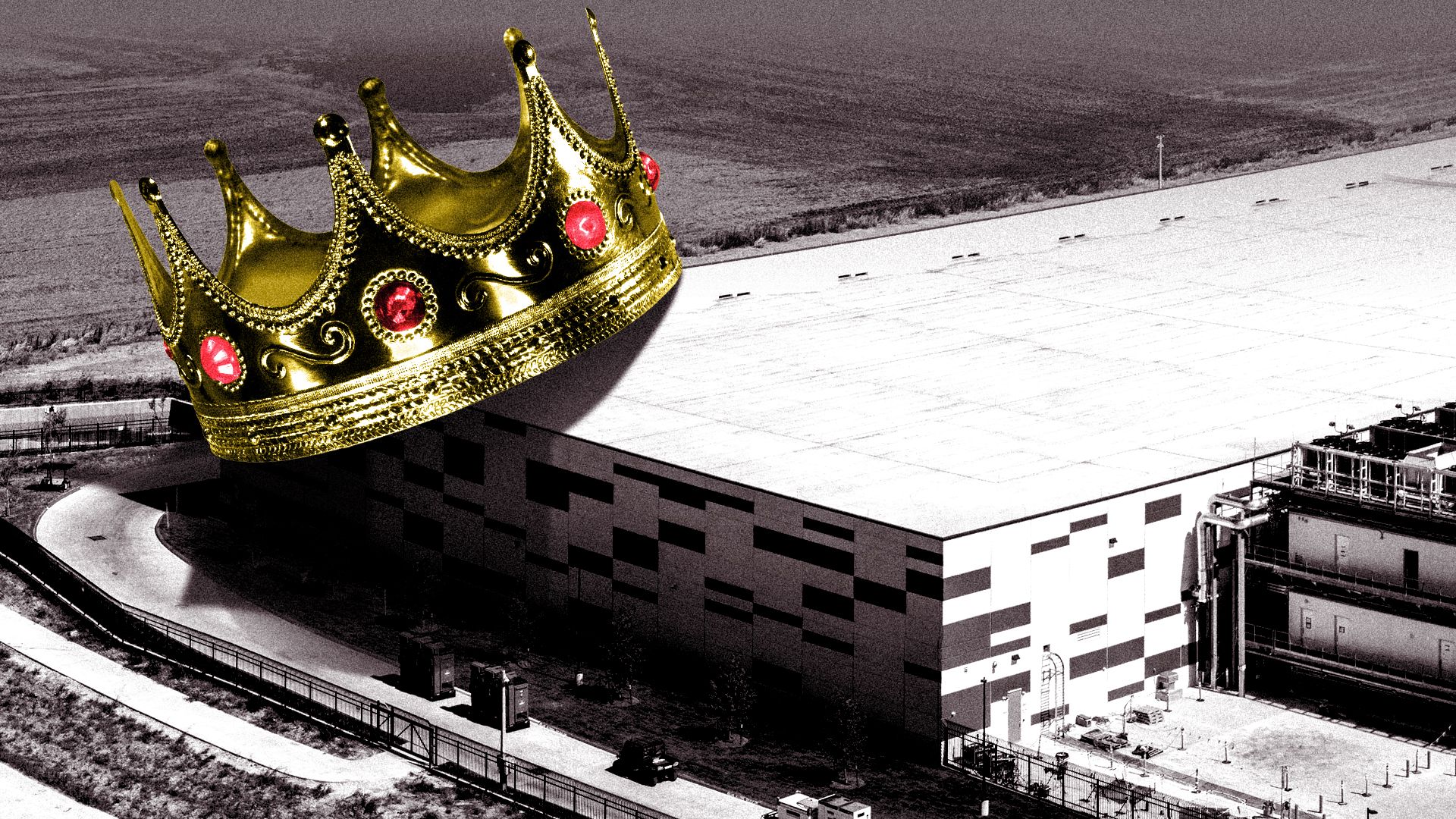
President Trump has a new message for Americans rebelling over the nation's data center boom: Get over it.
- "If we kill the Golden Goose, you will only have yourselves to blame," Trump warned yesterday.
Why it matters: Nine weeks out from the midterms, he's charging into a fight Republicans have been scrambling to escape — staking his political capital on one of the most toxic issues in the country.
Catch up quick: "The only reason that communities throughout the U.S.A. should not want Data Centers is if they want to end up being backwards and poor," Trump wrote on Truth Social.
- "If they want to be successful and rich, with far lower taxes and jobs all over the place, let Data Reign," he added, drawing rare frustration and confusion from his MAGA followers.
The big picture: Trump's blunt intervention comes as the AI industry mounts a far more disciplined campaign to persuade data center skeptics rather than browbeat them.
- Build American AI, a group linked to the pro-AI super PAC Leading the Future, is ready to unload a $50 million war chest to defend data centers in key states, starting in Kansas, Ohio and Wisconsin.
6. 🔋 Number of the day: 20.2 gigawatt-hours
That's the record-setting addition of U.S. battery storage capacity in the second quarter of 2026, per new data from the Solar Energy Industries Association and Benchmark Mineral Intelligence.
Stunning stat: Over 74% of that new capacity was built in states Donald Trump won in 2024, led by Arizona, Texas, and Utah, a summary states.
📫 Did a friend send you this newsletter? Welcome, please sign up.
Sign up for Axios Future of Energy