Axios Future of Energy
March 25, 2026


🌆 Hello again from Houston! We've got Texas-sized content packed into a Rhode Island-sized edition, with items on...
- Advanced batteries' AI tailwinds
- Trump's energy team in the eye of the storm
- Suspicious oil trades, policy news and more, all in 1,491 words, 5.5 minutes.
🌉 California Gov. Gavin Newsom joins Alex Thompson on the next episode of "The Axios Show." He said Elon Musk was "one of the great disappointments" for "ceding the EV space to China." Watch the clip.
🎶 Today's intro tune is George Strait's "Amarillo By Morning" ... Here's hoping we all get to where we need to go after departing Houston.
1 big thing: Chris Wright's crisis balancing act in Houston
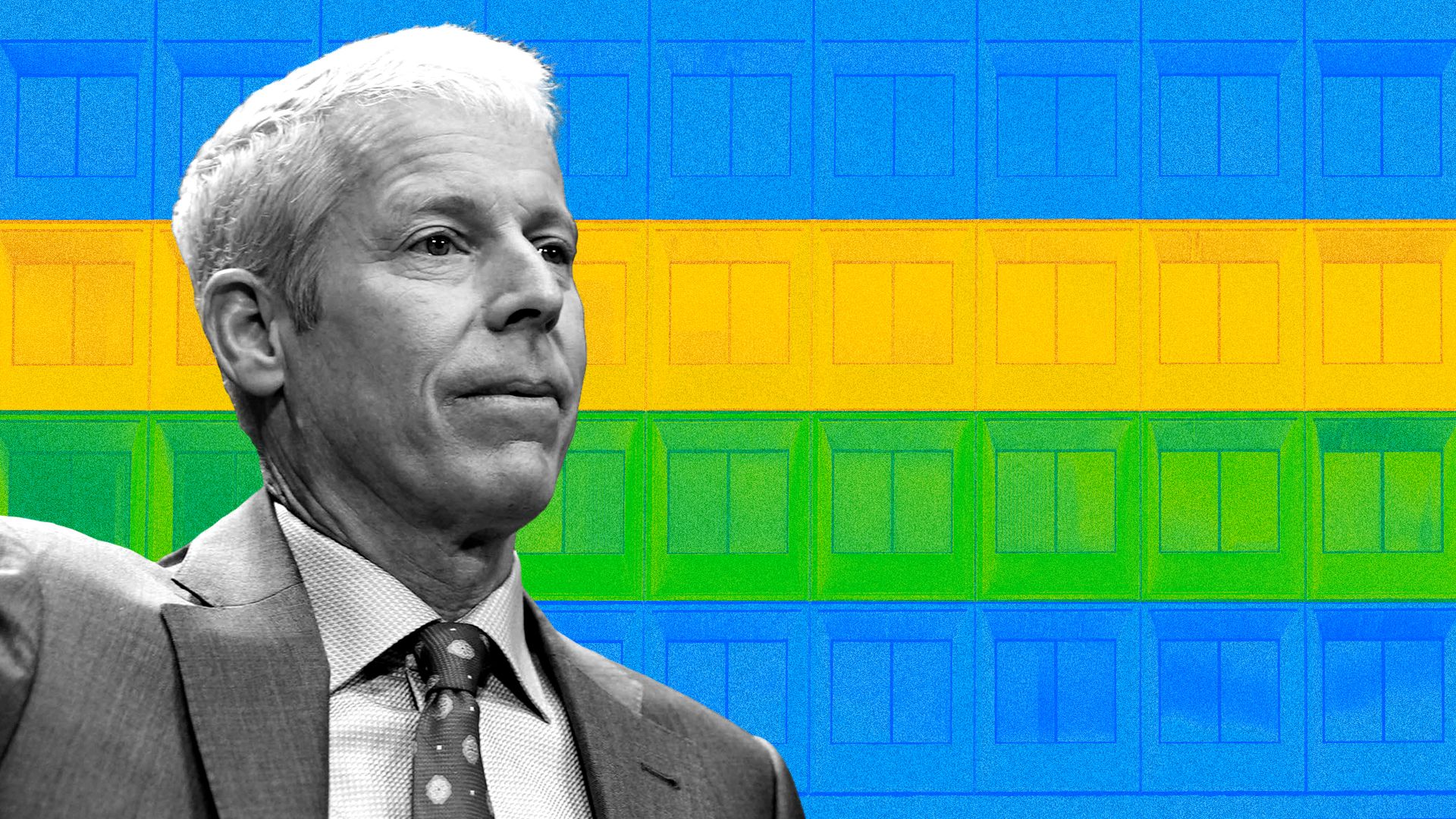
HOUSTON — The glare has never been brighter on Energy Secretary Chris Wright.
Why it matters: Onstage and behind closed doors, he's been seeking to reassure markets and companies spooked by a historic and unpredictable disruption — all while promoting the White House agenda at the CERAWeek conference here.
- It's a tricky task. President Trump's statements on Iran can move markets in an instant.
The big picture: Wright is part of a wider, high-level team here that includes Interior Secretary Doug Burgum, who chairs the National Energy Dominance Council, and Jarrod Agen, the council's executive director.
- "He's able to calm down any concerns people have, and then also talk through some of the longer-term issues that we're trying to solve," Agen told Axios.
Zoom out: Wright, for all the immediate crises, is also using CERAWeek as a larger platform to promote nuclear, gas and other favored sources.
- "Fortunately, today, I think the interest in energy has grown dramatically for geopolitical reasons, for rising out of poverty reasons, for artificial intelligence, for re-shoring manufacturing," he told an audience heavy on grad students yesterday.
- "So I think energy is coming in the sweet spot of attention."
Friction point: The Iran crisis has elevated Wright's profile at a sensitive time as gasoline prices rise under a president who covets low costs — and who pays close attention to his lieutenants' public performances.
- "If I were in the White House now, I would look at the situation and go, you know, the secretary is on message. He's doing a great job representing where the administration is, where the United States is," George David Banks, a White House energy aide in Trump 1.0, tells me.
Inside the room: Wright has been here since Sunday, huddling with foreign officials and energy execs.
- Yesterday's agenda with Burgum and Agen included a closed-door session with CEOs of Chevron, gas producer EQT, and LNG exporters Cheniere Energy and Venture Global, per a person in the room who spoke on condition of anonymity.
- Topics included an "open dialogue" with execs about ways to boost domestic production; the White House position on Iran; and fresh assurances to industry that the administration isn't looking to thwart exports.
Yes, but: Onstage, Wright's been a happy warrior. But he's dealing with crosscurrents — such as calling for U.S. producers to pump more even as he repeatedly says the price spikes are temporary.
- And industry concerns about Iran and energy flows remain palpable.
The bottom line: "He's everywhere," said Mike Sommers, head of the American Petroleum Institute, said of Wright.
- "I think that's one of the keys to his success, is that he really does have his finger on the pulse of this industry at a really, really important time."
2. 🥜 CERAWeek Day 2 in a nutshell

🇻🇪 Venezuelan political leader, receiving a rare standing ovation, pushes energy security and a stable energy sector.
🔨 CEOs and Trump officials are hungry for a permitting deal — but odds are they won't get it.
🔋 Batteries are ascendant, thanks to the AI boom (more below).
⚛️ A CERAWeek first-timer, Nvidia inks deals on nuclear and flexible data centers.
✈️ It feels like we just got here, but conference-goers are eyeing their exits anxiously, given the horrendously long security lines at the city's main airport.
3. 📈 AI boom is catapulting batteries into the mainstream

HOUSTON — The power surge fueled by the AI boom is catapulting novel battery storage technologies from niche to mainstream, with deal-making revealed at a major industry gathering this week.
Why it matters: It's a marriage of urgent needs: The AI sector needs reliable power — fast. Battery companies need deep-pocketed customers.
Driving the news: Form Energy will provide its multi-day storage technology to data center developer Crusoe in an announcement made yesterday at CERAWeek.
- Also yesterday, Crusoe expanded an existing deal with Redwood Materials, another energy storage company.
- These come on the heels of at least two other deals in the last few weeks committing to deploy novel battery technologies to power data centers, including a huge one with Form and Google.
"We just see that the moment for batteries is really here," said Cully Cavness, co-founder and president of Crusoe. "It's ultimately about having more control of our timelines, taking our destination into our own hands."
The big picture: The race for power is driving huge investments in a series of energy technologies, ranging from traditional natural gas to fusion, as the AI industry races to secure power that correlates with more AI compute capacity.
Zoom in: Under the agreement announced yesterday, Form will deliver 12 gigawatt-hours of multi-day energy storage by 2027.
State of play: Cavness said the deal also reflects pressure from President Trump for tech companies to ensure the AI buildout doesn't drive up electricity costs for others.
4. 🏃 Catch up quick on policy: Congress, EPA, courts

🛑 Rep. Alexandria Ocasio-Cortez and Sen. Bernie Sanders are floating legislation that would block new data centers until Congress puts new environmental and community safeguards in place.
- Why it matters: They're the highest-profile progressives in Congress and have nationwide platforms. So while the bill itself is DOA, it signals a backlash against the data-center buildout. Go deeper.
⛽ Via Reuters, EPA will temporarily waive smog-cutting restrictions on summer gasoline blends as officials look to lower fuel prices.
⚖️ Maryland's Supreme Court upheld a lower court's dismissal of city and county lawsuits against oil giants that sought damages for climate change.
- State of play: The state's high court ruled that local governments' claims are preempted by federal law, and to the extent they're not, the plaintiffs' "failed to state claims under Maryland common law upon which relief can be granted."
- What we're watching: The U.S. Supreme Court. It's weighing whether federal law precludes these kinds of state-law claims. Its eventual ruling could thwart many other cases against Big Oil.
🏛️ Oklahoma's new senator is an oil and gas pipeline executive.
5. 🔍 Mysterious trading patterns follow Trump into war

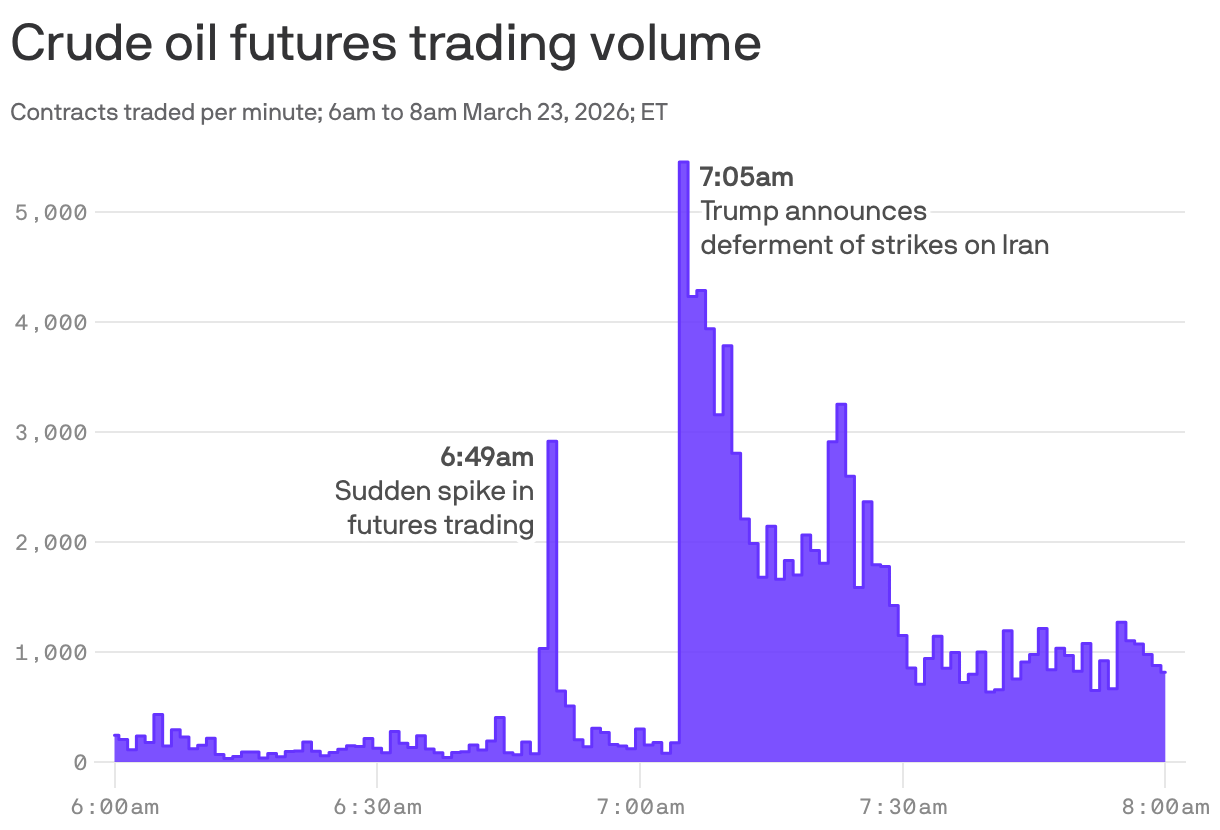
On Monday, $580 million in oil futures flooded the market in a sudden spike — with no public news to explain it — roughly 16 minutes before Trump announced a pause in strikes on Iranian power plants.
6. 🧳 Unpacking NextEra's huge gas agreement with Trump and Japan
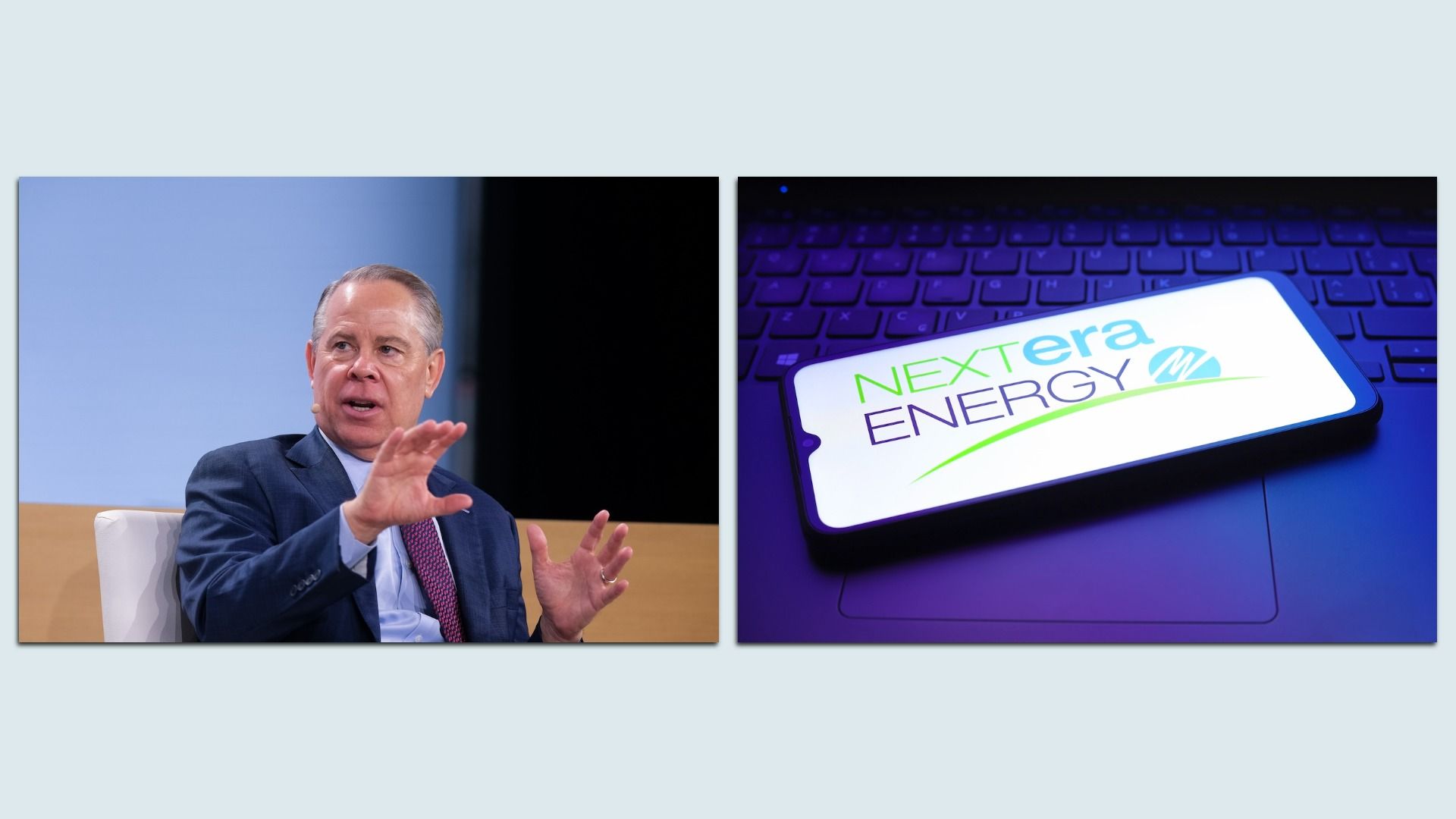
HOUSTON — NextEra Energy CEO John Ketchum dished a bit on eye-popping plans to build nearly 10 gigawatts of gas-fired power in Texas and Pennsylvania that stem from Japan's investment deal with the White House.
Why it matters: It's a powerful sign of hyperscaler demand for power and the White House strategy of using trade pressure to bring outside investment into the U.S. energy sector.
Driving the news: The money will flow into a "special purpose vehicle" co-owned by the U.S. and Japanese governments, while NextEra is the owner-operator.
How it works: Ketchum, in an interview, said the projects would unfold in phases and start coming online late this decade or in the early 2030s.
- They're part of the power behemoth's wider "data center hubs" approach. Ketchum said he's not worried about procuring gas-turbines, noting his company is turbine manufacturer GE Vernova's biggest customer.
- The plan is for up to 5.2GW in Texas, and the land near Dallas has been largely secured. It's part of NextEra's work with natural gas producer Comstock Resources.
- The siting for the 4.3GW in southwest Pennsylvania isn't as far along, he said.
The intrigue: In this case, the U.S. government will identify power purchasers, Ketchum said.
- "The U.S. government is going to bring the hyperscaler, and they think they'll have no issue doing that, because these are exactly what hyperscalers are looking for."
State of play: The $17 billion Pennsylvania project will "connect to existing interstate natural gas pipelines within the Marcellus and Utica shale region," the Commerce Department said.
What we're watching: Ketchum expects the projects to be co-located with data centers, and could initially be behind-the-meter.
- "But most hyperscalers are going to want what I call an extension cord built between the data center and the grid at some point, and we should want that too," Ketchum said, touting data centers' ability to be flexible grid assets.
7. 💬 Quote of the day: Where the puck is going edition
"I think the problem is, we are more in reaction mode to what's happening in the world four years ago, what happened with the Russian invasion of Ukraine and now, what's happening in the Middle East. The best energy strategies are strategies that actually look five, 10 years and build resilience from now."— Shell CEO Wael Sawan, speaking at CERAWeek
🙏 Thanks to Chuck McCutcheon and Chris Speckhard for edits to today's newsletter, along with the brilliant Axios Visuals team.
📫 Did a friend send you this newsletter? Welcome, please sign up.
Sign up for Axios Future of Energy