Axios Future of Energy

April 03, 2026

๐ Made it to Friday. Today we've got ...
- Energy "islands"
- Brent crude spot prices
- A data center poll exclusive, all in 1,477 words, 5.5 minutes.
๐ In honor of her new memoir coming out this week, today's intro tune is a classic R&B hit from the late '90s ...
1 big thing: AI boom drives clash over grid power vs. going it alone
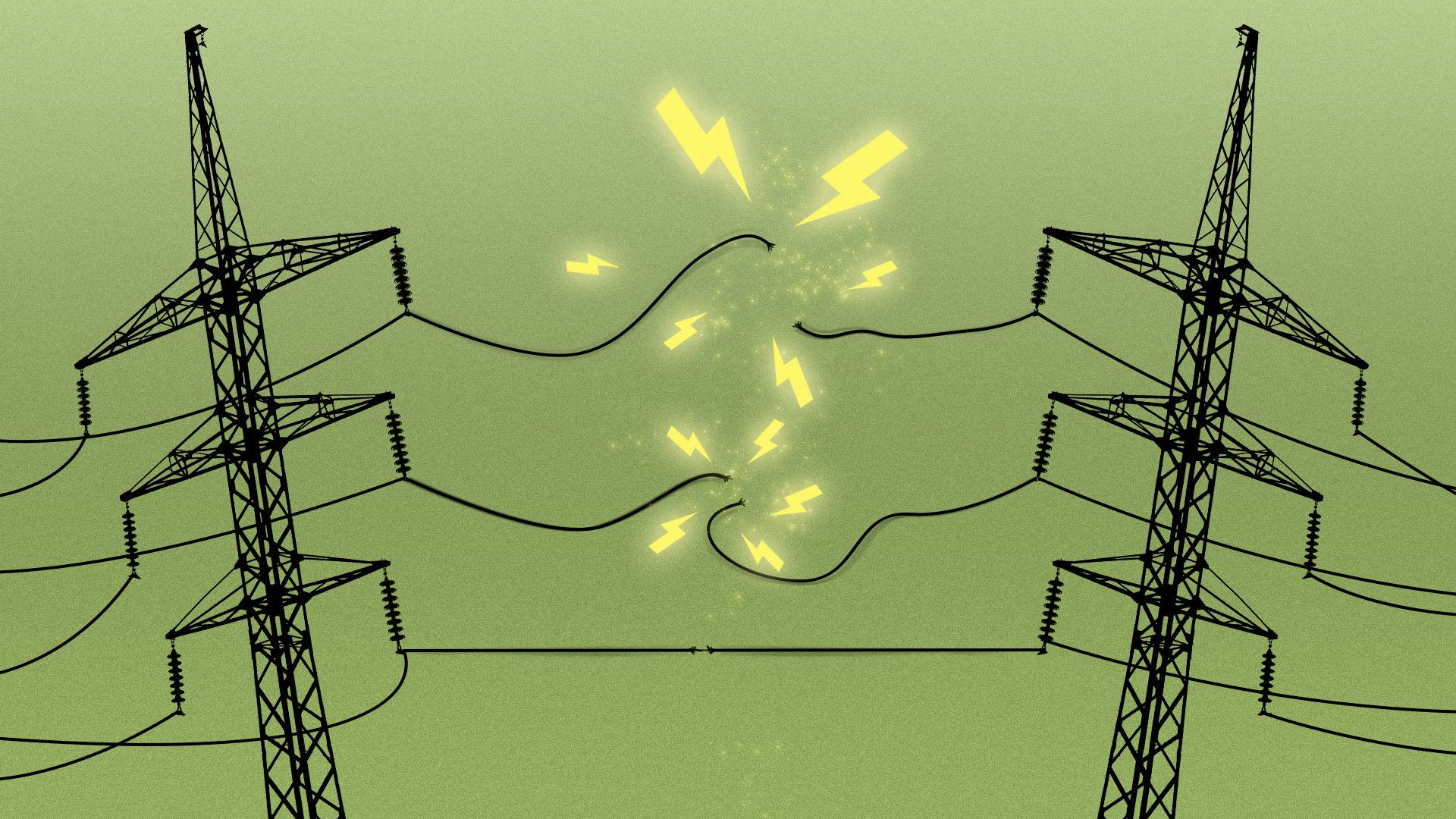
HOUSTON โ A high-stakes fight is emerging as the AI boom accelerates: Should data centers plug into the grid, or operate as energy "islands"?
Why it matters: The debate is shaping power flows and multibillion-dollar investments, as data centers rival entire cities in their electricity demand.
Driving the news: Chevron said this week it's working on a deal to build a natural gas plant dedicated to a Microsoft data center in Texas โ one of many signs that on-site power is gaining traction.
- Roughly 30% of all planned data center power capacity is expected to be on site, according to a February report by Cleanview, a market intelligence firm โ up from almost nothing a year earlier.
"A lot of people look at that 30% figure from our report and assume it will stop there," said Michael Thomas, founder of Cleanview. "But the trend line suggests to me that it could keep rising."
- "I wouldn't be surprised if we see it rise to 50% of planned capacity," added Thomas.
How it works: Companies building AI infrastructure say avoiding the grid โ at least initially โ can bypass years-long waits to connect, provide more control and avoid straining the electric system with massive new demand.
Yes, but: Many in the power industry argue the opposite: that connecting to the grid ultimately lowers costs and improves reliability by spreading system costs across more customers and providing backup power.
What they're saying: "For us, speed is the competitive currency," said Cully Cavness, president and co-founder of data center developer Crusoe, in an interview on the sidelines of the CERAWeek conference last week in Houston. "There are some aspects of islanding that are faster."
- He went on to say that they could be energy "islands" for years.
The other side: Others argue the opposite, that fully integrating data centers into the grid will lower costs and strengthen the system.
"If we decouple the AI ecosystem from the electric grid ecosystem, I think everybody loses," said Varun Sivaram, founder of startup Emerald AI, which aims to make data centers more flexible with their power usage.
- "AI will become more expensive," said Sivaram, speaking at an Axios dinner in Houston ahead of CERAWeek. "And the power sector will lose out on its largest and most lucrative potential anchor client, data centers."
The bottom line: Companies can move forward with their power "islands" regardless of policies under discussion now by regulators.
- "Whether or not they connect to the grid is a business decision, as far as I'm concerned," Laura Swett, chairman of the Federal Energy Regulatory Commission, told Axios at a media briefing during CERAWeek.
2. ๐ข The price of oil is higher than you might realize


The spot price of a barrel of Brent crude oil โ the actual stuff that producers buy โ has doubled since the Iran war started to $141.37, its highest level since July 2008 in the run-up to the financial crisis, according to Platts, which tracks the data.
Why it matters: It's a sign that the disruption of the Iran war is already causing huge stress in oil markets.
- That stress has not been fully reflected in the oil futures market, which has been getting all the attention in recent weeks.
Zoom in: One-month Brent futures were trading at around $109 a barrel this morning.
Catch up quick: Oil futures are contracts that investors buy to hedge against price fluctuations. Hedge funds, retail and institutional investors, pension funds, etc. โ they're all out there buying futures. It's just paper, not actual oil.
- The dated Brent crude oil price (charted above) is paid by those who are buying the physical commodity.
The big picture: There are not enough barrels for everyone, so refineries in Asia are desperately buying product from wherever they can get it โ and paying a big premium.
- "The physical crude market is telling a story that the futures strip is refusing to price in," per a note from Rystad Energy yesterday.
- "On one side, the forward curve is still signaling a relatively healthy environment.
- "On the other side, the physical market tells another story โ one of severely strained oil supply, with refiners fighting over the same barrels that have now skyrocketed in value."
3. ๐ค Exclusive: Poll explores data centers and electricity rates

Public resistance to data centers isn't driven as much by electricity prices as conventional wisdom suggests โ it's more about how the giant projects might alter their communities, a new Harvard/MIT poll shows.
Why it matters: The poll could shape how developers engage with communities as they try to build more data centers to meet AI's massive electricity demands, said Harvard researcher Stephen Ansolabehere, who oversaw the poll.
By the numbers: Overall, the poll found that about 40% of respondents supported data centers in their areas, with about 32% opposed.
- That's less than the support for auto factories and e-commerce warehouses, but was ahead of petrochemical facilities, which drew 23% backing and 52% opposition.
The poll also found that about two-thirds of those surveyed said a data center would lead local electricity prices to rise "a lot" or "somewhat."
- But it found that concerns about data center impacts on a community's quality of life generally were twice as important as electricity prices in accounting for public support.
- The poll surveyed 1,000 people in November by YouGov from sampling its national panel of potential survey respondents. It has a margin of error of plus or minus 3 percentage points.
Between the lines: "I was surprised that jobs and growth were viewed as being as important as concerns about prices," Ansolabehere said.
4. ๐ Hot reads: "Gate of Tears," pipelines, AI and NRC, Maine

Why a second global shipping chokepoint could soon live up to its name as the 'Gate of Tears' (The Conversation)
Chuck says: An academic explains why the Bab el-Mandeb Strait โ "Gate of Tears" in Arabic โ could become the new Strait of Hormuz. It handles about 5% of global fossil-fuel traffic.
Summit Sold Its Midwest Pipeline as a Carbon Solution. Now, It'll Be Used for Fossil Fuels. (Inside Climate News)
Amy says: This provides a specific and stark example of how companies are pivoting in the Trump era when pursuing technologies that straddle climate and oil.
The DOE's plan for AI in NRC licensing (Nuclear News)
Chuck says: Among the many big conversation topics at CERAWeek was how AI can speed nuclear licensing paperwork. This story says an AI tool created a 208-page document in about a day โ a task that typically would take a team of people between four and six weeks.
Maine Is About to Become the First State to Ban New Data Centers (The Wall Street Journal)
Amy says: Maine isn't a hotbed for data centers, but the story says this could be the first of many moratoriums, fueled by angst over power prices.
5. ๐๐ปโโ๏ธ Catch up fast: Interior changes, NC center, Tesla, Gulf
๐ผ Interior moves: The Interior Department said yesterday it's giving employees a third opportunity to accept voluntary incentives to leave their jobs or retire early as it announced an overhaul aimed at improving efficiency.
- Why it matters: One goal of the administrative changes is to sharpen Interior's focus "on core water and power missions" while "streamlining outdated bureaucracy."
โก๏ธCarolina center: Hitachi Energy yesterday announced plans for a $10 million center in Cary, N.C., that it said would help strengthen the North American power grid.
- Why it matters: The center will "expand local engineering, testing, and system integration capabilities, accelerating the delivery of solutions to help utilities and developers meet surging electricity demand," Hitachi said.
๐ Tesla EV sales: Tesla's electric vehicle sales disappointed investors in the first quarter โ but CEO Elon Musk doesn't seem to mind as he sets his sights on an AI-powered future.
- Why it matters: EV sales still pay the bills for Tesla, providing critical cash flow to fund costly endeavors like humanoid robots and self-driving car technology. Full story
๐ Gulf interest: Per Reuters, "European energy majors TotalEnergies and Shell are among companies eyeing a majority stake in one of the U.S. Gulf's most promising sites, three โsources with knowledge of the process said, as interest in North American energy prospects โrises due to the Middle East conflict."
6. ๐ฅ Number of the day: 11.5 million
That's the number of tons of carbon dioxide, per year, that the natural gas power plant at the heart of a deal between Microsoft, Chevron and investment firm Engine No. 1 is expected to emit, according to an air permit Cleanview uncovered.
By the numbers: That's more CO2 than Microsoft's entire fleet of data centers emitted last year, which was 10 million, Cleanview's Thomas said.
- "So this single deal would more than double the company's emissions," Thomas said.
โ Thanks to Chuck McCutcheon, David Nather and Chris Speckhard for editing and to our brilliant Axios visuals team.
Did a friend send you this newsletter? Welcome, please sign up.
Sign up for Axios Future of Energy