Axios Future of Energy

June 29, 2026


🥞 Welcome back! We're opening the week with a look at the rise in oil traffic through the Strait of Hormuz, and what's threatening the trend. Then we move on to...
- The latest on policy, a cool oil graphic, deals news and more, all in 1,108 words, 4 minutes.
🙏 Thanks to David Nather, Mackenzie Weinger and Chris Speckhard for editing and to our brilliant Axios visuals team.
🎸 This week marks 40 years since anthemic Scottish rockers Big Country released the album "The Seer," which provides today's intro tune...
1 big thing: Oil transit is rebounding — but fresh hurdles arrive
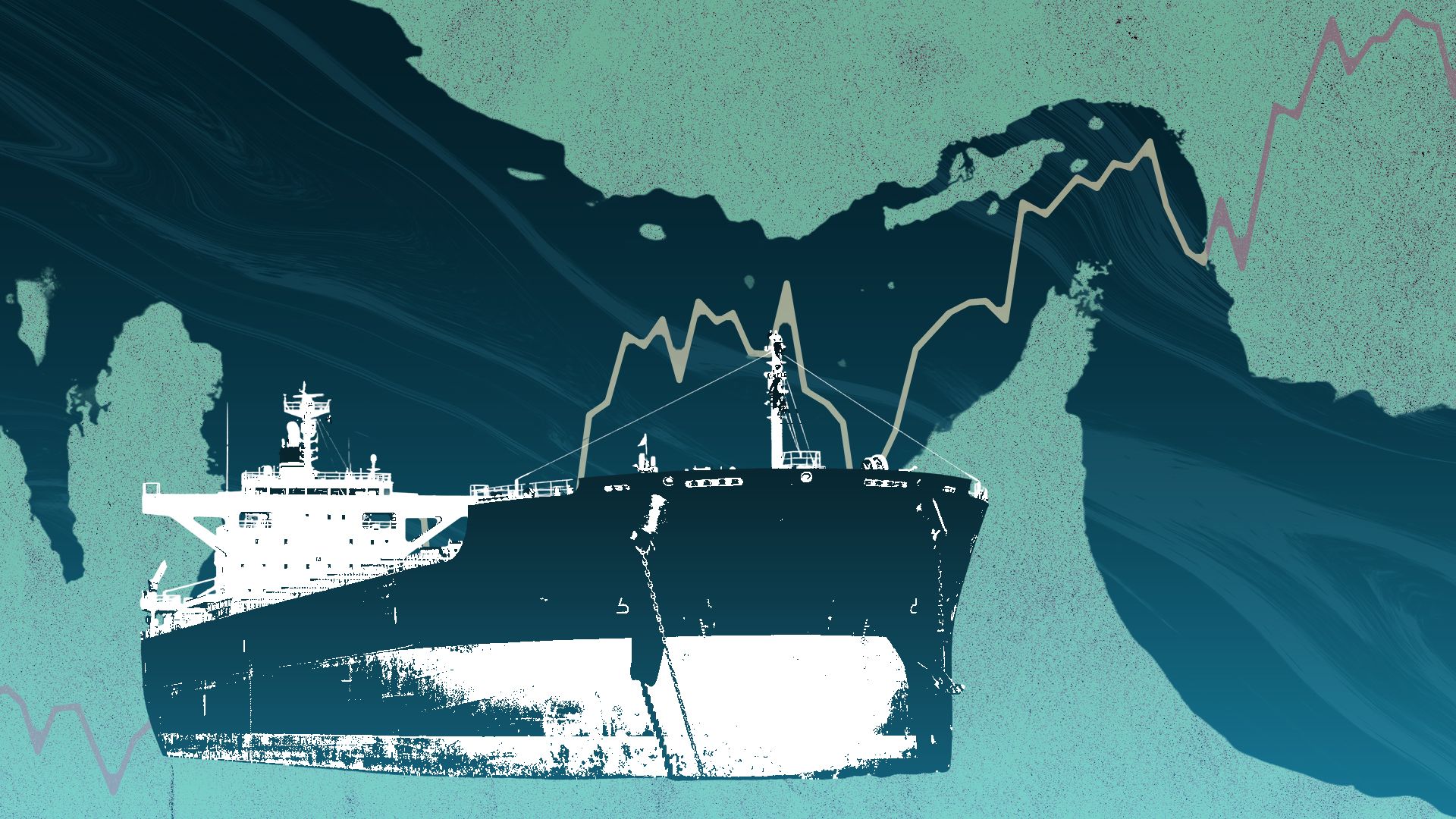
Oil shipments through the Strait of Hormuz are resuming faster than many analysts predicted, but fresh hostilities in recent days are threatening the trend.
Why it matters: The rebound in shipments is good news for the tight oil market and is helping push prices lower.
- The speed since the June 17 U.S.-Iran deal is just the latest example of the 2026 oil crisis repeatedly defying conventional wisdom over the last four months.
- Oil prices climbed only slightly to start the week, with the global benchmark Brent crude at $72.51 this morning. That's basically where it was just before the war, suggesting traders don't see the recent flare-up as game-changing.
State of play: Traffic through the strait jumped last week, per multiple vessel tracking services, before pulling back after a container ship was struck Thursday.
- The marine intelligence firm Windward reported that oil volumes leaving the strait reached 13.4 million barrels on June 24 and 11.7 million barrels on June 25.
- Another metric: S&P Global Energy reported Thursday that 78 vessels — a tally that includes oil tankers, container ships and other types of cargo — transited the strait on June 24, by far the highest since the war started.
Yes, but: The situation is tenuous, with trading analytics firm Kpler and others showing a drop-off Friday and over the weekend.
- The U.S. struck Iranian targets on Friday and Saturday in response to Iranian actions in recent days, including what U.S. officials called an Iranian Revolutionary Guards Corps drone strike on a commercial oil tanker.
The intrigue: Another factor that will influence how much oil flow resumes is how quickly Persian Gulf states revive production they dialed down when the strait was cut off.
- The consultancy Rystad Energy, in a note Thursday, listed several reasons that supply from the region is recovering more quickly than it previously projected.
- One is that producers are "reporting restart timelines ahead of earlier estimates."
Reality check: The recent surge of outbound tankers is only part of the equation. Watch how many empty ships enter the waterway to load, analysts caution.
- "I wouldn't confuse a burst of outbound shipments with a return to normal," said Landon Derentz, senior director at the Atlantic Council's Global Energy Center.
- "When ships are willing to enter the Gulf in normal numbers, that's a strong signal that governments, shipowners, insurers, and industry believe this fragile agreement has some staying power," he wrote via email.
- ING analysts said in a note Friday that "once stranded vessels have moved out, we could see a pullback in flows."
What we're watching: The status of the strait is on the agenda when U.S. and Iranian officials meet tomorrow in Qatar, Axios' Barak Ravid reports.
The bottom line: Despite the recent — and fitful — surge, traffic remains well below the roughly 20 million barrels of oil and petroleum products that moved daily through the strait before the war.
- "It is still fairly obvious to us that until more vessels sustainably head into the Strait than come out of it, we won't get anywhere near a normal AG [Arabian Gulf] supply chain," Sparta Commodities' Neil Crosby said in a note today.
2. 👟 Catch up quick: EPA, methane, pipelines

🏭 A federal appeals court rejected EPA's move to scuttle Biden-era rules that toughened air quality standards for soot particles from coal-fired power, construction, tailpipes, wildfires and other sources.
- Zoom out: Fine particulate matter is inked to asthma, irregular heartbeats, even premature death in people with heart or lung disease.
- Yes, but: Trump's EPA called the tougher rules an unneeded barrier to business, and noted this pollution had already been declining for decades.
- What we're watching: Potential appeal of Friday's ruling. EPA said it's reviewing the ruling, per AP.
👀 The Trump administration may be on the cusp of at least a partial win in its bid to soften EU methane rules.
- Why it matters: The U.S. and some other gas exporters, as well as some EU member states, say the rule's timelines are infeasible — a view laid out in a letter last week from the U.S., Qatar, Nigeria and Algeria.
- Catch up quick: Dan Jørgensen, the EU's top energy official, said Friday that "we are taking concerns on implementation into our analysis, and I will be putting forward recommendations quite soon."
- Yes, but: It's unclear if that will satisfy concerns about the rules, which now face opposition from Germany, the EU's largest economy, which on Friday joined a dozen other countries seeking to delay certain requirements.
🤝 Via Bloomberg, "Williams Cos. is in advanced talks to acquire rival natural gas pipeline operator Momentum Midstream for about $5.5 billion in what would be one of its largest deals ever."
3. 💵 Don't expect pre-war gas or airfare prices any time soon


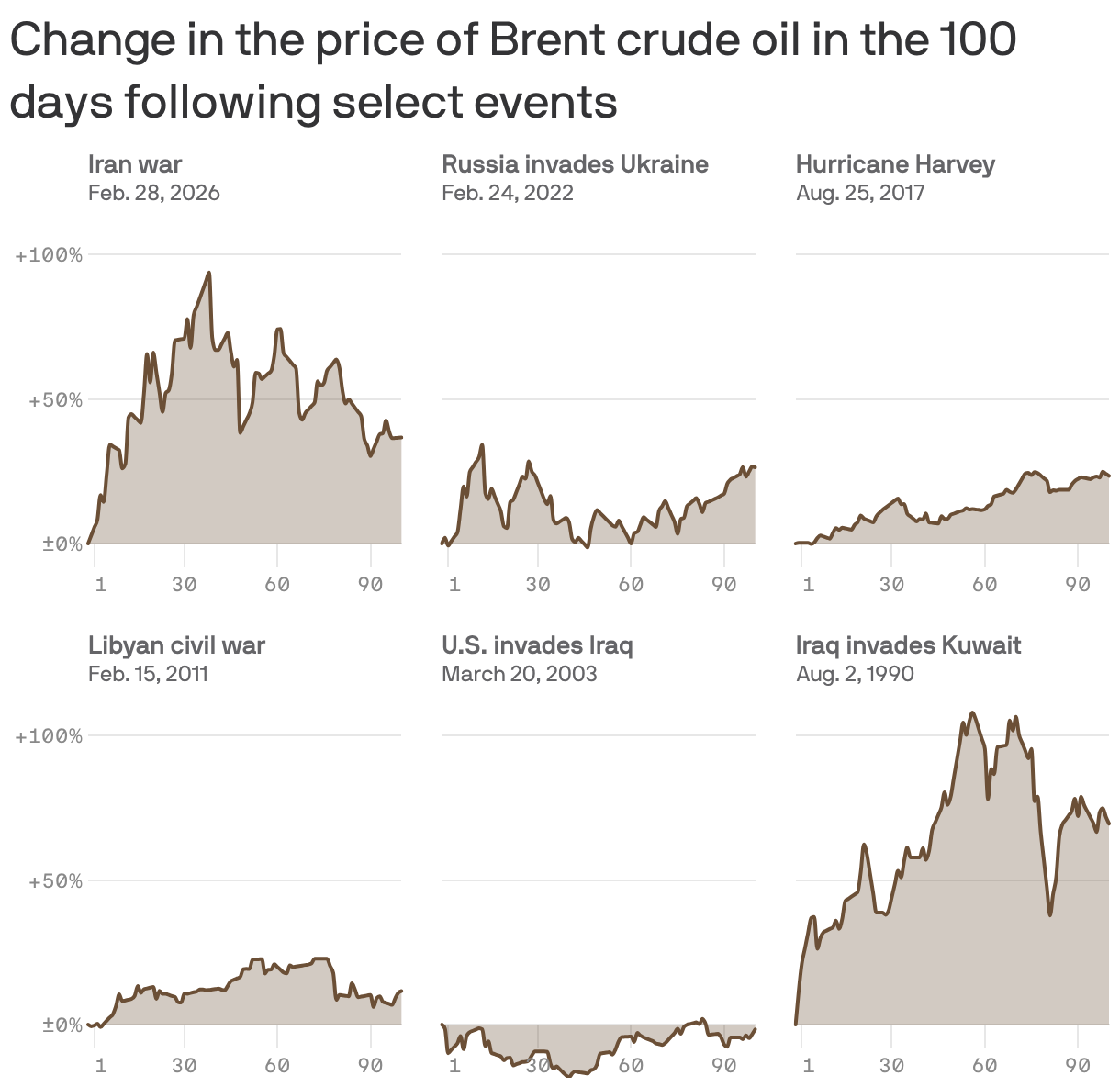
Oil prices can rise quickly and dramatically when headline-grabbing events like war or hurricanes threaten global supplies.
- It usually takes longer for them to settle down after seismic events.
Flashback: After Russia invaded Ukraine in 2022, Brent took 171 days to return to pre-invasion prices. Gas took another 104 days beyond that.
- Saturday marked 119 days since the Iran war started.
4. 🤝 Energy deals and finance news you might have missed

🎙️ Geothermal developer Fervo Energy sees growing appetite for behind-the-meter power projects for data centers. Go deeper
⚡️ On-site power provider Mainspring Energy has hired Goldman Sachs to consider an IPO. Go deeper
🚛 Superlight, a developer of medium-duty electric trucks, closed $21 million in Series A funding. Go deeper
🤘 Reuters reports that Stegra, the firm building Europe's first hydrogen-powered steel plant, closed a $1.6 billion financing round led by a Wallenberg Investments consortium.
Want a steady diet of scoops and smart analysis? Talk to our sales team about Axios Pro Deals.
5. 🎲 Quote du jour: Bet the under on AI demand edition
"I think it's way too premature to be extrapolating some of this power demand from data centers because we know that there are going to be some changes along the way. ... I'm taking the under on some of the McKinsey, Bain, BCG-type numbers I'm seeing."— J.P. Morgan Asset Management energy analyst Michael Cembalest, speaking on the new episode of the Columbia Energy Exchange podcast
He's skeptical of some eye-popping estimates of future demand from data centers. But that's just a slice of a wider conversation that's worthy of your time.
📫 Did a friend send you this newsletter? Welcome, please sign up.
Sign up for Axios Future of Energy