Axios Future of Energy

May 13, 2026


📐 There are energy angles to spare in President Trump's meetings this week with Chinese President Xi Jinping. We break it down and then move on to...
- Sobering new oil stats
- A major geothermal IPO
- Power market advice, shale impact and more, all in 1,253 words, 4.5 minutes.
🙏 Thanks to David Nather and Chris Speckhard for editing and to our brilliant Axios visuals team.
🎹 Happy birthday to the incomparable Stevie Wonder, whose brilliance shines through on today's intro tune...
1 big thing: The energy stakes of the Trump-Xi summit
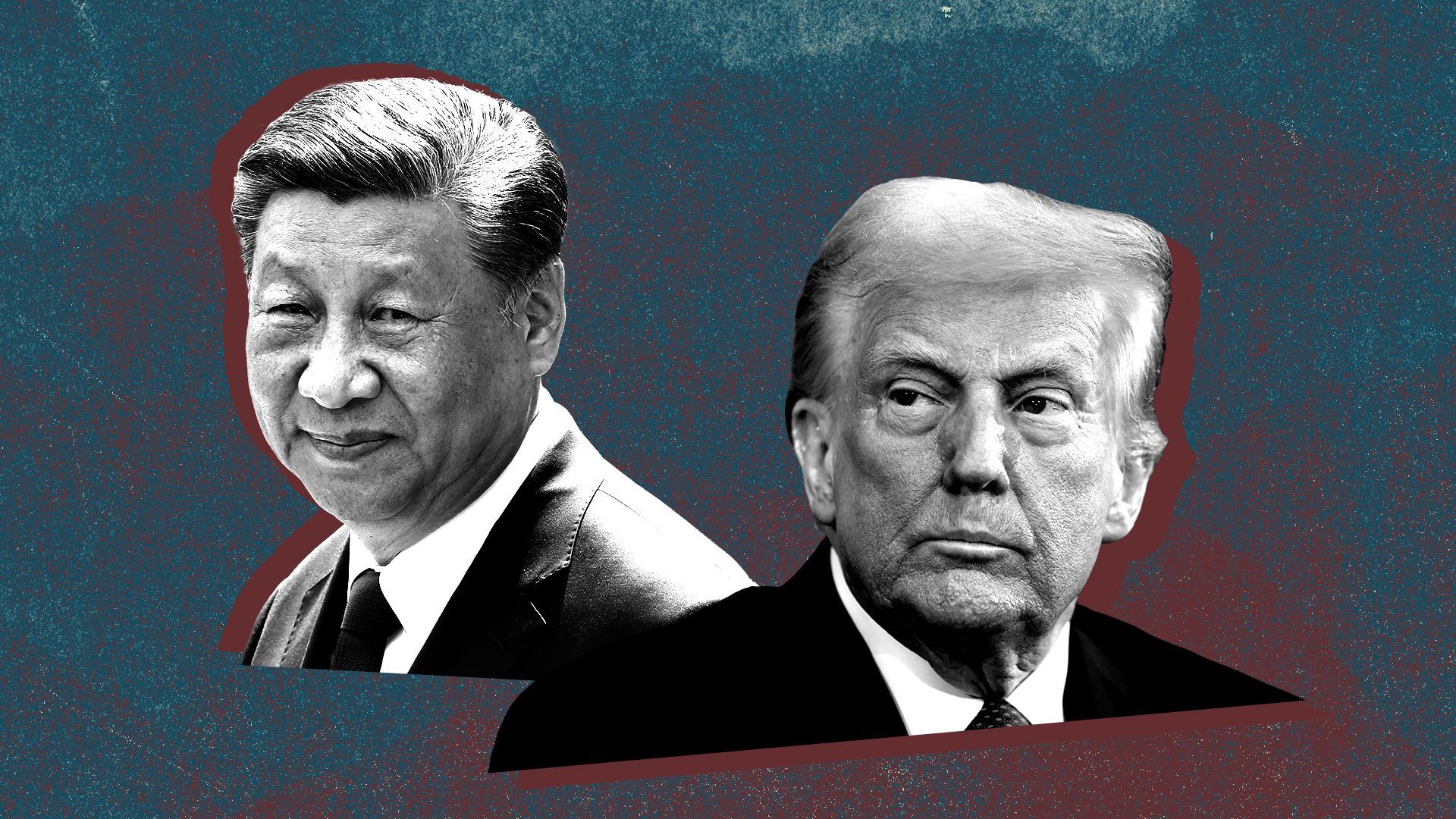
President Trump faces a tough climb turning his "energy dominance" agenda into energy wins when he meets Chinese President Xi Jinping in Beijing.
Why it matters: China is a massive market, and Trump loves using bilateral summits to secure energy purchase agreements.
- White House officials say energy is on the agenda at this week's summit, though it's not clear how high.
What they're saying: The ground isn't ripe for oil and gas deals, according to trade analyst Chad Bown.
- China is wary of becoming dependent on a rival. And Trump's "history of policy reversals" would risk a shutoff of U.S. exports if domestic prices are high heading into the midterms, he said.
- Meanwhile, "[The] Iran war and global energy shortage means there are plenty of suitors for U.S. oil and LNG today, so there is less urgency on the U.S. side," Bown, a senior fellow with the Peterson Institute for International Economics, said via email.
The U.S. may also have less overall leverage to get deals heading into the summit because of the Iran war.
- China is leaning into its long-dominant role as a global supplier of solar panels, batteries, and EVs, as the war throttles oil and gas shipments.
- Trump "seeks to use the U.S. booming oil and natural gas output as geopolitical leverage," writes the Council on Foreign Relations' David Hart in a summit primer.
- "While both have racked up wins, Trump's military gamble in Iran has fundamentally weakened his hand."
The big picture: China's imports of U.S. LNG and crude oil have fallen in recent years amid trade battles, though there's been an uptick in petroleum products.
- China relies on the Strait of Hormuz for oil and gas, and is the main buyer of Iranian crude oil.
- Yet China is increasingly flexing its brand of dominance as an "electrostate" with exports of solar panels, batteries and electric cars.
⛏️What we're watching: China's export restrictions on minerals, even though an agreement last fall softened some of Beijing's controls.
- It's a big deal. Rare earths and other critical minerals are needed for a wide array of defense and industrial applications, and China is the dominant supplier.
Friction point: The Atlantic Council's Melanie Hart said stronger minerals commitments from China would be a success for U.S. negotiators.
- "While Beijing wants to keep this chokehold in place, Washington wants to loosen it enough to buy time for U.S. and allied de-risking efforts, including building out other rare-earth mining and processing capabilities," Hart, who heads the think tank's Global China Hub, writes in a summit preview.
The intrigue: The summit could address the war itself, given China's leverage over Iran as its main energy export market and a tech provider, multiple analysts say.
- "I would watch for anything linking China to de-escalation, shipping security, or a more active diplomatic role on Iran," Tatiana Mitrova, a fellow at Columbia's Center on Global Energy Policy, tells Axios.
2. 🧁 Bonus: The vanishing Chinese LNG market


U.S. exports of liquefied natural gas to China have cratered, largely due to tariff battles.
3. 🗞️ The latest on Iran: Markets and Congress

😬 The oil market will be "severely undersupplied" through the end of September even if the conflict ends by early June, the International Energy Agency projects.
- Why it matters: Its latest outlook this morning (summary here) is chock full of foreboding stats and analysis that capture the depth of the crisis.
- Stunning stats: April output from Persian Gulf countries affected by the Strait of Hormuz closure was 14.4 million barrels per day below pre-war levels. Cumulative losses during the conflict exceed 1 billion barrels.
- Yes, but: Higher exports from the U.S. and other Atlantic Basin countries have offset just some of the loss, rising 3.5 million bpd since February
- The bottom line: Global oil inventories are falling at a "record pace" and "tightness is quickly spreading to product markets."
💬 House Speaker Mike Johnson called a gasoline tax suspension an "intriguing idea" but said lawmakers need to "look at any unintended consequences," per remarks reported by several outlets.
- Why it matters: His first remarks (that I've seen anyway) show that top lawmakers are noncommittal on President Trump's call for a suspension.
🫏 With Trump's proposal facing headwinds on Capitol Hill, some Democratic lawmakers are offering alternative approaches to get fuel costs under control.
- Why it matters: This goes beyond a simple debate about gas prices and taps into fundamental disagreements between the two parties about which parts of society should shoulder the costs of war and inflation.
- What we're watching: Dems' proposals. A bill set to be introduced by Rep. Brad Sherman (D-Calif.), for instance, would tax oil companies for any profits derived from selling oil at a cost of greater than $75 per barrel. Full story.
4. ♨️ The message behind Fervo's $1.89 billion IPO


Geothermal power developer Fervo Energy priced its IPO at $27 per share, raising $1.89 billion last night.
Why it matters: The upsized IPO shows surging investor interest in clean energy stocks amid the backdrop of the AI boom and the Iran war.
- Fervo uses traditional shale drilling techniques to unlock previously inaccessible geothermal resources.
Driving the news: The Houston-based company sold 70 million shares of Class A common stock, giving it a valuation of $7.7 billion.
- Underwriters also have the option to purchase an additional 10.5 million shares. The max proceeds including the greenshoe could deliver $2.17 billion.
The big picture: The offering was massively oversubscribed, says a source with knowledge of the IPO, and bankers are marketing it as "the largest primary clean energy public equity deal of all time."
The intrigue: The largest shareholders before the offering include shale firm Devon Energy, Capricorn Investment Group, DCVC, and Breakthrough Energy Ventures.
- Other investors include B Capital, Google, Congruent Ventures, Galvanize, and Prelude Ventures.
Catch up quick: Earlier this week, Fervo boosted its IPO plans, aiming to raise up to $1.82 billion at a $7.2 billion valuation.
- Fervo set its target range at $25-$26 per share.
- The company says it has 3.65 GW of power plant capacity under construction, or in advanced stages of development.
What's next: Fervo plans to trade this morning on the Nasdaq under the ticker symbol "FRVO."
Talk to our sales team about Axios Pro Deals, where a more detailed version of this story first appeared.
5. 💵 Numbers of the day: $4.5 trillion to $5.3 trillion
That's how much the U.S. shale gas boom saved U.S. consumers between 2007 and 2025, per a new working paper by UC Berkeley energy economist Lucas Davis.
- He arrived at the figure, around $237 billion to $276 billion annually, by comparing domestic prices to much higher costs in Europe and Japan.
- One big caveat! The paper does not explore environmental costs and benefits. Full study ... Blog post on the findings
6. ⚡ Quote du jour: New power world edition
"The old forecasting world was about gradual demand trends. The new forecasting world is about project-level shocks. Poor load forecasting, welcome to your main-character era."— Power economist Lynne Kiesling, writing in The Dispatch about large data centers
One wonky-but-important takeaway from her piece: special rate classes for big data centers do more than protect consumers.
- They improve demand forecasting by surfacing info on "timing, magnitude, persistence, and credibility" of project plans.
📫 Did a friend send you this newsletter? Welcome, please sign up.
Sign up for Axios Future of Energy