Axios Future of Defense
September 18, 2024

Good morning from the last day of the Air, Space and Cyber Conference in Maryland.
- Any last-minute news to share? Hit reply. I'm around.
📟 Situational awareness: Several people were killed and thousands injured when pagers belonging to Hezbollah members exploded across Lebanon and parts of Syria on Tuesday, Axios' Barak Ravid reports.
- 💭 My thought bubble: If a pocket-sized device can be rigged to blow, what else can? And how? I'm definitely going to be doing some reporting on this in the coming days.
Today's specials: Hyperion, a notebook dump and an update from BlueHalo CEO Jonathan Moneymaker.
Today's newsletter is 1,255 words, a 4.5-minute read.
1 big thing: The new swarms
A global, high-stakes race is on to figure out not just how to build affordable autonomous weapons, but also invent ways they can fight together.
Why it matters: Today, individual drones are a tool for troops. Tomorrow, collaborating swarms will define conflict, turning battlefields into an unmanned "hellscape," in the words of America's top leader in the Indo-Pacific.
The big picture: From the Pentagon's $1 billion Replicator bet to the Air Force's collaborative combat aircraft, the Army's human-machine integrated formations and the Navy's hybrid fleet, big bets are being made.
- Mark Milley, the former head of the Joint Chiefs of Staff, in July told Axios one-third of the U.S. military will be robotic in the next 10-15 years.
- Meanwhile, China dominates the global drone market, Iran feeds Russia and extremist cells its increasingly popular unmanned arsenal, and North Korea constructs clones of America's greatest hits.
Driving the news: To get a glimpse of this future, I visited the Anduril Texas Test Site, a brew of Middle East forward-operating base and Burning Man geekdom near the U.S.-Mexico border.
- Full disclosure: Anduril flew a half-dozen reporters down for a day of demos. The 16-hour roundtrip included a stopover in Dallas and some Whataburger.
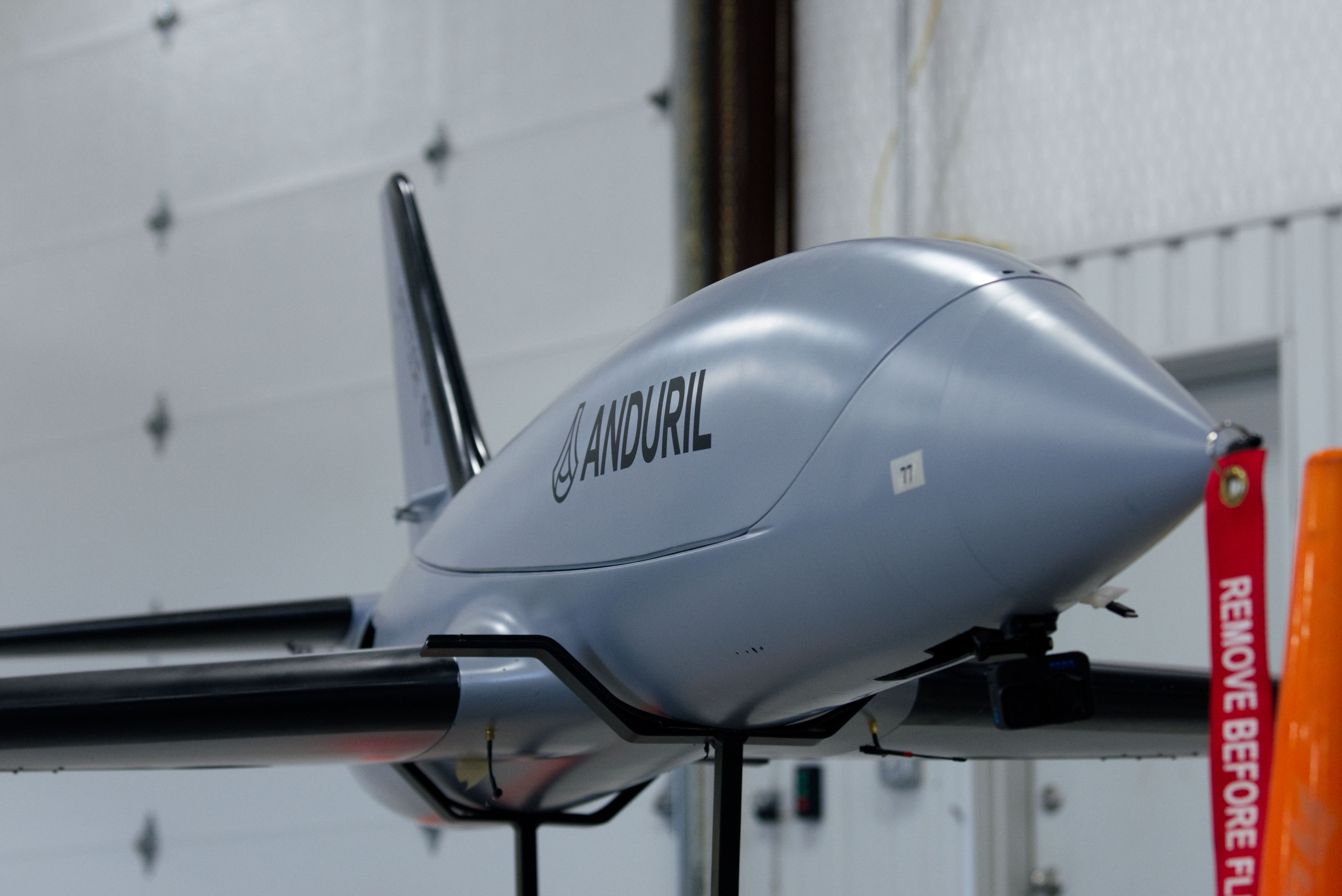
At the dusty, remote airstrip, Anduril showed how a single person familiar with Siri and armed with a laptop could govern a clutch of jet-powered drones.
- Using the company's Lattice for Mission Autonomy software, which looks like a fancy flight tracker, the commander, "Kobe," oversaw a team of midsize drones as they took off, circled up, patrolled the area and downed a simulated enemy aircraft.
- The drones sought permission before making consequential moves, like intercepting the incoming plane and launching what was described as a "magic missile." (Nothing actually went boom.)
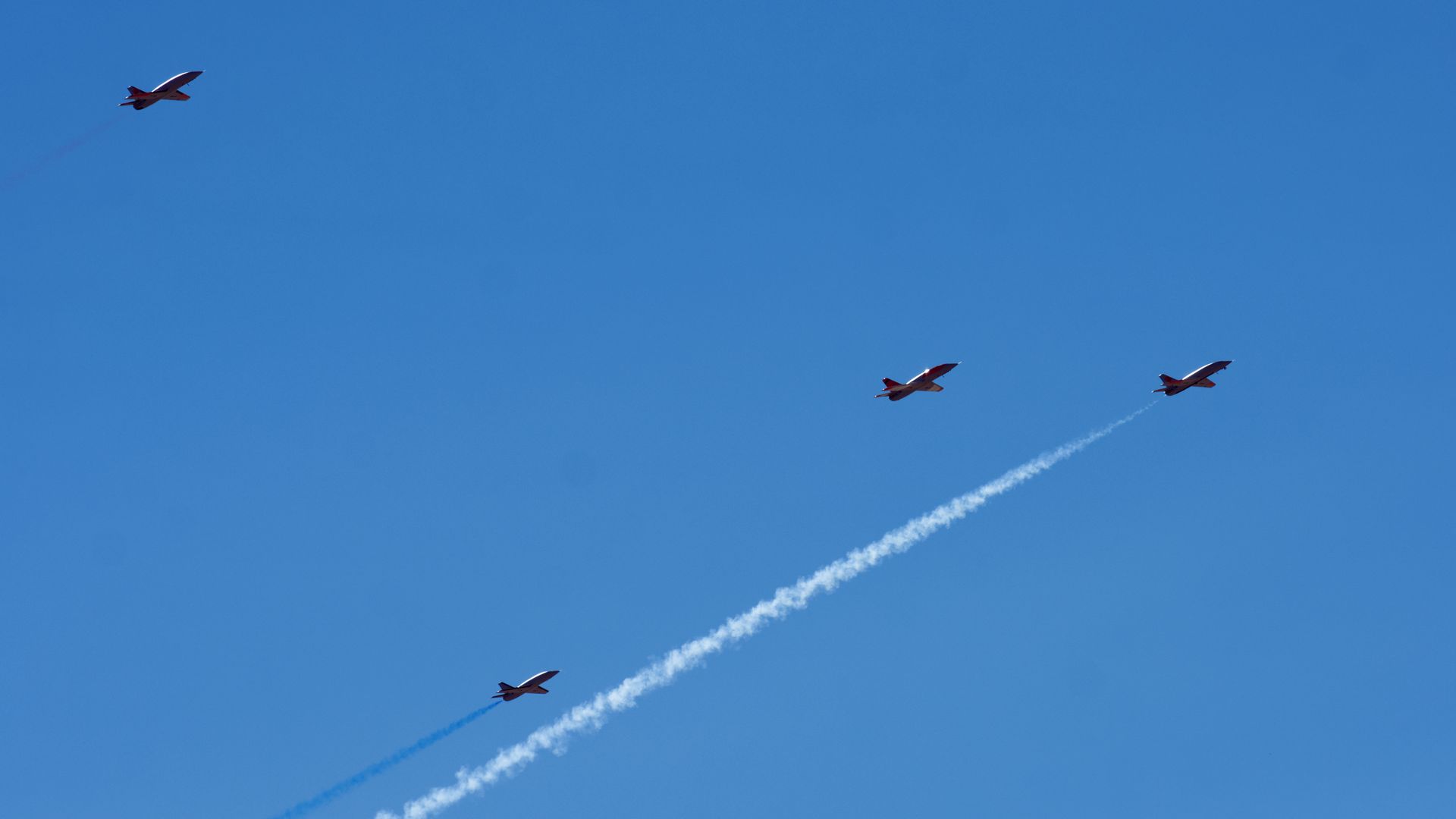
- During a Blue Angels-style flyby, the drones bunched together with just 20 feet of separation. Their callsign was "Mustang," a callback to the World War II-era P-51 the U.S. produced en masse.
Between the lines: The event offered a peek at how Anduril is thinking about airpower, autonomy and their digital interstice amid a competition to build the Air Force's fleet of robo-wingmen
- The service selected Anduril and General Atomics to develop CCA prototypes in April.
- Air Force Secretary Frank Kendall said both "will be flying in the near future, and at least one of them will be in our inventory in meaningful numbers in the next few years."
- Different loadouts are envisioned for different tasks: spying from afar, jamming signals, drawing fire as decoys and striking targets with their own munitions.
What they're saying: "What makes a good wingman? I want to trust them. I want them to be predictable," said Kevin Chlan, Anduril's senior director of air dominance and strike.
- "We get bored. We need a drink, a snack, go to the restroom. Whatever," added Chlan, a former fighter pilot. "The robots don't have any of that."
- The company declined to discuss government contracts during the trip.
Zoom in: To get air autonomy right, Anduril launched an internal campaign dubbed Hyperion, after the Greek titan. More than 200 live flights have been conducted.
- "The reason we're here and we live-flight test is because it allows us to do it faster," said Diem Salmon, vice president of air dominance and strike. "Doing it in simulation will get you very little in the long run, especially as you start moving toward platform integration."
Yes, but: While the routes were not planned and the showcase resembled real-world operations, it lacked the electronic harassment and general chaos of war.
- A ferocious fight over the electromagnetic spectrum would erupt in any conflict with China or Russia.
2. The Texas toy chest
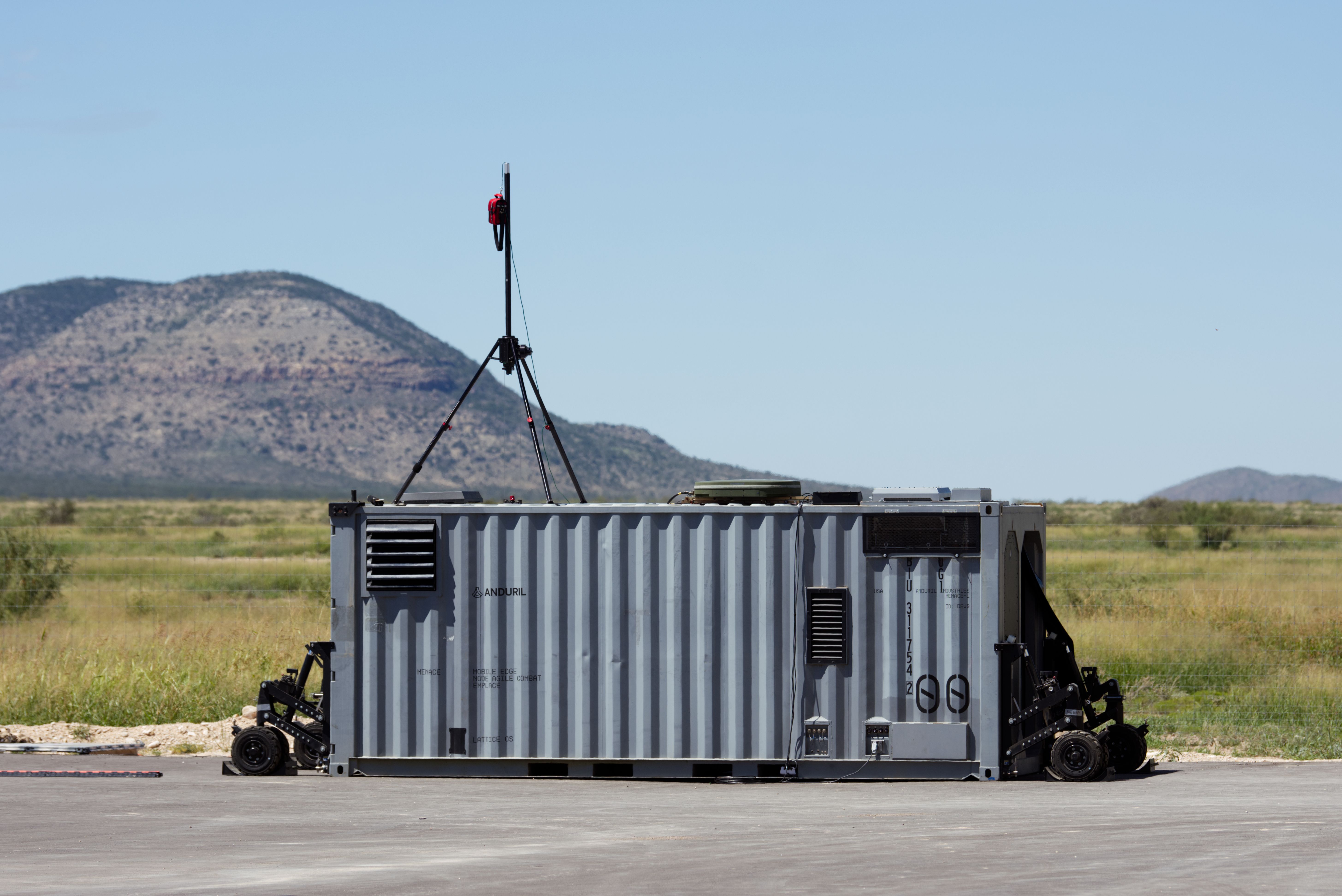
Anduril's Texas proving ground is the largest range it employs. Others exist in California, close to corporate headquarters, Nevada and Oregon.
- The Texas outpost has housing for dozens of people, a mess hall, a gym, a large hangar, a workshop, a computer lab, and an 8,000-foot runway that can handle a fully loaded C-17 transport plane.
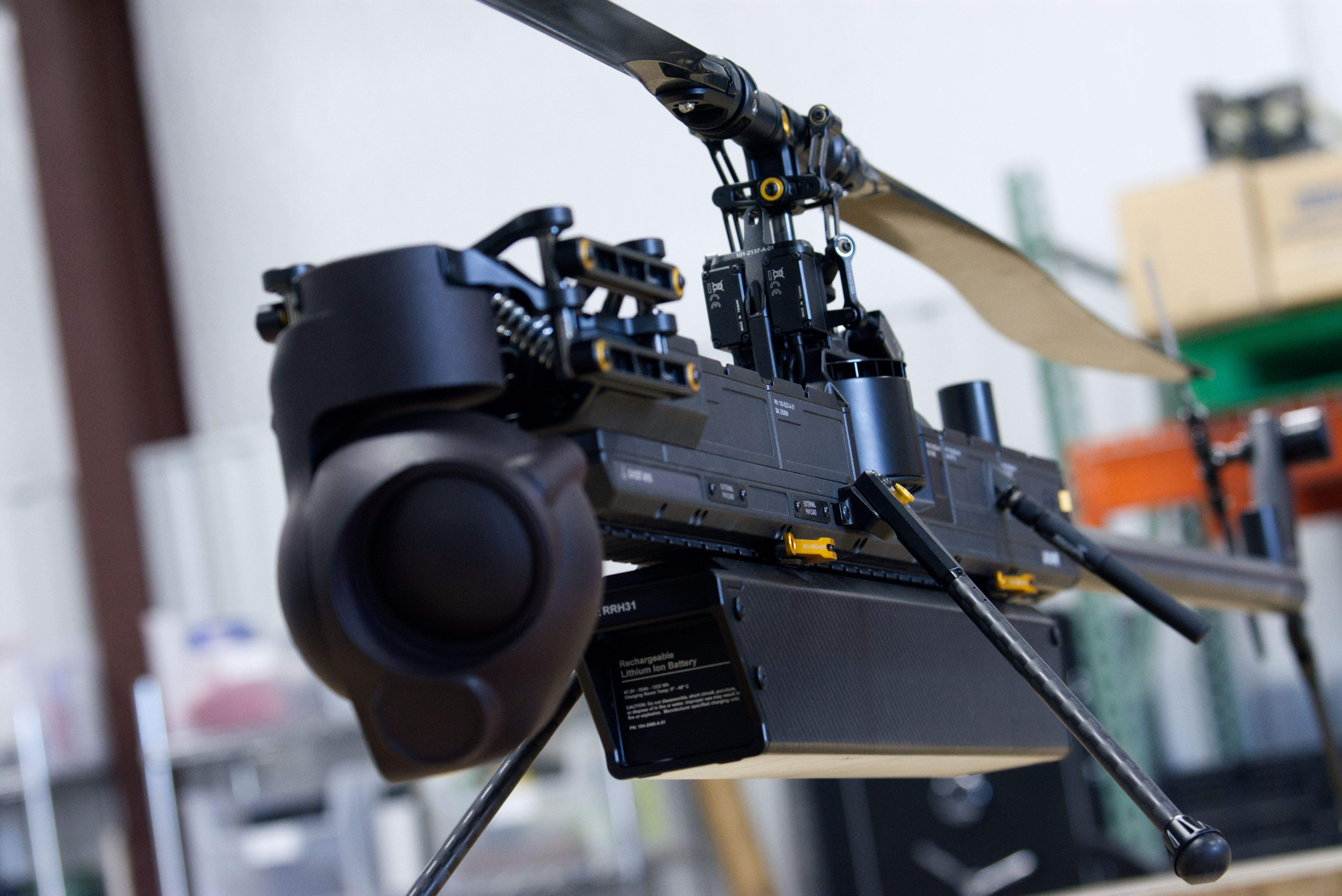
The Mustang team wasn't the only thing to ogle that day. Keep scrolling for a look at the gadgets the company rolled out.
3. The Air, Space and Cyber notebook
The Air, Space and Cyber Conference just south of the Capitol is wrapping up today. Here's what jumped out:
- L3Harris Technologies is now producing its Viper Shield electronic warfare suite for F-16s. Fleets in six countries will be outfitted with the digital protections and countermeasures.
- The Russian military is "getting larger," and "they're getting better," warned the Air Force's top general in Europe, James Hecker. Russian President Vladimir Putin this week ordered the country's military to boost its troop total to 1.5 million.
- Lockheed Martin unveiled the AGM-158 XR, an "extreme range" munition the company is developing itself, separate from existing Joint Air-to-Surface Standoff Missile and Long Range Anti-Ship Missile contracts. It's compatible with bombers and jets, but not the F-16.
- The missile-and-drone salvo Iran launched at Israel in April is a "harbinger of things to come," according to Air Force Chief of Staff Gen. David Allvin. That response required lightning-quick international coordination and intercepts.
What's next: I'm spending a big chunk of next week's newsletter on the Next-Generation Air Dominance debate. Stay tuned.
4. Quick hits
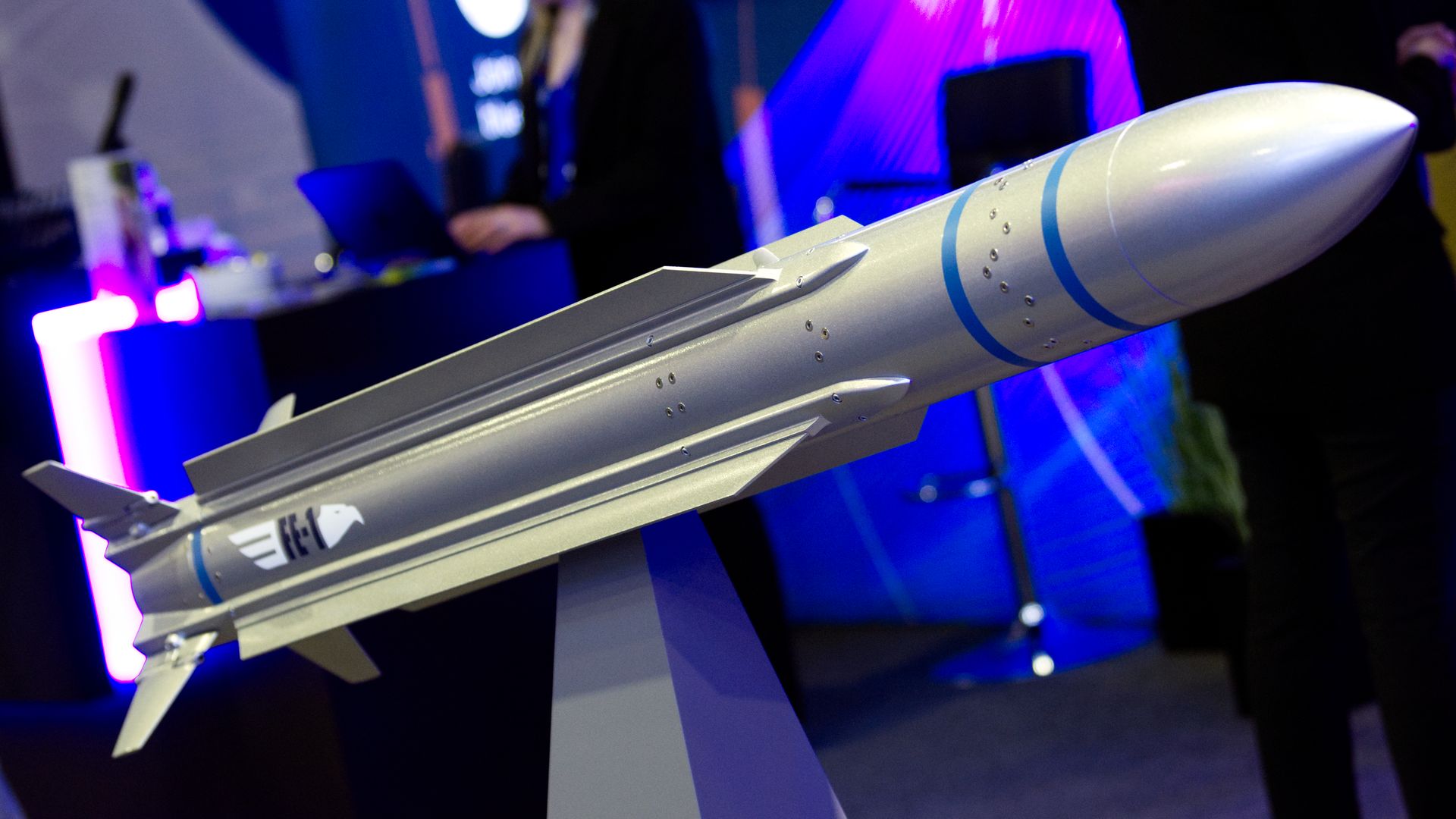
🔵 The next development milestone for BlueHalo's Freedom Eagle missile, or FE-1, is expected by the end of the year, CEO Jonathan Moneymaker told me. The company announced the successful firing of its dual-thrust, solid rocket motor in August.
- Why it matters: Amid much discussion about drone-killing costs and munitions production, BlueHalo and RTX are competing to build the Next-Generation C-UAS Missile.
- 💭 My thought bubble: As I've written before, cheap, weaponized drones demand cheap defenses. Current trades, as seen in the Red Sea and Gulf of Aden, are unsustainable.
🏛️ U.S. Sens. Mark Kelly, an Arizona Democrat, and Kevin Cramer, a North Dakota Republican, launched the Senate Defense Modernization Caucus. The move was announced at the Chamber of Commerce Global Aerospace Summit.
- Why it matters: The military's embrace of emerging tech is critical to its success. Progress can be stymied by a distracted or divided Congress.
- 💭 My thought bubble: Despite political rancor, weapons innovation and production can be common ground.
🚢 General Dynamics NASSCO will build eight more John Lewis-class fleet replenishment oilers after securing a U.S. Navy contract worth up to $6.7 billion.
- Why it matters: The new vessels are key to at-sea logistics, as they haul fuel and provisions.
- 💭 My thought bubble: The U.S. must rebuild its shipbuilding muscles. As the Government Accountability Office put it last month, "Rapidly growing maritime threats compel the Navy to deliver ships faster."
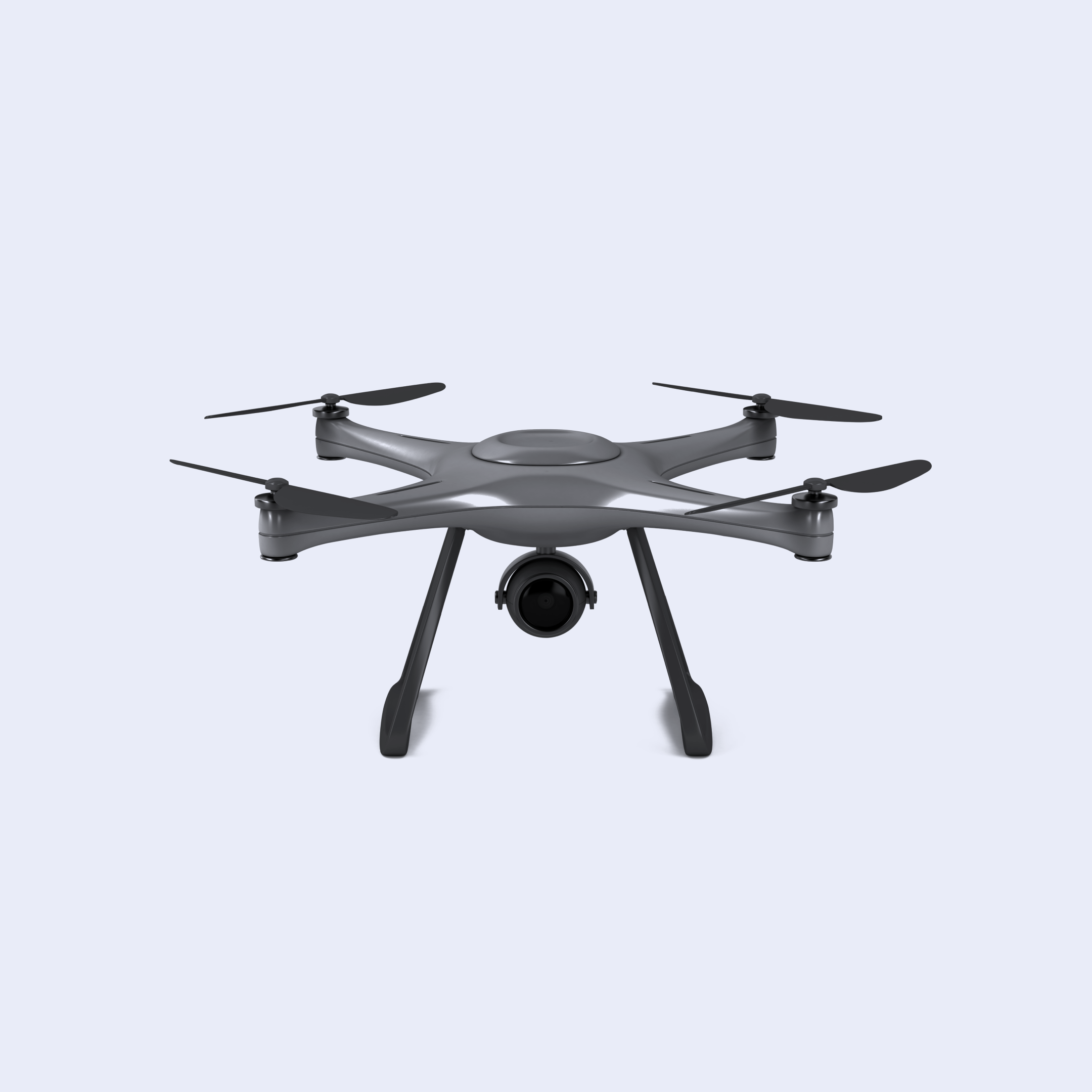
2️⃣ The U.S. Army picked Anduril and Performance Drone Works to supply soldiers with small, commercially available drones. The former will furnish its Ghost X. The latter, its C-100.
- Why it matters: "The world is witnessing the transformative power of quadcopters on the battlefield, whose unmatched agility, precision, and tactical versatility are revolutionizing modern warfare," PDW CEO Ryan Gury said.
- 💭 My thought bubble: This is starting to feel like the old Oprah Winfrey meme. "You get a drone! You get a drone! You get a drone!"
5. Check this (exclusive) out

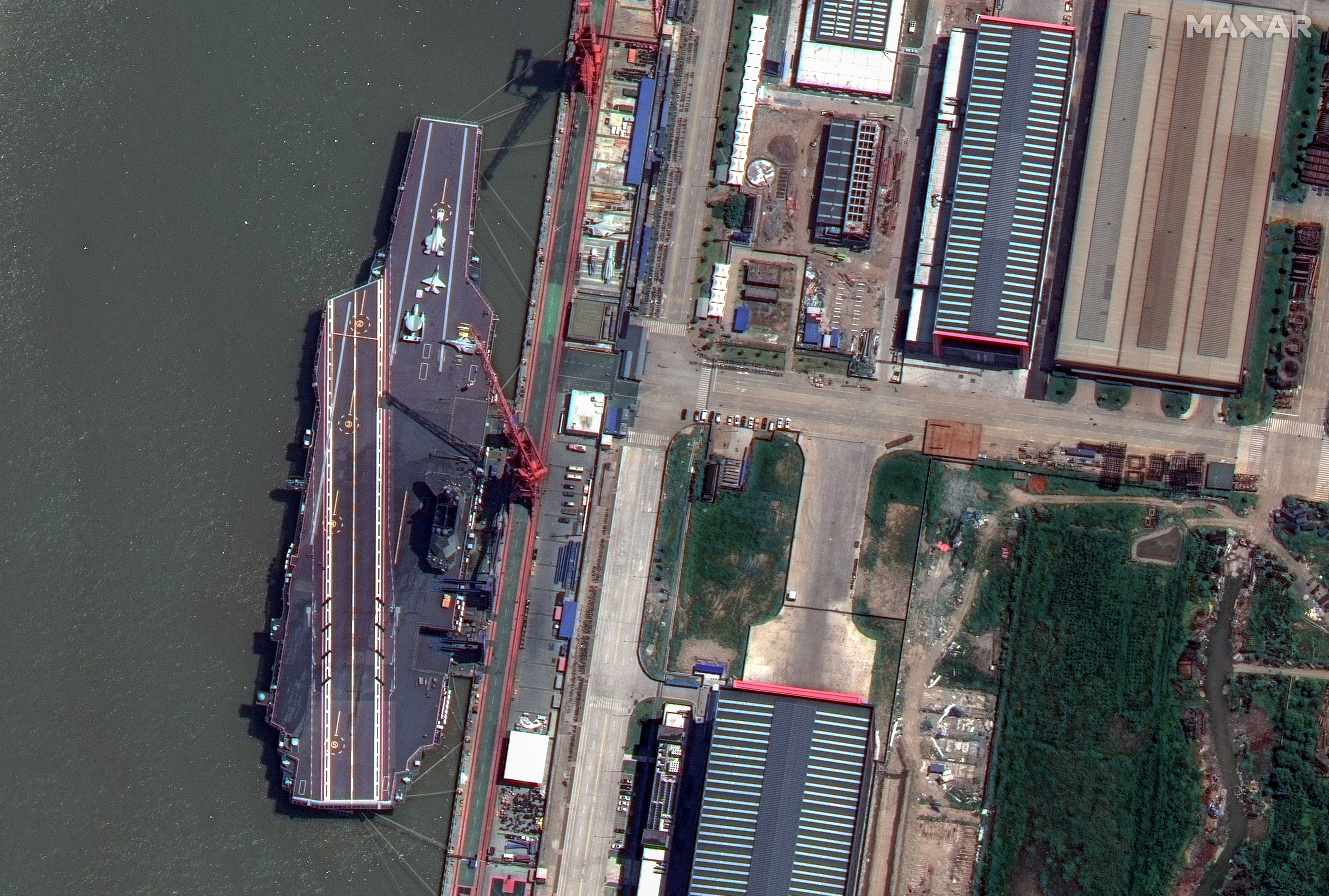
An overhead image captured by Maxar and exclusively shared with Axios shows a Type 003 Fujian aircraft carrier at the Jiangnan Shipyard.
Why it matters: Carriers are an indicator of a country's military and manufacturing power. And this is China's newest.
Zoom in: Munitions and aircraft — including a J-15 fighter with its wings folded — can be seen on the deck.
Go deeper: Space tech boom offers militaries the "ultimate high ground"
Shoutout to Nicholas Johnston for editing and Matt Piper for copy editing.
Did I miss something? What did you like or dislike? Shoot me a message by replying to this email.
Sign up for Axios Future of Defense