Axios Future of Defense
July 31, 2024

Good morning. It's Future of Defense time.
- Looking for something to do? Hit up next week's Emerging Technologies for Defense Conference in Washington. I'll be there.
- As always, I'm open to y'all's feedback. Let me hear it!
This time around, a dire warning about U.S. standing, a chat with Bombardier Defense's vice president and a peek at the nuclear stockpile.
Today's newsletter is 1,438 words, a 5.5-minute read.
1 big thing: "Fighting the last war"
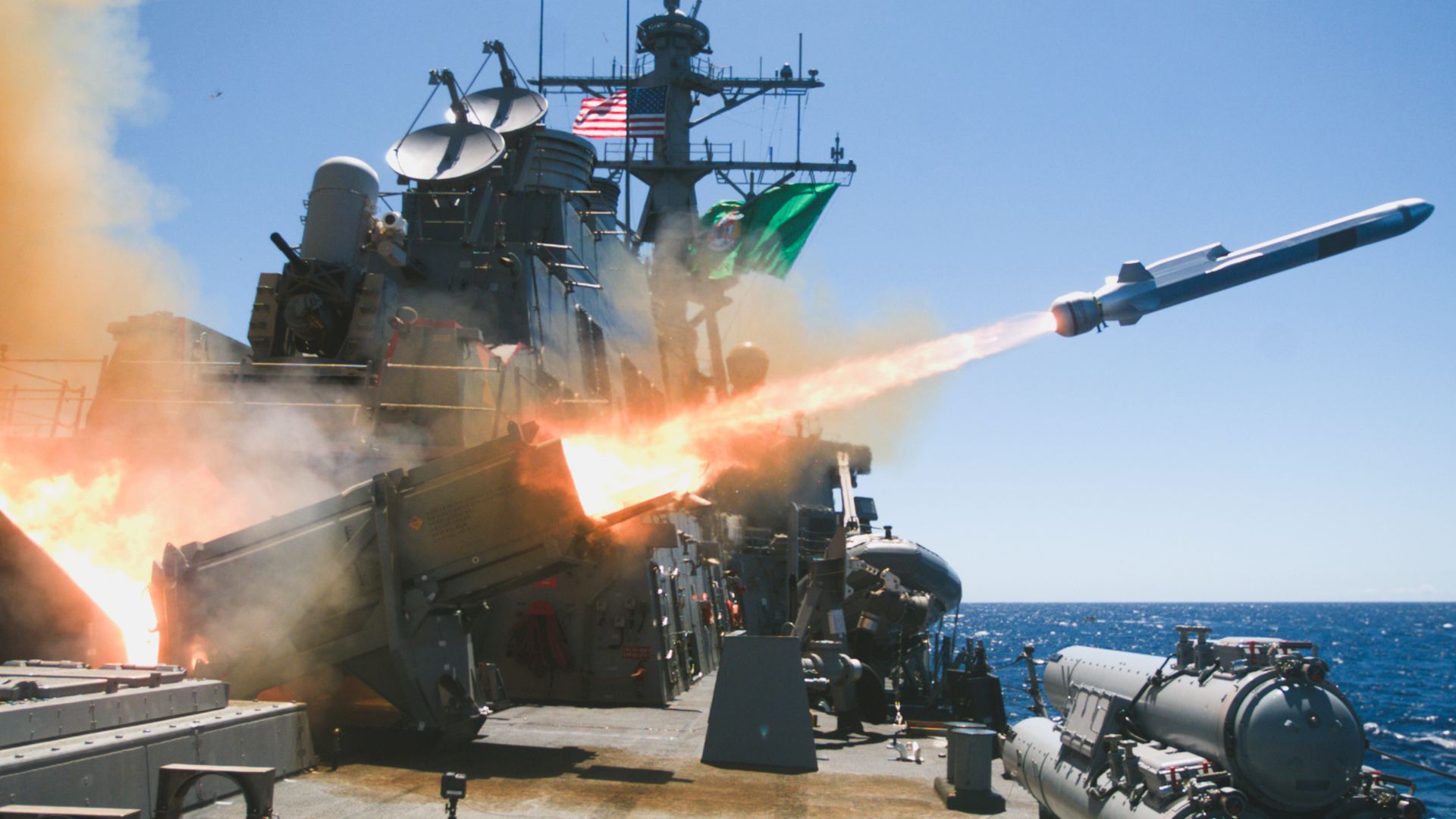
The United States — its citizens, industry, decision-makers and military — is unprepared for a war that could kick off with Russia and China and later engulf the world, according to a new blue chip study.
Why it matters: The Commission on the National Defense Strategy, a congressionally mandated group with members handpicked by Democratic and Republican lawmakers, is not known for hyperbole. Its conclusions, that the U.S. "has not kept pace with a worsening situation," should be a wakeup call.
Here are some of the top-line issues the commission laid out in 100-plus pages published this week:
- China has "largely negated the U.S. military advantage" in the Western Pacific after 20 years of investment.
- The Pentagon's portrayal of Russia as an "acute threat" undersells the "ongoing and persistent" nature of the hazards it poses, especially in space and cyber. Moscow-aligned hackers are expected to sow chaos across the U.S. should war break out.
- The means by which the Pentagon purchases weapons are outdated, as are the ultimate products. Successes like the DIU are system workarounds that don't have enough resources.
- Stateside production capacity is "grossly inadequate," meaning a "World War II–style industrial mobilization" is off the table. A protracted fight, as seen in Ukraine, is incredibly taxing.
- Recruiting failures have stunted the services. Techniques once used to bring people in the door are in desperate need of an overhaul (no more strip mall recruiting offices and discolored billboards).
- Congress "has become a major impediment to national security" and fails to fund the government in a timely manner, while billions of dollars are wasted and new projects are kneecapped.
- Public support for a strong military and robust alliances is evaporating amid political polarization and peacetime disengagement.
What they're saying: "We're very good at fighting the last war," Jane Harman, the commission chairperson, said at the Aspen Security Forum ahead of the report's rollout.
- Harman, a former ranking member of the House Intelligence Committee, also said greater focus should be on software — "cyber, AI and the amazing change in social media and how people are motivated to act."
The findings resonated with members of the Senate Armed Services Committee, which dissected the report Tuesday.
- "It aptly describes our hollow, brittle defense industrial base, and painfully Byzantine bureaucratic process," said Sen. Roger Wicker, a Mississippi Republican.
My thought bubble: None of this is terribly surprising, especially if you've read prior postmortems as well as my Future of Defense manifesto, published earlier this month. But as the volume and clip of these warnings increase, we'll see more of the changes we track here every week.
2. Quick hits

💻 PsiQuantum will anchor a quantum technology campus in Chicago where universities, national labs and defense agencies will collaborate.
- Why it matters: PsiQuantum ranked No. 11 on the Silicon Valley Defense Group's latest list of venture-funded national security innovators. Give it a read.
- 💭 My thought bubble: Quantum is as important as it is arcane. Some of the world's most sensitive secrets are protected by digital locks that quantum could render useless.
🤔 Americans' willingness to believe outlandish things is boosting the efficacy of foreign influence campaigns, Sen. Mark Warner, the Virginia Democrat at the head of the Senate Intelligence Committee, told a crowd at the Ronald Reagan Institute.
- Why it matters: The 2024 presidential election is less than 100 days away. The U.S. will soon be awash in malign information and sources.
- 💭 My thought bubble: Media literacy is a critical skill, especially for U.S. troops battling propaganda.
💥 A B-2 Spirit stealth bomber used an experimental weapon dubbed Quicksink to, well, sink a decommissioned warship during the Rim of the Pacific military exercise.
- Why it matters: The ordnance is neither mine nor torpedo — and offers the U.S. military an additional way of blowing up vessels in places like the Indo-Pacific.
- 💭 My thought bubble: Who says you can't teach an old dog new tricks? Strapping a B-2 with novel and relatively inexpensive weapons is an interesting advancement.
3. Axios interview: Steve Patrick

This week's conversation is with Steve Patrick, Bombardier Defense's vice president.
- We recently caught up over Zoom. He beamed in from Wichita, Kansas. I was working from home.
Why he matters: Bombardier plays a key role in the U.S. Army's deep sensing stratagem, and its aircraft are the backbone of intelligence, surveillance and reconnaissance fleets across the world.
Q: When you hear "future of defense," what comes to mind?
A: I think of two things: transformation and agility. Lots of changes, whether it be new theaters, new technologies, new requirements, new adversaries.
- The future of defense is transforming, it's changing. In order to be a participant in that future, you've got to be agile. Solutions in the past that were acceptable are no longer acceptable. Timelines, costs, ways of doing business — you have to change.
Q: What's the biggest challenge the defense industry faces? What can be done to alleviate it?
A: If you look at current demands, it certainly seems to be one of capacity and capability. For many years, the defense industry has been ticking along at a reasonable level of activity.
- With what's going on in Europe just now and with the ramp up of activities in the Indo-Pacific Command region, capacity within the defense industry is a challenge.
- And with capacity also comes capability. It's not just about having people and facilities, it's about having the right people at the right facilities — so training and investment into our workforce, bringing innovation to the forefront.
Q: How many emails do you get a day? And how do you deal with them?
A: I probably get about 50-100 emails a day. But they get filtered by my executive assistant, Sandra. She's fantastic. And many of my team members get copied on those emails, so they generally grab and pick up the ones that they can before I even get to them.
- But I do have a methodology of just scanning, prioritizing, looking for subjects and names. It really is divide and conquer. You can't do all yourself.
Q: What time do you wake up? What does the morning routine look like?
A: I will confess to being a bit of a night owl. I tend to carry on working late into the afternoons and evenings.
- But, generally, it's a 7-7:30am start. Nice cup of coffee, and then it's straight into scanning emails and prioritizing and a quick read of the morning newspapers, go and see what's happening in the world — just a quick trail of some of the U.S., European media and a little bit of trade press.
Q: What's a piece of gear or tech you can't go without?
A: My life seems to run on this thing these days: my iPhone. I'm not really a techno geek. But I think I've become almost entirely dependent upon my iPhone, just for running my day, running my agenda, running my travel. I can do everything on this, so I think that's where I'd struggle most without.
Q: What advice would you give your younger self?
A: Don't be surprised if things change. You know, when I was a young engineer out of college, my ambition was to be a pilot, and I was very much focused on how I was going to get myself into the left seat of an aircraft. I went through a couple of jobs that were aviation related, but I was training as a pilot in the background, doing my [Private Pilot License], et cetera.
- I then eventually took the plunge and took myself out of the workforce for about a year and a half to train as a professional pilot. Got all my training done, and then 9/11 happened. The whole market just moved. So I ended up in more of a traditional engineering and management job, and where I find myself now is, I'm actually in a great job.
- I love what I do. I love the people I work with. I love the challenges I get presented. I can't imagine not having this job. But if you'd asked my younger self, "Do you want to be in an office, running a business, with a team of people?" That's not what I would have thought.
4. Check this out
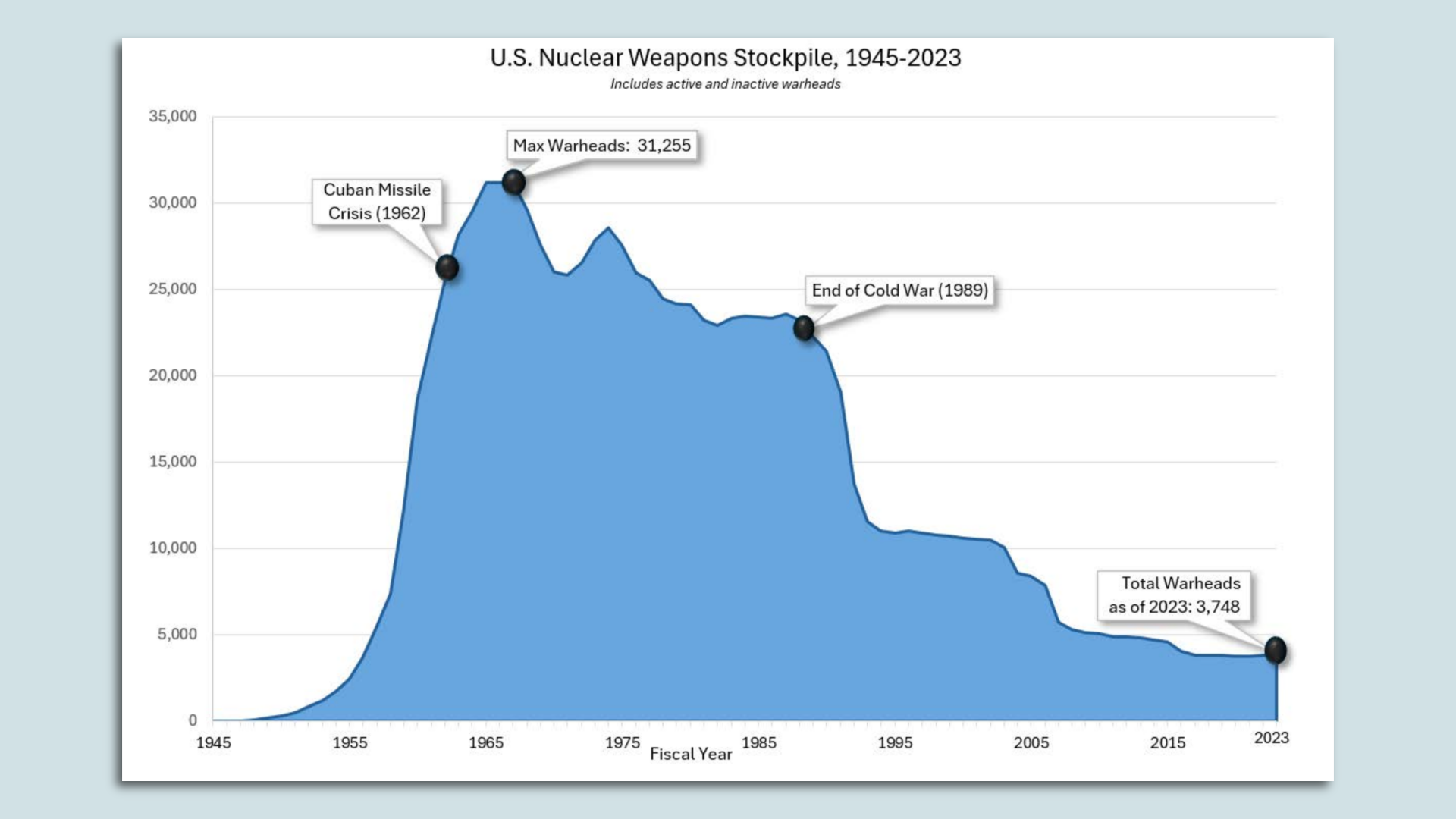
The National Nuclear Security Administration, part of the Energy Department, recently declassified information about the U.S. nuclear arsenal.
- The graph above, shared on X by NNSA boss Jill Hruby, shows the amount of active and inactive warheads per fiscal year, including steady levels since 2016.
Why it matters: Requests for similar disclosures have been rejected in the past.
My thought bubble: Transparency is good, especially when dealing with world-killing weapons.
Shoutout to Nicholas Johnston for editing and Matt Piper for copy editing.
Did I miss something? What did you like or dislike? Shoot me a message by replying to this email.
Sign up for Axios Future of Defense