Axios Future of Cybersecurity
July 29, 2025

Happy Tuesday! Welcome back to Future of Cybersecurity.
📬 Have thoughts, feedback or scoops to share? [email protected].
Today's newsletter is 1,807 words, a 7-minute read.
1 big thing: Ransomware looms over SharePoint hacks

Ransomware gangs are on the hunt for organizations that have yet to patch their vulnerable Microsoft SharePoint servers.
Why it matters: Those could include organizations across the government and sectors including education, health care, transportation, technology and finance, security experts told Axios.
State of play: As of Wednesday, more than 400 systems had been actively compromised via the SharePoint zero-day vulnerability, according to researchers at Eye Security.
- Several federal government agencies — including at the departments of Energy, Homeland Security, and Health and Human Services — have been hacked, likely by groups linked to the Chinese government.
- Malicious hackers have attempted to break into more than 90 state and local government offices, according to Randy Rose, vice president of security operations and intelligence at the Center for Internet Security, which runs the Multi-State Information Sharing and Analysis Center.
- Last week, researchers warned that the attackers were also stealing machine keys once they broke in — which would allow them to return even after a vulnerable SharePoint server was patched.
Threat level: The new Warlock ransomware gang is actively targeting vulnerable SharePoint servers, Microsoft warned last week.
- Since emerging in June, the Warlock gang has claimed responsibility for attacking 19 victims across the government, finance, manufacturing, technology and consumer goods sectors, according to security firm Halcyon.
- The group is believed to be a descendent of the Black Basta gang, which was known for hacking more than 500 organizations globally, per U.S. authorities.
Zoom out: Ransomware is the most pressing long-tail cyber threat for organizations to be concerned about, Rafe Pilling, director of threat intelligence at Sophos' Counter Threat Unit, told Axios.
- So far, Sophos hasn't seen any active ransomware attacks tied to the SharePoint vulnerability, but Pilling said it's only a matter of time.
- "No doubt, there will be people that don't patch, and we will continue to see this pop up as an entry point down the line," Pilling said.
The big picture: Ransomware gangs routinely adopt newly discovered zero-day vulnerabilities to gain access to corporate networks.
- In 2021, ProxyShell — a trio of critical vulnerabilities in Microsoft Exchange Server — was discovered by security researchers and patched by Microsoft.
- But before many organizations updated their systems, the flaws were exploited first by espionage-focused hackers and then by opportunistic ransomware gangs.
- Within weeks, several groups had used the vulnerabilities to breach at least a thousand organizations. The incident demonstrated how quickly ransomware operators can weaponize publicly disclosed vulnerabilities.
- While the initial wave subsided after widespread patching, there have still been attacks reported years later.
Reality check: Pilling said that the SharePoint attacks will likely be less detrimental than ProxyShell and similar incidents but that companies are still at risk if they haven't patched.
Between the lines: These types of complex, multistage hacks are becoming the norm, Cliff Steinhauer, director of information security and engagement at the National Cybersecurity Alliance, told Axios.
- The SharePoint hacks are the result of attackers stringing together two vulnerabilities that, on their own, "weren't that big of a deal, " Steinhauer said.
- "Attackers know that they're not as prioritized and that we're all already trying to patch so many vulnerabilities that we have to prioritize," he said. "They're gaming the system."
What to watch: Ransomware gangs are likely to try targeting vulnerable, unpatched SharePoint servers for months to come.
- "It's really going to take a village on this one to help each other figure out what needs to be done and that they applied the updates correctly," Steinhauer said.
2. Exclusive: AI threat-hunting startup launches

A new startup offering an AI-enabled threat-hunting platform is emerging from stealth today with backing from Bain Capital Ventures, the company first shared with Axios.
Why it matters: Cyber defenders are in a race against malicious hackers to embrace AI tools before automated attacks become the norm.
- Some of the biggest advancements for defenders are coming from startups that have the flexibility to build new technologies from scratch, rather than retrofitting AI capabilities into existing products.
Driving the news: Nebulock emerged from stealth today with $8.5 million in funding, including a fresh $6 million seed round led by Bain.
Zoom in: Nebulock offers an autonomous threat-hunting platform that actively scans and responds to malicious activity on a company's system.
- The product — which uses both machine learning algorithms and AI agents to study telemetry data — can be plugged into the existing security stack, including CrowdStrike, Okta and Splunk, via an API to detect endpoint, identity and cloud security threats.
- While in stealth, Nebulock tested its products with a variety of customers across health tech companies, banks and VC-backed technology firms, Damien Lewke, the startup's founder and CEO, told Axios.
The big picture: 90% of companies say they're not ready for AI-powered cyber threats, and cyber threat hunters are inundated with alerts about potential malicious activity across their companies' environments.
- Defenders have been eager for AI-enabled tools that can not only help them sort through those notifications but also automatically respond to significant threats.
- "Our vision is to have Nebulock be that teammate that tips the balance of power back in the hands of network defenders," Lewke said.
Reality check: Cybersecurity has long been a crowded market, and automated threat response is no different. But Lewke told Axios that customers' awareness of the problem has been high.
What's next: Lewke said the startup will use the new funds to hire more engineers and sales and marketing employees and also to build out the platform to expand the types of threats it can detect.
- Nebulock also plans to expand its customer base into the retail, manufacturing and legal sectors.
- Additional investors in the seed round include Decibel, In-Q-Tel, Zetta Venture Partners, Step Function and Aviso Ventures, as well as angel investors.
3. Ransomware gangs experiment with AI
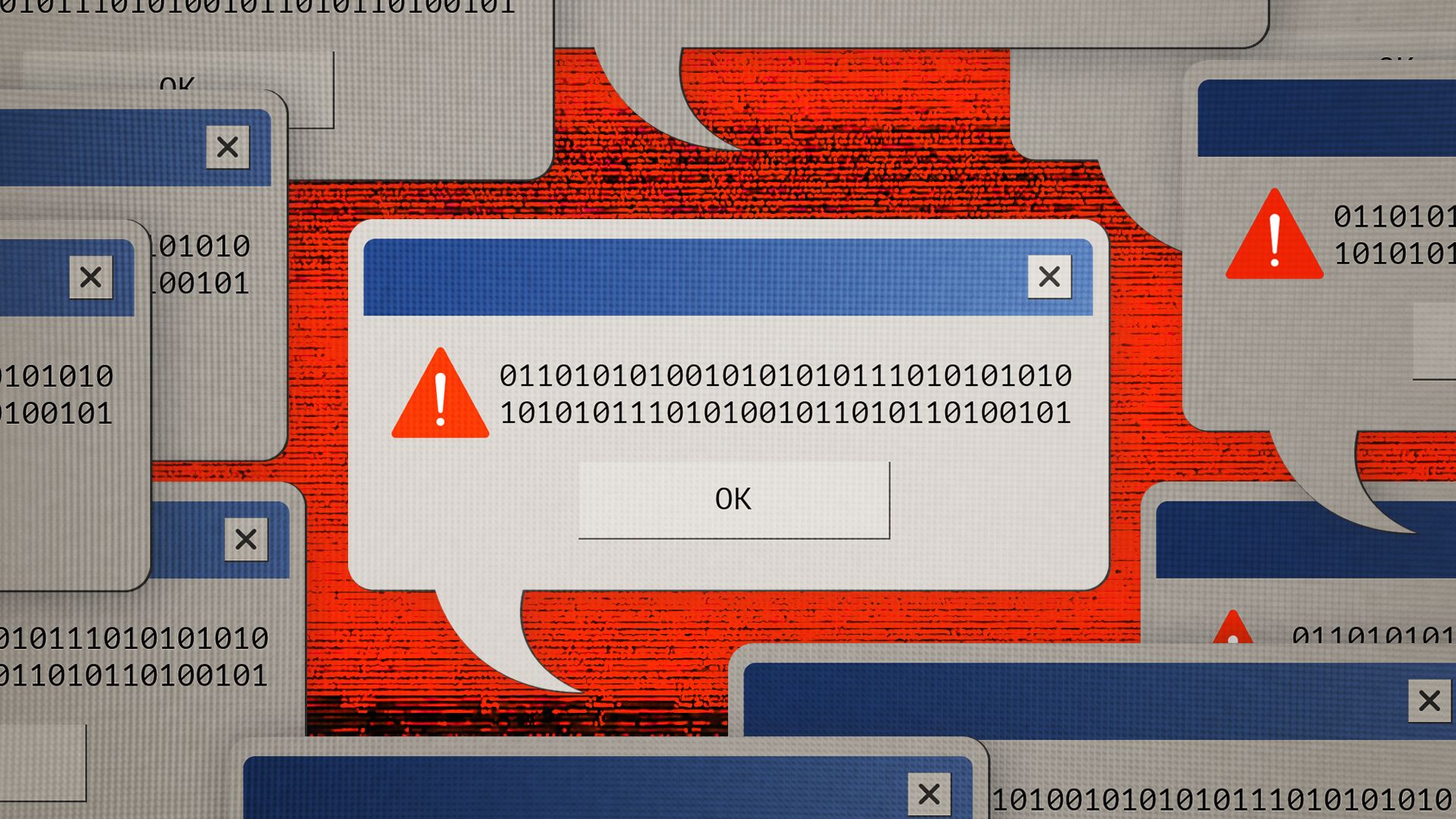
A ransomware gang is using AI chatbots to negotiate with its victims, according to research from Picus Security.
Why it matters: It's the latest example of how even the bad guys are using AI-enabled tools to scale their workloads.
Zoom in: Global Group, a new ransomware-as-a-service brand that researchers uncovered last month, has been directing victims to talk to an AI chatbot to negotiate their ransom payments.
- The chatbot is designed to "automate communication and apply psychological pressure," including by increasing ransom demands and sending threats, Picus found.
- Chat transcripts reviewed by Picus show the chatbots demanding upward of $1 million at a time from victims.
Yes, but: Human hackers can still review what the chatbot is saying and decide what deadlines victims must follow to avoid seeing their stolen data leaked online, according to the report.
The big picture: Ransomware gang members are experimenting with AI-enabled tools in all aspects of their attacks, including coding and social engineering, Allan Liska, a threat intelligence analyst at Recorded Future, told Axios.
- "Just as in the tech world, some groups are heavily focused on AI, while others are waiting to see how it's being used and then copying the successful strategies of other groups," Liska said.
What to watch: This is only the beginning. Security experts have been increasingly warning of AI agents carrying out a detrimental cyberattack within the next year.
4. Exclusive: AI tops security leaders' concerns

Cybersecurity leaders are less stressed about hiring new talent and more worried about having the skills they need to tackle the AI-enhanced threat landscape.
- That's according to new RSA Conference (RSAC) data published this morning and shared exclusively with Axios.
Why it matters: De-emphasizing hiring and talent could end up exacerbating the existing cyber workforce shortage in the long run, Hugh Thompson, executive chairman of RSAC, told Axios.
Driving the news: RSAC released a report today detailing its predictions for the industry in the coming three years based on attendance data from its 2025 conference, including which attendees went to what panels.
By the numbers: C-level executives and board members were 36% more likely than average to attend skill-building sessions at this year's conference, according to the new data. Vice presidents and other senior executives were also more likely to attend those sessions.
- Meanwhile, those executives were 5% less likely than the average attendee to participate in sessions about team development and retention.
- Vice presidents and other senior executives were 14% less likely to attend team development sessions.
Between the lines: Security executives are worried about their own ability both to secure the AI tools their companies are adding to their network and to use AI themselves to make their teams more efficient, Thompson said.
- At the same time, executives are eager to see whether they need to continue hiring as AI agents improve, he added.
- "These executives are realizing the world really is changing around them," he said.
The big picture: Even so, AI has prompted an existential crisis among security leaders, who are worried they will be at fault for any security issues that come from their businesses' decision to rapidly deploy untested solutions.
- Unlike when security executives had to reckon with cloud adoption, executives don't have much say in how companies are using AI tools.
- "The business is demanding that we are going to use AI in these use cases. It's coming at them," Thompson said. "They're caught off guard in a speed cycle that they really haven't been in before with another technology disruption."
5. Catch up quick
@ D.C.
🏛️ President Trump's AI Action Plan focuses more on accelerating AI innovation than on concerns about model safety, environmental risks and potential job losses. (Axios)
🇰🇵 An Arizona woman was sentenced to 8.5 years in jail for running a so-called "laptop farm" as part of a North Korean IT worker farm scheme. (Politico)
✂️ DOGE has built an AI tool to slash federal regulations within government agencies, with the hope of cutting half by the Trump administration's first anniversary. (Washington Post)
@ Industry
💰 Vanta's CEO says she plans to use the data compliance startup's recent $150 million Series D funding to accelerate its AI innovations and expand into government compliance. (Axios Pro)
🫠 Security bug bounty programs are being overrun with AI slop and fake reports. (TechCrunch)
📈 VPN use skyrocketed in the United Kingdom after the country's new online safety rules went into effect. (Financial Times)
@ Hackers and hacks
👀 Microsoft is investigating whether the recent SharePoint zero-day attacks are the result of a leak from its information-sharing program. (Bloomberg)
⚠️ Allianz says the majority of customers' personal data was exposed in a recent cyberattack. (TechCrunch)
📲 Tea, a fast-growing app where women leave anonymous reviews about their experiences with the men they've dated, has suffered two major security issues in recent days — exposing more than 1.1 million messages and about 72,000 images. (404 Media)
6. 1 fun thing

🏃🏻♀️ An exciting update for long-time readers who have been following my running journey: I finished my first 10K race this weekend!
- 🌁 Shoutout to everyone else who was at the SF Marathon over the weekend.
- 👀 Up next: A 10-miler? A half-marathon? Or maybe just a nap.
☀️ See y'all next week!
Thanks to Dave Lawler for editing and Khalid Adad for copy editing this newsletter.
If you like Axios Future of Cybersecurity, spread the word.
Sign up for Axios Future of Cybersecurity