Axios Des Moines

October 09, 2026


🚂 Happy Friday! On this day in 1893, Valley Junction was incorporated. The community later became known as West Des Moines, per Notes on Iowa.
🌧️ Weather: Slight chance of showers, then sunny with a high of 85 and a low of 65.
🎂 Happy early birthdays to our members David Yepsen, Tom Colvin and David Jennings!
🗓️ Programming note: We're off Monday for the holiday!
Today’s newsletter is 1,101 words — a 4-minute read.
1 big thing: Rising to the top

This is Andrew Fuller's era — and not just because he's Halloween-maxxing 24/7.
Why it matters: The Des Moines celebrity baker is blowing up with appearances on two Food Network shows this fall and serving as living proof that if you're authentically yourself, good things happen.
How it started: Fuller broke out as a made-for-TV star when he competed and won the first season of "Is It Cake?" on Netflix in 2022.
- Since then, his talent for baking outrageously realistic cakes has landed him on Food Network competitions and speaking appearances around the world.
- But eventually his management told him to no longer be a TV competitor and rise to a judge role. Then last year, he got a call from Food Network to be a judge on the "holy grail" of cake shows: "Halloween Wars."
- "Whether I'm on it or not, it's the best. But now that I'm on it, it's even better, let's just be real," he joked.
Since then, things have really taken off for Fuller, including appearing on another Food Network show, "Sweet Deceit" with Josh Peck.
Yes, but: With elevated stardom comes more public attention and scrutiny.
- He stays off Reddit and doesn't read online comments. And despite being proudly queer and green-haired in the middle of the Midwest, the negative messages still bother him.
- "No matter how thick of a skin you might think you have, it is so true not to read the comments," Fuller says. "I'm kind of in this place now where I have to protect myself a little bit for my mental health."
The big picture: Still, Fuller says he's okay with representing "a big thing that a lot of people hate." He can't be anything other than himself — and that's paying off, not only for his career, but also through helping Iowa youth feel OK being "weird."
- "I'm heading in this direction where I'm being rewarded for being myself," he says. "I would feel like a fraud if I did anything else."
What's next: Fuller still lives in Des Moines, though with the increase in work outside of the state, he expects to move at some point.
- When that time comes, he says Iowa will still be his home, including where his mom and husband's family live.
- "Des Moines is a city that really celebrates anyone who has made something of their life here," he says.
📺 If you watch: The next episode of "Halloween Wars" airs Sunday at 8pm on Food Network, and the next day on HBO Max.
2. Boese costs hit $1.54M

A judge this week dismissed the remaining lawsuit by Polk County deputy administrator Sarah Boese against the county and three supervisors.
Why it matters: Boese's cases were part of a string of litigation involving county officials — including former HR director Jim Nahas' wrongful termination case — that generated millions in settlements and legal costs.
Driving the news: Clarke County Judge Elizabeth Reynoldson threw out Boese's case before trial Wednesday, rejecting her discrimination, retaliation and privacy claims against the county and Supervisors Matt McCoy, Mark Holm and Jill Altringer.
Catch up quick: Boese sued Polk County in 2022, saying McCoy sexually harassed her in 2020 and county officials retaliated against her.
- McCoy has denied the allegations.
Zoom in: Her complaint became central to Jim Nahas' firing after county officials accused him of mishandling Boese's harassment complaint.
- Nahas said his firing was political and sued the county and several supervisors.
- A jury awarded him $4.26 million last year, but supervisors approved a $2.5 million settlement in February. About $1 million was covered by insurance.
Stunning stat: The county's costs tied to Boese's lawsuits have now reached $1.54 million, according to data provided to Axios on Thursday.
- That includes $1.39 million related to the claims dismissed this week and almost $150,000 on two public records cases it settled, including $50,000 for Boese's attorney fees.
What they're saying: McCoy tells Axios that this week's ruling provided a "logical rationale" for dismissal.
- He said Boese's case against him was a factor in his Democratic primary loss.
What we're watching: Whether the ruling ends the disputes — and whether Boese continues working for the county.
- Boese and her attorney, Matt Sahag, did not respond to Axios' requests for comment, and it's unknown whether they'll appeal.
- Asked whether he will take legal action against Boese, McCoy says he hasn't decided.
3. Your weekend plans

Friday
🪦 Jordan Cemetery Tour | Explore local history with costumed reenactments, a headstone restoration demonstration and a presentation on cemetery symbolism. | 9am–noon | 2001 Fuller Rd., West Des Moines | Admission: $25
🎀 Eleven 101 Collective Grand Opening | Support former Painted Tree Boutique vendors as they reopen at this new space. | 10am-8pm today and Saturday; 10am-6pm Sunday | 11101 University Ave., Clive | Free!
Saturday
👗 Totally Rad Vintage Fest | A traveling vintage festival featuring retro clothing, accessories, toys and home goods. | 10am-5pm | Iowa Events Center | Tickets: $12
🕹️ Y2K Countdown Party | Travel through the decades with '80s, '90s and 2000s music, themed cocktails, photo ops and an 11pm Y2K countdown. Ages 21+. | 6pm | Up-Down | Event details
🏒 The Iowa Wild | Watch our hometown team play against the Rockford IceHogs. | Casey's Center | 6pm | Tickets: $31
Sunday
🐶 Wag-o-Ween | Bring your dressed-up dog to Big Grove, where they can enjoy a pup cup. AHeinz57 will bring adoptable pets. | 1-3pm | Free!
4. 🐮 1 tasty thing to go: AE's Scotcheroo milk
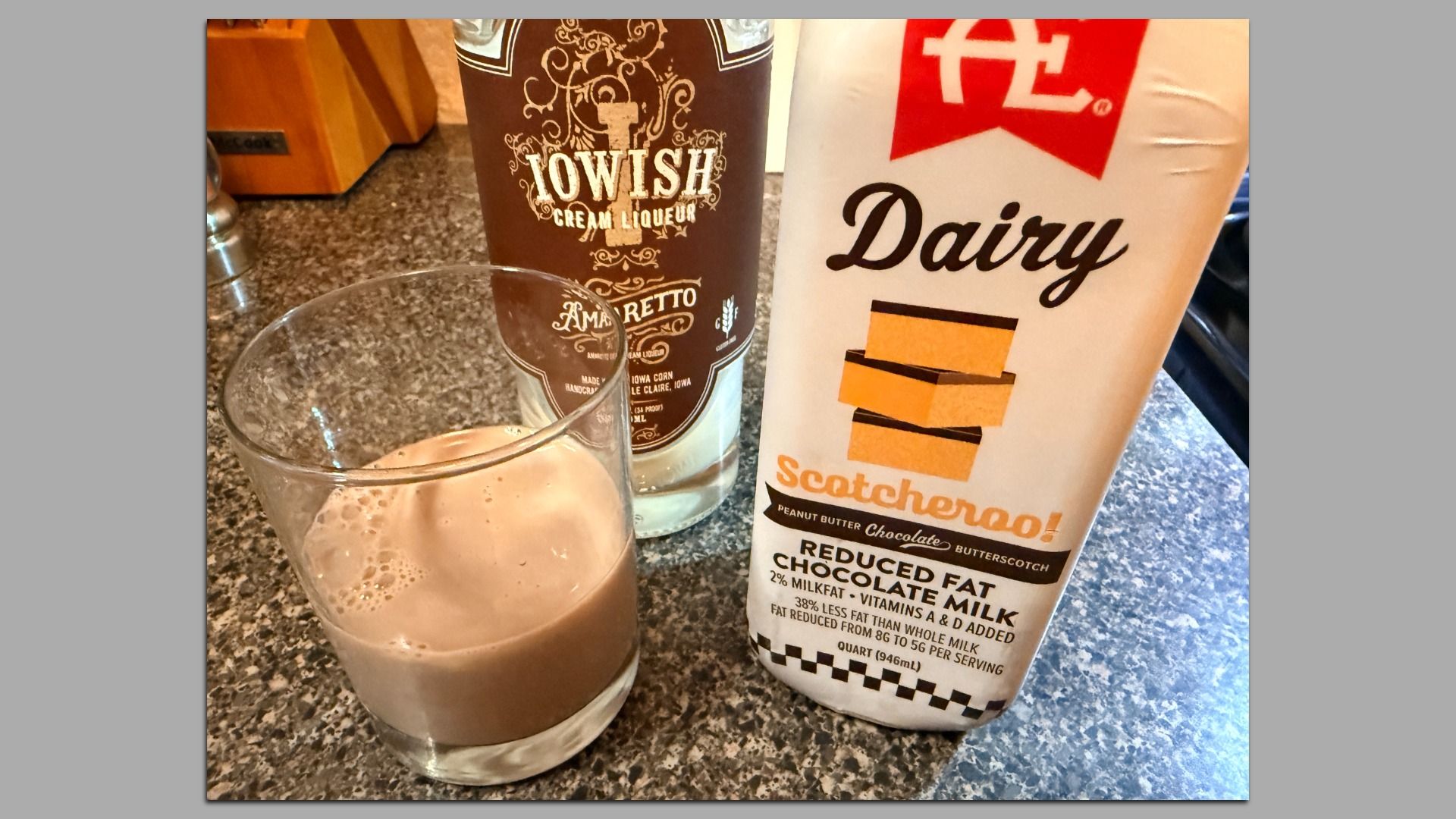
👋 Jason here: I tried AE Dairy's new Scotcheroo milk this week.
State of play: It tastes so much like the real treat that I'm convinced someone liquefied an entire pan of bars I remember as a kid.
Zoom in: The adult me added amaretto-flavored Irish cream liqueur because, apparently, my childhood needed a liquor license.
The bottom line: It should be in your grocery cart.
🎃 1 thing to go: AE's seasonal Harvest Pumpkin Egg Nog is also on shelves.
- Mix it with coffee if you crave a lovely Starbucks-like drink, or a bit of Baileys Irish Cream in it is nice, too!
🧌 1 hairy thing to go: Real Bigfoot hunters are coming to Saturday's Bigfoot in Bondurant event.
This newsletter was edited by Chloe Gonzales.
Sign up for Axios Des Moines

Get smarter, faster on what matters in Des Moines with Linh Ta and Jason Clayworth.