Axios Denver

April 29, 2026




2. 💨 Denver is among the most polluted cities


The metro Denver-area ranks as the eighth-most ozone-polluted region in the U.S., with an average of 30 high-ozone per year, according to the American Lung Association's 2026 "State of the Air" report.
Why it matters: Hundreds of thousands of people in the metro area — including Aurora and Greeley — have health conditions such as asthma that make them more susceptible to air pollution.
- Infants, children and teens are at increased risk because their lungs are still developing, experts say.
State of play: As a whole, Colorado's air quality is improving, the report found, but ozone and particle pollution in certain areas remain problematic.
- Fort Collins and Loveland rank as the 18th-worst metro area in terms of ozone-polluted cities
- Jefferson County ranks 10th for ozone pollution, while Douglas County ranks 20th.
The other side: Colorado Springs is one of just three metro areas in the nation to see improvements and drop off the worst list. It moved from 23rd worst to 54th.
- Grand Junction and Pueblo–Cañon City are at the top of the 25 cleanest cities for year-round particle pollution.
The big picture: Nearly half of Americans (44%) live in places with unhealthy levels of ozone or particle pollution.
- That's over 152 million people — despite "decades of successful efforts to reduce sources of air pollution," the report says.
3. Mile Highlights: New scooters incoming

4. 🥛 Lord of Lactose creams Denver rival

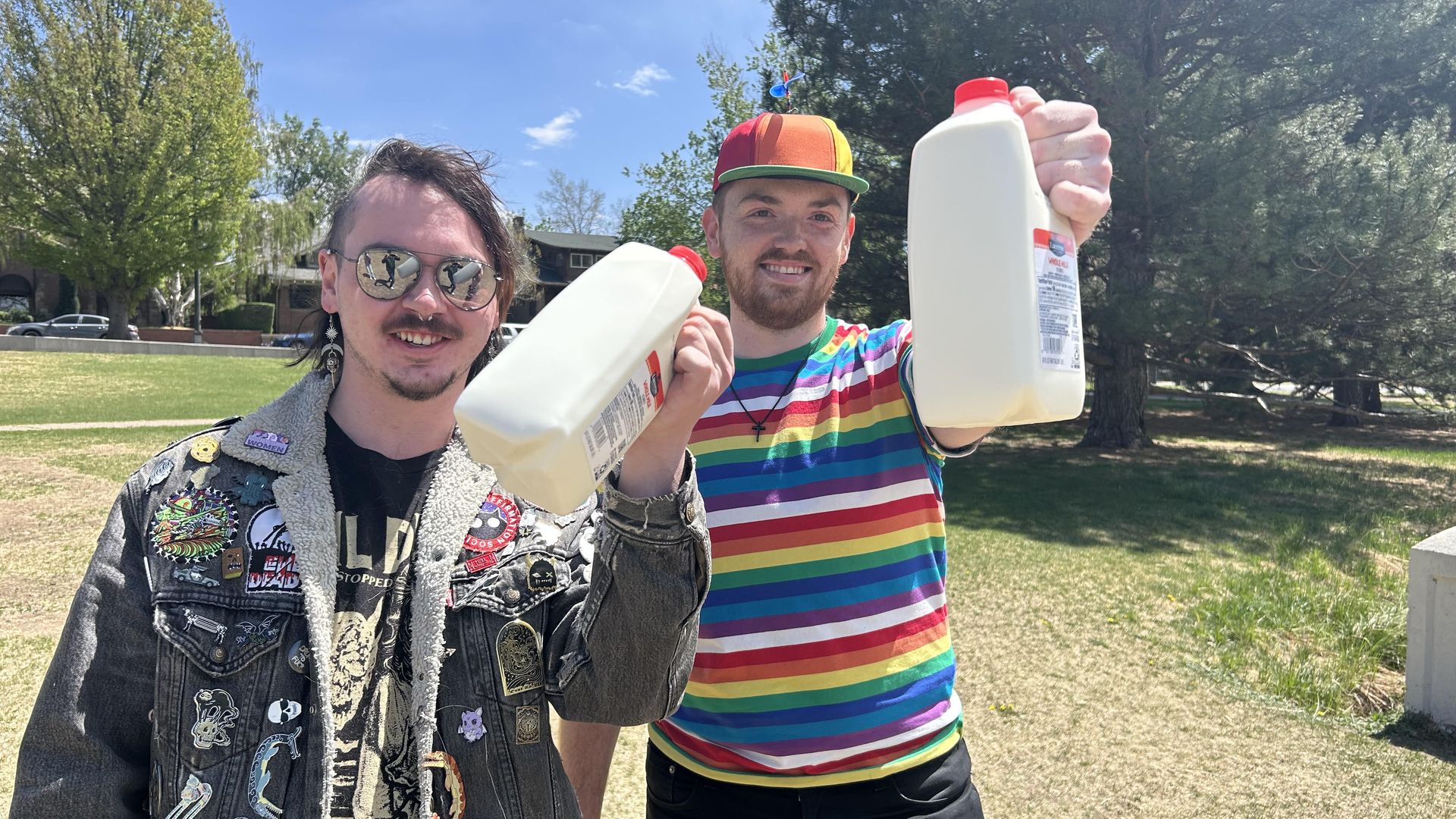
The Bovine Baron took on the Lord of Lactose in a milk-chugging duel last Saturday at Washington Park.
State of play: An April Fool's prank turned 24-year-old Liam Poultney (aka the Bovine Baron) into a Mile High milk-swilling sensation — luring challengers and side-eyes, as the joke quickly curdles into something bigger.
Catch up quick: A friend secretly plastered Denver and Arapahoe County with flyers daring strangers to out-chug him earlier this month. One event, April 19 at Observatory Park, drew 100-plus challengers.
- But the Baron got his bovine butt beaten, drinking about two-thirds of a gallon in five minutes.
- He also barfed.
Zoom out: Enter the Lord of Lactose.
- Matthew Garis, 26, an accountant from Denton, Texas, saw the loss on Instagram, booked a flight, and arrived Saturday in a pinwheel hat.
In the room: Two half-gallons. Five minutes.
- The competitors stood back-to-back, took three paces, turned and chugged.
- Both started fast.

Poultney paused — then paused again. Garis kept chugging.
- In the end, the Lord of Lactose finished his half-gallon in 2 minutes, 9 seconds, and Denver's own Bovine Baron made it only halfway.
Winners: Everyone.
- "It feels like there's whimsy in this, and we're missing a lot of whimsy in the world right now," the Baron said.
What's next: Poultney wants to turn milk-chugging into an annual event — possibly tied to a breast cancer fundraiser.
The bottom line: No one puked — this time.
Axios Denver
