Axios AM Deep Dive

October 31, 2026

๐ฆพ Welcome to the first major election of the AI era. In this special midterm edition, we're exploring how AI and data centers are reshaping campaigns, dividing communities, and forcing voters and local leaders to confront what the AI boom means for their futures.
- This newsletter was reported and written by Axios' tech, business and energy experts ... orchestrated by director of special projects Natalie Daher ... and copy edited by Amy Stern.
Smart Brevityโข count: 1,498 words ... 5ยฝ mins.
1 big thing: AI boom meets the ballot box

Technology has become a defining issue in the 2026 midterms โ and AI data centers are the punching bag.
- ๐ฅ Why it matters: It's not just about noise pollution and curb appeal. Data centers have become a lightning rod for growing resentment over who gets rich from the AI boom and who bears the cost, Axios' Maria Curi and Erica Pandey report.
๐ฌ Tatishe Nteta, a political scientist at UMass Amherst, says: "It's a reflection of what's increasingly becoming an easy target โ tech giants and AI."
- He calls the backlash "a turn against the billionaire class from both the left and the right."
๐ณ๏ธ Driving the news: Opposition to data centers reached a fever pitch in the months leading up to the midterms. Once an obscure infrastructure issue, data centers have become a political liability for candidates across the country.
- Voters in 10 states will decide on 41 data center ballot measures on Election Day, ranging from new requirements for developers to outright bans on construction.
- All six data center measures already decided this year โ in New Hampshire, Wisconsin, Michigan and California โ have gone against development, according to Ballotpedia.
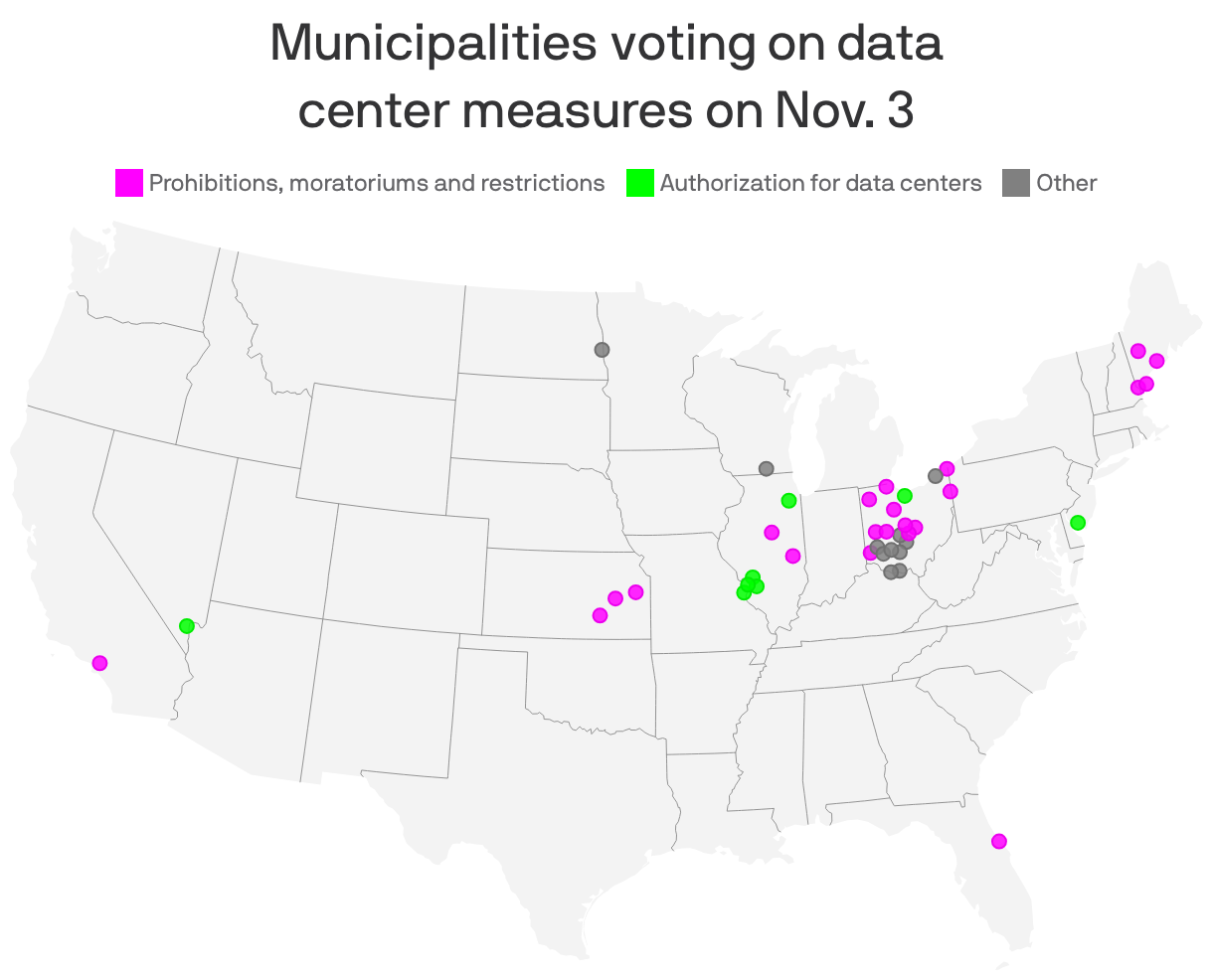
๐ Zoom in: Data center backlash is reshaping races and forcing politicians to change course.
- In Texas, incumbent Gov. Greg Abbott (R) reversed course after years of courting the industry โ halting new approvals pending an audit of projects โ after a backlash in rural communities. Democratic challenger Gina Hinojosa supports a moratorium on new data centers until tougher rules are established.
- In Utah, an unlikely coalition of state leaders, local residents and environmental groups is opposing a data center project backed by Shark Tank's "Mr. Wonderful," Kevin O'Leary.
- In Ohio, incumbent Sen. Jon Husted (R) is on the defensive over past support for data centers as he fights to keep his seat in a race that could help decide Senate control. The state has 21 data center-related measures on Tuesday's ballot.
The backlash is minting a new wave of candidates. Across the country, local activists galvanized by data center fights in their communities are running for office.
โ๏ธ Between the lines: The opposition to data centers cuts across generations and party lines, though some groups are far more skeptical than others, per exclusive polling from the new Axios-CivicScience AI Sentiment Index.
- Overall, 43% of Americans oppose construction of data centers in their area, compared with 19% who support them. Another 38% are neutral.
- The generational divide is stark: Nearly two-thirds of baby boomers and older Americans (65%) oppose data centers, compared with 26% of Gen Z.
- A majority of independents (54%) and nearly half of Democrats (48%) oppose data centers. Republicans are almost evenly split, with 30% opposed and 29% supportive.
๐บ๐ธ The Trump factor: President Trump has complicated Republicans' efforts to navigate local backlash over data centers, declaring "we want them" at an Ohio rally and forcing the Husted campaign to distance itself from his remarks.
- Trump has called data centers a "Golden Goose" for the U.S. economy and praised companies like Meta for investing in local communities.
- Democrats are capitalizing on voter frustration and making data centers a major campaign issue.
2. ๐ Who pays for the grid's growing tab
Americans' electricity bills could be affected for years to come by the decisions being made now about who pays for the AI data center boom, Axios national energy correspondent Amy Harder reports.
- ๐ฐ Why it matters: Policymakers increasingly want tech companies โ not residential customers โ to foot more of the bill.
How it works: Data centers pay for the electricity they use and generally cover the cost of connecting to the grid. But the cost of building new power plants and broader electric grid upgrades can be passed on to households.
๐งฎ Who ultimately pays depends on where a data center is built, how its utility charges customers and whether new protections take effect.
- More than half of states have taken or considered steps to protect residential customers, including special electricity rates and requirements that data centers cover more infrastructure costs.
๐ What to watch: Congress is considering bipartisan legislation to require large data centers to pay more of those costs โ even if projects are canceled.
- Share this story ... Get Axios Future of Energy.
3. ๐ฆ What Wall Street is watching
Investors are closely watching elections in states with major data center projects planned, down to the makeup of local utility commission boards.
- ๐ฐ Why it matters: New restrictions could delay major projects and rattle the AI trade that's driving the stock market and helping power the U.S. economy, Axios Markets co-author Emily Peck reports.
๐ Stunning stat: The outcomes of 10 governors' races could affect 67.4 gigawatts of planned data center capacity โ $2.5 trillion worth (!) โ more than is currently operating in the U.S., according to research firm Cleanview.
- A Democratic sweep would be the most negative outcome for AI investor sentiment, Morgan Stanley projects.
4. ๐ Mapped: AI's $10 trillion buildout


Despite more than 300 local moratoriums, U.S. data center development is moving at a blistering pace, Axios' Bradley Olson and Erin Davis report.
- ๐ง But political, regulatory, supply and environmental hurdles are delaying some major projects.
Case in point: In New Mexico, Oracle recently took steps to protect itself from steep costs tied to delays of the $165 billion Project Jupiter stemming from local opposition, permitting roadblocks and power supply challenges.
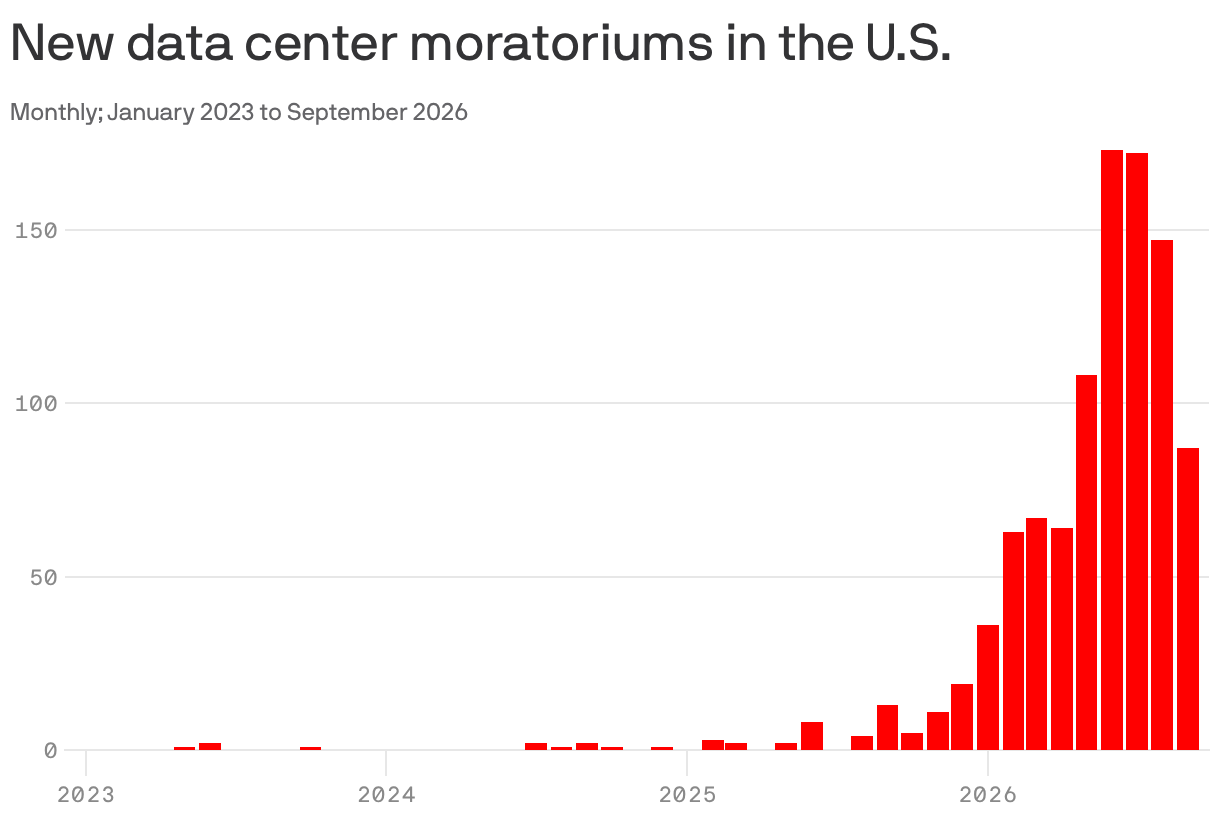
The bottom line: Growing opposition is slowing some projects but hasn't forced the buildout to stop.
5. ๐ท Unions split on AI
AI is creating jobs for some union workers โ while threatening to replace others. That tension is dividing organized labor over how to respond to the technology's rapid expansion, Axios Closer author Nathan Bomey reports.
- ๐ ๏ธ Why it matters: Building trade unions are embracing the data center construction boom. But other labor groups, including the Teamsters, are advocating policies to restrict AI use that could replace workers.
The big picture: Labor's competing priorities are complicating its political alliances as both parties court union voters.
- ๐๏ธ Building trade unions representing electricians and plumbers have joined forces with OpenAI and real estate and financial firm Blackstone to fight moratoriums on data center construction.
- The AFL-CIO is pushing for restrictions against workplace surveillance and AI-driven health care decisions made without human oversight.
โ UAW president Shawn Fain has criticized the "corporate narrative" that technology should be used to eliminate jobs and boost profits, arguing "it doesn't have to be that way."
6. ๐๏ธ One town's bargain: New Albany, Ohio
New Albany, Ohio, has welcomed roughly 40 data centers operated by Meta, Google, AWS, Microsoft, Vantage Data Centers and others over the last decade.
- The Columbus suburb courted these companies in exchange for millions in tax revenue and infrastructure investments โ even as residents complain about noise, energy use and environmental impacts, Axios Macro co-author Courtenay Brown reports.
๐ How it works: New Albany offers property tax breaks while requiring developers to make payments that help fund infrastructure, parks and other public improvements.
- Those payments generated roughly $10 million in 2024, equivalent to nearly one-fifth of the city's general fund revenue that year.
- A single hyperscale data center generated as much revenue for the city as it would collect in local income taxes from a company with $178 million in annual payroll.
- Data center revenue has also helped local schools avoid asking voters for new property tax levies.
โ๏ธ Reality check: The financial payoff of welcoming a data center depends on the deals communities negotiate โ and whether residents feel the benefits outweigh the cost.
7. ๐บ The new attack line
Campaigns and outside groups have spent $173 million on almost entirely negative ads about data centers during this year's general election, Axios' Holly Otterbein and Alex Thompson report from AdImpact data.
- Over half of the total spending โ about $95 million โ is in four Rust Belt states: Ohio, Michigan, Wisconsin and Pennsylvania.
๐ต Democrats are driving the attacks, outspending Republicans $140 million to $28 million overall.
- When Axios asked AdImpact if it could identify a single ad making an overtly positive case for data centers, it could not.
๐ฏ What to watch: The geography of today's backlash could offer an early glimpse of how AI could shape the political battlegrounds in 2028.
8. ๐๏ธ Sign of the times: Data Center Alley

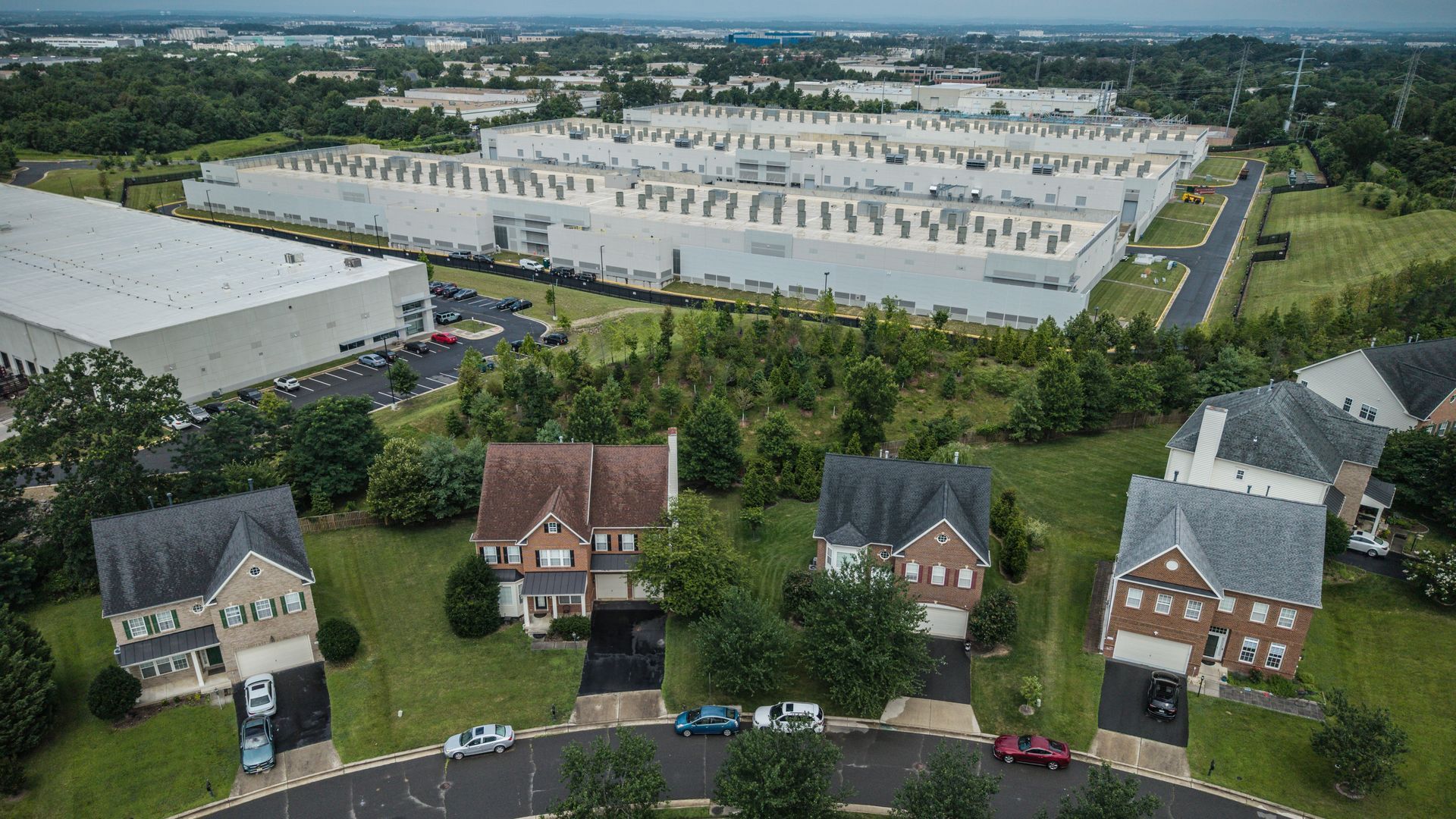
D.C. photographer Stephen Voss is trying to show how data centers actually affect the people living near them, Axios D.C. co-author Mimi Montgomery writes.
- His project, "Dark Fiber," documents how data center development has transformed Northern Virginia communities.
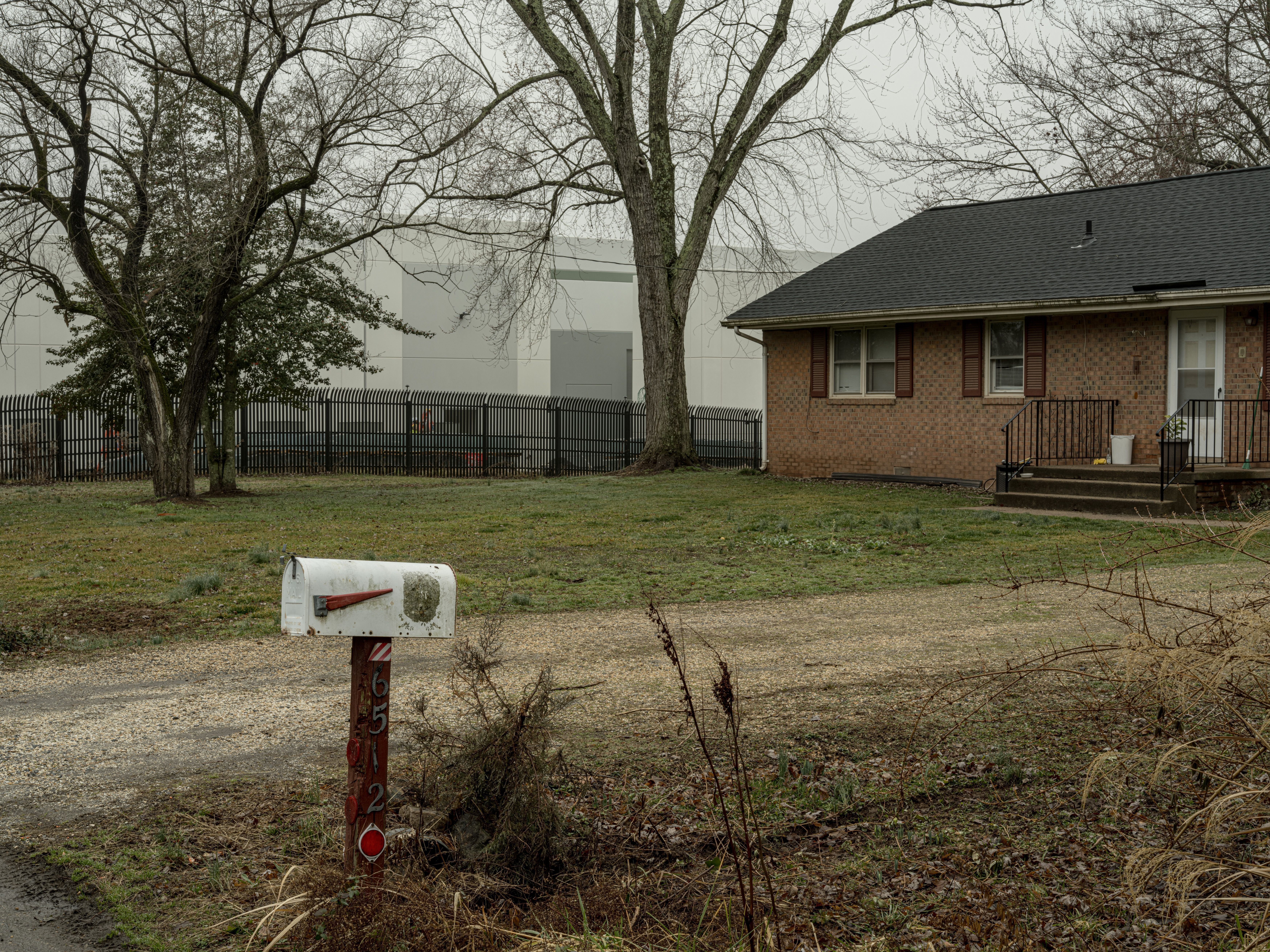
The data center boom is reshaping the D.C.-Virginia-Maryland region so quickly that some of the places Voss photographed just a few years ago already look different.
- More photos ... Get Axios Local: Newsletters in 43 cities.
๐ฌ Thanks for reading! Please invite your friends to join AM.