Axios AM Deep Dive

December 01, 2018

1 big thing: The new digital divides


As ubiquitous as connectivity may seem for those who live in cities or suburbs with comfortable incomes, here's the reality:
- Less than one-fifth of Americans live in a neighborhood where at least 80% of the residents have broadband, according to a report last year from the Brookings Institution.
- Nearly one-in-five teens are sometimes unable to complete homework because of lack of a reliable computer or internet connection, per Pew.
- Local news and information is becoming scarce and hard to access: More than 500 newspapers have closed or merged in rural communities since 2004.
The big picture: There are two types of “digital divide” operating today:
- The geographic divide: Rural and other areas are underserved because it doesn’t make financial sense for companies to invest in infrastructure.
- The economic divide: Infrastructure is in place, but lower-income families lack affordable access and devices.
Why it matters: These divides are colliding and combining in troubling ways — and creating a whole spectrum of education, information and privacy inequality.
2. The privacy divide: It'll cost you

Illustration: Rebecca Zisser/Axios
3. The homework divide: Kids without access


Data: Pew Research Center. Chart: Chris Canipe/Axios
About 7 in 10 teachers assign homework that requires broadband access — but nearly 1 in 3 households don't have it, Axios' Kim Hart reports.
Why it matters: The "homework gap" affects 12 million U.S. school-age kids, according to the congressional Joint Economic Committee. Students with less access to digital tools are at risk of falling behind peers who are more connected.
By the numbers:
- 35% of teens say they at least sometimes rely on their cellphone to finish their homework, according to the Pew Research Center. That number creeps up to 45% for teens living in households that earn less than $30,000 a year.
- 12% of teens say they at least sometimes use public WiFi to complete homework assignments because they don't have a connection at home.
FCC Commissioner Jessica Rosenworcel tells Axios that the homework gap is the "cruelest part of the digital divide":
"It's the most important issue of digital equality we face. It's not about indulgent surfing online, it's about teaching students how to use resources online to supplement how they find information and understand the world. We're going to harm their ability to perform jobs, the majority of which now require digital skills."
Possible solutions: Rosenworcel has proposed using excess funds from spectrum auctions to fund initiatives to narrow the gap, like providing library loans of WiFi hotspots.
4. The screen time divide: Seeking balance
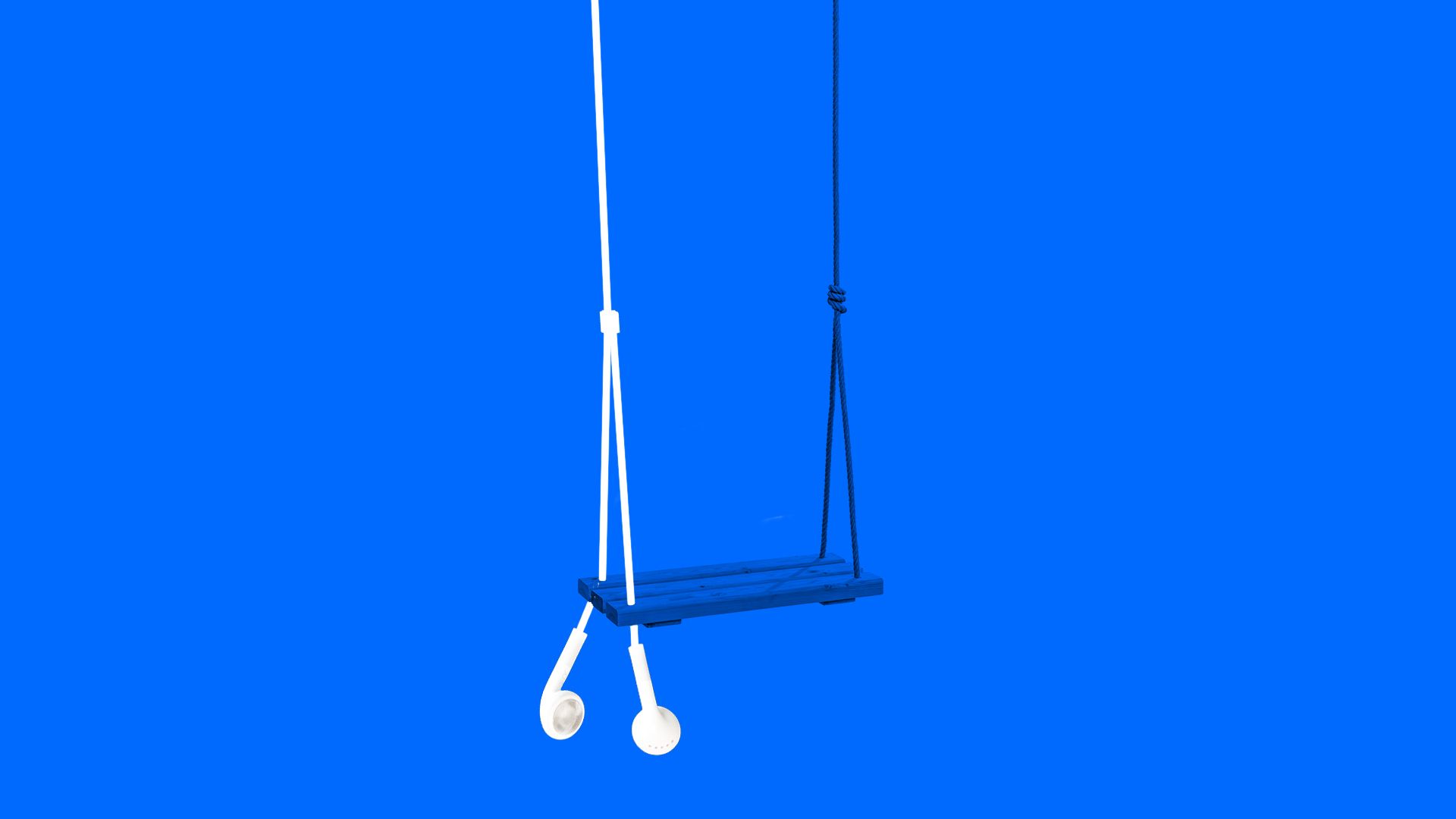
Illustration: Rebecca Zisser/Axios
5. The news divide: Local is national

Illustration: Rebecca Zisser/Axios
6. Income is the invisible divide


Data: SurveyMonkey online poll conducted Nov. 27‐29, among 3,308 U.S. adults. Total margin of error is ±2.5 percentage points. Poll methodology. Chart: Chris Canipe/Axios
An exclusive Axios/SurveyMonkey poll reveals that income strongly affects how Americans access the internet, and the divide cuts across geography.
- In both urban and rural areas, exactly half of the lower income population reported having broadband internet at home — the lowest percentage of any group.
- Our research also found that income was a strong factor in determining why a person might rely primarily on a smartphone for internet access.
- Members of families making less than $50,000 per year were more likely than higher-income respondents to say they use a smartphone because they didn't own a computer or because it was cheaper.
7. What the federal government is doing
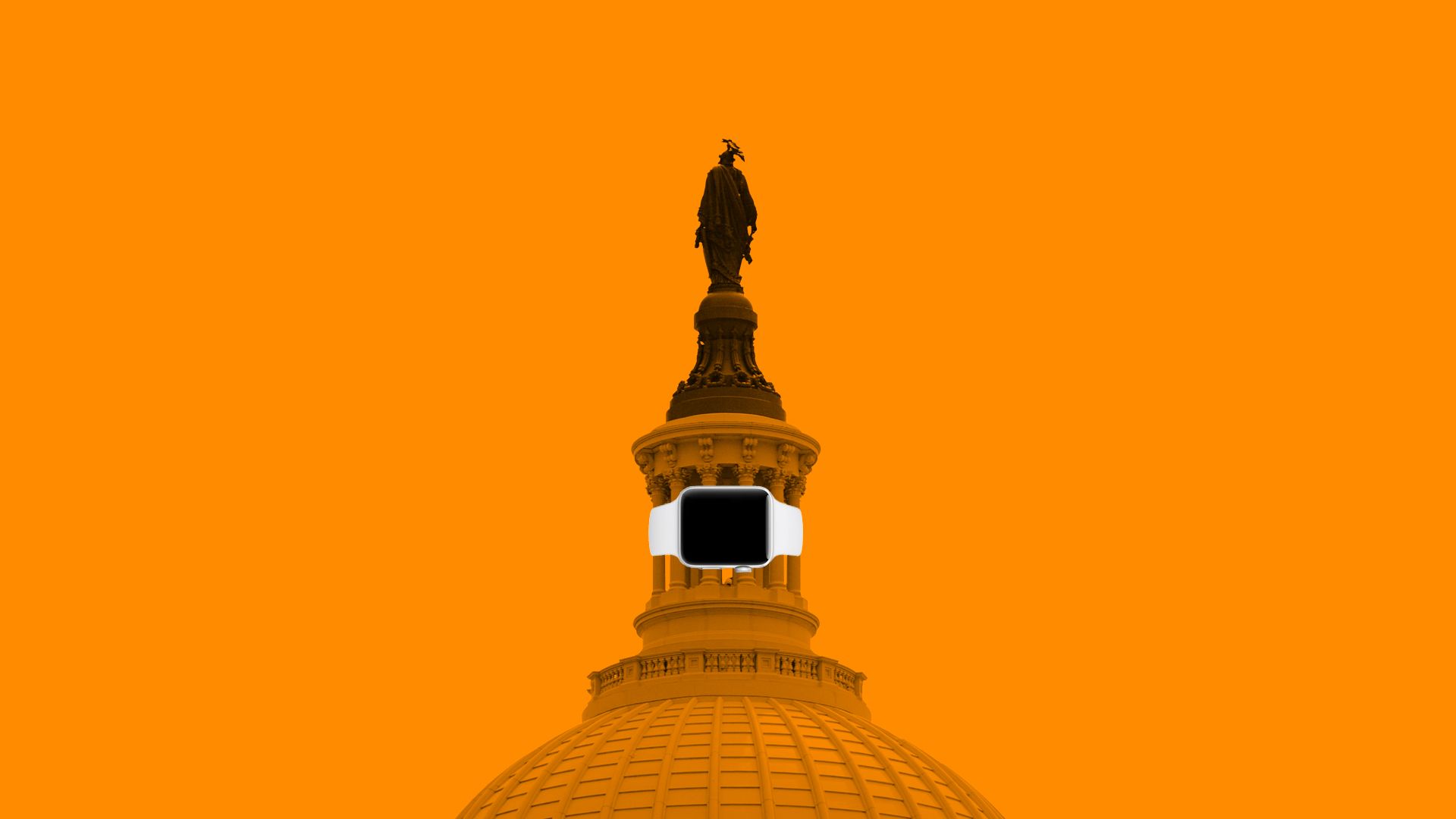
Illustration: Rebecca Zisser/Axios
8. Local innovation vs. big internet

Illustration: Rebecca Zisser/Axios
9. 1 global thing: Facebook in the Philippines

Illustration: Sarah Grillo/Axios
10. More work ahead: The inequality quandary

Illustration: Rebecca Zisser/Axios