Axios Crypto

April 15, 2025

⏲️ Hey there. If you own Trump's meme coin, we're not telling you what to do, but we have been watching the clock. And the clock has pretty much run out.
- Situational awareness: Congress is not in session this week.
Are you curious about how much BTC the U.S. government has? [email protected]
Today's newsletter is 1,101 words, a 4-minute read.
1 big thing: The TRUMP dump
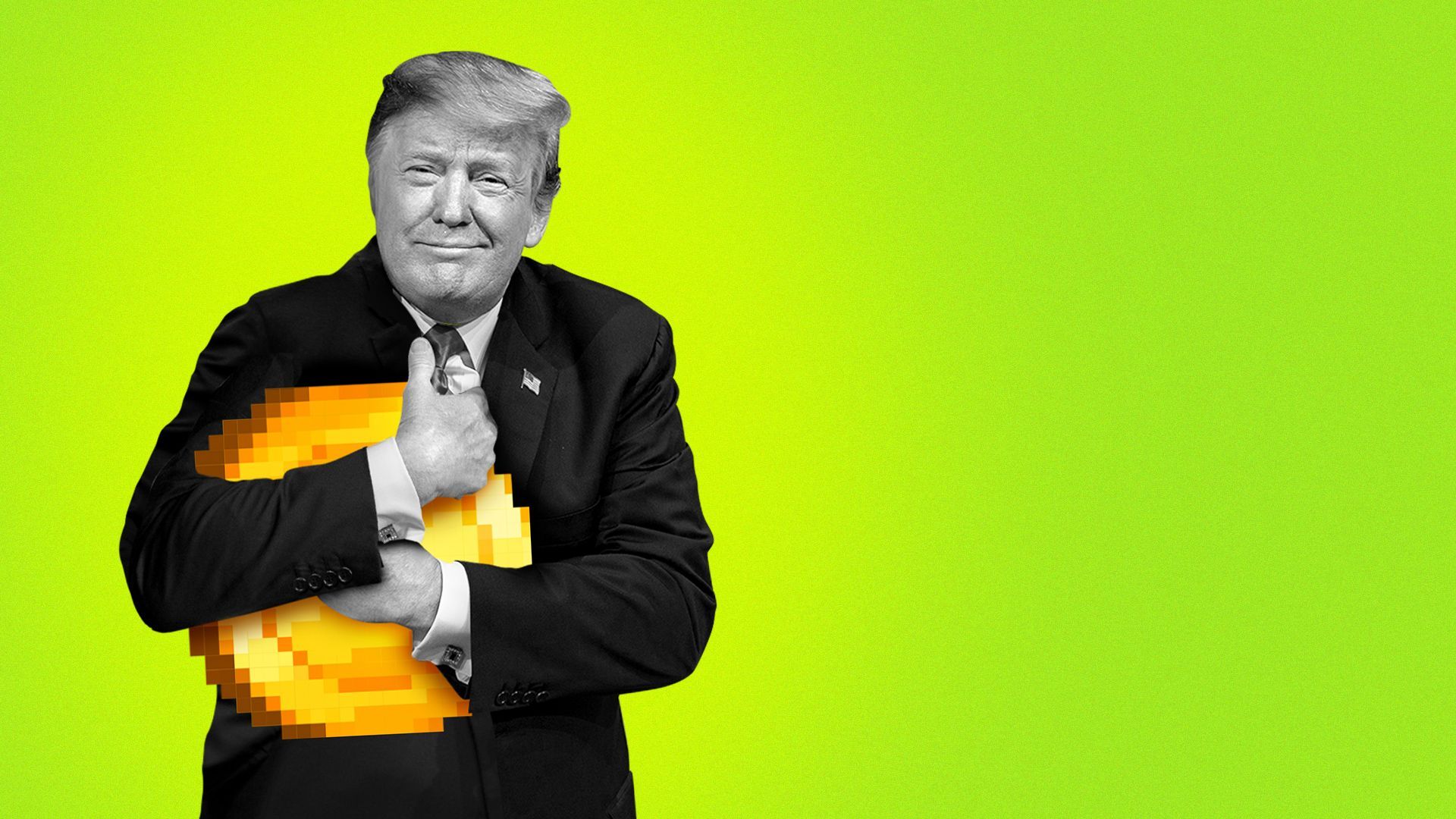
Very soon, 40 million Official Trump meme coins will be unlocked, and they are very likely to be sold into the market as quickly as possible — which is bad news for anyone who has them.
- Why it matters: The launch of the meme coin on the Friday before Inauguration Day caused a groundswell of retail enthusiasm, but one that really only benefited savvy traders and cost many other early buyers a collective $2 billion.
What's happening: The new tokens are set to become available to sell or transfer three months after the Jan. 17 launch, according to Alex Fatuliaj, a co-founder of Simplicity Group, a firm that helps crypto startups sort out how to allocate tokens and when (also known as "tokenomics").
- 200 million Official Trump tokens, or 20% of the total supply, are circulating. The 40 million new coins will unlock under the control of the two Trump Organization affiliates that own the rest of the unvested supply.
- This will also begin a daily unlock of the remaining tokens, which will last for the next two years, according to its release schedule.
State of play: Official Trump trades around $8.
- At that price, the 40 million soon-to-be-unlocked coins represent around $320 million worth of the meme coin.
- Yes, but: It's unlikely that all of them would fetch that price. If the unlocked coins are sold into the market it will be a dilutive event, which typically causes prices to drop.
Between the lines: Fatuliaj believes these tokens are almost certainly going to be sold.
- "There is substantial liquidity in the market ... but it's nowhere near enough able to absorb $320M worth of selling," he tells Axios.
- Even so, any sales of additional tokens into the market is likely to put downward pressure on price, he noted.
What we're watching: The date of the unlock is unclear, but it should happen around April 17. Fatuliaj warns of a big early sell that's likely to tank the price hard, predicting a quick drop to $7 or even $6 soon.
- By the end May, the price is likely to fall as far as $3, he expects.
What they're saying: Early on, we waited to see if Fight Fight Fight, LLC, the Trump Organization subsidiary responsible for the meme coin, might offer services or benefits to drive value to the token, but we haven't seen evidence of that.
- The Trump Organization did not respond to a request for comment on its plans for the unlocked tokens, or on any plans to drive additional value to Official Trump tokens. Fight Fight Fight could not be reached for comment.
- The president has, however, posted about his namesake token on his social media site.
2. What can trade where
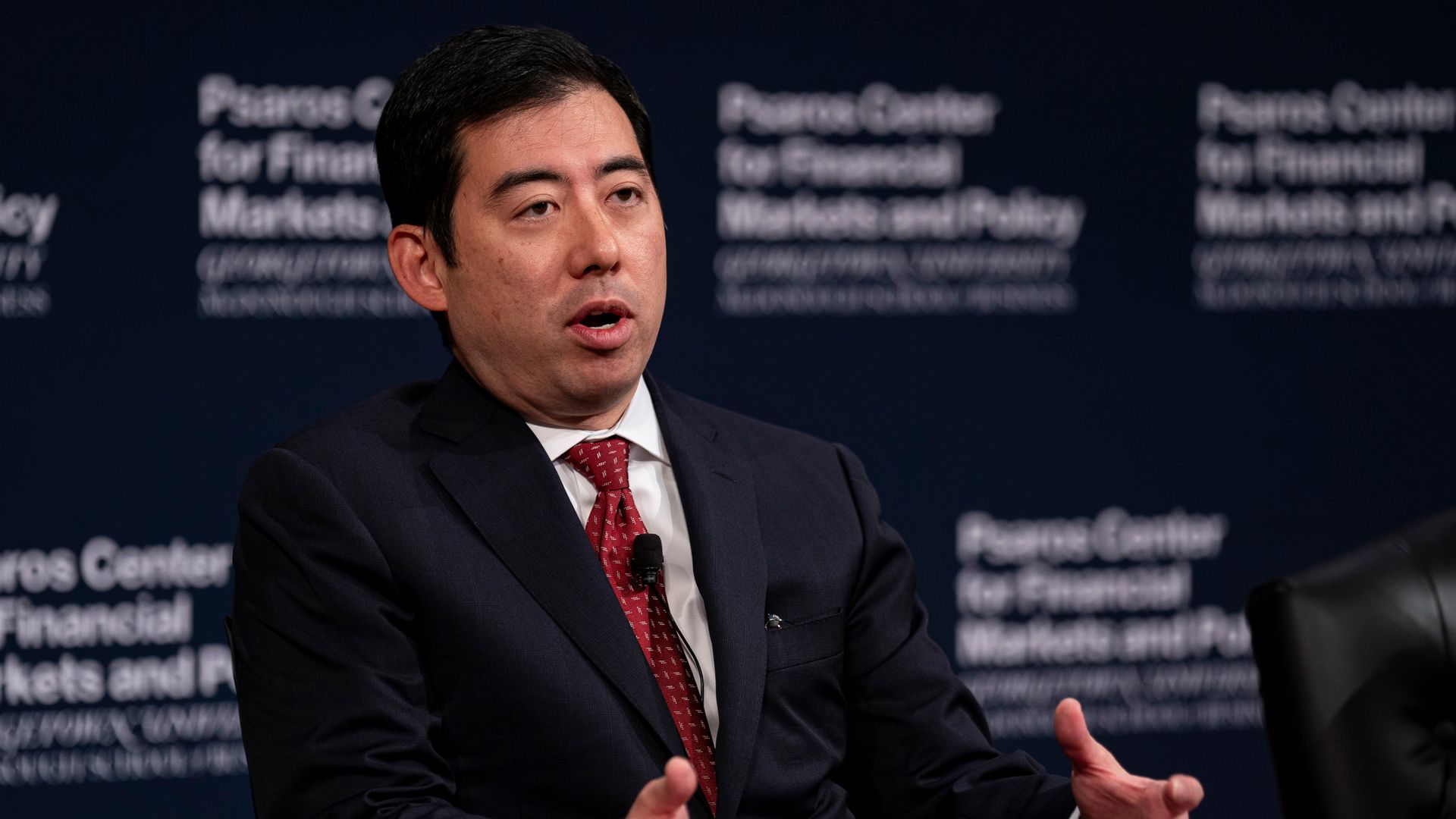
The SEC's crypto task force had a session Friday, with various experts, on how to regulate exchanges of digital assets.
- Why it matters: The main use case for crypto assets (though not the only one) has been trading, as investors make long-term bets on which coins and tokens have the brightest future and short-term bets on which ones will snag the most attention now.
Context: The new SEC has made it clear that it's full speed ahead on writing rules for the crypto industry, but a government agency steaming ahead still does so in a fairly deliberative way.
- Less than a month ago, the SEC's crypto task force had its first roundtable on crypto regulation, focusing on which assets are under its purview and which are not.
- Friday's roundtable concerned which venues and third parties involved in trading the SEC should concern itself with, and how.
How it works: These roundtables aren't deliberative sessions — the commissioners only participate as speakers at the start of the sessions. Instead they are a way of gathering some of the strongest experts on the topic to have a conversation that will inform rulemaking.
What they said: In short, participants agreed that it's a complicated question, complicated further by the fact that the U.S. has broken regulation of securities and commodities into separate buckets that digital assets easily bridge.
- As a starting point, Christine Parlour, chair of finance and accounting at the University of California at Berkeley, said the SEC could just make sure that the exchanges where traders meet aren't in danger of blowing up (as we've seen).
- Several speakers agreed that the right place to start is with brokers, by requiring that they guarantee the best price for a given trade.
As far as what not to include, Katherine Minarik, from Uniswap Labs, urged the commission to set aside peer-to-peer transactions and the infrastructure traders use to make them (such as decentralized exchanges), since, she contends, many of the risks present in other kinds of exchanges are not present there.
In the weeds: Several references to late '90s alternative-trading system regulations came out, another moment when the SEC adapted itself to business models that didn't neatly fit its way of doing business.
The big picture: Dave Lauer, of Urvin Finance and We The Investors, suggested that a strong end state for the commission might be to get as much trading as possible onto exchanges.
- And Austin Reid, head of revenue of FalconX, zoomed out even further, saying that at a minimum it should aim to take a bite out of the 85% of crypto trading that takes place overseas.
3. Catch up quick

4. Academic corner: Crypto and consumption

A new paper looked at 165,000 Americans' financial records to assess whether or not cryptocurrency wealth increased consumption.
- Why it matters: Blockchains have spun billions of dollars out of the internet, so the question is whether or not that has any impact on the real economy.
What they found: "Recent crashes in cryptocurrency markets have appeared to have limited contagion effects on broader financial markets. [But] While crypto may have limited spillover effects onto other financial assets, our results show that crypto wealth directly influences real consumption," Darren Aiello, Scott Baker and their four other collaborators write in the conclusion.
- "As a result, the distribution of crypto wealth has significant implications for the growth of the real economy."
The intrigue: One big difference driving the outsized impact of crypto gains vs. equity gains, the authors found, was that people who invest in crypto were significantly more likely to turn gains — of either asset class — into consumption.
What we're watching: The authors are studying the interaction of the blockchain economy and the traditional one.
This newsletter was edited by Pete Gannon and copy edited by Carolyn DiPaolo.
Still waiting to hear what U.S. agencies reported to Treasury last week about government held digital assets. —Brady
Sign up for Axios Crypto