Axios Crypto

November 02, 2023

Hello! We are very near the end of SBF's case in federal court. Judge Kaplan is preparing to give the jury instructions, and deliberations are expected to start shortly after 2pm.
- Brady gives it a 70% chance that a verdict comes in today. Crystal is gearing up for a potentially long night at court. 📭 [email protected]
🚨 Situational awareness: Bitcoin price crossed $35,000 finally last night, and held that level till about 10 this morning, before falling back below again.
Today's newsletter is 1,343 words, a 5-minute read.
😒 1 big thing: SBF was a bad boss
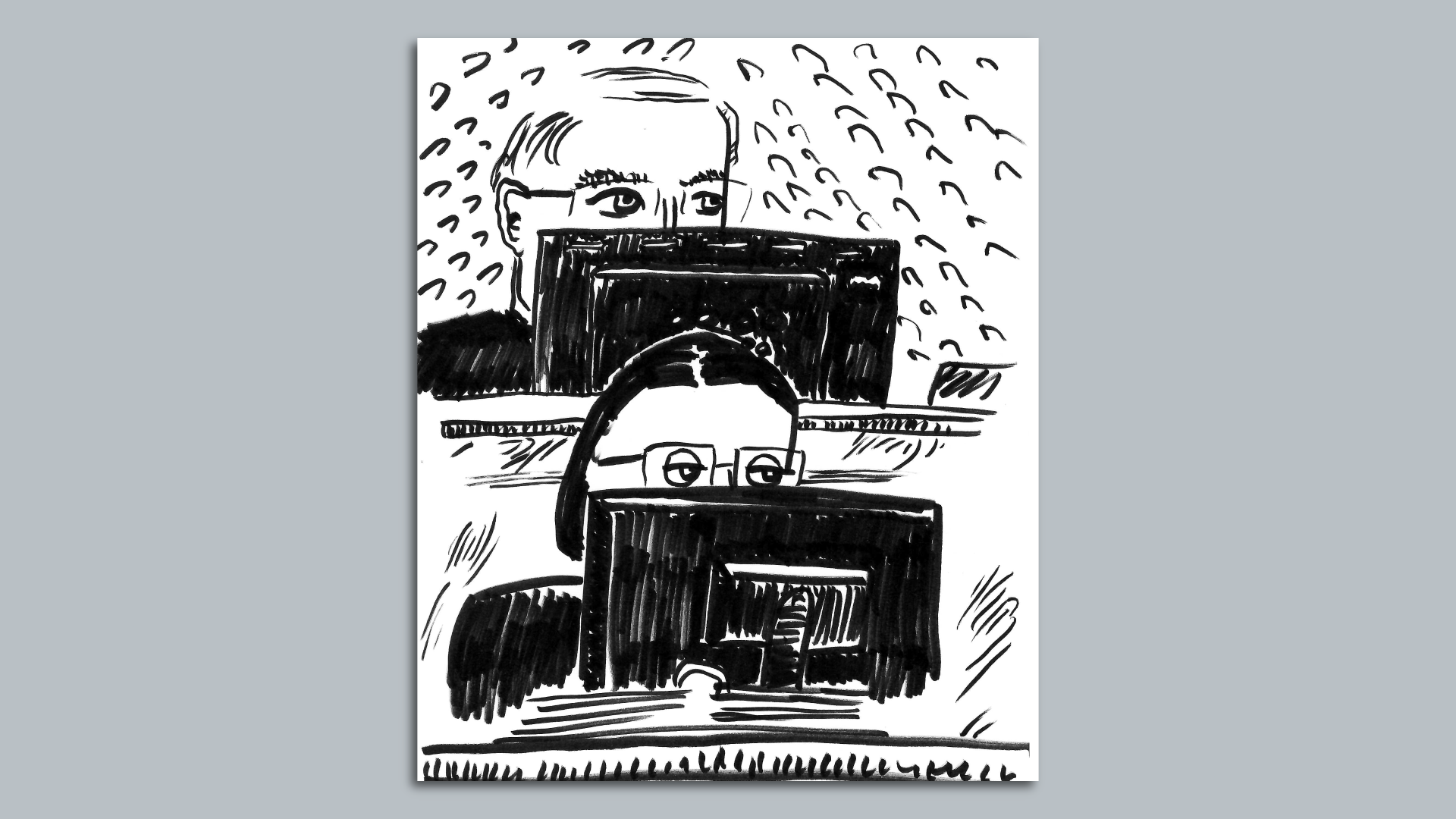
Judge Lewis Kaplan and his staff look on yesterday during the prosecution's closing arguments. Drawing: Brady Dale/Axios
The jury in SBF's trial is a group of normal people from New York. We don't know a lot about them, but one thing is a fairly sure bet about all of them: They've had bosses.
- And if they've had bosses, they've probably had bad ones, the kind who like to pin their mistakes on subordinates, Brady writes.
Why it matters: Pinning the blame for mistakes at his multibillion-dollar cryptocurrency exchange, FTX, and his extremely free-spending trading firm, Alameda Research, has been the heart of SBF's defense and testimony over the course of his trial.
- It's hard to imagine that jury members haven't seen that move in a workplace before.
Between the lines: It was Gary and Nishad's fault.
- On Friday, SBF testified that Alameda had simply grown too fast and its risk engine — the system meant to prevent users from each other's margin trade — got overwhelmed in 2020. A trade got out of control, he said.
- "This was something which presented systematic risk to the entire system and all of its platforms," he told the court.
- So he asked his chief technicians, Gary Wang and Nishad Singh to fix it, and he said he didn't know what they did to get it done.
- In court, he said that he now believes that that was when the "allow_negative" function was created on Alameda's trading accounts — the function that allowed the trading firm to hold balances that were below zero, unlike any other user.
SBF gave the same explanation for Alameda's infamous $65 billion line of credit. He said his tech leads created it after he asked for assurance that the market maker would never see all of its trades canceled at the same moment.
- "That would mean that customers who came onto the platform wouldn't have anything to trade against," he told the court.
- But he also said he had no idea of the scale of what they did in response to this request for a fix.
- "I was aware of roughly the amount that it was utilizing, or the amount that it was borrowing. I was not aware of if there was a clear, like, maximum and if so, what that was," he testified.
It was Caroline's fault. Alameda, he said, failed to adequately manage risk, because its co-CEO (and his former girlfriend) Caroline Ellison refused to hedge her long positions, he testified.
- He said he met with her every month through 2022 and asked her to put on hedges. She still hadn't done it as of June.
- He also pointed at other staffers he'd tried to talk with about mitigating risk: his head of trading, head of strategy and Ellison's co-CEO.
Even as defense counsel Mark Cohen made his final argument for SBF's good faith, he made a little jab at Ellison. He said his client did his best running two companies, but "Some decisions turned out poorly, especially without hedges."
- That last bit is a call back to SBF's efforts to shift some blame onto his ex-girlfriend.
Reality check: It's not hard to imagine how this blame game from the man in charge will sound to a typical worker.
📱 2. The infamous tweet timeline
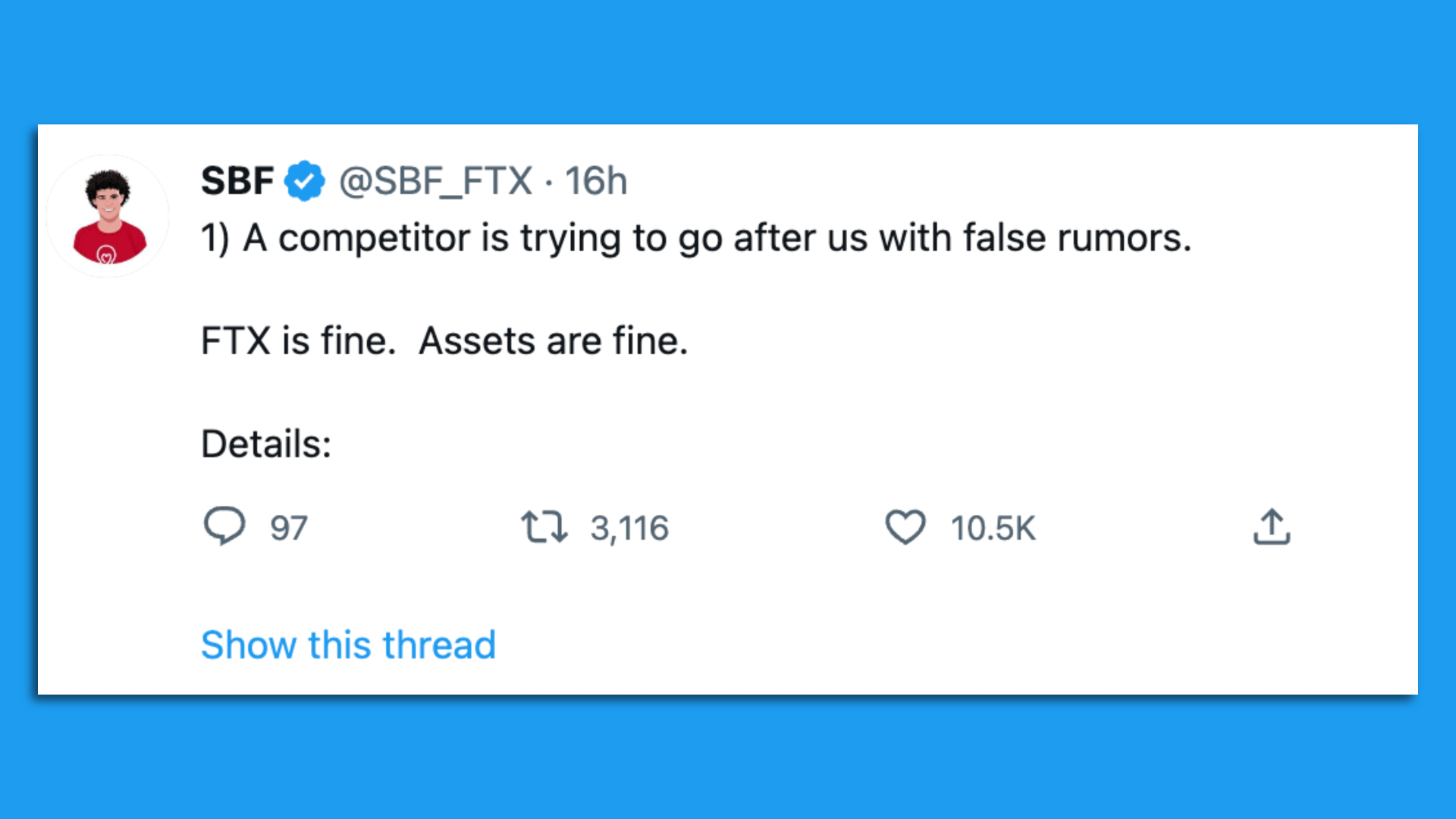
Screenshot: @SBF_FTX (social media message, archived Nov. 8, 2022)
As FTX was unwinding, Sam Bankman-Fried famously posted this tweet (that he later deleted), Brady writes.
Why it matters: Showing that the defendant was lying on the internet is really important to the government's case.
- "It shows he had criminal intent," prosecutor Nicolas Roos told jurors yesterday. "He knew the situation and he lied."
- The other side: As noted, SBF subsequently deleted the tweet. In his defense's closing arguments, Cohen said SBF did so in the public interest: because he had realized only after sending it that FTX no longer had a positive net asset value.
Details: To show that SBF knew the message was untrue when he sent it, Roos presented this timeline:
- Nov. 6: SBF creates a Google Doc assessing the situation FTX finds itself in as doubts about the exchange start to swirl. In it, he writes that the company has enough assets on hand to process about 1/3 of client deposits.
- Nov. 7: At 3:08am, he sends a message to his inner circle on Signal, a messaging app, that estimates an $8.1 billion difference between assets on hand and customer holdings.
- Nov. 7: Based on Nishad Singh's testimony, as a crisis around customer withdrawals set in, the inner circle convened a sort of war room to slow the bleeding. Key to their plan, Singh said, was to send a confident thread of tweets to assuage customer fears about solvency.
- Nov. 7: Four hours after the small group chat message, SBF sends the tweet above. On direct examination, each of his alleged co-conspirators who took the stand testified that the tweet was inaccurate.
Meanwhile, Nov. 8: In a Signal chat just between Singh and SBF, the government shows Singh writing that employees need to know there weren't a lot of people involved in what happened at FTX. SBF replies that he understands, and "I think that's probably correct."
🏛 3. Closing arguments
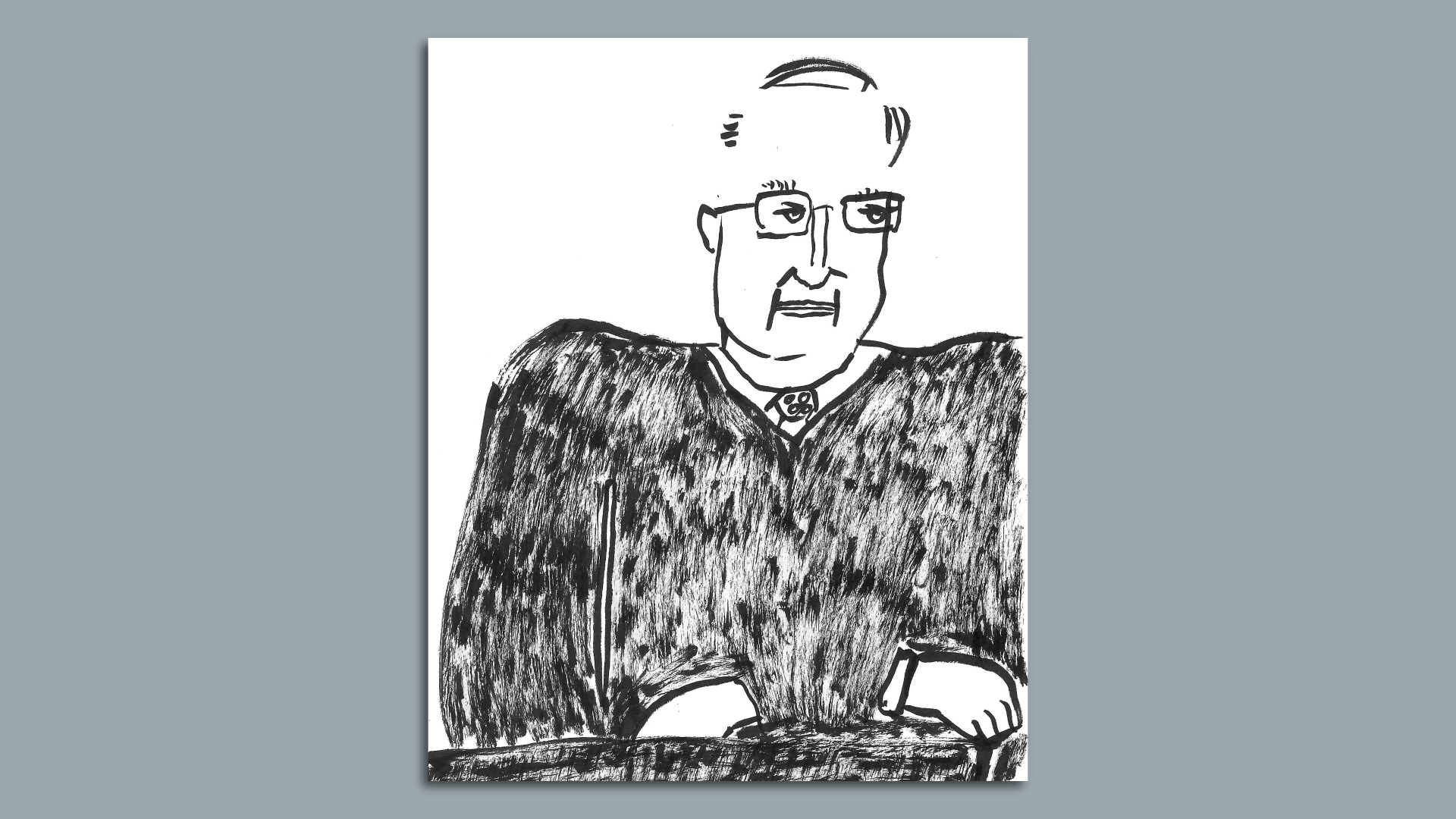
Judge Lewis Kaplan standing behind his bench and leaning on his chair, as he sometimes does, yesterday during closing arguments. Drawing: Brady Dale/Axios.
Arguments in the trial didn't quite end last night. This morning, prosecutor Danielle Sassoon gave the final rebuttal of the case.
Yesterday, however, we heard the big wrap-ups from each side, Brady writes.
- The prosecution went first. Roos pointed out that the undisputed facts in the case were already pretty bad: There was a giant deficit between customer deposits and funds available. So he focused on proving SBF had criminal intent, that he knew he needed to hide something.
- Cohen, from the defense team, focused entirely on arguing that SBF did everything in good faith and that the prosecution had failed to prove otherwise. Both FTX and Alameda had been strong businesses for most of their short lives, but they weren't ready for a cryptocurrency market that turned against them.
💭 Brady's thought bubble: I tried my best to present the strongest possible version of the defense's case in the post linked above, even picking other reporters' brains to do so as we chatted during breaks in the trial yesterday.
- But their case has been, to me, a patchwork all through, and that continued through to the end.
🎙 4. Closing styles
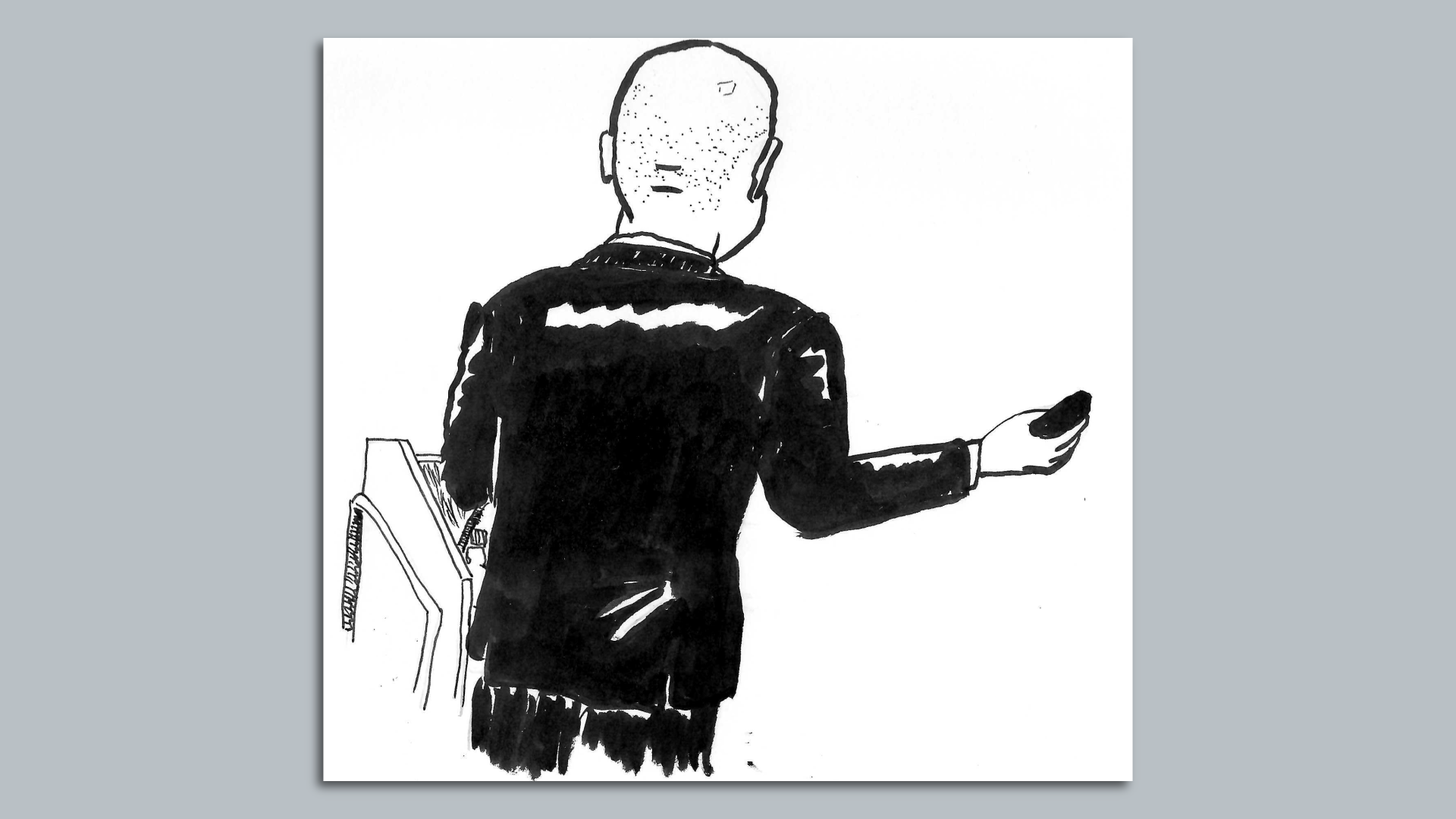
Assistant U.S. attorney Nicolas Roos delivers closing arguments yesterday. Drawing: Brady Dale/Axios
Defense attorneys have different styles, while prosecutors consistently employ just one, Crystal writes.
What they're saying: "Using simple words and being a little bombastic — it's common to see that" from prosecutors, Jordan Estes, a Kramer Levin Naftalis & Frankel lawyer and a former federal prosecutor, tells Axios.
- "You want to make the jury want to convict and find the person guilty."
Between the lines: Conveying that something wrong has happened compels the jury to hold the defendant accountable.
- The tone of the prosecution, according to Estes, signals the wrongdoing.
Quick take: Prosecutor Nicolas Roos played that part.
🌚 5. SafeMoon execs arrested

Illustration: Eniola Odetunde/Axios
Founders of a meme coin called SafeMoon were arrested yesterday as the DOJ unsealed an indictment against them.
- Meanwhile, the SEC in parallel action sued for civil fraud and the offering of unregistered securities, Crystal writes.
Driving the news: The criminal indictment charged Braden Karony, Kyle Nagy and Thomas Smith with conspiracy to commit securities fraud, wire fraud and money laundering, according to the U.S. attorney's suit filed in the Eastern District of New York.
- Karony, 27, was arrested in Utah, and Smith, 35, was arrested in New Hampshire yesterday; Nagy, 35, remains at large.
Context: SFM was created in March 2021. Its market capitalization reached $8 billion shortly after amid the last frenzied crypto bull market.
- Its makers then promised customers that their staked deposits would be locked up in a liquidity pool and generate returns as developers periodically destroyed some of the circulating supply.
- Of note: Barstool's Dave Portnoy was a fan.
Yes, but: Both the justice department and the SEC's suits allege that the defendants lied about that and misappropriated millions for personal gain.
What they're saying: "As alleged, the defendants deliberately misled investors and diverted millions of dollars to fuel their greedy scheme and enrich themselves by purchasing a custom Porsche sports car, other luxury vehicles and real estate," U.S. attorney Breon Peace said in a statement.
This newsletter was edited by Pete Gannon and copy edited by Carolyn DiPaolo.
Estes also tells Axios how long a jury deliberates has no correlation to the strength of the evidence. So don't read too much into it. —C & B.
Sign up for Axios Crypto

Brady Dale covers crypto and blockchain impacts on markets and regulation.