Axios Crypto

July 12, 2024


TGIF! Someday, we will realize that it has been a long time since we parsed the legal definition of a security and that will be a relief. Today is not that day.
Today's newsletter is 948 words, a 4-minute read.
1 big thing: ✂️ Government agencies split on cryptocurrencies
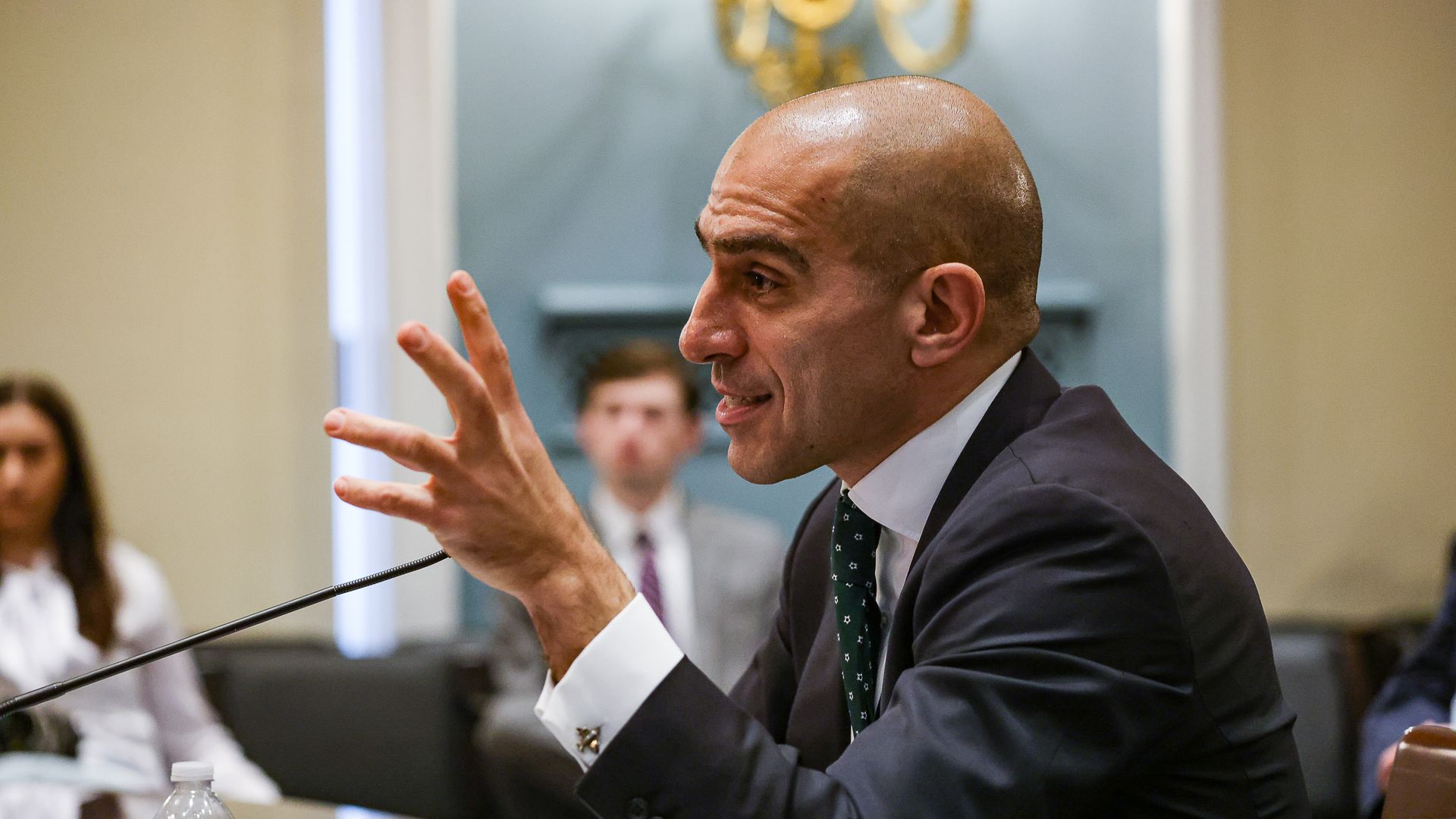
The U.S. government can't seem to speak clearly about which agency most cryptocurrencies should be regulated by.
Why it matters: The regulatory status of cryptocurrency has been the most fraught issue in the space going back to at least 2017, when entrepreneurs started using blockchains for capital formation en masse.
- The issue has probably been the most recurring theme in this newsletter.
The latest: Wednesday, before a Senate committee, CFTC chair Rostin Behnam said that he believed that Congress needed to make a "comprehensive framework" to clarify which assets were commodities and which were securities.
- Securities limit who can hold them, how they can be used, and where they can be traded. Those restrictions would severely limit the ultimate utility of cryptocurrency.
- Commodities (like coffee and gold) can be held by anyone and used any which way.
- "If you measure the Bitcoin economy by market capitalization, upwards of 70% to 80% of the market are non-securities," Behnam said as questions began following his testimony.
💭 Our thought bubble: The way he put it is a little weird. He didn't say 70% to 80% of the assets are non-securities (as some headlines have said). He seems to be talking about the market cap share.
- BTC, ETH, USDT and BNB alone make up 75% to 80% of the asset class' market capitalization.
Friction point: Behnam did not make a statement in the hearing about whether he believes ether (ETH) is a commodity, but he noted a court ruling that found it to be so.
- In the past, though, he has been clear on ether and other assets.
- Famously, House Financial Services Chairman Patrick McHenry (R-N.C.) asked SEC chair Gary Gensler whether ether was a security.
- After dodging several times, Gensler said, "Mr. Chair, I think you would not want me to pre-judge."
- Zoom out: As recently as May, Gensler said he believes most tokens in the market are securities.
The intrigue: The agency recently provided notice that it would not be bringing a case against Ethereum 2.0 (also known as The Merge). We do not know why.
- But it did bring a case against the blockchain firm Consensys in part, for making it easy for users to access the main feature of Ethereum 2.0: staking.
Between the lines: Both agency chairs could be right. It could be true that the lion's share of crypto assets are securities, but the lion's share of the market is not.
- (As we say in Kansas: Clear as mud.)
The bottom line: "I do think given the size of the market, the number of tokens, and some of the novel legal questions, it is important that the agencies work closely together to find consensus," Behnam said when asked about the regulatory football this industry has been.
- He also said he'd be glad for the Commodity Futures Trading Commission to take on the task of regulating crypto.
2. 🦹♂️ Bitcoin down, stablecoins up (in crime)

Bitcoin is losing the hearts and minds of criminals, according to a fresh report from Chainalysis.
- They like stablecoins now.
Why it matters: Money laundering takes time, and even criminals don't want to expose themselves to volatility as they slowly but surely move ill-gotten gains into a form they can use.
By the numbers: A new report from the top blockchain surveillance firm provides further evidence that the criminal world (like everyone else) prefers stablecoins.
Follow the money: The report explains that money laundering on chain includes bouncing assets through multiple wallets as a way of throwing off the scent of crime.
- Previously, lots of bitcoin was hopping through lots of bitcoin wallets, peaking at around 700 million in 2020.
- Stablecoins, which had been little used by criminals until 2021, hit an inflection point in that year, with wallets receiving illicit funds spiking.
- In 2022, the number of wallets hiding dirty stablecoins surpassed ones with dirty bitcoin.
The bottom line: In 2023, Chainalysis was watching more than 6 million addresses that were bouncing stablecoins, while bitcoin had fallen to less than 5 million naughty wallets.
3. ♟️ MicroStrategy's stock split
MicroStrategy, the enterprise software company that has effectively become a leveraged bet on bitcoin, announced yesterday that it would split its stock.
Why it matters: That means more shares will be created, and lower prices.
Zoom in: The Tysons Corner, Virginia-based firm declared a 10-for-1 stock split for holders of its Class A and B shares.
- Holders of MicroStrategy stock will receive nine additional shares after the market's close on Aug. 7.
- Trading the next day would reflect the split.
Yes, but: It won't change the value of the company.
- For example, if a stock was trading at $1,000 per share, a 10-for-1 stock split would make it trade for $100.
By the numbers: Shares traded at $1,358 this afternoon.
The big picture: MicroStrategy joins other high-profile tech companies like Nvidia and Broadcom that have recently made their shares more bite-size and more attainable to retail investors.
- There are various studies on how stocks move post-split (up), but that effect might largely be psychological.
💭 Our thought bubble: Post-split, each share of MicroStrategy, based on its recent price, would be still higher than pretty much all of the bitcoin ETFs, which range from roughly $15 to $65.
4. 🐬 Catch up quick

🥳 The SEC dropped its three-year investigation into blockchain software developer Hiro Systems. (CoinDesk)
🇩🇪 Coinbase's man in Germany attempts to reassure the crypto market after the government sold a bajillion bitcoins this week. (DL News)
😞 Speaking of Coinbase, the firm got a less-than-optimal response from a judge after it attempted to subpoena the personal messages of the SEC chair. (CoinDesk)
Bonus: A dive into the deep and wide online activities of one of Wikipedia's most prolific editors, and a crypto skeptic, David Gerard. (Tracing Woodgrains)
This newsletter was edited by Carolyn DiPaolo and copy edited by Mickey Meece.
Sign up for Axios Crypto