Axios Crypto
April 24, 2024

We didn't get to pick through CZ's story — because he pled guilty, he bypassed a trial. But the sentencing hearing is coming.
- Bitcoin is holding pretty steady.
- 🤫 Got the skinny on the next shady crypto giant? Hit us up: [email protected].
Today's newsletter is 988 words, a 3½-minute read.
😐 1 big thing: CZ's sentencing coming soon
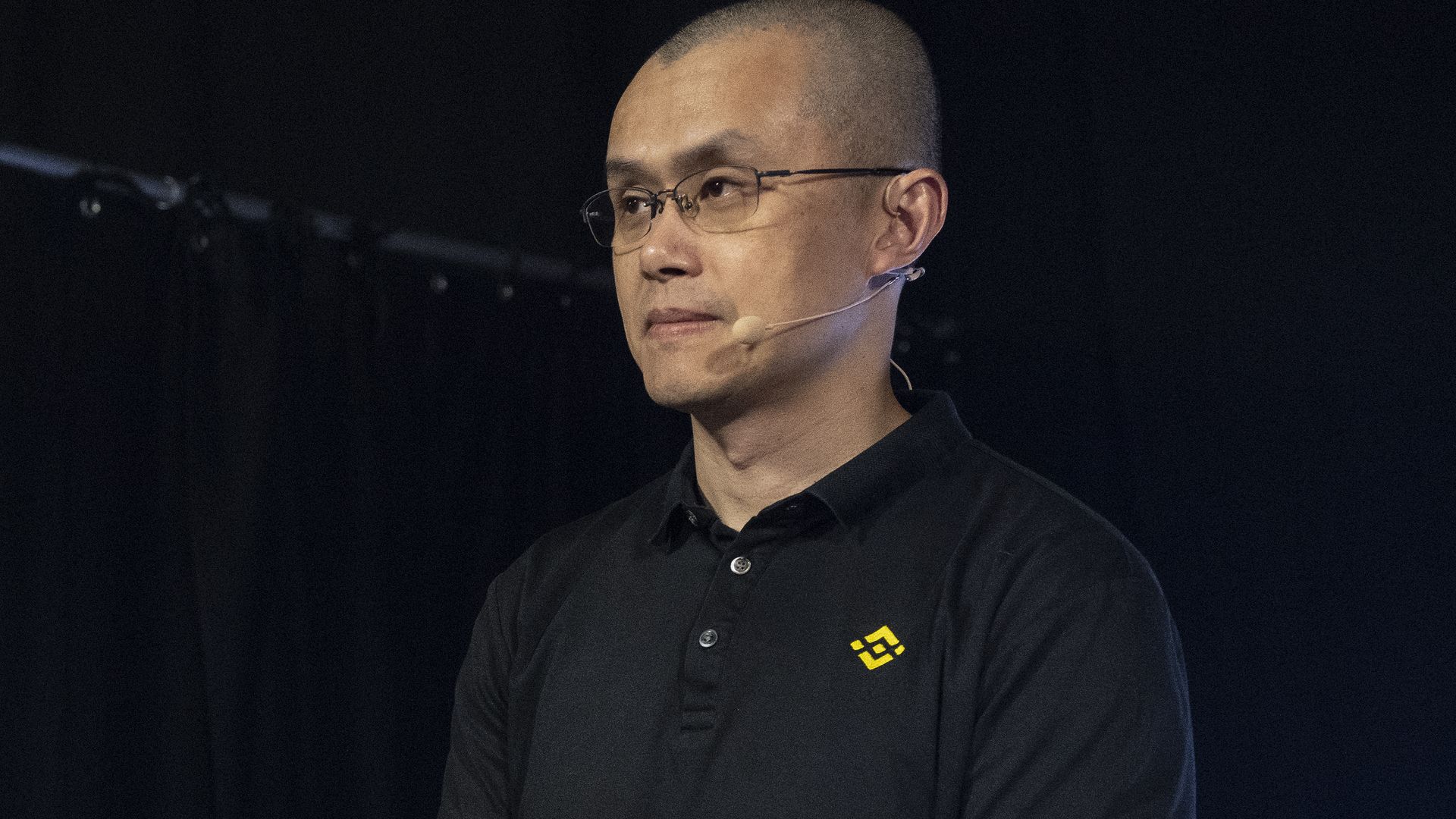
Binance founder Changpeng "CZ" Zhao at WebSummit in 2022. Photo: Horacio Villalobos/Getty
Changpeng Zhao (CZ), the founder of Binance, the world's largest crypto exchange, will be sentenced Tuesday in federal court in Seattle, and the government is looking for more prison time than originally thought.
Why it matters: CZ was the biggest fish in the relatively young industry of cryptocurrency, running the largest and most far-reaching venue for trading, launching and making bets on cryptocurrency, Brady writes.
He pled guilty late last year to one count of violating the Bank Secrecy Act.
The latest: The government has asked the court to give CZ three years in prison.
- Previous reports, citing federal sentencing guidelines, had indicated he was facing a max of 18 months — though DOJ officials from the beginning were signaling they could ask for more.
What they're saying: "Zhao's willful violation of U.S. law was no accident or oversight. He made a business decision that violating U.S. law was the best way to attract users, build his company, and line his pockets," U.S. attorney Tessa Gorman, and others, write in their letter filed to the court yesterday ahead of his sentencing.
- They note up top that Binance had a culture of asking for forgiveness rather than asking for permission.
The other side: In his own letter to the court, CZ apologized and seemed to ask for more forgiveness. "There is no excuse for my failure to establish the necessary compliance controls at Binance," he wrote.
- But he also noted his voluntary surrender in the case. "I want to make things right, close the chapter, turn the page, and focus on the next chapter of my life."
- His letter was accompanied by 161 letters of support from various people, including family and friends.
What's next: Sentencing in Seattle.
😼 2. An NFT series created to change Bitcoin

Illustration: Sarah Grillo/Axios
There are 3,333 cats on the Bitcoin blockchain that want to change it forever, Brady writes.
Why it matters: Bitcoin doesn't change often, but proponents of this latest update believe it could open a bunch of very positive use cases, such as making Bitcoin wallets much more hacker-proof.
State of play: The team behind one of the first hot NFT collections, Taproot Wizards, created a collection called Quantum Cats to dramatize support for reinstating a bit of code on Bitcoin.
- The code was called "operation concatenate" or "op_cat," in the code base.
- Bitcoin's creator disabled op_cat long ago because he believed it could be used in denial-of-service attacks on Bitcoin.
- There's a proposal in the Bitcoin Github to turn op_cat back on.
How it works: Op_cat allows two pieces of information to be put together at the same time. This allows all kinds of new functions.
- A simple one to understand, though, might be the idea of "vaults" that could have certain kinds of rules.
- For example, someone with a lot of bitcoin might set a rule that only small transactions can be allowed from a vault (like, 0.1 BTC, once per day).
- That way, if someone got hold of their private key, they wouldn't be able to steal that much (additional rules could allow the rightful owner to move their coins out of a compromised vault).
Quantum Cats want op_cat to create a permissionless bridge to take bitcoins and bitcoin assets (such as the cats) onto Bitcoin layer 2 chains, where they can engage in more complex trading.
- They call it CatVM (or Cat Virtual Machine). It needs op_cat to work.
- Bridges have allowed a lot of losses in the blockchain world, but the Taproot Wizards folks believe op_cat opens a path to bridge more safely and simply.
Flashback: The last notable change for Bitcoin was implemented in 2021.
Zoom in: Quantum Cats are Bitcoin NFTs that change over time.
- Most Bitcoin NFTs refer to one piece of artwork inscribed on the Bitcoin blockchain. Each Quantum Cat refers to several files, not all of which have yet been revealed.
The bottom line: As new files get revealed, the cats change. In other words: they are putting data together (concatenating).
- That's how they reflect what op_cat would do if it were turned back on.
💶 3. Strike reaches Europe

Illustration: Aïda Amer/Axios
Strike, the bitcoin-focused payments app, is now in Europe, Crystal writes.
Why it matters: Strike is built atop the Lightning Network, a so-called layer 2 Bitcoin payments solution that promises to use blockchain to reduce transaction speeds to seconds.
- Strike's rollout in Europe puts the app in nearly 100 countries, founder Jack Mallers said.
Between the lines: The Lightning Network facilitates peer-to-peer micropayments, allowing people to send bitcoin almost instantly and privately — making it harder to track activity.
- River Financial, a Bitcoin-only financial services firm, estimated that there were between 279,000 and 1.1 million monthly active Lightning users as of September 2023.
The big picture: While Lightning has its detractors, Strike founder Mallers is known for saying the protocol could do for money "what the internet did for communication."
Strike, which raised $80 million in funding in 2022, has been expanding to markets outside the U.S. lately.
Flashback: Last year, Strike launched in Mexico and established headquarters in El Salvador to boost its presence in Latin America, as part of a mission to take its business global.
Reality check: While Strike is in almost 100 countries, Strike's full suite of products aren't available everywhere. Strike is also not in New York.
- "A lot of the Latin America region" only has access to debit-card bitcoin purchases, according to Mallers.
📰 4. Catch up quick
⛏ Jack Dorsey's Block Inc. is planning to develop mining rigs to further decentralize Bitcoin. (CNBC)
🪨 BlackRock's IBIT has entered the top 10 for ETFs with the longest streak of inflows since 2004. (Decrypt)
🦦 The SEC has asked for $2 billion in fines against Ripple Labs over its initial sale of xrp to investors, while the company says it should face no more than $10 million. (Blockworks)
🍊 A proposed mining facility in a town outside Atlanta led to a huge turnout in opposition at a county planning meeting. (Fox 5 Atlanta)
This newsletter was edited by Pete Gannon and copy edited by Carolyn DiPaolo.
Quantum Cats recalls CryptoKitties (which no one ever talks about anymore). —C & B
Sign up for Axios Crypto

Brady Dale covers crypto and blockchain impacts on markets and regulation.