Axios Crypto

March 06, 2024
Who is Satoshi? Plus, the SEC settles with an already-closed crypto shop.
Today's newsletter is 1,229 words, a 4½-minute read.
🦹 1 big thing: The Satoshi mystery
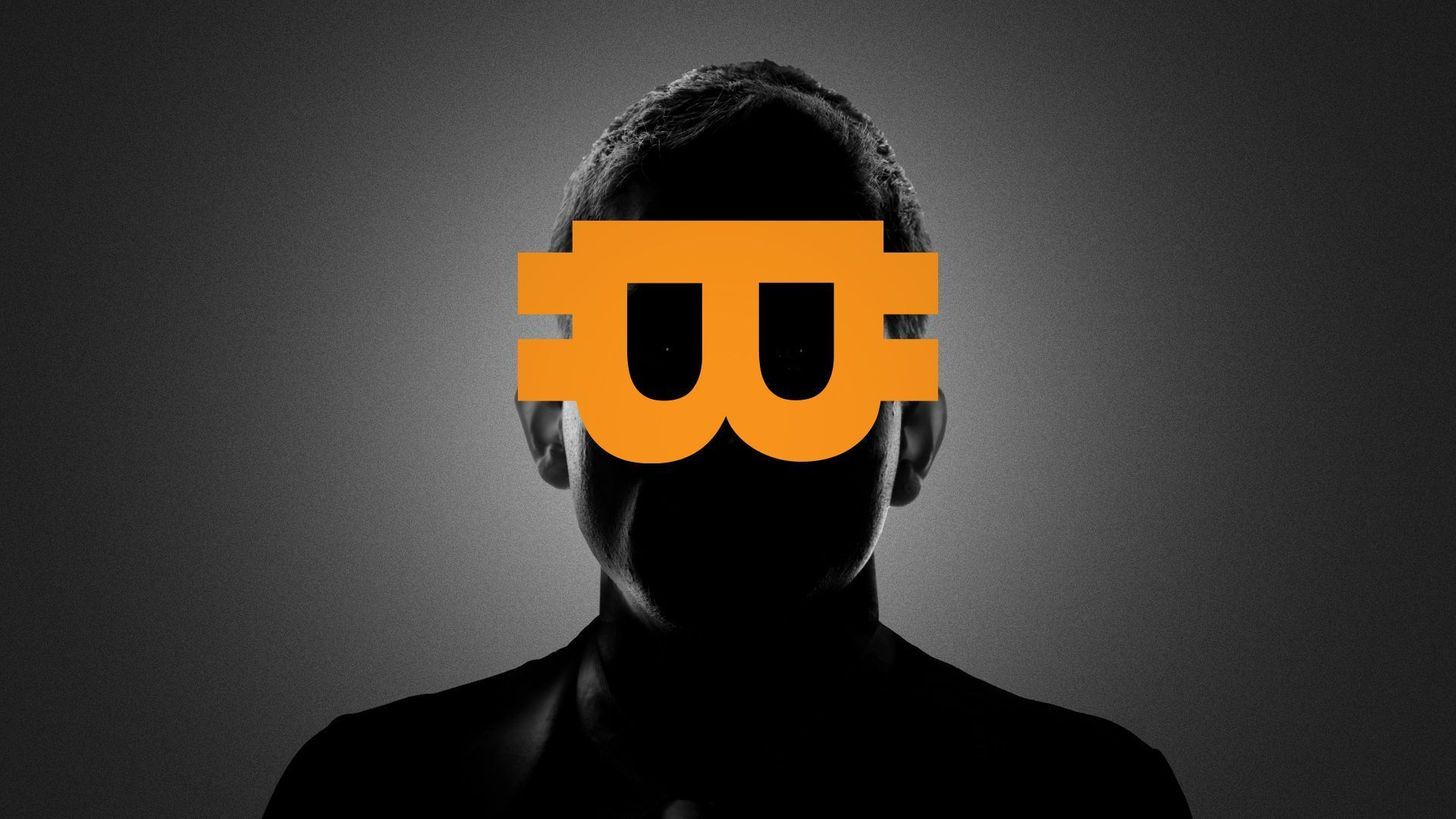
Illustration: Aïda Amer/Axios
The one person that basically no one in the Bitcoin world believes to be Satoshi Nakamoto is on trial in the U.K. over his claim that he's the creator of the original cryptocurrency, Brady writes.
Why it matters: If Satoshi is alive and in control of his keys, he owns many billions of dollars worth of BTC that the market assumes are lost coins.
- The roughly 1.1 million bitcoins in known Satoshi wallets have never moved. If they did, it could crash the market.
- Context: Valued around $70 billion at today's prices, the Satoshi pile is bigger than what's held in all 11 new U.S. ETFs, combined.
The big picture: The question of who Satoshi is — who made this crazy money machine — is one of the most persistent quandaries in the technology world.
- So who's who? Let's talk about some of the favorite candidates for bitcoin's creator.
Elon Musk. A former SpaceX intern has been banging this drum in reporters' inboxes for years.
- Best argument: Musk was CEO at PayPal, which means he gave a lot of thought to money on the internet.
- On the other hand: He was taking over Tesla in 2008, as Bitcoin was being conceptualized.
- Believability: Low.
John Nash. The troubled mathematician Russell Crowe portrayed in "A Beautiful Mind" was a gifted cryptographer, who died six years after the first bitcoins were mined.
- Best argument: Toward the end of his life, Nash was very interested in money.
- And also: With some head-twisting word puzzling, you can find "John Nash" in Satoshi's full name, according to this Redditor.
- Believability: Even lower.
Dorian Satoshi Nakamoto. A Japanese engineer living in America whom Newsweek identified as bitcoin's inventor when it relaunched the brand in 2014.
- Yes, but: He denied it, and so did Satoshi. Plus, it just feels off. Dorian seems like a chill dude though.
- Believability: Naw.
Hal Finney. A computer scientist, video game maker, cryptographer, and — by all accounts — the nicest guy, Finney has gone down in history as the first person to receive a bitcoin transaction.
- Best argument: He was there from the beginning, with the skills to do it.
- He was diagnosed with ALS shortly after Bitcoin debuted, dying in 2014, four years after Satoshi said adieu.
- Believability: High.
Nick Szabo. A cypherpunk who invented an early online payment scheme he called bit gold. Total fiat curmudgeon.
- Best argument: In his Coinbase book, "Kings of Crypto," Fortune's Jeff John Roberts says it's an open secret among long-time bitcoiners that Szabo is the one.
- Plus: Experts say the writing styles match nicely. And the initials of each are switched (SN and NS). 🤯
- Yes, but: Szabo has also denied it.
- Believability: ✅ This is my bet (Occam's razor + vibes), but the evidence is circumstantial.
The latest: Back to the U.K. trial for Craig Wright (it's going badly for Wright: The Australian computer scientist didn't even make our list), where Martti Malmi — the real Satoshi's first sidekick (in digital anonymity) — just released new email exchanges with Satoshi from over a decade ago.
- What's inside: They offer more intrigue than clues.
💭 Brady's thought bubble: Bitcoin was not made by a "group of people," as some suspect. It was one person.
The bottom line: To bitcoiners, it doesn't matter who Satoshi is. By abdicating, he fostered decentralization.
🐋 2. Charted: A bitcoin whale's bet


MicroStrategy's shares hit a new high since it started buying bitcoin in the summer of 2020, Crystal writes.
Why it matters: The enterprise software company just raised $700 million through a convertible debt offering to buy more bitcoin for its balance sheet.
- As of Feb. 5, MicroStrategy was sitting on a stockpile of 190,000 BTC, valued at roughly $12.7 billion based on current prices.
- The company holds the most BTC of any publicly traded firm, according to BitcoinTreasuries.net.
Flashback: MicroStrategy's stock has become something of a leveraged bitcoin-proxy trade ever since it started selling company debt — convertible, and junk.
- That strategy looked imperfect at times, but looks like a winning one lately given the surge.
- CFO Andrew Kang said the aggregate purchase price for the company's BTC was around $31,224, last month — that's a near 115%-plus gain based on a current price of almost $67,000.
The bottom line: Shares are taking a hit as BTC backs off fresh all-time highs, but also because company stock tends to take a little dip after a debt offering.
- The offering was upsized by $100 million, however, which suggests there was no shortage in demand from buyers.
🤝 3. SEC settles with ShapeShift
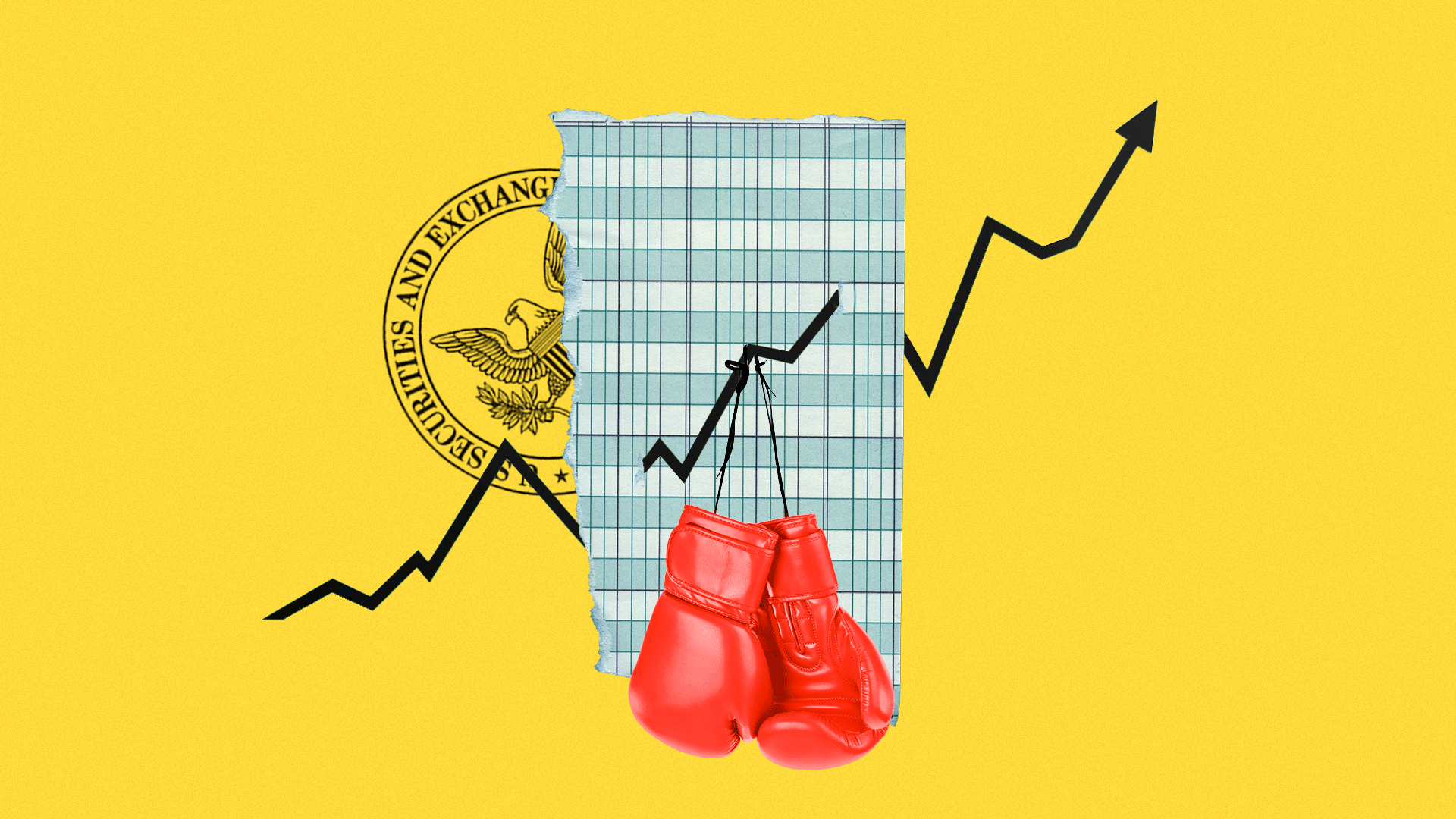
Illustration: Aïda Amer/Axios
The SEC charged U.S. trading platform ShapeShift yesterday for operating as an unregistered dealer, Crystal writes.
The big picture: Erik Voorhees' Denver-based company shut down in 2021, but getting out of dodge doesn't mean the SEC won't come knocking.
Between the lines: The SEC complaint alleges that ShapeShift bought and sold crypto assets from August 2014 until early 2021, assets that the regulator says qualify as securities under the Howey Test.
- ShapeShift agreed to settle the charges with a $275,000 penalty.
Fun fact: In its early days, users could trade with ShapeShift using no login nor any kind of identity beyond a wallet address.
Zoom out: The settlement looks like a rational step for the already-closed company, though a win for the SEC last week on the "crypto as securities" question has ruffled some feathers.
- On Friday, a court ruled that tokens sold on the secondary market as part of the ex-Coinbase insider case were indeed securities.
- Yes, but: The ruling was a default judgment, which Coinbase's chief legal officer Paul Grewal was quick to point out.
- In such a judgment, a ruling is made because there's no party there to challenge the claims — in this case, those brought by the SEC.
What we're watching: Kraken's fight with the SEC is getting more interesting.
📢 4. Catch up quick
Illustration: Annelise Capossela/Axios
5. What we're watching: Agio Ratings

Illustration: Natalie Peeples/Axios
Agio Ratings is a Moody's-like analyst for the crypto world.
- The company, founded in 2022, just raised $4.6 million in two rounds of funding, the company tells our colleague Ryan Lawler for Axios Pro: Fintech Deals.
Why we're watching: Market makers, brokers and lenders in the digital asset ecosystem could use an independent measure of crypto counterparty risk.
How it works: Agio analyzes on-chain and off-chain data sources to rate the possibility that various crypto trading platforms could default.
- It provides its data by subscription.
Behind the scenes: The company began by assembling a training data set from the 25 default events in the crypto ecosystem over the past two years.
- "We assembled over 1,000 variables, ran them through the model and found that nine are predictive of default," Agio Ratings CEO Ana De Sousa says.
State of play: Agio has ratings on 32 crypto firms and plans to expand its coverage to more than 70 by April.
- In addition to the crypto exchanges it has independently rated, De Sousa says the company has received interest from lenders and brokers who want to be vetted and are willing to share proprietary financial information with Agio.
- "A lot of firms felt like they were good risks compared to their peers, but they had no reputable, independent way of showcasing that," she says.
This newsletter was edited by Pete Gannon and copy edited by Carolyn DiPaolo.
🔭 What we really wanna know is who made the Useless Ethereum Token? —C & B
Sign up for Axios Crypto

Brady Dale covers crypto and blockchain impacts on markets and regulation.