Axios Communicators

February 19, 2026

Hi readers!
- 🤠Axios House returns to SXSW from March 13-15. Join us in Austin, Texas, for dynamic conversations with industry pioneers who are disrupting technology, media, culture and more. See our event lineup and RSVP here.
Today's newsletter, edited by Christine Wang and copy edited by Kathie Bozanich, is 1,618 words, 6 minutes.
1 big thing: Affordability blame game
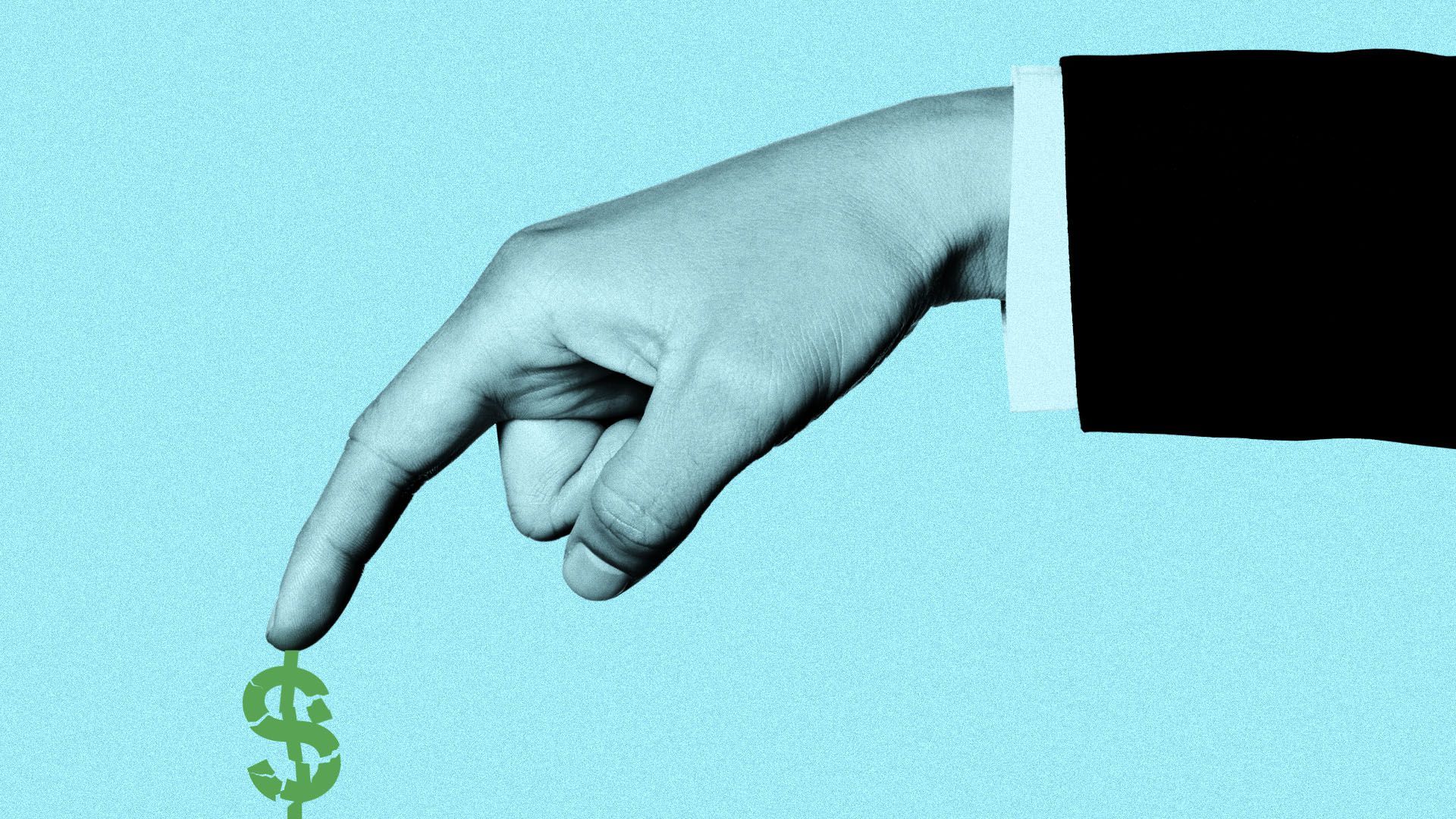
The pricing and affordability debate is heating up, and it's likely to get even more politicized ahead of the 2026 midterms.
Why it matters: Rising costs remain a vulnerability for the Trump administration and the Republican Party, and the president can blame the "Biden economy" for only so long.
- The next most likely target: corporate America.
State of play: 2026 has already brought higher-than-usual price increases for utilities, electronics, appliances and other household staples.
- Home electricity prices are up 6.3% and natural gas service 9.8% in the last year, while prices for ground beef have jumped 17.2% and coffee 18.3%, according to the January Consumer Price Index.
- Companies can no longer absorb the costs imposed by Trump's tariff policies, and brands like Stanley Black & Decker, McCormick & Company and Levi Strauss recently announced price increases.
The big picture: Businesses say higher wages and rising health insurance costs are also key drivers of price hikes, beyond the tariffs, per the Wall Street Journal.
- Meanwhile, job creation has remained stagnant over the last year and white-collar jobs have declined amid potential AI disruption.
Zoom in: These factors put companies at the center of a high-stakes economic narrative, and some major U.S. brands are recalibrating their messaging.
- McDonald's, for example, has made affordability central to its consumer messaging after raising prices roughly 40% since 2019.
- The company recently rolled out $5 meal deals and promoted $8 nugget bundles, while executives emphasize a renewed focus on "value leadership" to win back lower-income customers.
- And it's working, according to McDonald's CEO Chris Kempczinski. "By listening to customers and taking action, we've improved traffic and strengthened our value and affordability scores," he said in a LinkedIn post.
Earnings calls increasingly feature language about consumer strain and efforts to "absorb costs" where possible.
- For example, executives from PepsiCo and General Mills cited affordability concerns and economic strain, and each announced lower prices on some products.
- "For some consumers, low- and middle-income consumers, the biggest friction they have today in our category … is affordability," PepsiCo chair and CEO Ramon Laguarta said in a recent earnings call. "So we have been testing multiple ways to give them affordability."
Between the lines: Aside from lowering prices, some corporations are releasing and promoting detailed economic impact reports —which highlight contributions to the U.S. economy, job creation, community investments, supply chains and more — to get ahead of the blame game narrative.
- "Historically, we already had economic impact studies done in a few countries, but we hadn't really promoted them. We were late to the game in terms of really getting out of telling that always-on story," said a communications executive at a recent Chatham House rules breakfast in Davos.
- "But we saw that once we turned them on, it turned the tide. ... We were down 30% in terms of boycott sentiment for our business, and it was because the economic impact study helped people understand how [the company] is a part of their global community."
What to watch: Trump has called the affordability issue a "Democratic hoax," but as his term progresses, voters are more likely to judge prices within the framing of his policies.
- If household budgets remain strained, the political incentive to redirect blame — toward corporations, retailers and consumer brands — will intensify.
2. Doorbell cams and surveillance tech face growing public backlash


Sentiment around widely used home surveillance tools is souring as high-profile cases reveal just how deeply law enforcement can tap the data they generate.
Why it matters: What once felt like a personal security upgrade now feels to many like participation in a broader law enforcement apparatus they didn't sign up for.
- New AI advancements have made it easier to search, cross-reference and retain massive amounts of video and license plate data, raising the stakes of what once seemed like localized neighborhood tools.
Driving the news: A Super Bowl ad for Amazon's Ring doorbell camera touting the ability of the device's new Search Party feature to locate lost dogs has spurred widespread backlash.
- Many viewers assumed the tool could also track and identify people who walk by their front doors.
- Customers posted about destroying their Ring doorbell cameras. Reddit users reported requesting refunds from Amazon.
- Even a popular social media account that rates dog photos posted a video accusing Ring of pushing a "lucrative mass surveillance network" that turns "private homes into surveillance outposts."
In a statement, Ring spokesperson Yassi Yarger said the company is focused on "giving camera owners context about critical events in their neighborhoods" and that Search Party "doesn't process human biometrics or track people" and is designed to track only lost dogs.
- "Camera owners have always been able to share their videos with others if they choose," Yarger said. "We're using AI to give camera owners relevant context about when sharing might help those in their community — while keeping that choice in their hands, not ours."
By the numbers: In the week after the ad aired, nearly 50% of the social media conversations about Ring were considered negative, compared with 14% that were positive, according to data shared by PeakMetrics.
The big picture: The Super Bowl ad came amid simmering concerns about the partnerships between personal surveillance tools and law enforcement.
- Last week, FBI director Kash Patel said agents investigating the disappearance of Nancy Guthrie, the mother of "Today" co-anchor Savannah Guthrie, were able to "actually excavate material that people would think would normally be deleted and no one would look for" from her Nest smart doorbell camera.
- Flock Safety, the AI-powered license plate reader that's been rapidly expanding across American cities, is reportedly allowing ICE to tap into its databases — prompting some cities and companies to postpone or cancel their contracts.
- Protesters have also been calling on Palantir, which provides AI surveillance technologies, to end its contracts with ICE. (Palantir CEO Alex Karp has argued protesters should be "protesting for more Palantir.")
The other side: Law enforcement contends these technologies help speed up criminal investigations.
- While announcing the Flock partnership cancellation, Ring reiterated that users retain full control over whether specific videos are shared with law enforcement.
- The blog post also mentioned those who opted to share videos in response to the December shooting at Brown University. "One video identified a new key witness, helping lead police to identify the suspect's vehicle and solve the case," the company wrote.
Yes, but: Privacy advocates have argued the data shared through surveillance technologies is being used in some cases to prosecute protesters and surveil activists.
What to watch: Even as some consumers ditch the technologies, the surveillance ecosystem they helped build isn't going away.
Go deeper ... Subscribe to Axios Future of Cybersecurity
3. 📚 Reading list
Here are the other stories that caught our attention this week ...
- 🧊 Tricia McLaughlin, the top spokesperson for the Department of Homeland Security and one of the most vocal defenders of ICE, is departing. Lauren Bis will take on the role. (Politico/Axios)
- 📰 Josh Simons, a member of Parliament, is under investigation over claims he paid APCO Worldwide — a U.S.-based PR firm — to investigate two Sunday Times journalists. (BBC)
- 👀 Jeffrey Epstein attempted to enlist well-known fixer Matthew Hiltzik to help rehabilitate his image. (The Ankler)
- Yes, but: A source familiar told Axios that the engagement was limited, no media stories were managed, placed or killed, and all fees Hiltzik's firm received were donated to charity soon after.
- 💼 Goldman Sachs plans to remove race, gender identity, sexual orientation and other DEI factors from its board criteria. (The Wall Street Journal)
- 🚨Apple quietly removed an ESG provision that allowed the board to adjust annual bonuses by up to 10% based on the company's ESG performance. (Bloomberg)
- 🗣️ Dex Hunter-Torricke says he "only told half the story" during his time as PR lead for companies like Meta, SpaceX and Google DeepMind, and now he's writing a book. (TIME)
- 🤖 Bonus: Axios' chief technology officer Dan Cox explains the impact AI is having on our company, writing, "The team doubled its output in January and will double that again this month. We're doing exponentially more ... with dramatically fewer people." (Axios)
4. 🗂️ 1 thing to watch: "The subpoenas are coming"


Matthew Miller and Tucker Eskew — veterans of high-profile campaigns, now partners at Vianovo, a bipartisan management and communications firm — wrote in a note to clients that a "tsunami of Congressional oversight" is headed straight for corporate America if, as is likely based on history, Democrats win the House in November's midterms.
- "It's going to be so much worse than they expect," Miller tells Axios.
State of play: The Vianovo note says that "due to two key changes in Congressional Democrats' thinking, the focus on corporations is likely to be more intense than ever, and executives who are not prepared risk being swamped by a legal, political, and media onslaught."
- Larger corporations are likely to be the focus because, for Democrats on the Hill, aggressive oversight of private companies is "a means for exposing alleged abuses by the Trump administration."
- From their experience with the first Trump administration in 2019 and 2020, Democrats know the White House is likely to refuse to turn over documents. So administration probes "will be supplemented by piercing corporate investigations."
Among the possible focuses of Democratic oversight probes: algorithmic pricing; health care; crypto and digital assets; utilities and energy; trade and tariffs; and AI and tech.
✅ Thanks for reading! For exclusive reporting, deep dives and events, apply to join Mixing Board, powered by Axios.
Sign up for Axios Communicators