Axios Colorado Springs

October 29, 2026

It's Thursday.
- π Ski season's officially underway after Arapahoe Basin opened yesterday β albeit with one white ribbon of death.
π€οΈ Today's weather: Mostly sunny β high of 66.
Todayβs newsletter is 904 words β a 3.5-minute read.
1 big thing: Our great political divide

The statewide ballot has a geographic fault line: All five Democratic candidates live in the Denver area, while most of the Republican call southern Colorado home.
Why it matters: Whoever gets elected sets the agenda β and how they prioritize the state's challenges varies by geography.
State of play: The Democratic nominees for U.S. Senate, governor, attorney general, secretary of state and treasurer call the Denver area home.
- U.S. Sen. John Hickenlooper, who's seeking reelection, and gubernatorial candidate Phil Weiser are from Denver.
- Attorney general candidate Jena Griswold lives in Louisville, secretary of state candidate Amanda Gonzalez lives in Arvada, and Jeff Bridges, the treasurer nominee, is from Greenwood Village.
This is the first midterm since 2006 where all Democratic statewide candidates came from the Denver area.
On the Republican end, Victor Marx, a candidate for governor, and Michael Allen, the AG nominee, are from El Paso County. U.S. Senate contender Mark Baisley lives next door in rural Teller County.
- Treasurer hopeful Kevin Grantham is farther south in CaΓ±on City.
- James Wiley, a secretary of state candidate, is the exception. He lists his home as Littleton, just outside Denver.
Between the lines: In the state Legislature, the House and Senate could be represented by Denver lawmakers, too. The chambers will meet post-election to pick their leaders.
What they're saying: "There is a perception out there that Gov. Polis and these Democratic majorities only care about the Denver-Boulder axis ... and that's at the expense of the rest of the state," Dick Wadhams, a Pueblo native and former state GOP chair, told us.
Zoom in: The Democratic ticket's hub became an issue in the governor's race this year when Marx highlighted the rural-urban divide and the "political leaders who treat Colorado like two separate states."
Weiser acknowledges rural residents often feel overlooked.
- To blunt concerns, he's proposing to hire a cabinet-level rural affairs director and tasking state boards and commissions with holding meetings outside metro Denver.
What we're watching: The question isn't simply where candidates reside. It's whether their priorities β and the people they bring into government β reach beyond their home turf.
2. π³οΈ Colorado's early vote lags


More than 1 million Colorado voters have cast ballots in the 2026 election.
Yes, but: With less than a week to go, turnout lags the prior midterm cycle, an exclusive Axios analysis finds.
Why it matters: Colorado's lengthy and complicated ballot's likely contributing to the slow start β setting the stage for a late surge that could delay vote counting and results.
State of play: The state counted 1,109,631 ballots through Tuesday, representing just 24% of registered voters.
- That's roughly on pace with the 2022 midterms but almost 40% below 2024 election levels.
By the numbers: Statewide, 32% of Democratic registered voters have cast ballots, compared with 27% of Republicans.
- Just 20% of unaffiliated voters β more than half the electorate β have turned out so far.
The intrigue: The turnout picture is more blue, with Democrats voting at higher rates than their share of the electorate.
The fine print: Our analysis measures all registered voters, not just "active voters" who receive mail ballots, which is how the state inflates its turnout numbers.
The big picture: If unaffiliated voters stay on the sidelines β an unlikely outcome β it'd deliver a major blow to Democrats.
- About 60% of unaffiliated voters typically side with Democrats in Colorado.
Zoom in: In El Paso County β the state's most populous county β turnout stands at 23%.
- So far, 33% of Democrats have voted vs. 28% of Republicans.
What we're watching: A final-days ballot rush and whether unaffiliated voters close the gap.
3. π§ The Peak: Paving season ends
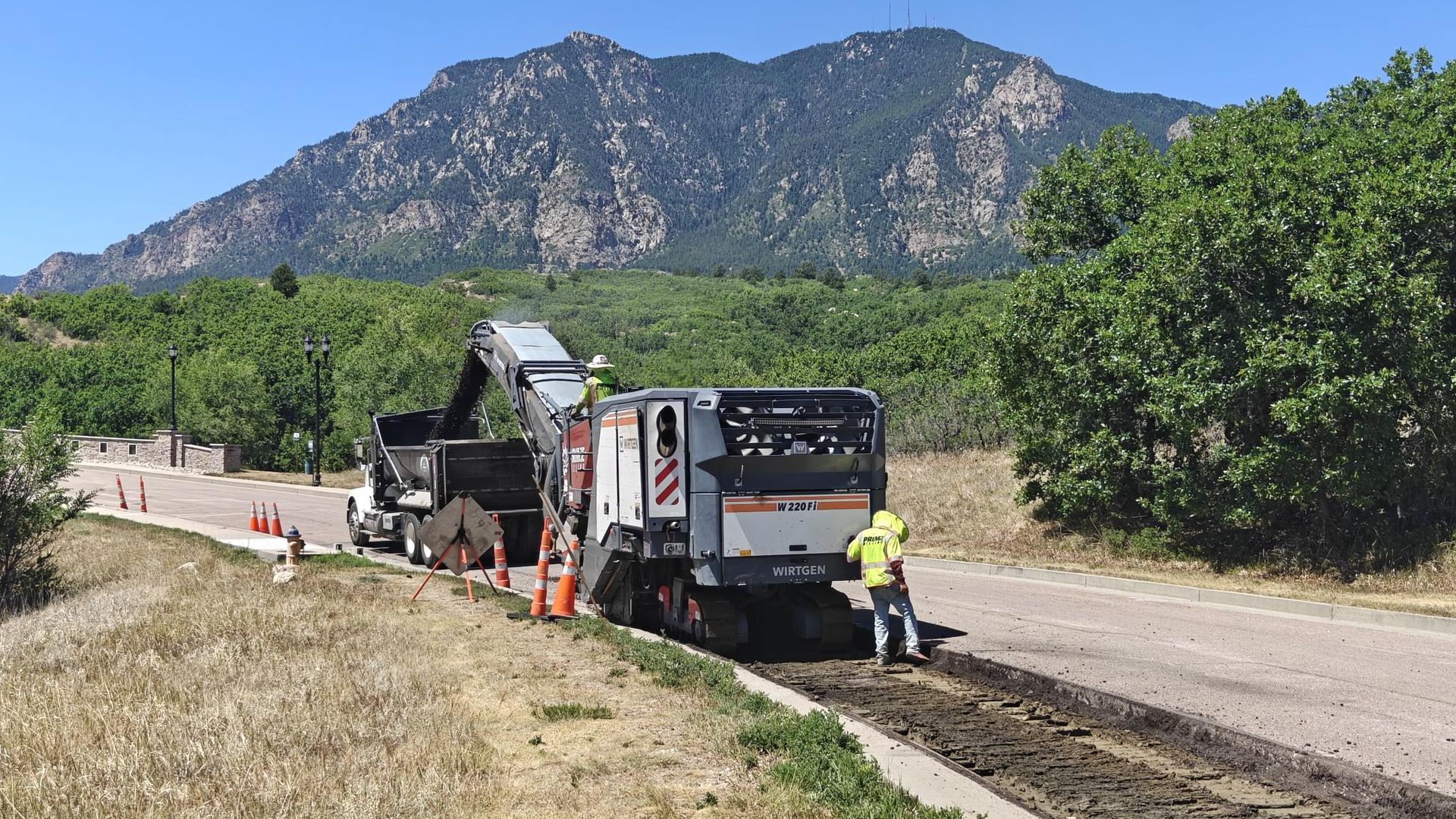
π£οΈ As road paving season ends, Mayor Mobolade's administration is celebrating paving 147 lane miles across 119 roadway segments β a 17% increase from the original plan β through the use of voter-approved 2C transportation dollars.
π§ Speaking of construction β¦ northbound South Academy Boulevard between Hancock Expressway and Drennan Road will close from 7pm tomorrow to noon Monday for crews to install water and drainage pipes, the city tells me.
ποΈ The Los Angeles-based, high-end furniture maker Joybird is opening a showroom here inside La-Z-Boy at 7087 N. Academy Blvd. (Gazette π)
π Air Force football is looking for a new quarterback for the second time this season after backup Evan Medders is out with a turf toe injury. (Gazette π)
4. π When to trick-or-treat

What's the best time to trick-or-treat these days?
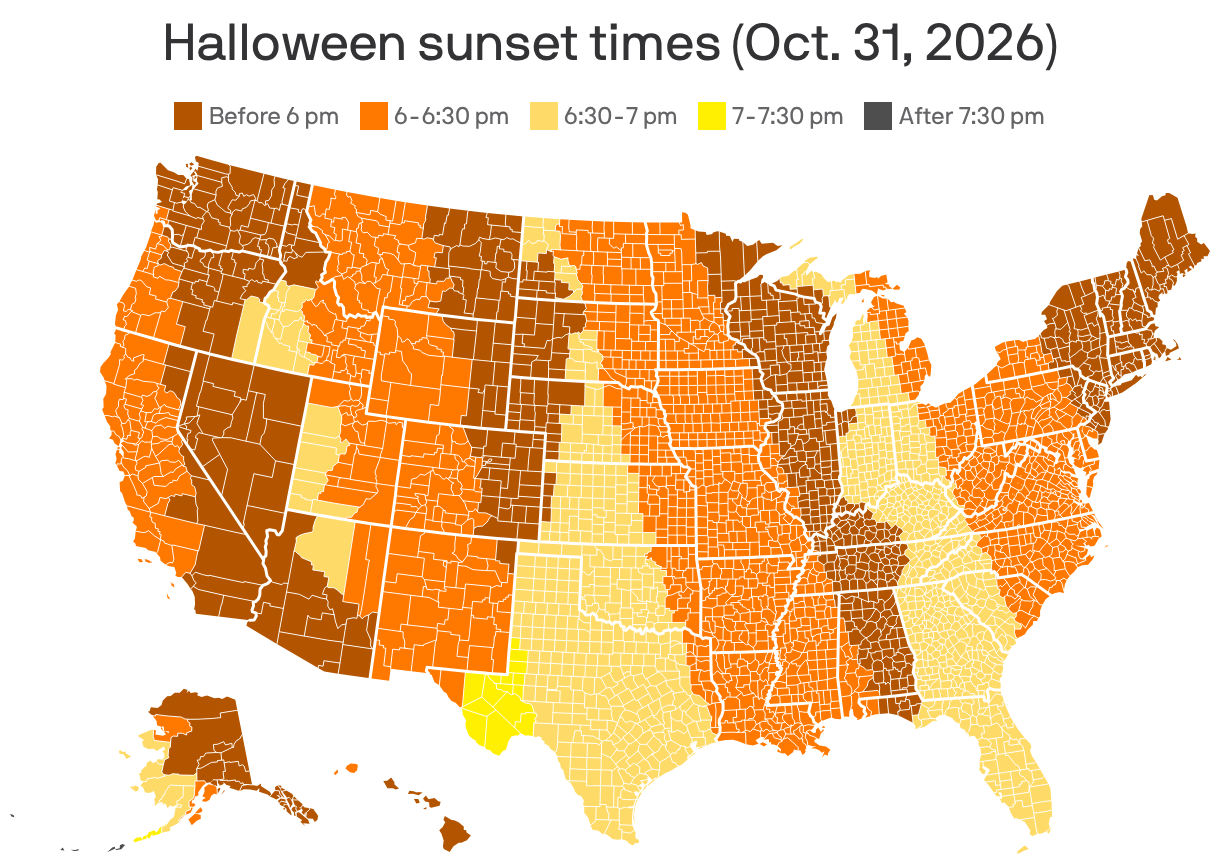
Why it matters: Halloween falls on a Saturday this year, meaning no school-hour prohibitions on when the goblins and ghouls can haunt your house.
Yes, but: If you're headed out before dark, trick-or-treaters in the Springs should start before the sun sets at 5:58pm, according to NOAA's solar calculations
- And don't count on the Moon. The waning gibbous Halloween Moon won't rise until later in much of the U.S.
Reality check: Sunset doesn't mean lights out. Twilight typically buys you another 20 to 40 minutes of natural light.
If you go: Saturday's high temperature is 62, but it will drop quickly after dark to a low of 43.
π What's next: Enjoy that last sliver of evening sunshine. Clocks fall back an hour at 2am Sunday.
π» John can still feel the excitement from being a kid when dusk arrived on Halloween.
Thanks to my editor, Gigi Sukin.
Sign up for Axios Colorado Springs