Axios Codebook
February 18, 2025

Happy Tuesday! Welcome back to Codebook.
- Sam is on vacation this week, but her editors have you covered.
- 📬 Have thoughts, feedback or scoops to share? [email protected].
Today's newsletter is 1,071 words, a 4-minute read.
1 big thing: Challenges to DOGE hinge on outdated laws
/2025/02/14/1739554433692.gif?w=3840)
The lawsuits filed against Elon Musk's government tech team hinge on two privacy laws written decades before the modern internet took shape.
Why it matters: How judges interpret those laws will dictate not only the success of these lawsuits in curbing the Department of Government Efficiency's power, but also what data government agencies can collect in the future.
Driving the news: Multiple lawsuits have been filed against DOGE in recent weeks, with some resulting in temporary stays on its data access.
- An ongoing legal dispute over DOGE's access to the Treasury Department's payment system has garnered the most attention, with new documents showing a DOGE member had "write" privileges to a sensitive database despite earlier statements from the administration to the contrary.
- The Electronic Frontier Foundation and a coalition of privacy advocates filed a lawsuit last week to block DOGE's access to the Office of Personnel Management's data and to force the deletion of any previously collected information.
- Several labor unions are also seeking to stop DOGE from accessing data at multiple federal agencies.
- A group of government employees is suing OPM for not conducting a privacy impact assessment before allegedly installing a new server to send mass email blasts.
Zoom in: All of these lawsuits rest on the Privacy Act of 1974 and the E-Government Act of 2002.
- The Privacy Act was passed after the Watergate scandal and governs how government agencies collect, use, maintain and disseminate personal information.
- The E-Government Act requires agencies to conduct privacy impact assessments whenever there are changes to how government systems access and use the personal information they store.
Between the lines: Neither law was designed for modern government's complex, data-driven processes. The Privacy Act, which underpins at least nine DOGE-related complaints, was enacted around the time the personal computer was invented.
- "We're asking [DOGE] to meet the standard around privacy that was set in 1974," Elizabeth Laird, director of equity in civic technology at the Center for Democracy and Technology, told Axios. "It's concerning."
The intrigue: Judges have faced few relevant challenges to these laws, so there's little precedent to guide the new wave of court battles.
- "There's very limited clauses in these laws that these lawsuits can essentially hang onto or build their case for," Ron De Jesus, field chief privacy officer at Transcend, told Axios.
The big picture: The U.S. has a patchwork of privacy laws dictating what can be collected and how it's stored. Few of those laws apply directly to government entities, however.
- For example, there's no breach notification requirement for government agencies, and their privacy policies don't have to be as thorough as those of corporate entities, De Jesus noted.
Yes, but: It remains unclear whether DOGE is violating these laws — and if its work is deemed legal, concerns about notification or transparency may be moot.
- And even if DOGE's access is ruled illegal, damage may have already been done.
- "DOGE already has access and has probably stored a lot of that personal information already," De Jesus said. "It's just like any other breach."
What we're watching: Lawyers may pursue challenges under different laws.
- A group of state attorneys general is trying to curb DOGE's power by questioning its constitutionality.
- Meanwhile, federal agencies holding data on EU citizens may face scrutiny from European officials, who have long been wary of U.S. government data practices.
2. DOGE moves on IRS' taxpayer data system

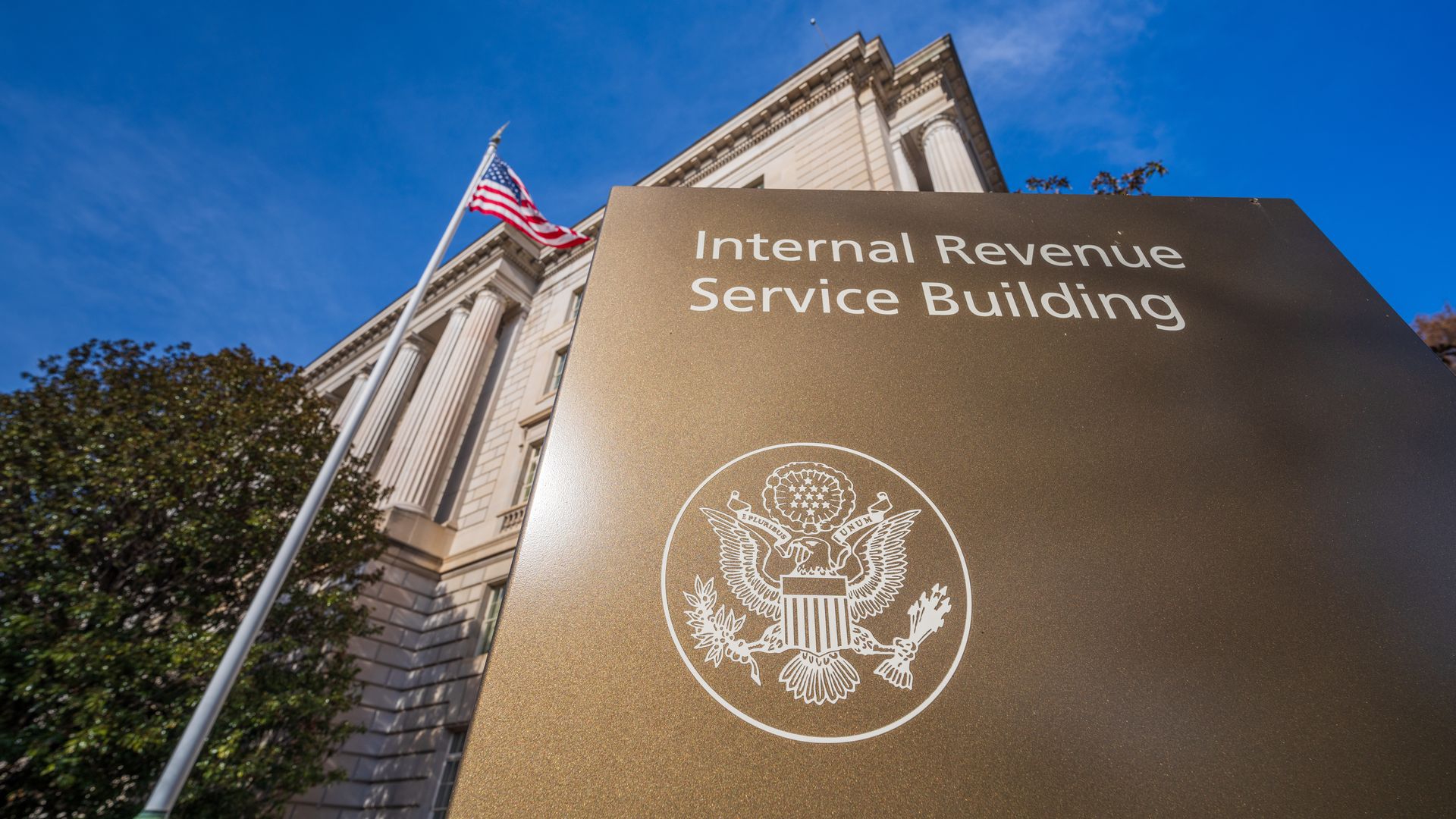
An Internal Revenue Service employee connected with the Elon Musk-led DOGE team is set to seek access to an IRS system that includes sensitive taxpayer data, the Washington Post first reported Sunday and Axios can confirm.
Why it matters: President Trump has given DOGE powers to oversee government agencies and the federal workforce with the goal of cutting bloat, but his administration is facing several lawsuits accusing it of violating privacy laws in regard to accessing sensitive data.
The big picture: The Integrated Data Retrieval System (IDRS) enables certain IRS employees "to have instantaneous visual access to certain taxpayer accounts," per an agency post.
- It can be used for researching "account information and requesting returns" and automatically "generating notices, collection documents and other outputs," according to the IRS.
- The staffer who joined at the start of Trump's second term has now been onboarded, Axios understands.
- An administration official said the staffer is acting legally on the "DOGE mission" and "with the appropriate security clearances."
What they're saying: White House spokesperson Harrison Fields said in a statement first shared with NBC News that "waste, fraud, and abuse have been deeply entrenched in our broken system for far too long."
- He added in the statement: "It takes direct access to the system to identify and fix it. DOGE will continue to shine a light on the fraud they uncover as the American people deserve to know what their government has been spending their hard-earned tax dollars on."
Zoom out: The move comes as roughly 140 million people in the U.S. prepare to file individual tax returns by the April 15 deadline.
Zoom in: DOGE has been tasked with modernizing federal technology and software to "maximize governmental efficiency and productivity."
- Some of the IRS' software dates back to the 1960s.
- Representatives of the IRS did not immediately respond to Axios' request for comment.
Go deeper: Trump orders "large-scale" cuts to federal workforce, gives DOGE more power
3. Catch up quick
@ D.C.
🤫 X is blocking links to Signal, the encrypted messaging tool that federal workers have been using to blow the whistle on Elon Musk's DOGE. (Disruptionist)
📄 The acting head of the Social Security Administration left her position over the weekend after a disagreement over DOGE's access to sensitive documents. (Washington Post)
@ Industry
💰 Israeli AI cyber company Dream raised $100 million at a $1.1 billion valuation, led by Bain Capital. (Bloomberg)
🐳 South Korea has banned DeepSeek until it can confirm that the Chinese AI app conforms to the country's data protection laws. (New York Times)
@ Hackers and hacks
✈️ Russian hackers have targeted about 20 Italian websites, including those that manage Milan's airports. (Reuters)
🛍️ Chase plans to block Zelle payments to sellers offering goods on social media sites or messaging apps, due to an abundance of scams. (BleepingComputer)
4. 1 fun thing

This is Sam's very Gen X editor subbing in for her this week on the 1 fun thing — which is that my heart is still full from watching Post Malone sub in for Kurt Cobain on the "SNL50" concert performance of "Smells Like Teen Spirit."
☀️ See y'all Friday!
Thanks to Megan Morrone for editing and Khalid Adad for copy editing this newsletter.
If you like Axios Codebook, spread the word.