Axios Codebook

October 22, 2024

Happy Tuesday! Welcome back to Codebook.
- 🗳️ T-minus two weeks until Election Day. What stories are we missing? Reply to this email if you want us to cover something we haven't.
- 📬 Have other thoughts, feedback or scoops to share? [email protected].
Today's newsletter is 1,247 words, a 5-minute read.
1 big thing: AI is already amplifying election falsehoods
/2024/10/21/1729538098729.gif?w=3840)
AI-powered election disinformation is lurking in the shadows of social media, and many may not spot it before they cast their votes this year.
Why it matters: Margins for several major U.S. elections — including the presidential race — are razor thin.
- Even the smallest social media campaign could influence a voter's choice and possibly sway an election's outcome.
Driving the news: Two researchers at Clemson University published a study last week detailing how a disinformation campaign has used large language models to respond to political posts on X, formerly Twitter, seemingly autonomously.
- The disinformation network, first reported by NBC News, has been running at least 686 X accounts and has posted more than 130,000 times since January, according to the study.
- Researchers say the operators are likely acting on behalf of a domestic political group, and they've targeted a range of elections, including five Senate races, a House race and the presidential campaign.
The intrigue: The network exclusively replies to posts from legitimate users. It also replies to posts about other topics, including professional and collegiate sports, to help the accounts appear more legitimate.
- The operatives switched to using the Dolphin large language model, which has fewer content moderation constraints, in June after initially launching their efforts with ChatGPT.
Yes, but: Engagement is relatively low on these posts, researchers found.
- AI-powered posts alone aren't likely to sway many voters in 2024, Darren Linvill, one of the report's authors and co-director of Clemson's Watt Family Innovation Center Media Forensics Hub, told Axios.
- Bots still represent a small percentage of the accounts posting on social media about politics, Linvill noted. "If you're talking about politics, whoever you're talking to, at the end of the day, is probably a real person."
Between the lines: Like any other kind of disinformation, the full impact of AI-fueled campaigns on the 2024 U.S. vote won't be fully realized for months, possibly years.
- Determining which posts are coming from legitimate users and which from bot accounts requires a lot of research.
- And even then, most researchers uncover these networks through random encounters with bots online or tips from outside sources.
Catch up quick: Election officials have been fending off a litany of mis- and disinformation threats leading up to this year's vote.
- Several nation-states have already tapped AI tools — including DALL-E and ChatGPT — to create images and write fake news stories that spread lies about political candidates.
The big picture: 2024 is just the first major election where AI-enabled content tools have been readily available. Experts fear that coming years could be worse.
- "We're very early in the AI revolution," Linvell said. "This is the first election."
- "While I don't want people to be too scared of the power of AI disinformation just yet, it is real, and we do need to be concerned about it," he added.
The bottom line: Caution is the best way to combat the threat of disinformation.
- State and local election officials provide accurate information about voting on their websites.
- Several organizations are either fact-checking election lies or have tools to help people fact-check information themselves.
2. Meta brings back facial recognition
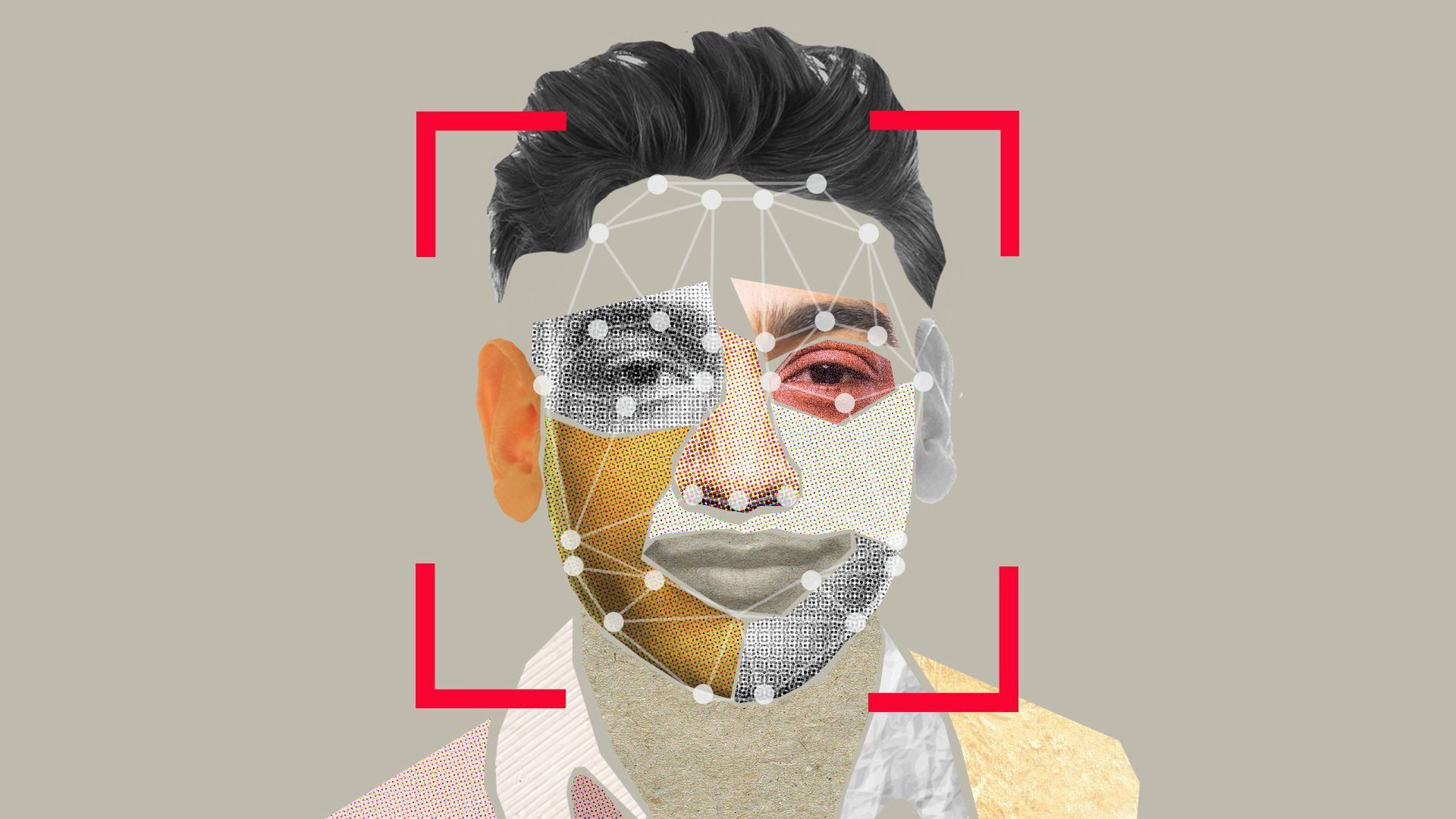
Meta is gradually releasing facial recognition technology across Facebook and Instagram to help users locked out of their accounts and to spot scam ads that improperly use a celebrity's image.
Why it matters: This is the first major expansion of Meta's facial recognition system since its 2021 rollback.
Zoom in: Meta has started testing facial recognition to verify the identities of users who are locked out of their Facebook or Instagram accounts, Monika Bickert, Meta's vice president of content policy, told reporters yesterday.
- The company has also been running a test of the technology to spot so-called celebrity bait ads, which often rely on AI-generated images of famous people to entice users into buying into whatever scam they're promoting.
- As of now, only a "small group of celebrities" are enrolled in the program, Bickert said.
How it works: To recover their accounts, users will be able to upload a video recording of their face.
- Meta's facial recognition system will then compare that video to the profile pictures on the account the user is trying to access.
- Facial recognition isn't the only option. Users can still choose to upload photos of their ID cards or other official documents.
The intrigue: Meta is not deploying the technology in the European Union, the United Kingdom and a few other jurisdictions due to local data collection laws, Bickert said.
Flashback: In 2021, Meta shut down its decade-old facial recognition system and deleted the face data of more than 1 billion users.
- Back then, the technology was used to automatically identify people in photos and suggest tags.
- But at the time, the company said it still saw facial recognition as a powerful tool to verify identities and prevent fraud.
The big picture: Cybercriminals have become scary good at hijacking people's Facebook and Instagram accounts in recent years.
- Typically, scammers will gain access to these accounts to help steal someone's identity, share posts about their scams, or extort a user into paying a ransom demand.
Between the lines: Meta has faced several lawsuits over its use of facial recognition in recent years.
- In July, the company agreed to pay $1.4 billion to settle a 2022 lawsuit with the state of Texas over the collection of users' biometric data.
- The company worked with policymakers, regulators, and privacy and security experts worldwide before beginning the most recent tests, Bickert said.
What's next: Meta plans to roll out facial recognition for account recovery to all users over the next few months, depending on how initial testing goes.
- The company is expanding its celebrity bait ad tests in December to another group of celebrities, and in the meantime, Meta has started reaching out to other famous people to enroll them in the program.
3. Catch up quick
@ D.C.
❌ The Justice Department proposed new rules for carrying out an executive order that would ban data brokers from selling Americans' data to China, Russia and other adversarial nations. (Reuters)
🪖 The Defense Department is considering asking technology executives to become part-time military officers in the reserves, where they could help with short-term cybersecurity, data analytics and other projects. (Wall Street Journal)
🔍 A look at what it may mean if former President Donald Trump is re-elected and fulfills his promise to revoke President Joe Biden's AI executive order. (Wired)
@ Industry
🤝 Sophos is planning to acquire Secureworks from Dell Technologies for $859 million in cash. (Reuters)
💰 Socket, a security startup that helps spot vulnerabilities in open-source code, has raised a $40 million Series B round led by Abstract Ventures. (Axios Pro)
🤖 Microsoft unveiled a series of semi-autonomous AI agents, bringing the industry one step closer to deploying fully autonomous agents. (Axios)
@ Hackers and hacks
⚠️ Hackers have again breached the Internet Archive. This time, they've broken into the company's email support platform and started emailing anyone who has submitted a removal request. (BleepingComputer)
🇵🇸 Pro-Palestinian hackers have targeted several of Cyprus' critical infrastructure and government websites in a seemingly coordinated — but largely unsuccessful — series of cyberattacks. (The Record)
4. 1 fun thing

👋🏻 ICYMI: We're reading "Sandworm" by Wired reporter Andy Greenberg for our first Codebook Book Club pick.
- 📖 I'm about halfway through, and it's stunning to me in hindsight how novel attacks on critical infrastructure felt at the time. Now, I'm reporting on them all the time!
- 🤔 Have questions for Andy about his reporting as you're reading? Hit reply.
☀️ See y'all Friday!
Thanks to Megan Morrone for editing and Khalid Adad for copy editing this newsletter.
If you like Axios Codebook, spread the word.
Sign up for Axios Codebook