Axios Closer

February 27, 2026

Friday ✅.
Today's newsletter is 762 words, a 3-minute read.
📉 The dashboard: The S&P 500 closed down 0.4%.
🥶 Today's stock spotlight: Duolingo (-14%), the language app, rattled investors after the bell yesterday by saying it's going to focus on growing subscribers, even if that means taking a hit to short-term margins.
1 big thing: Amazon deal opens AIs
AI's biggest relationships just got more complicated — and Amazon is suddenly more firmly in the center of the drama.
- The tech giant is investing $50 billion in OpenAI as part of the ChatGPT maker's $110 billion funding round.
- OpenAI is committing to spend $138 billion on Amazon's chips and hardware over the next eight years.
The big picture: The deal reshuffles the AI power map, in what could amount to a win for Amazon, a loosening of power for Microsoft and potential long-term risk for Nvidia as chip competition heats up.
State of play: The deal widens OpenAI's funding base to include more cash from Amazon, less cash than expected from Nvidia and no change to Microsoft's investment.
- Microsoft was originally OpenAI's main partner. Now, it is sidelined to a degree as OpenAI is making deals with whoever it can to fund its AI ambitions.
- Nvidia was set to commit as much as $100 billion in OpenAI in this deal. That dropped to $30 billion, and now OpenAI is using chips from a potential long-term competitor in Amazon.
Zoom in: Through the new deal, OpenAI is committing to 2 gigawatts of capacity on Amazon's custom Trainium3 and Trainium4 chips — chip power expected to go toward serving up the new services Amazon is offering.
- Anthropic is training its upcoming model on Trainium chips as well, meaning the top AI labs are both using Amazon's hardware.
By anchoring this record-breaking funding round with Amazon rather than Microsoft or Nvidia, OpenAI is signaling it's no longer a one-cloud company.
- And Amazon is proving it can lure the industry's biggest stars into using its chips
The bottom line: The monogamous era of the AI race is over.
2. WBD's Hollywood script


In repeatedly rebuffing takeover offers from Paramount Skydance, Warner Bros. Discovery's board managed to create one of Hollywood's most dramatic and lucrative bidding wars, Axios' Sara Fischer writes.
State of play: Everyone wins a little with the deal battle over, but Warner Bros. Discovery — which added $23 billion in market value in just five months — has the clearest evidence to show for it right now.
- Netflix is walking away from an expensive bidding war, and its stock gained 14% today as a result.
- It also conveniently leaves one competitor saddled with debt and two competitors burdened by a long, distracting regulatory approval process.
Yes, but: If Paramount's winning deal is approved and closes, CEO David Ellison becomes one of the most powerful figures in media, owning not just three major movie studios, but also two global streamers in Paramount+ and HBO Max, two major news networks in CNN and CBS, and a slew of cable networks.
- And WBD chief David Zaslav will have cemented his legacy as one of the savviest media dealmakers of all time.
3. Other happenings
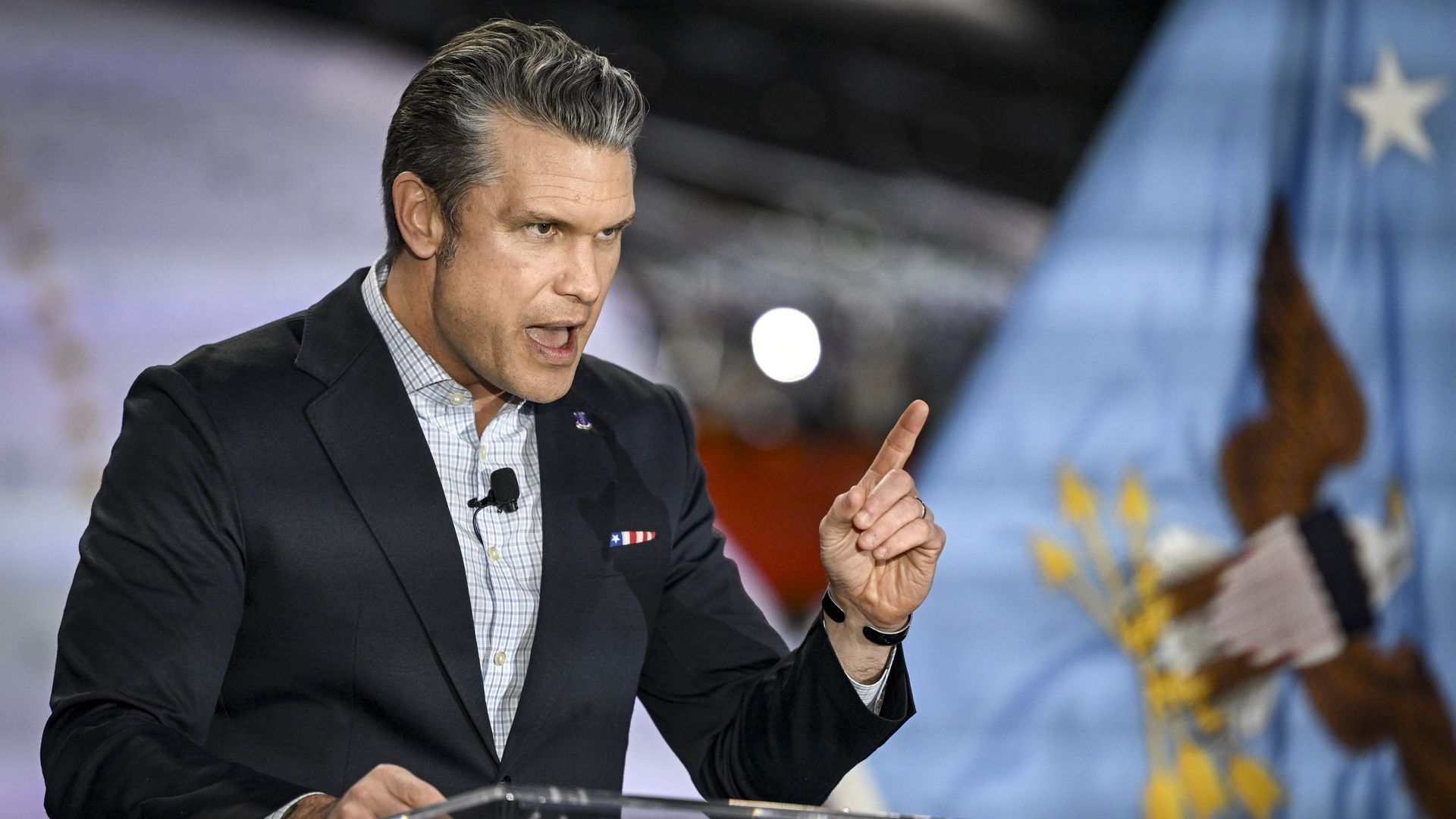
🤖 Anthropic's clash with the Pentagon intensified after President Trump said the U.S. would blacklist the AI company. (Axios)
🤳 Trump Media & Technology Group said it is in talks to spin off Truth Social into a new publicly traded company. (Axios)
💸 Wholesale prices came in hotter than expected in January. The 0.8% rise in core PPI was the largest increase since July, suggesting price pressures remain stubborn. (CNBC)
4. Everyone lost
FanDuel parent Flutter Entertainment turned in a rough quarter, Axios' Pete Gannon writes.
The intrigue: Part of the problem? The sportsbook won too many bets.
Between the lines: "FanDuel recorded persistently high NFL gross revenue margins throughout November and December," CEO Jeremy Jackson said yesterday on an earnings call. That caused what the company called "adverse recycling."
Translation: NFL bettors on FanDuel lost more than usual.
- When customers lose quickly, they have less money to bet again.
- And when gamblers lose fast — and consistently — they're more likely to run out of money, lose interest or move to a competitor.
The bottom line: For sportsbooks, it's better for business when customers win occasionally — and lose more slowly.
🗓️ On this day in 1960, an underdog U.S. hockey team beat the Soviet Union in the semifinals of the Winter Olympics. It was 20 years before the more famous "Miracle on Ice" in Lake Placid.
Today's newsletter was edited by Pete Gannon and copy edited by Sheryl Miller.
- Did a friend forward this to you? Sign up here to get Axios Closer in your inbox.
Sign up for Axios Closer