
Axios Closer

March 07, 2025

Friday. ✅
Today's newsletter is 534 words, a 2-minute read.
🔔 The dashboard: The S&P 500 closed up 0.6%.
- Biggest gainer? Broadcom (+8.6%), the chipmaker, pleased investors with its Q1 earnings and guidance for Q2.
- Biggest decliner? Hewlett Packard Enterprise (-12.0%), the server maker, spooked investors with its outlook for Q2 and estimate for full-year earnings.
1 big thing: Separating signal from noise
It was a crazy day, capping a crazy week for markets — and it may perfectly encapsulate a new era for investors.
- The big picture: The confident AI trade that drove stocks higher in 2024 has firmly given way to fears of slowing growth and possibly recession, fueled by unpredictable policy and an escalating trade war.
The morning kicked off with the first full jobs report of the Trump era, which showed healthy hiring last month, offering some initial relief for nervous investors.
- But that relief was short-lived. Upon deeper inspection, the report proved to be mixed, showing signs of underlying softness in the labor market.
By midday, jittery investors had driven down the S&P 500 by 1.8%, just around the time Trump was ratcheting up the heat on Canada from the Oval Office, threatening reciprocal tariffs on lumber and dairy products "as early as today."
- And then just like that, stocks bounced back.
The reason? Fed chair Jerome Powell gave some measure of assurance about the health of the economy, preaching patience in evaluating the impact of fast-moving trade policies.
- "As we parse the incoming information, we are focused on separating the signal from the noise as the outlook evolves," he said. "We do not need to be in a hurry [on interest rate changes], and are well-positioned to wait for greater clarity."
The bottom line: That will be the challenge for investors — if weeks like this one become the norm.
2. Charted: Stock market anxiety


"What I do know is that volatility seems like the only thing that is certain at the moment."— Kenny Polcari, chief market strategist at SlateStone Wealth, to Bloomberg today
Context: The CBOE Volatility Index, commonly known as the "fear gauge," is a measure of expectations for stock market volatility.
3. Friday catch-up
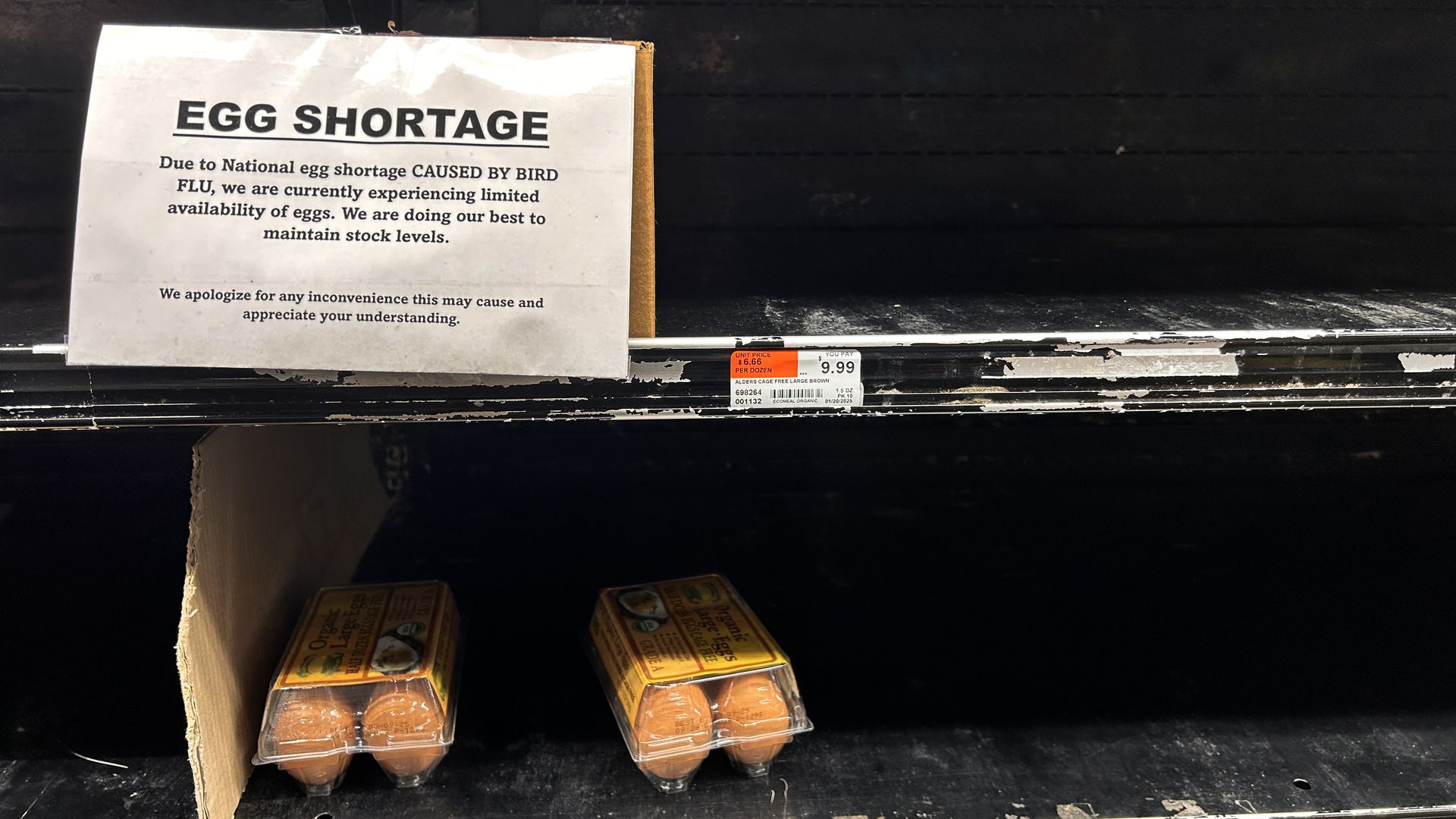
🥚 The DOJ has opened an investigation into the cause of soaring egg prices, including whether producers have conspired to raise prices or constrain supply. (WSJ)
🪙 Bitcoin, above other cryptocurrencies, is the highest priority for the Trump administration's overall digital assets strategy, a White House official said, a day after Trump announced a crypto strategic reserve. (Axios)
4. ⛳️ One sports thing: Daylight saving
Sunday we roll the clocks forward, a ritual that's become cool to hate.
- And among the loudest advocates for ending the annual clock switching once and for all? The U.S. golf industry.
The big picture: An extra hour of daylight in the evening can be very good for the golf business, AP notes. And many within it want to make daylight saving a permanent thing.
- Late afternoon leagues generate up to 40% of the revenue for some courses, according to Joe Kohout, a lobbyist for the Nebraska Golf Alliance.
- "We would lose 100 tee times a day if daylight saving time goes away," Connor Farrell, general manager of Stone Creek Golf Course in Omaha, told AP. "Switching to permanent standard time would cost us $500,000 a year."
Yes, but: The National Golf Course Owners Association said many of its 4,000 members love the extra hour in the evening too. But not all of them are on board with 365 days of daylight saving.
- They're backing the status quo. Something their warm-state members have reminded them — many people play golf in the morning, too.
Today's newsletter was edited by Pete Gannon and copy edited by Sheryl Miller.
✏️ Was this email forwarded to you? Sign up here to get Axios Closer in your inbox.
Sign up for Axios Closer