Fed's Powell: "No hurry" to cut rates amid Trump volatility

Add Axios as your preferred source to
see more of our stories on Google.
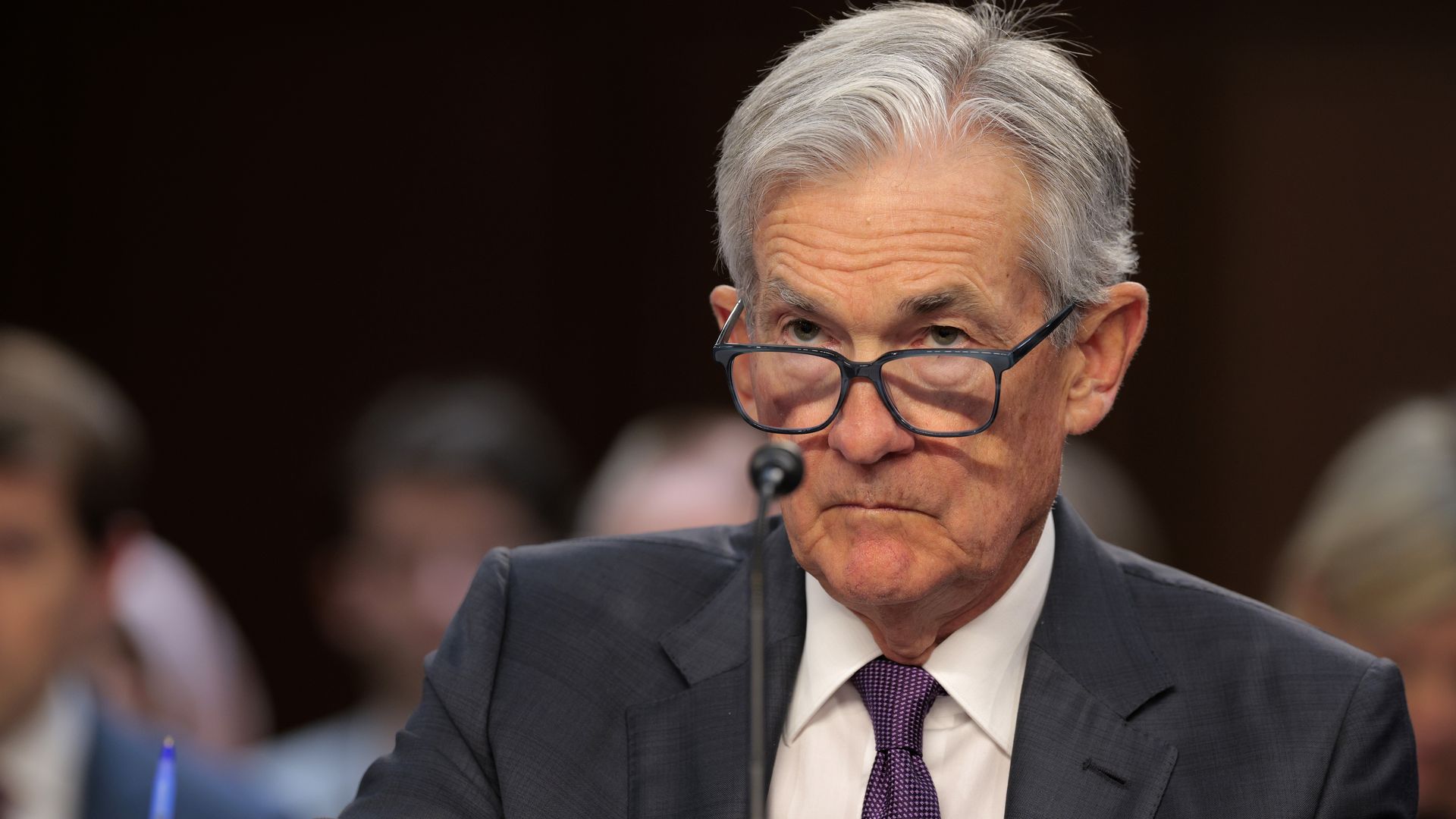
Federal Reserve chair Jerome Powell. Photo: Chip Somodevilla/Getty Images
The Federal Reserve is poised to leave interest rates steady, as it aims to separate "signal from noise" in the Trump administration's big changes to U.S. economic policy, chair Jerome Powell said Friday.
Why it matters: Amid fast-moving changes to trade and other policies, volatile markets, and slumping consumer sentiment, the central bank is looking to offer a sense of patience, as it waits for more decisive evidence of how the economy is changing.
- It implies the Fed's interest rate target will remain unchanged at its current level of 4.25% to 4.5% until clear changes in the economic backdrop emerge.
What they're saying: Powell noted that the Trump administration is implementing significant changes across trade, immigration, fiscal policy and regulation.
- It is the "net effect of these policy changes" that matters to the Fed, Powell will say at the Clark Center for Global Markets' monetary policy forum, according to a prepared text.
- "While there have been recent developments in some of these areas, especially trade policy, uncertainty around the changes and their likely effects remains high," he will say.
- "As we parse the incoming information, we are focused on separating the signal from the noise as the outlook evolves. We do not need to be in a hurry, and are well-positioned to wait for greater clarity," he adds.
Of note: Powell acknowledged recent survey evidence of greater economic angst, but suggested that those survey measures of the economy should not trigger policy adjustments.
- He noted that "recent surveys of households and businesses point to heightened uncertainty about the economic outlook."
- "It remains to be seen how these developments might affect future spending and investment. Sentiment readings have not been a good predictor of consumption growth in recent years," Powell said.
Between the lines: The cross-currents of Trump policies create a potentially volatile mix, and Powell and the Fed are looking for greater clarity on how it will all shake out before adjusting interest rate policy further.
- Restrictive immigration policy and tariffs tend to lower the economy's supply potential, fueling inflation. Deregulation, by contrast, could enhance the economy's supply potential.
- Federal spending cuts could, in the near term at least, slow business activity, raise unemployment and slow consumer demand.
- Some of those developments would point to higher interest rates, others to lower rates — so in the absence of clear evidence of which proves more powerful, the Fed is looking to stand pat.
"Our current policy stance is well-positioned to deal with the risks and uncertainties that we face in pursuing both sides of our dual mandate" of maximum employment and steady prices, Powell said in the speech.
What's next: The policy-setting Federal Open Market Committee concludes its next meeting March 19 and is set to leave rates unchanged.
