Axios Closer

June 16, 2023
Friday β
Today's newsletter is 689 words, a 2.5-minute read.
π The dashboard: The S&P 500 closed down 0.4%, but still notched its best week since March.
- Biggest gainer? Ball Corp (+7.2%), the packaging company, is reportedly exploring a sale of its aerospace unit for more than $5 billion.
- Biggest decliner? Alexandria Real Estate Equities (-4.7%), the life science industry REIT. Β―\_(γ)_/Β―
π’ Programming note β we're off Monday in recognition of Juneteenth, so we'll be back with you Tuesday.
1 big thing: Closed hotels are hot
Illustration: Sarah Grillo/Axios
Interest in revitalizing or redeveloping closed hotel properties has been on the rise for the last decade β but it's surged to new heights since the pandemic began, Nathan writes.
Why it matters: Vacant sites are a scourge to local property values and pose safety and other problems to law enforcement, lawmakers and residents.
By the numbers: 458 closed hotel properties were sold in 2022, marking at least the ninth straight year of increases, according to CoStar Group.
- The number has nearly tripled in a decade, rising from 160 in 2013 and 234 in 2019, the last full year before the pandemic.
Be smart: The ensuing plummet in travel demand forced many hotels to close.
Between the lines: Shuttered hotels often still have "good bones" and thus make for excellent redevelopment opportunities, Jan Freitag, CoStar national director of hospitality analytics, tells Axios.
- "You have individual bedrooms, bathrooms β you often have a gym, you often have a pool, you have food and beverage setup already," Freitag says. "It slots in theoretically quite nicely into elder care facility, student housing or multifamily."
Zoom in: Several high-profile deals for shuttered hotels have taken place in recent months, including:
- The former New York Marriott East Side hotel, in a deal that could set the stage for a redevelopment into student housing, TheRealDeal reported.
- The 12-story Dayton Grand Hotel in Dayton, Ohio, closed since 2016, after being marketed for reuse as a hotel or redevelopment into multifamily housing, the Dayton Daily News reported.
2. Charted: How we'll get around


Privately owned vehicles will make up a smaller and smaller share of global transportation over the next decade, according to new research by the McKinsey Center for Future Mobility.
By the numbers: New modes of mobility β namely robotaxis β will increase from virtually zero today to 8% of global transportation in 2035, as self-driving car technology becomes more viable, according to McKinsey's estimates provided to Nathan.
- Micromobility services β such as scooters and bicycles β will continue to grow, rising to a 19% share of transportation in 2035.
The big picture: America definitely has a "high car reliance," with 80% of transportation occurring in privately owned vehicles, says Timo MΓΆller, co-leader of the McKinsey Center for Future Mobility.
- But "the direction will be similar in the U.S." and private car use will decline as a share of overall transportation.
4. UPS workers deliver strike authorization
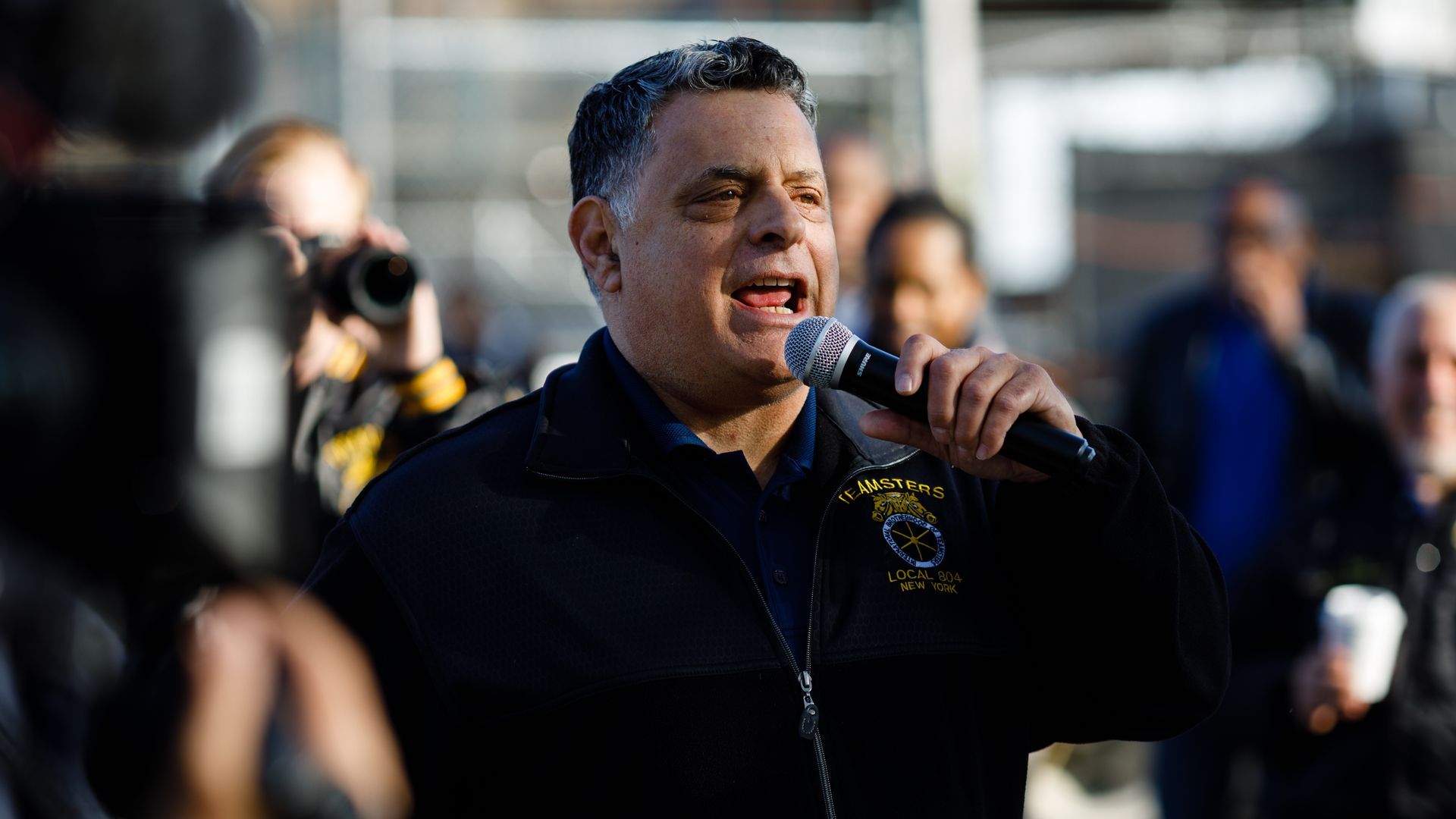
Vincent Perrone, president of Teamsters Local 804, speaks during a rally with UPS workers and Teamsters members outside a UPS hub in New York on April 21. Photo: Paul Frangipane/Bloomberg via Getty Images
Unionized drivers and warehouse workers for UPS have authorized a strike in the event they don't secure a new contract by July 31, Nathan writes.
- The move was widely expected but nonetheless heightens the tension at a time when delivery services are already under pressure to maintain recent improvements in supply chain operations.
Details: The Teamsters, which represents more than 340,000 UPS workers, said 97% voted to approve the strike.
- Negotiations began April 17, with the union pursuing a new five-year deal that would guarantee raises, more full-time positions, an end to forced overtime and the demise of the company's two-tier wage system.
The other side: UPS in a statement called the vote a normal step in union negotiations and said it remains confident the parties will reach an agreement.
5. His Airness selling Hornets stake
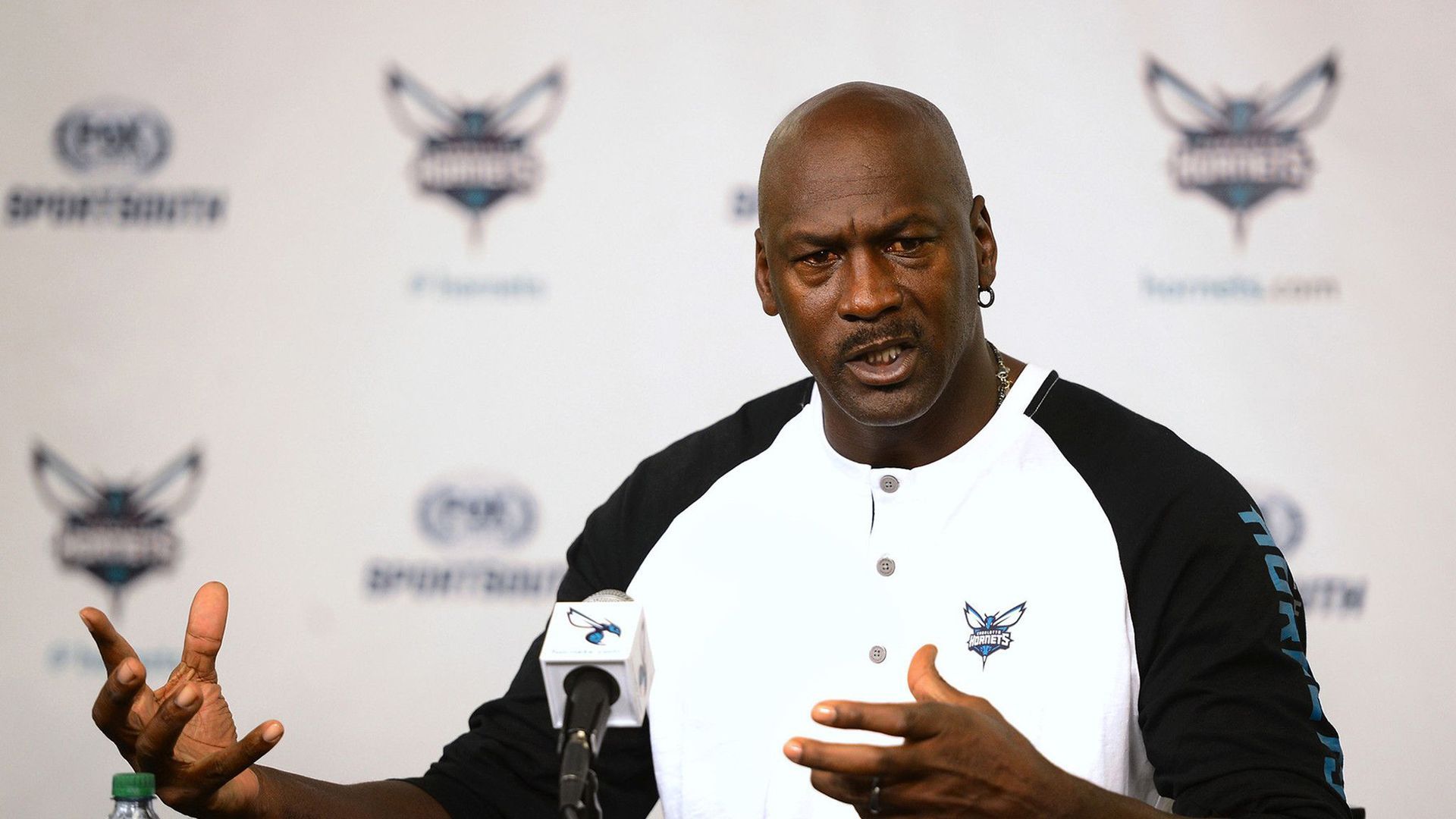
Charlotte Hornets owner Michael Jordan speaks at a news conference on Oct. 28, 2014. Photo: Jeff Siner/The Charlotte Observer/Tribune News Service via Getty Images
Basketball legend Michael Jordan is selling his majority stake in the Charlotte Hornets, the team announced Friday.
Why it matters: Jordan, widely regarded as the greatest NBA player of all time, has been the league's lone Black majority owner for the last 13 years, Axios' Ashley Mahoney and Alex Sands write.
Details: Jordan will retain a minority stake in the team.
- The buyer is a group led by Hornets minority owner Gabe Plotkin and private equity exec Rick Schnall, who is expected to finalize a sale of his minority stake in the Atlanta Hawks in the coming weeks.
Of note: The NBA Board of Governors still has to approve the sale.
6. What they're saying
"I guess they are more concerned about us than I would have thought."β Fanatics CEO Michael Rubin, to CNBC, on DraftKings submitting a rival bid to acquire the U.S. assets of gambling service PointsBet.
Today's newsletter was edited by Pete Gannon and copy edited by Carlos Cunha.
Sign up for Axios Closer

Catch up on the day's biggest business stories and look ahead to important trends. Led by Nathan Bomey.