Axios Closer

March 20, 2026

Friday ✅.
Today's newsletter is 803 words, a 3-minute read.
📉 The dashboard: The S&P 500 closed down 1.5%, as investors weighed signs of escalation in the Iran war.
- 🛢️Brent crude oil rose 3% to $112. Bond yields rose, with benchmark 10-year Treasuries at 4.39%.
🥶 Today's stock spotlight: McCormick (-1.5%). The food company confirmed it's in talks to combine with Unilever's food business.
1 big thing: Super Micro plunge

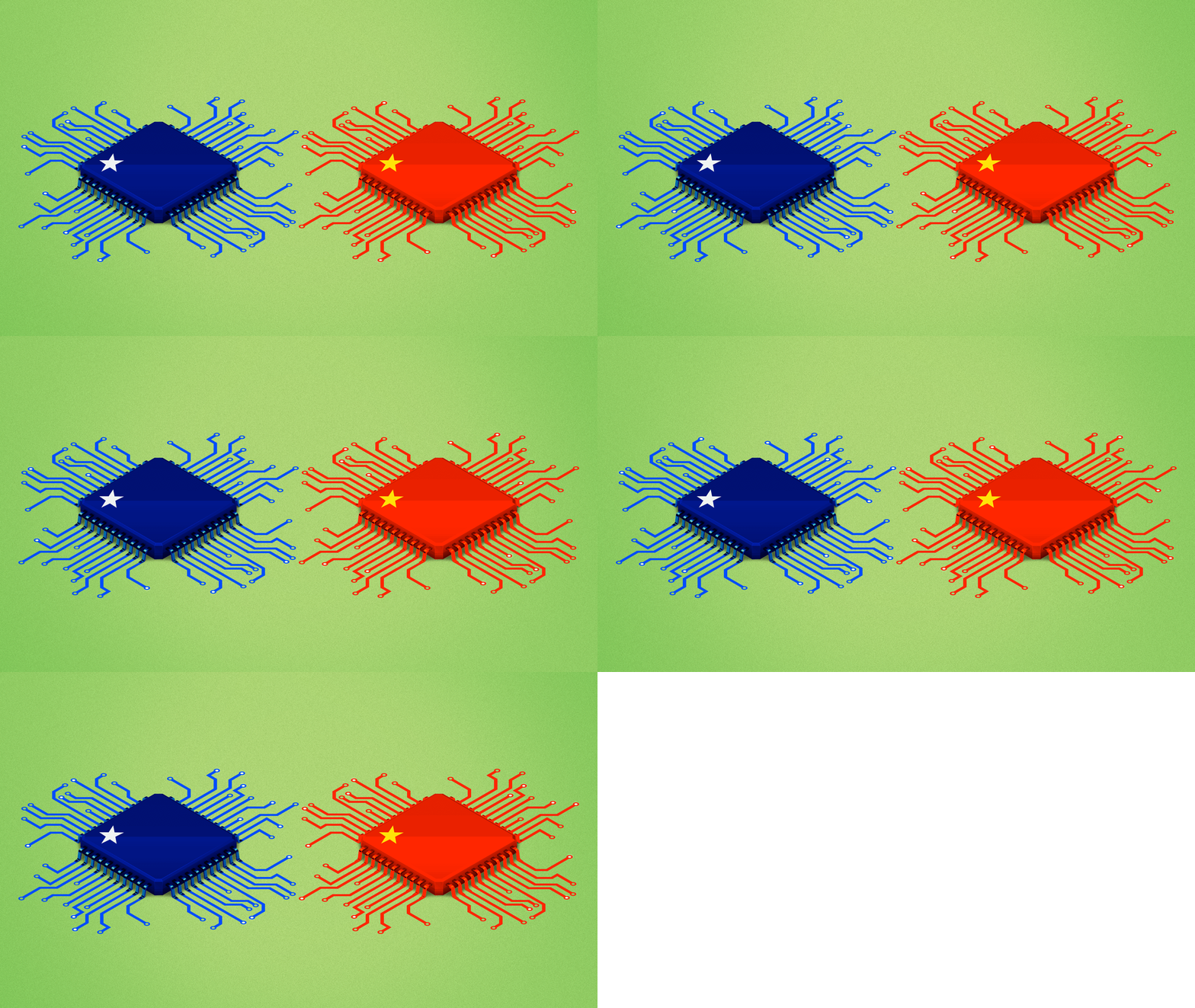
Super Micro Computer shares plunged 33% today after U.S. prosecutors charged two employees, including co-founder Yih-Shyan "Wally" Liaw, in connection with an alleged scheme to smuggle hundreds of millions of dollars' worth of Nvidia-powered AI servers into China.
- Why it matters: The U.S. has restricted the export of advanced AI chips to China since 2022 on national security grounds, effectively locking U.S. players out of what Nvidia sees as a potential $50 billion market.
Super Micro, which is not named as a defendant in the indictment unsealed last night, said it has placed Liaw and the other employee on administrative leave.
🕵️ What they're saying: Prosecutors say Liaw and co-conspirators used a customer in Southeast Asia to funnel servers powered by restricted Nvidia chips to various end customers in China.
- To get past Super Micro's own compliance team — which had raised suspicions about the volume of product going to that one customer — the conspirators allegedly created fake servers to sit in the customer's warehouse, affixed with legitimate labels and serial number stickers that they stuck on using hair dryers.
- To create the allusion that the customer could use all the servers it was ordering, the conspirators allegedly fudged data center leases to make it look like it had more capacity than it actually had.
💸 Zoom out: Prosecutors say roughly $2.5 billion worth of Super Micro servers went to that customer since 2024 — and that "a substantial portion" were diverted to China.
- Many of them are said to have contained Nvidia's B200 chips, which are part of the company's advanced Blackwell architecture and are banned from export to China.
What we're watching: Super Micro said it is fully cooperating with the investigation, and said it is "committed to full adherence to all applicable U.S. export and re-export control laws and regulations."
🔎 Go deeper: The case is challenging industry claims that smuggling to China isn't happening on a massive scale, Axios' Maria Curi writes. (Read the story)
2. Trump lays out AI plan
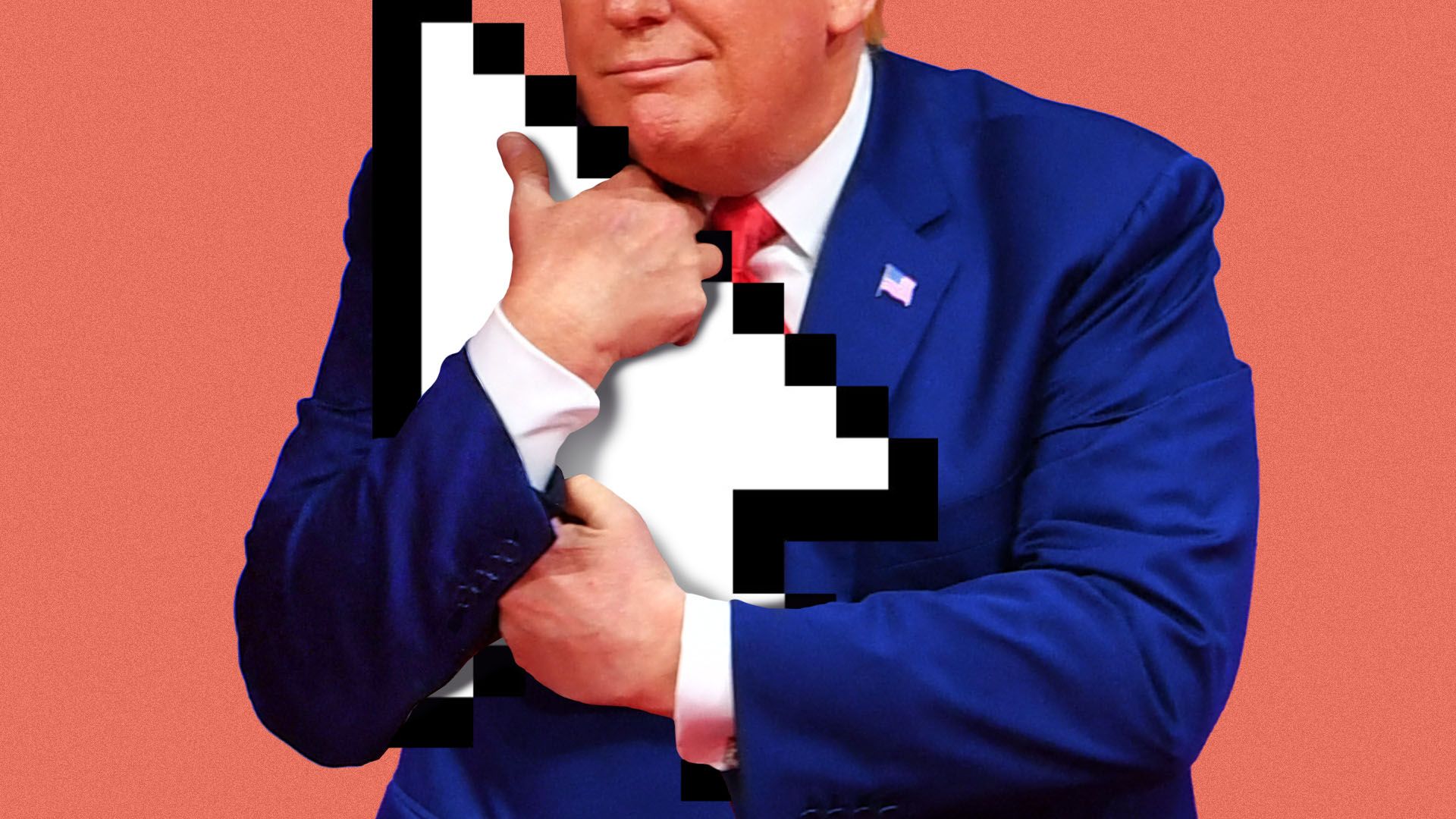
The Trump administration's highly anticipated recommendations for Congress on AI came out today.
What's inside: The framework offers lawmakers a list of priorities rather than a concrete legislative plan, Axios' Ashley Gold, Maria Curi and Mackenzie Weinger write.
- It says Congress should "preempt state AI laws that impose undue burdens to ensure a minimally burdensome national standard consistent with these recommendations, not fifty discordant ones."
🏛️ It calls on Congress to:
- Address the use of AI replicas that simulate someone's likeness or voice.
- Codify President Trump's pledge to require tech companies to pay for their increased energy demands.
- Establish "regulatory sandboxes" to allow developers to experiment with AI under relaxed rules.
👦 It also focuses on kids' online safety.
What we're watching: Though the framework marks a starting point from the White House, it will be incredibly hard for Congress to pass anything like it — even with Republicans in control.
3. Other happenings

4. Jeff Bezos' new AI play

What is Jeff Bezos up to?
- That was the question buzzing yesterday after the Wall Street Journal reported that the humble bookseller is in talks to raise $100 billion for a fund that would buy manufacturing companies "and seek to use AI technology to accelerate their path to automation."
What we know, based on sources familiar with the situation, writes Axios' Dan Primack:
- This fund is connected to Project Prometheus, of which Bezos serves as co-CEO.
- PP, which hasn't said anything publicly, isn't about automating factories and putting those workers on the street. Instead, it's focused on using AI to optimize pre-production machinery and processes, such as prototyping.
- Innovation tied to inputs and materials, rather than to assembly robots.
💭 Dan's thought bubble: The fund feels a bit like a private equity rollup — design a new playbook for an industry, buy up lots of companies in that industry, and then apply the new playbook.
🗓️ On this day in 1602, the Dutch East India Company was founded. It became the first company to issue publicly traded shares, allowing investors in Amsterdam to buy exposure to the booming global trade of spices, nutmeg, silk and tea.
Today's newsletter was edited by Pete Gannon and copy edited by Sheryl Miller.
- Did a friend forward this to you? Sign up here to get Axios Closer in your inbox.
Sign up for Axios Closer