Axios Closer

October 08, 2025

Wednesday ✅.
Today's newsletter is 764 words, a 3-minute read.
📈 The dashboard: The S&P 500 closed up 0.6%.
🥶 Today's stock spotlight: Jefferies Financial (-7.9%) said one of its credit funds has a roughly $715 million exposure to bankrupt auto parts supplier First Brands through invoice factoring with retailers.
1 big thing: Silicon shade
The rivalry between chip giants Nvidia and Advanced Micro Devices is entering a new and increasingly frosty chapter.
- 💥 Nvidia CEO Jensen Huang today took a bit of a shot at AMD and its deal with OpenAI earlier this week, in which it agreed to give the ChatGPT creator up to 10% of itself.
- 🗣️ "It's imaginative, it's unique and surprising, considering they were so excited about their next-generation product," Huang told CNBC, referring to AMD. "I'm surprised that they would give away 10% of the company before they even built it."
- (It's unclear whether Huang then dropped a mic.)
The intrigue: Nvidia and AMD have both announced deals with OpenAI in the last two weeks.
- AMD's stock soared 24% yesterday after it unveiled its deal to deliver to OpenAI 6 gigawatts of GPUs to power its AI infrastructure.
- Nvidia in September announced an investment of up to $100 billion in OpenAI, enabling the company to stand up at least 10 gigawatts of AI data centers.
🔄 Follow the money: The Nvidia investment called attention to an emerging loop in which the chip designer invests in OpenAI, which buys data software from Oracle, which gets chips from Nvidia, and so on.
- 🙋♂️ AMD wanted a lucrative loop of its own. (The company did not respond to a request for comment on Huang's remarks.)
- Wedbush Securities analyst Dan Ives, in a research note, called the whole thing an "AI Arms Race" that's becoming a "1996 Moment for the tech world."
The bottom line: AMD is nipping at Nvidia's heels, but its market cap remains less than 1/10th that of its larger rival's.
2. Verizon's space signal
Verizon is launching deeper into the space-based cellular service game in a deal with AST SpaceMobile.
How it works: The AST network runs off satellites deployed in low Earth orbit, and its network can connect directly to regular smartphones, the company says.
- Verizon, through today's commercial agreement, intends to integrate AST's network with its existing terrestrial network coverage sometime in 2026, providing connectivity for customers wherever they are.
Catch up quick: The deal deepens a partnership inked in May 2024, where Verizon reportedly committed $100 million to help AST build out its network.
- The companies did not disclose their financial arrangement today.
What we're watching: Starlink — owned by SpaceX — has been expanding its direct-to-cell service with T-Mobile and is bolstering its own mobile connectivity plans through a $17 billion spectrum deal with EchoStar.
- AST shares closed up 8.6% today. They're up 285% for the year.
3. Other happenings
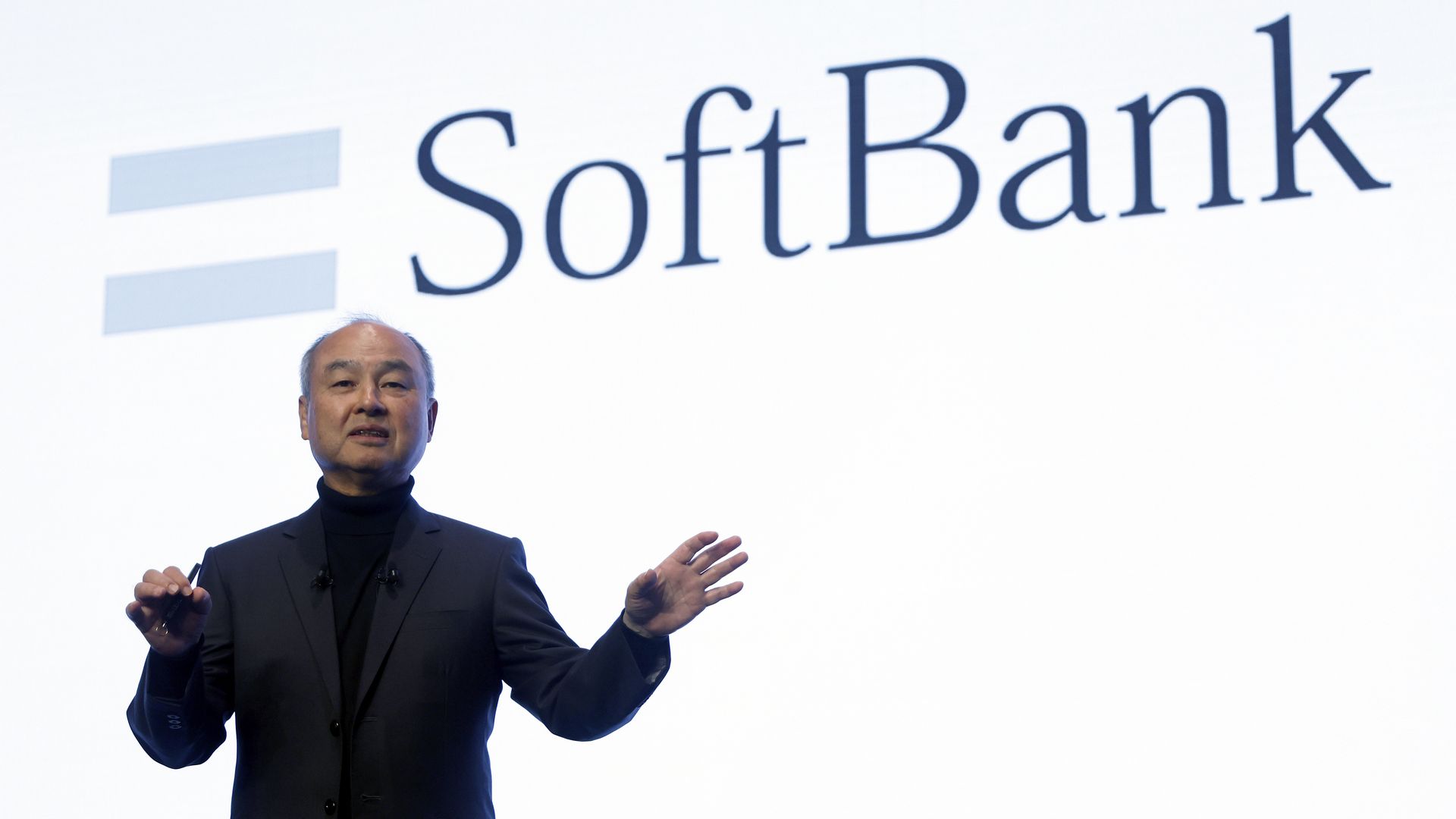
🦿SoftBank is acquiring the industrial robotics business of Swiss engineering firm ABB for $5.4 billion. (WSJ)
💵 A few Fed officials saw a case for keeping interest rates on hold last month, according to minutes from the central bank's policy meeting released today. (Axios)
💊 Amazon Pharmacy is launching prescription vending kiosks at One Medical clinics in Los Angeles. The company said the kiosks will deliver prescriptions "within minutes" of the patient's doctor visit. (CNBC)
4. 🎨 A happy little auction
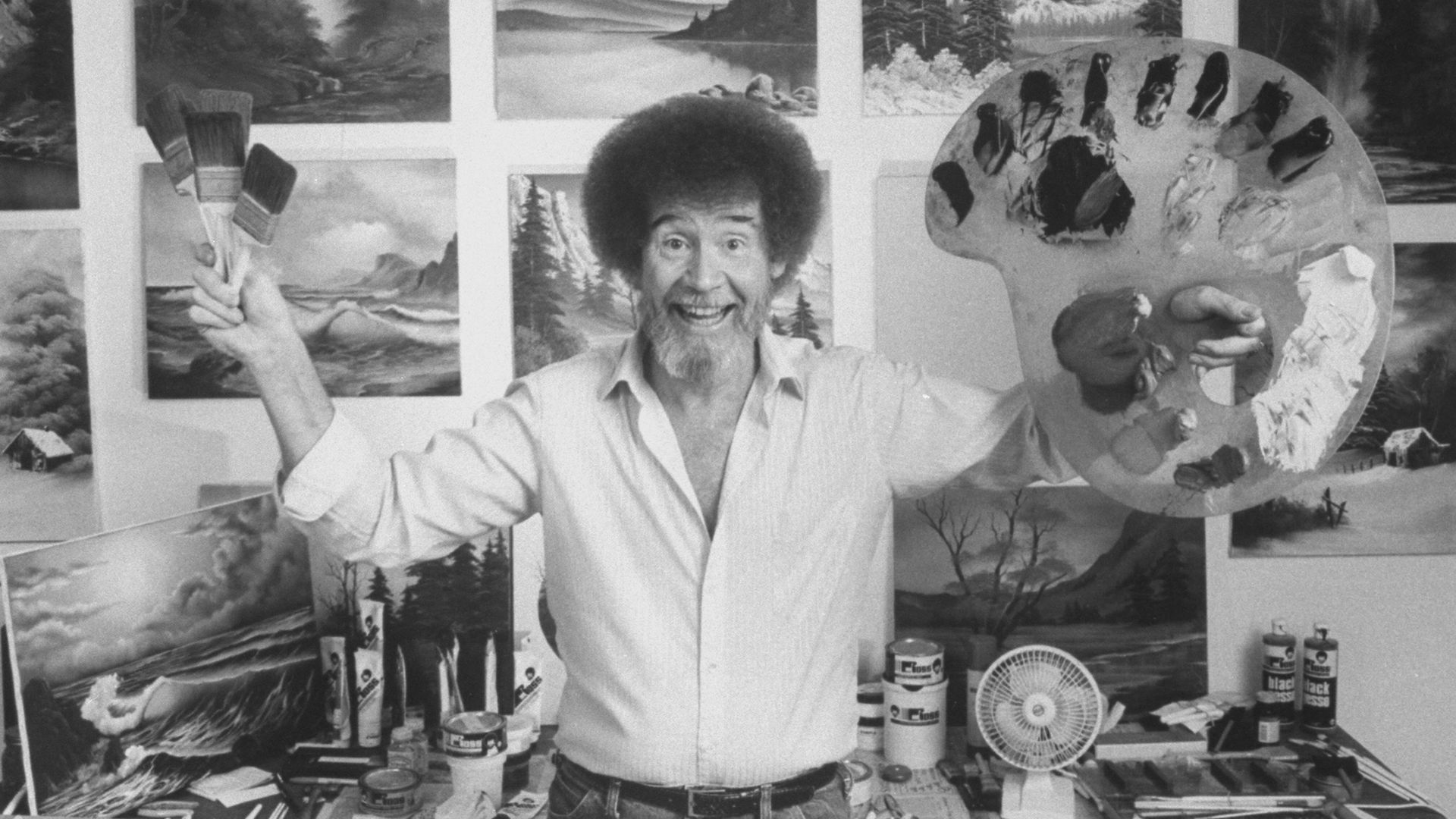
The legacy of painter Bob Ross continues to lift public TV 30 years after his death.
🖼️ The latest: Bob Ross Inc. is auctioning off 30 Ross paintings "to defray the costs of programming for public television stations suffering from cuts in federal funding," AP reports.
- "The idea is to help stations in need with licensing fees that allow them to show popular programs that include 'The Best of Joy of Painting,' based on Ross' show," AP reports.
By the numbers: The batch of paintings — which includes the artist's famously scenic outdoor vistas — is valued at $850,000 to $1.4 million.
- Most of them were painted on the air in less than 30 minutes.
💭 Nathan's thought bubble: The soothing mellow voice of the late Bob Ross matched the serene nature of his artwork.
🗓️ On this day in 1945, Raytheon filed the first patent for the microwave oven — an idea the defense contractor stumbled on by happy accident. Radar engineer Percy Spencer decided to investigate why candy bars kept melting near the magnetrons Raytheon built to generate microwaves.
- It turns out those same waves weren't just good for bouncing off distant planes and ships to pinpoint their locations — they also made food molecules vibrate fast enough to heat and cook them.
Today's newsletter was edited by Pete Gannon and copy edited by Sheryl Miller.
- Sign up here to get Axios Closer in your inbox.
Sign up for Axios Closer