Axios China

February 16, 2021

Welcome back to Axios China. Today we're looking at China's huge financial markets, its "sharp power," Rob Malley's China call, and a whole lot more.
- Sends tips and suggestions to [email protected], or just hit reply.
Today's newsletter is 1,545 words, a 6-minute read.
1 big thing: China's political power grows with its capital markets
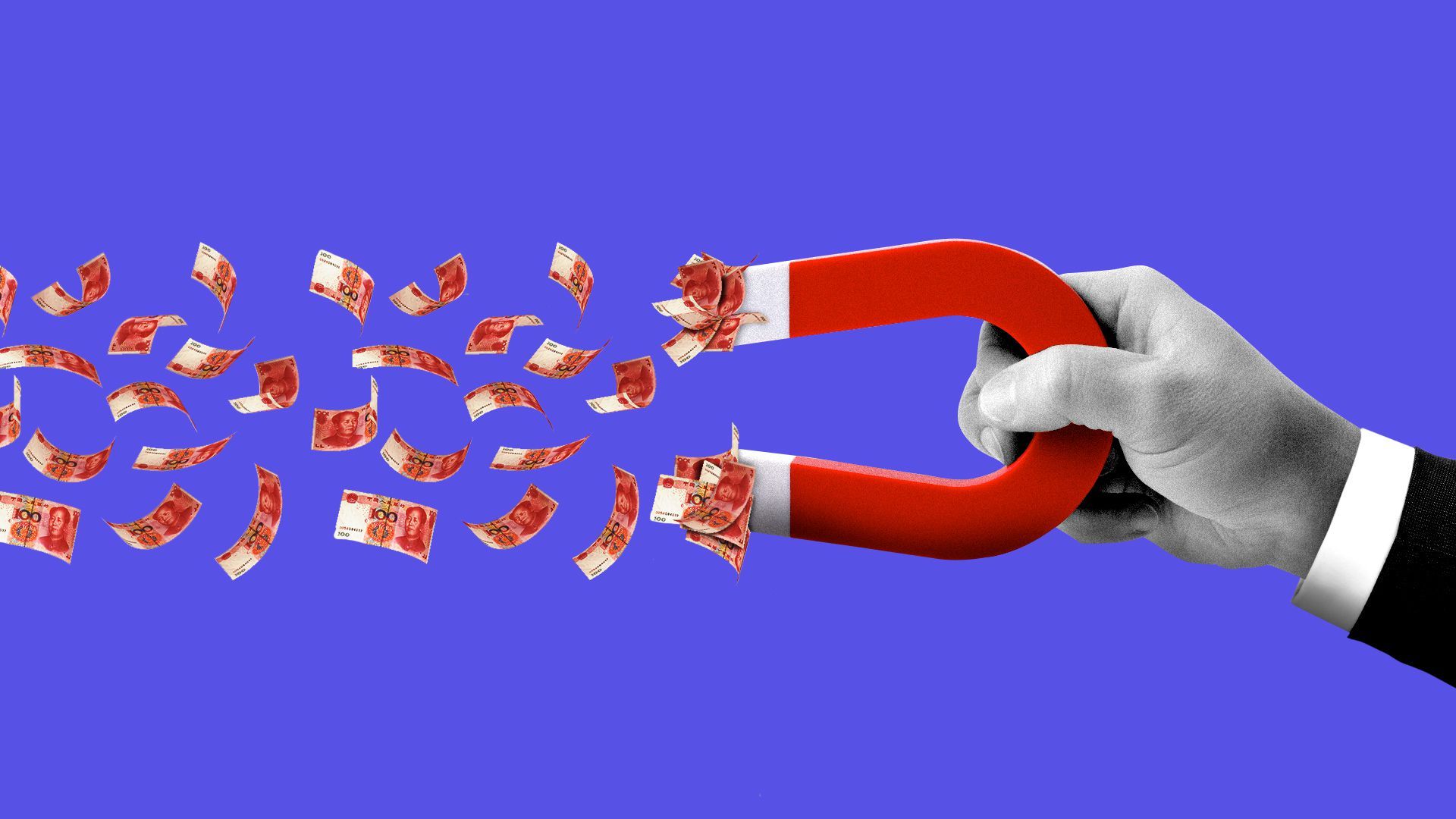
Illustration: Aïda Amer/Axios
Thanks to a mandate for outside investment and its strong rebound from the coronavirus pandemic, China’s financial markets are drawing record high chunks of global capital — particularly from U.S.-based investors — and are poised to keep growing, Axios' Dion Rabouin and I write.
Why it matters: As more money flows to China’s markets, its political leaders will have a clear mechanism to increase the country’s political power, giving China another potent weapon to challenge the United States’ position as the world’s financial superpower.
What's happening: Even as the Trump administration banned U.S. investors from owning shares in certain Chinese companies linked to the military and Congress passed legislation to delist Chinese firms from American exchanges, China has become one of the largest single-country exposures for U.S. investors, according to data from Seafarer Capital.
- "China is now both the second-largest economy and the second-largest capital market," Linda Zhang, CEO of Purview Investments, told Axios.
By the numbers: As of 2020, the market cap of Chinese companies listed on mainland, Hong Kong and overseas indexes like the New York, London and Singapore stock exchanges totaled nearly $17 trillion, with the vast majority ($11.7 trillion) on mainland exchanges.
- That total rivals the combined market cap of the London Stock Exchange and the Euronext exchanges.
What it means: As more foreigners invest in mainland Chinese companies, government bonds and other securities that trade in renminbi (RMB)— China's currency — are forced to buy and hold the currency.
- The more global investors hold these Chinese assets, the more international and important China's currency becomes.
- "You can’t have a globally important currency unless you give investors a safe place to park it," Nicholas Borst, director of China research at Seafarer Capital Partners, told Axios.
The big picture: China has long weaponized access to its domestic consumer markets for geopolitical gain, forcing airlines, hotels, Hollywood studios and many other companies to avoid crossing the Chinese Communist Party's red lines.
- As China's capital markets become more lucrative, China might leverage access to those markets in the same way.
The key principle at play: More international investors investing directly in China's markets could strengthen Beijing's ability to exert extraterritorial enforcement of its domestic laws through freezing investment accounts and initiating arbitrary audits.
- As a financial superpower, the U.S. has displayed relative restraint in how it regulates and polices those markets. It has implemented guidelines primarily aimed at ferreting out fraud and protecting investors while facilitating global capital flows.
- With some notable exceptions during the Trump era, U.S. sanctions have usually targeted terrorism funding, weapons proliferation, rogue regimes and gross human rights violators, rather than punishing people for their political views.
- But domestically, and increasingly on the international stage, China views political opposition as equivalent to terrorism or money laundering and aims to punish it accordingly.
One case study: In Hong Kong, China's national security law requires banks to freeze the assets of pro-democracy activists accused of "terrorism" or "sedition" for peaceful democratic political organizing.
Between the lines: Banning Chinese companies from U.S. stock exchanges could push those companies to the Shanghai and Hong Kong stock exchanges, which in the long run would increase the relative power of these exchanges over the U.S. exchanges, said Bob Bartell, global head of corporate finance at New York-based financial consultancy Duff & Phelps.
What to watch: China is developing a digital RMB, and global payments giant SWIFT has partnered with China's central bank to help develop it.
- A digital RMB could speed the internationalization of China's currency and expand Beijing's geopolitical sway around the world.
2. More countries issue warnings on China
Illustration: Eniola Odetunde/Axios
In the past week, intelligence agencies in the Netherlands, Finland and Canada expressed deep concern about China's espionage and political influence in democracies.
Why it matters: Three years ago, the U.S. was something of a global outlier in its strident warnings against China. Now democratic countries around the world are echoing the same fears.
The Netherlands: Last week, the Dutch General Intelligence and Security Service (AIVD) released a report on threats to Dutch national security interests. The report was blunt in its criticism of China, stating that Beijing's cyber espionage poses an "imminent threat" to the Dutch economy, in sectors including banking, energy and infrastructure.
- "Behind the scenes, China is rising on the agenda of the Dutch intelligence services. Spearheaded by the AIVD and NCTV, the focus is on economic espionage and political influence," Ties Dams, a research fellow at the Clingendael China Centre at the Clingendael Institute, told Axios.
- "With the upcoming elections in March, this is the intelligence community signaling that China has to be prioritized," said Dams.
Finland: Antti Pelttari, director of the Finnish Security and Intelligence Service, said last week that “authoritarian countries are trying to get hold of Finland’s critical infrastructure," referring to China and Russia.
- Pelttari also said he believes Huawei should not be permitted to build Finland's 5G networks.
Canada: David Vigneault, director of the Canadian Security Intelligence Service, said last week that China is "pursuing a strategy for geopolitical advantage on all fronts — economic, technological, political, and military — and using all elements of state power to carry out activities that are a direct threat to our national security and sovereignty."
- “These activities ... cross the line by attempting to undermine our democratic processes or threaten our citizens in a covert and clandestine manner," Vigneault said.
3. Catch up quick
1. Canada and 57 other countries issued a declaration decrying politically motivated arbitrary detention, Bloomberg reports.
2. WHO scientist says there were 13 different strains of the coronavirus in Wuhan in December 2019. Go deeper.
3. President Biden held his first call with Chinese President Xi Jinping. Go deeper.
4. China banned BBC World News from broadcasting in the country, the BBC reports.
4. U.S Iran envoy Rob Malley's quiet outreach to China
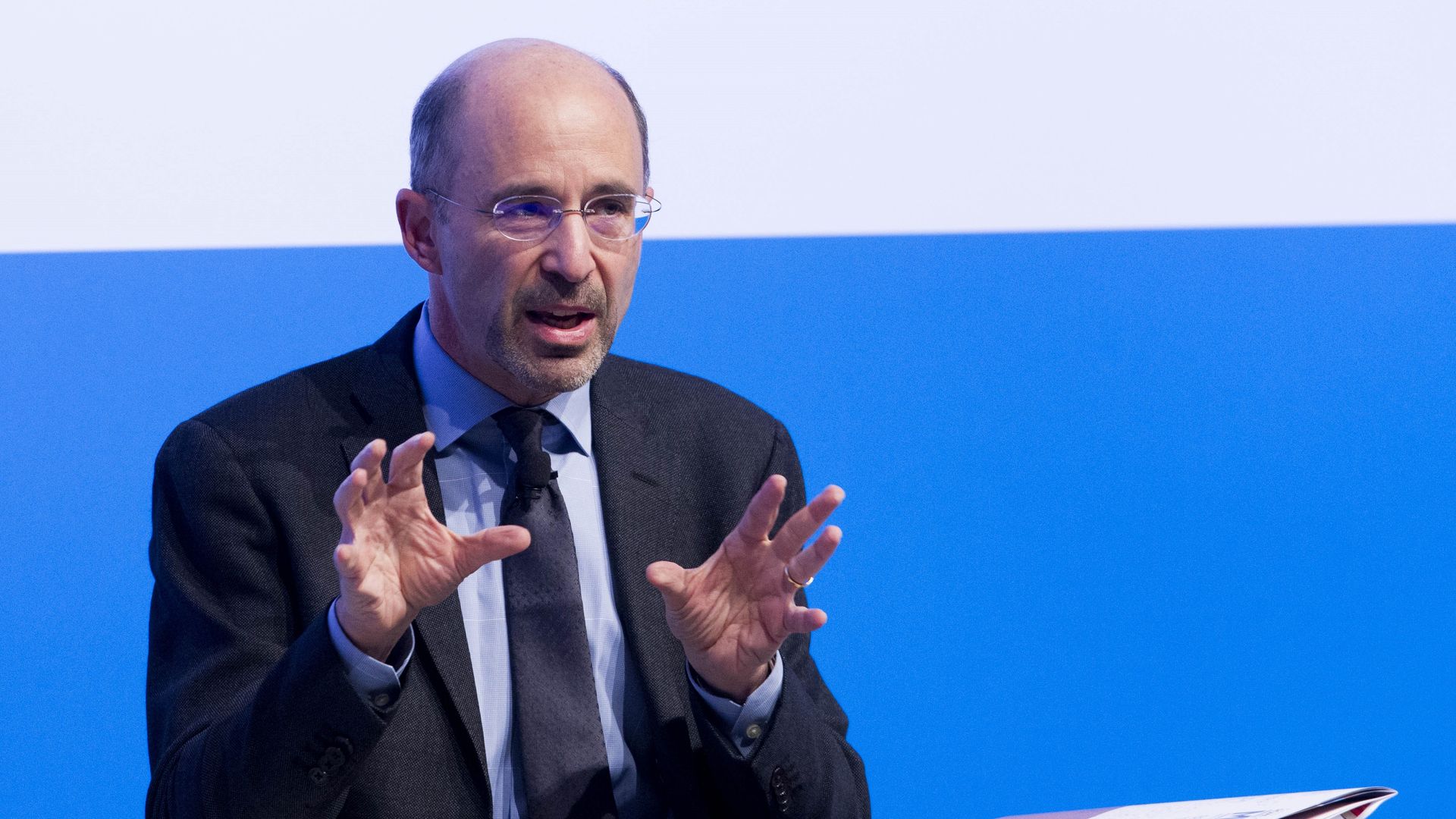
Photo: Riccardo De Luca/Anadolu Agency/Getty Images
U.S. special envoy to Iran Rob Malley had an "in-depth exchange of views on the Iranian nuclear issue" with a Chinese vice minister on a call initiated by Malley, China's Ministry of Foreign Affairs said on Feb. 10. The Biden administration has not spoken publicly about the call.
The big picture: Renewing multilateral diplomatic efforts to stop Iran's nuclear program is Malley's mandate under Biden.
Background: During the Obama administration, gaining China's support was key to levying the multilateral sanctions on Iran that eventually helped bring Iranian leaders to the bargaining table, leading to the signing of the Iran nuclear deal.
- But Trump withdrew from that deal and China resumed imports of Iranian oil last year.
What they're saying: When contacted by Axios, the State Department did not confirm the details in the Chinese announcement.
- "Special Envoy Rob Malley is in the early stages of engaging Members of Congress, allies, partners, and others," a U.S. State Department spokesperson told Axios in a statement.
What to watch: On Feb. 21, Iran will begin blocking International Atomic Energy Agency inspectors unless the U.S. eases sanctions.
The bottom line: As long as China gives Iran an economic lifeline, it will be easier for Iran to withstand Western pressure.
5. What I'm reading
The Long Hack: How China exploited a U.S. tech supplier (Bloomberg)
- “Supermicro is the perfect illustration of how susceptible American companies are to potential nefarious tampering of any products they choose to have manufactured in China,” said one FBI official. “It’s an example of the worst-case scenario if you don’t have complete supervision over where your devices are manufactured.”
Also: Don't miss the new "Authoritarian Influence Tracker," a project of the Alliance for Securing Democracy at the German Marshall Fund of the United States.
- The tracker "catalogues the Russian and Chinese governments’ activities to undermine democracy in more than 40 transatlantic countries since 2000 using five tools: information manipulation, cyber operations, malign finance, civil society subversion, and economic coercion."
6. China's "sharp power"
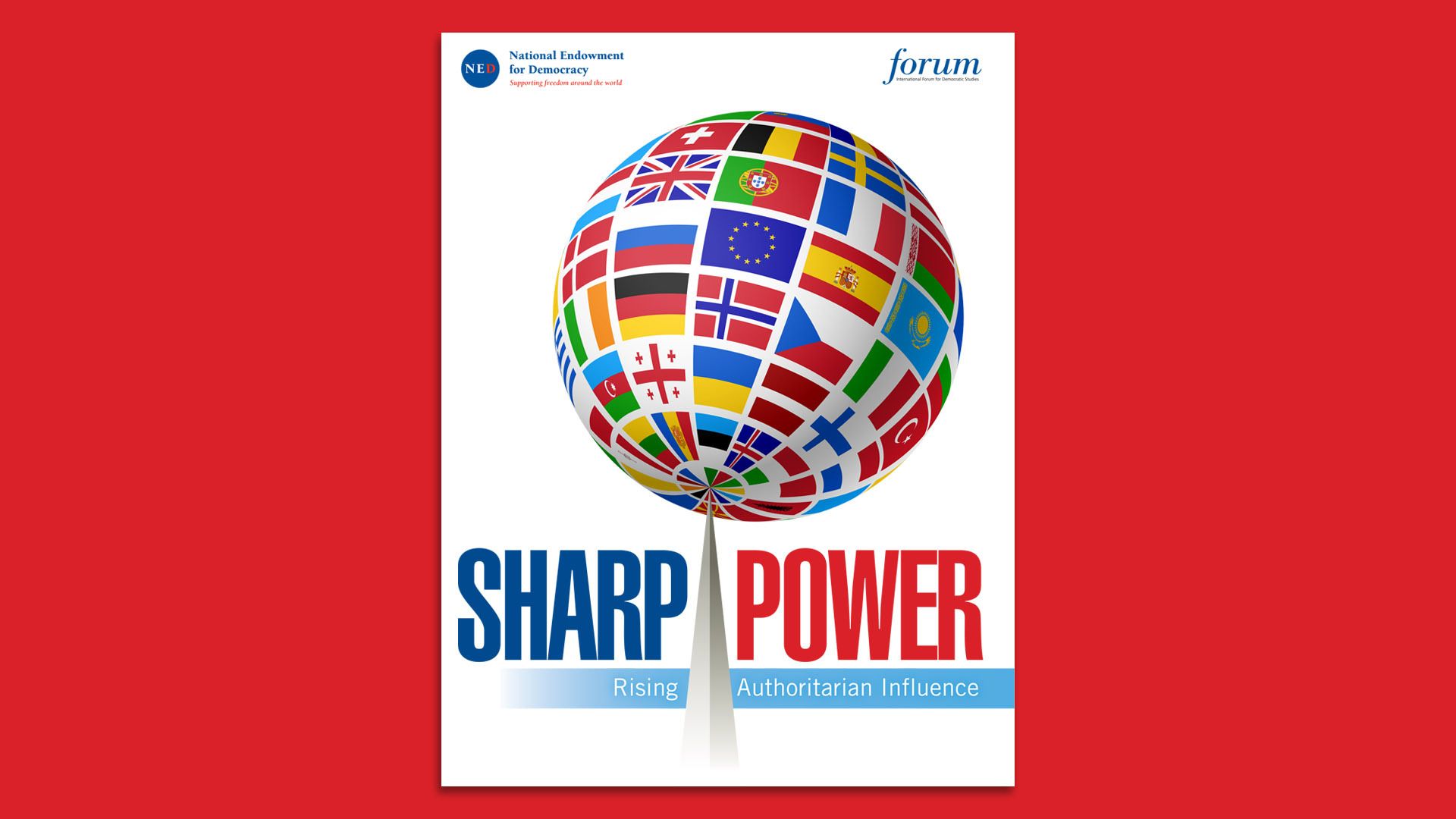
Image: The National Endowment for Democracy
A senior Biden administration official used the term "sharp power" last week in a phone call with reporters to describe China's coercive activities around the globe.
Why it matters: The phrase hints at the administration's intellectual influences as they formulate new U.S. policies toward China.
- "Sharp power" is a term coined in a December 2017 report by the National Endowment for Democracy to describe how Russia and China use covert and coercive means to gain political influence abroad, particularly within democratic countries.
Background: In the 2010s, analysts worked to come up with accurate ways to describe the techniques China and Russia were honing to manipulate global perceptions and political environments in their favor.
- The NED report was quite influential, and the term "sharp power" soon became well known among specialists, though some criticized it as too broad.
- The Trump administration seemed to mostly settle on the term "malign influence activities" to convey a similar idea, while others call it "authoritarian interference."
From the NED report: "Some of the most visible authoritarian influence techniques used by countries such as China and Russia, while not 'hard' in the openly coercive sense, are not really 'soft' either," wrote the report's authors. "This authoritarian influence is not principally about attraction or even persuasion; instead, it centers on distraction and manipulation."
- "What we have to date understood as authoritarian 'soft power' is better categorized as 'sharp power' that pierces, penetrates, or perforates the political and information environments in the targeted countries."
Go deeper: Read the full NED report.
7. 1 Lunar New Year thing: "Hometown" isn't as simple as it used to be
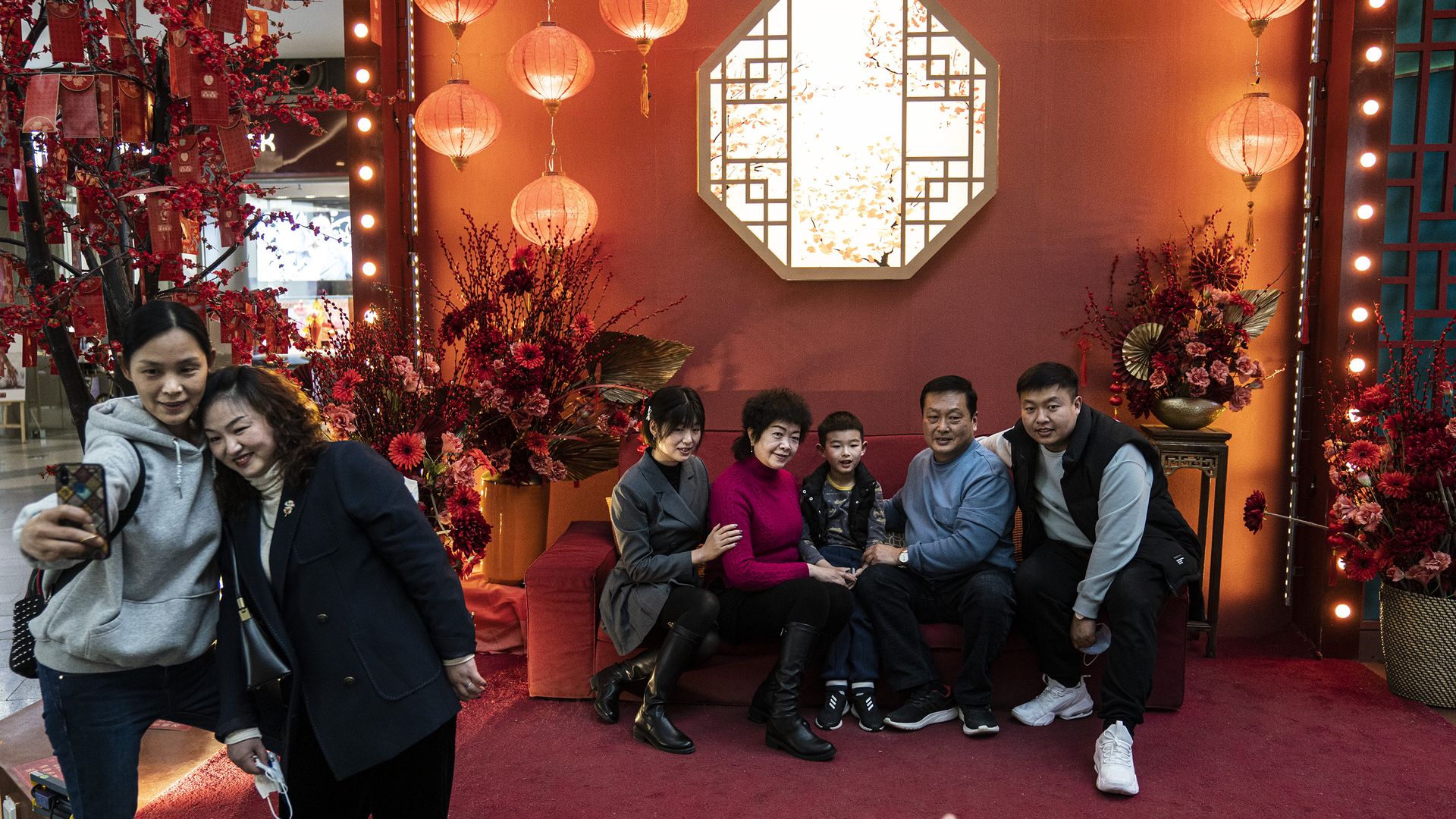
Families celebrate at the Spring Festival in Wuhan, China, Feb. 16. Photo: Getty Images
The concept of an ancestral hometown is deeply engrained in Chinese culture, and it's common for Chinese people to ask each other where their hometown is.
- But as many Chinese visit family for the Lunar New Year, that question is getting harder to answer, writes Nankai University associate professor Zhou Wang for China-based news outlet Sixth Tone.
What he's saying:
"For hundreds of years, identity in China has been tightly bound up with your place of origin. How you answered that seemingly innocuous question, 'ni shi nali ren?' [where are you from], used to be a kind of shorthand for the language you speak, the food you eat, even your personality. But after two generations of mass internal migration, urbanization, and shifting family dynamics, it’s getting harder to answer."— Zhou Wang, in "A New Generation, an Age-Old Question: ‘Where Are You From?’"